
City Council - Apr 07, 2026 - Regular Meeting

City Council - Apr 07, 2026 - Regular Meeting

City CouncilWalnut CreekApril 7, 2026

Sources:

Locunity is a independent informational service and is not an official government page for this commission.We use AI-assisted analysis and human editorial review to publish information.

Council Clears 422-Unit Townhome Project After Marathon Hearing, Lone Dissent

Walnut Creek's City Council spent nearly four hours debating the biggest housing project the city has seen in decades — a 422-unit townhome development that will replace vacant office buildings in Shadelands Business Park — before denying two appeals and approving the project 4-1. The hearing drew passionate testimony from housing advocates, labor unions, senior residents worried about construction dust, and a mayor who broke with his colleagues over traffic and the loss of business-zoned land.

  • 422-unit Mitchell Townhomes approved 4-1 after Council denies both appeals; Mayor Wilk casts lone dissent over traffic concerns
  • Seniors at neighboring Viamonte plead for air quality protections as Council adds green screen fencing and construction notification conditions
  • Housing advocates, labor and business groups turn out in force to support the project, warning of fines up to $60,000 per month per unit if the city denied it
  • Federal CDL crackdown sidelines bus and garbage truck drivers, threatening transit and waste collection in the Walnut Creek area
  • MCE announces 14% electricity rate cut effective April 1 for 90% of Walnut Creek customers

Shadelands Gets Housing: 422-Unit Builder's Remedy Project Survives Two Appeals

The Walnut Creek City Council voted 4-1 to deny two appeals and approve the Mitchell Townhomes, a 422-unit for-sale development proposed by Signature Development Group on a 22-acre site in the Shadelands Business Park. The project replaces 11 vacant office buildings with three-story townhomes, including 55 affordable units — nearly double the required 7% — along with 542 new trees, a roundabout, raised crosswalks, extended bike lanes, and monetary contributions for traffic improvements.

Why it matters: This is Walnut Creek's largest housing project in decades and a direct test of the state's builder's remedy authority. Because the city's housing element was not certified by the California Department of Housing and Community Development when the developer filed its SB 330 application on Oct. 18, 2023 — six days before HCD certification on Oct. 24 — the Council had extremely limited legal discretion to deny the project.

The Appeals

Appeal 1, filed by the Friends of Walnut Creek and presented by Steve Elster, argued that the builder's remedy should not apply because the city's housing element was "substantially compliant" when adopted on Aug. 1, 2023. "We expect that a court would apply the language of this statute to determine that the date when Walnut Creek's housing element was substantially compliant is August 1, 2023, prior to October 18 when Signature submitted its application," said Elster. The appeal also challenged the environmental impact report's alternatives analysis, the traffic study's methodology, and the adequacy of public notice. Staff and the city attorney rebutted each point, confirming that builder's remedy applies under current law, the EIR's alternatives were adequate, the traffic study used the correct ITE trip-generation codes (confirmed by independent peer review), and all noticing requirements were met.

Appeal 2, filed by Mike Heller on behalf of Viamonte Senior Living residents, focused on construction impacts to the neighboring senior community — fugitive dust, asbestos notification, tree removal, lack of air quality monitoring, traffic and emergency access on Shadelands Drive, and insufficient construction scheduling notice. "The purpose of this appeal is not to suggest that you deny this project," said Heller. "What we would like to put before you is some examples of considerations particularly impacting the seniors at Viamonte that were either not considered or considered in a light way."

Public Comment: A Broad Coalition for Housing — and Anxious Seniors

The hearing drew extensive public comment, with support outweighing opposition. The Housing Action Coalition, Bay Area Council, East Bay Leadership Council, Plumbers and Steam Fitters Local 159, Joy Bound People and Pets, and several individual advocates all urged the Council to deny the appeals and approve the project.

Matt Regan of the Bay Area Council issued a blunt warning: "You could be liable for fines up to $60,000 per month per unit that you do not approve, litigation and attorney fees and punitive damages."

Stephen Black, a housing advocate, pointed to the city's slow progress on its state housing targets. "The publicly available data right now shows that the city has permitted just 85 units in the first two years of the cycle," he said, referring to Walnut Creek's 5,805-unit Regional Housing Needs Allocation.

Mark Orcutt of the East Bay Leadership Council endorsed the project after committee review, citing density, affordability, adaptive reuse, and significant legal risks of denial. Jason Lester of Plumbers and Steam Fitters Local 159 spoke in support, representing 150 Walnut Creek union households.

On the opposing side, Suzanne Reingruber, a Viamonte resident with leukemia, asthma, and lung damage, pleaded with the Council to ensure air quality protections for elderly residents. Bob Asfor, also a Viamonte resident, argued the traffic analysis was flawed because 422 families living year-round would generate more trips than office commuters working 240 days per year.

Technical Findings: Air Quality and Traffic

Two expert consultants addressed the issues central to the appeals. Jackie Winkle of First Carbon Solutions confirmed that required Tier 4 construction equipment reduces PM2.5 emissions by more than 90%. "The health risks were found to be five in a million," she said — well below the 10-in-a-million threshold. Mark Spencer of W-Trans confirmed the traffic study analyzed directional peak-hour traffic and that the net change from replacing offices with housing was incremental.

Council Deliberations: Four Yes, One Firm No

Councilmember Cindy Silva framed the project as a fortunate outcome given the legal landscape. "This is a builder's remedy project. We are lucky that we only got one," she said. "The problem is not the builder's remedy rules. It's the process that HCD was using of moving the goalposts because they couldn't figure out what the new regulations requirements were."

Councilmember Cindy Darling personalized the housing crisis. "I am the mother of two young professionals who are trying to live in the Bay Area," she said. "One's a civil engineer, one's a nurse. They make a lot of money and they cannot afford to live in Walnut Creek."

Councilmember Craig DeVinney acknowledged the legal constraints. "In order to reject the project, we would have to show that it has an impact that we cannot mitigate. And I don't think that the evidence has risen to that level," he said.

Vice Mayor Matt Francois noted the strength of the environmental review. "I think it's also significant that the EIR found that all the significant impacts could be mitigated. That's not always the case for a project of this size," he said.

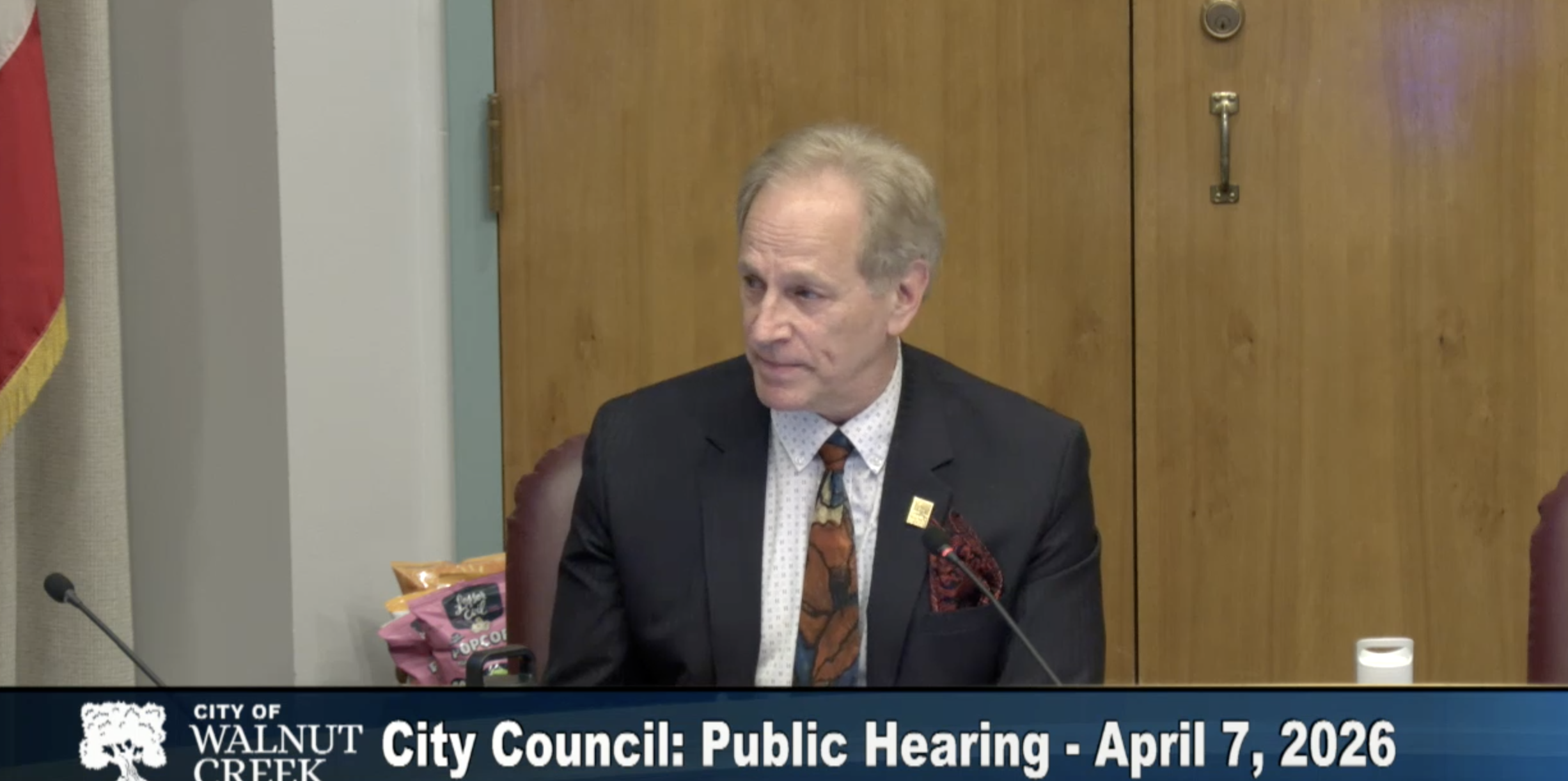
Mayor Kevin Wilk cast the lone dissent, citing both traffic and the erosion of Shadelands' business identity. "I am speaking on behalf of the residents that live in that area of Walnut Creek because I feel I would be doing them a disservice if I was not representing their views here at the dais," he said. "What is being done is we need housing and the way this has been done doesn't feel good." He also warned about precedent: "My general concern is that we're now looking to further reduce the business and jobs aspect of the Shadelands district and setting a precedent." He said he wanted a supplemental directional peak-hour traffic study before proceeding.

Decisions

The Council added two conditions before voting: an 8-foot non-porous green screen fence along Shadelands Drive during construction, and advance written notification to Viamonte property management before demolition and grading phases. The motion to deny both appeals, certify the EIR, and approve the project with conditions passed 4-1 (For: Darling, DeVinney, Francois, Silva; Against: Wilk).

What's next: Signature Development Group can proceed with final engineering and permitting. The project will be watched closely as a precedent for additional builder's remedy applications and for the broader transformation of Shadelands from office park to mixed-use district.


Federal CDL Crackdown Threatens Bus Routes and Garbage Pickup

Mayor Kevin Wilk, reporting as the County Connection liaison, warned that a September 2025 federal Department of Transportation directive suspending processing of non-domiciled commercial driver's licenses has placed six County Connection bus drivers on unpaid leave. The affected drivers are legal temporary residents whose licenses were canceled; the California DMV has not been cleared to relicense them.

Why it matters: The impact extends beyond transit. Councilmember Cindy Silva reported the same issue is hitting garbage truck drivers at Recycle Smart, with potential routing changes and overtime costs. "We are about to learn at our next Recycle Smart meeting that the same thing is happening to garbage truck drivers," she said. "So all of you are going to see an impact."

Mayor Wilk called the situation unfair to legal workers and said California appears to be specifically targeted by the DOT. He noted that hundreds of public transit drivers across the state have been affected.

What's next: No resolution timeline has been set. Residents may see disrupted garbage collection and reduced transit service in the near term.


Stormwater Mandate Could Require New City Revenue

Councilmember Craig DeVinney pulled the Contra Costa Clean Water Program agreement from the consent calendar to flag a growing cost pressure for residents. The Council then unanimously approved two resolutions authorizing the city manager to execute the amended program agreement through June 30, 2041.

Why it matters: The Clean Water Act is a federal unfunded mandate requiring increasingly strict stormwater treatment. "It's an unfunded mandate," DeVinney said. "The requirements for treating water and for treating stormwater are becoming increasingly strict. And so they're requiring increased investment and increased money from the city." The program is currently funded through development fees, with overflow into the general fund. DeVinney warned the city may eventually need to explore alternative funding mechanisms.

Decisions: Approved 5-0 (For: Darling, DeVinney, Francois, Silva, Wilk).


Minor Items

  • Consent calendar approved 5-0, including March 17 minutes, warrant registers, the Kimley-Horn traffic engineering contract ceiling increase from $250,000 to $500,000, and a $176,000 Kimley-Horn contract for Highway Safety Improvement Project design.
  • Downtown BID and SBID annual assessments for FY 2027 adopted unanimously with no protests received and no public comment.
  • MCE presented a 14% rate reduction effective April 1 for community choice energy customers — 90% of Walnut Creek households. Chiara Donato of MCE reported $386,000 in EV rebates distributed, 112 EV charging stations installed, and $1.7 million invested in energy efficiency programs locally. A new $10 million MCE CARE Credit for income-qualified households was also announced. Councilmember DeVinney reported on AB 1761 legislation to increase transparency of PG&E's PCIA exit fees.
  • Council honored Joan Lucchese, retiring director of Gardens at Heather Farm, for her decade-plus leadership of the nonprofit garden.
  • April 2026 proclaimed Clean Contra Costa Month, with the Cleaner Contra Costa Challenge credited with saving nearly $85,000 and keeping 180 tons of CO2 out of the atmosphere from 949 Walnut Creek households.
  • National Public Safety Telecommunicators Week declared for April 12-18.
  • Council delegation visited partner city Kita City, Japan on a self-funded trip, touring earthquake preparedness facilities and observing integrated transit systems. Mayor Wilk, Councilmember Darling, and Councilmember Silva participated.
  • Public commenters promoted the UC Master Gardeners program and discussed SB 913 on stored power efficiency and SB 1117 on reducing ADU impact fees for units up to 750 square feet.
Council Clears 422-Unit Townhome Project After Marathon Hearing, Lone Dissent | City Council | Locunity