
County Supervisors Warn 93,000 Could Lose Medi-Cal Under HR 1
City Council • Walnut CreekNovember 17, 2026
Locunity is an independent informational service and is not an official government page for this commission. All information is sourced from public footage and an analysis of official agendas with the aid of responsible, fact-checked AI. to report an error or omission.
Two Contra Costa County supervisors gave the Walnut Creek City Council a sobering forecast on Nov. 17, 2026: federal HR 1 cuts could strip Medi-Cal from 93,000 county residents and CalFresh from 17,000 more. The informational briefing was the night's longest discussion and also covered new county limits on cooperation with ICE. The council, with Mayor Pro Tem Matt Francois absent, voted 4-0 to extend a cost-shared police deal at Broadway Plaza and to receive the closeout of a state-funded ADU rebate program.
- 93,000 county residents could lose Medi-Cal under HR 1, and the county projects a structural deficit upwards of $700M by 2031
- County limits ICE access to non-public areas and bars data sharing without a judicial warrant
- ADU Accelerator closes out: 25 rebates totaling just under $130,000, with no city funds
- Tennis players press for LED retrofit with 14 of about 94 Heather Farms lights dark
- Broadway Plaza police deal extended 4-0; Macerich keeps paying for half of the officers
HR 1 Hits Home: County Braces for Coverage Losses
The basics: Medi-Cal is California's Medicaid health program. CalFresh is the state's food assistance program. Supervisor, District 2 Candace Andersen and Supervisor, District 4 Ken Carlson delivered the county's annual update to the council.
Why it matters: "93,000 of our residents could lose their Medi-Cal coverage, meaning they have no healthcare," said Carlson. He said another 17,000 residents could lose CalFresh benefits.
Where things stand: Andersen described a county budget of roughly $7.25 billion. More than half comes from state and federal sources, and more than half is spent on health. That reliance on outside money explains why federal changes reach county clinics so quickly. Carlson cited a projected structural deficit upwards of $700M by budget year 2031.
Carlson's rundown also included:
- 42 new eligibility workers
- $5M for the SAFE Center
- Funding to help residents keep their pets
- A push for unleaded aviation fuel
- A $99M award from the state's Behavioral Health Continuum Infrastructure Program (BHCIP)
Andersen also reported a 3.48% property tax increase and an extra audit of the assessor's office.
Homelessness and crisis response: Andersen said the county's point-in-time homeless count came in at a little over 2,200. That is up 7% from last year but down 21% since 2024. She highlighted the dashboard for A3, the county's crisis response program, and a new peer respite center.
Closer to home: Andersen described a dual-track pilot on the Iron Horse Trail. Carlson covered a $1.2M repair of the Schroeder pedestrian bridge, and councilmembers asked about its night construction. Council questions also touched on CARES Court.
Carlson also flagged a regional rule that will reach into homes. The Air District "passed what we're calling the water heater rule, which would require the replacement of a gas water heater with electric starting in 2028," he said.
Decisions and stakeholder impacts: The briefing was informational, and the council took no vote. The people most exposed are low-income residents who rely on Medi-Cal and CalFresh, and the county health system that serves them. Homeowners with gas water heaters face the 2028 Air District mandate.
What's next: The water heater rule takes effect in 2028. The supervisors announced no other county deadlines.
ICE Policies: County Draws Lines, Urges Vigilance
Why it matters: Mayor Kevin Wilk said many residents are extremely concerned about immigration enforcement. He asked the supervisors what guidance the city should give them.
Where things stand: Andersen said the county adopted employee policies. "It sets policies for interaction with ICE and not having ICE agents come into areas that are not open to the public," she said. The policies also bar sharing data the county collects without a judicial warrant.
The limits: Andersen acknowledged a gap the policies cannot close. People leaving the jail can still be intercepted by ICE in public courthouse parking lots. Answering the mayor's question, she cautioned that "ICE isn't necessarily playing by the rules."
Carlson described an informal alert system run by residents. "The idea is to kind of phone tree it, share on social media that ICE is active in a certain neighborhood or location," he said.
Decisions and stakeholder impacts: Both supervisors pointed residents to:
- Know Your Rights workshops
- Emergency lines
- Rapid response teams
- The SAFE Center
- Community networks
The county policies govern county employees and county spaces. They leave immigrant families who use public property, including people released from jail, still exposed.
What's next: The council took no action, and the supervisors announced no new policy steps.
ADU Accelerator: State Money In, State Money Out
The basics: Accessory dwelling units, or ADUs, are secondary homes on residential lots, such as backyard cottages or garage conversions.
Where things stand: Administrative Analyst Kathy Arana of the Community Development Department presented the program's closeout. In October 2024, the council authorized staff to seek nearly $180,000 in state pilot funding through former Senator Glazer's office. The program paid 25 homeowner rebates totaling just under $130,000, tiered by unit size. It spent another $50,000 updating the city's pre-approved ADU plans to the 2025 building code.
Low-income rentals required a 20-year deed restriction, and only one of the 25 rebates went to a low-income rental. On permit costs, Arana said "typically it ranged from $2,000 to $20,000, and then it averaged out at about $8,000." Total construction costs were not known.
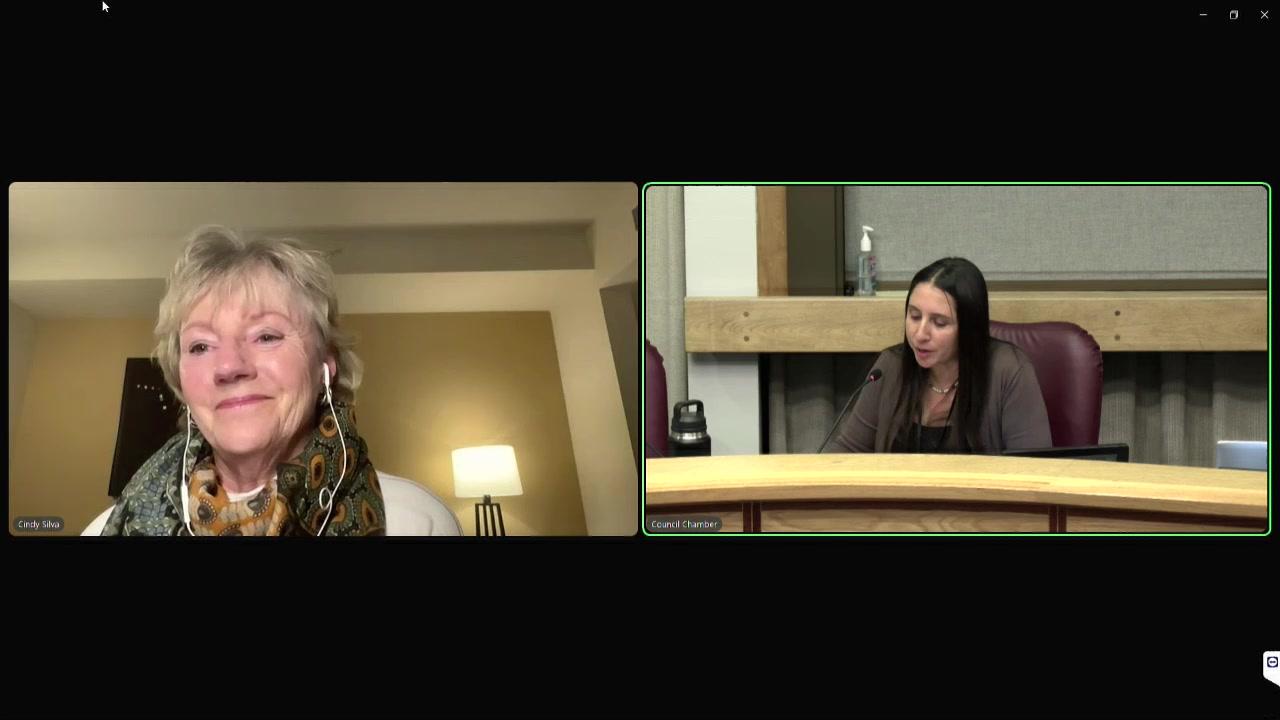
Questions from the dais: "Does that mean we were roughly in the 60 ADU range for over the 2-year period?" asked Councilmember Cindy Silva. Staff confirmed that about 60 ADUs pulled permits during the program window, so rebates reached 41.6% of them. Silva also asked whether projects were concentrated in particular areas, and staff will follow up.
Councilmember Cindy Darling pressed on obstacles beyond the city's control. "PG&E water and wastewater are also a challenge," she said.
Decisions and stakeholder impacts: The council voted to receive the update (For: 4, Darling, DeVinney, Silva, Wilk; Against: 0; Absent: 1, Francois). The program cost the city nothing. However, demand now exceeds supply. "At this point, we've utilized the state grant funding," Arana said, and staff noted interest remains high. Homeowners still gain from the updated pre-approved plans. The program's affordability goal produced just one deed-restricted unit.
What's next: Staff will return with the geographic data Silva requested. No new funding source was identified. Staff report
Lights Out at Heather Farms: Tennis Players Organize
Why it matters: Three speakers made a coordinated case that failing lights are costing residents safe evening play at Heather Farms.
Where things stand: A tennis club representative reported about 94 lights across 11 courts. Fourteen have been out for months, including six at courts 5 and 6. The representative said the lights need an LED retrofit, not just replacement.
Terry Frangie, a 20-year resident and Walnut Creek Racquet Club member, said she stopped playing at night for safety reasons. Maury McKenna, a Lafayette resident raised in Walnut Creek, said the main fixtures date to a late-1980s upgrade. He urged LED lighting like the nearby pickleball courts have.
The response: Mayor Wilk directed the speakers to Public Works Director Rich Payne. Silva suggested the club look at how the city has partnered with community groups to fundraise for facilities in the past. "Perhaps someone could walk the racquet club through that process," she said.
What's next: The council took no action because the request came during public comment. Expect a capital funding ask, possibly paired with private fundraising.
Broadway Plaza Police Deal Extended
Where things stand: Mayor Wilk pulled the fifth amendment to the city's law enforcement agreement with Macerich HHF Broadway Plaza from the consent calendar to highlight it before the holidays. "Broadway Plaza is, of course, so important to not just the city, but to residents that come and visitors that come and shop, spending tax dollars as well," he said.
Operations Captain Jeff Slater of the Walnut Creek Police Department said the agreement dates to 2016 and is evaluated yearly because of budget. It also lets officers use the plaza for night training, and extra holiday enforcement is planned. "Macerich pays for half of the police officers assigned to the Broadway Plaza," he said. Slater also floated a bigger program next year: "Maybe we could expand this program to having two full-time officers there."
Decisions and stakeholder impacts: Wilk moved approval, and the item passed (For: 4, Darling, DeVinney, Silva, Wilk; Against: 0; Absent: 1, Francois). The mall owner splits the cost of officers on site. Shoppers and nearby businesses get a steady police presence, and the city's sales tax base gets protection during peak season. Staff report
Minor Items
- Consent calendar passed 4-0: $500,000 for Boundary Oak Golf Course repairs, $209,666 for a new Walden Park basketball court, and a $30,000 state alcohol-enforcement grant.
- Permitting contracts: $142,700 more for Partners in Public Innovation Lean training (up to $433,420, through June 30, 2028), plus Truepoint Solutions Accela support (up to $153,800).
- Transit reprieve: Wilk said voter-approved funding means County Connection will not cut routes by 22% or lay off employees.
- Recusal: Silva will recuse herself from closed-session talks on 1860 Glenhaven because she lives less than 100 feet away.
- Honors: Council recognized the 24-0 Las Lomas girls flag football team and proclaimed November Lung Cancer Awareness Month.
Looking Ahead
Silva serves as Walnut Creek's voting delegate at the National League of Cities business meeting on Nov. 21, 2026. The RecycleSmart board meets Dec. 10. The Air District's gas water heater replacement rule begins in 2028.