Locunity is an independent informational service and is not an official government page for this commission. All information is sourced from public footage and an analysis of official agendas with the aid of responsible, fact-checked AI. to report an error or omission.
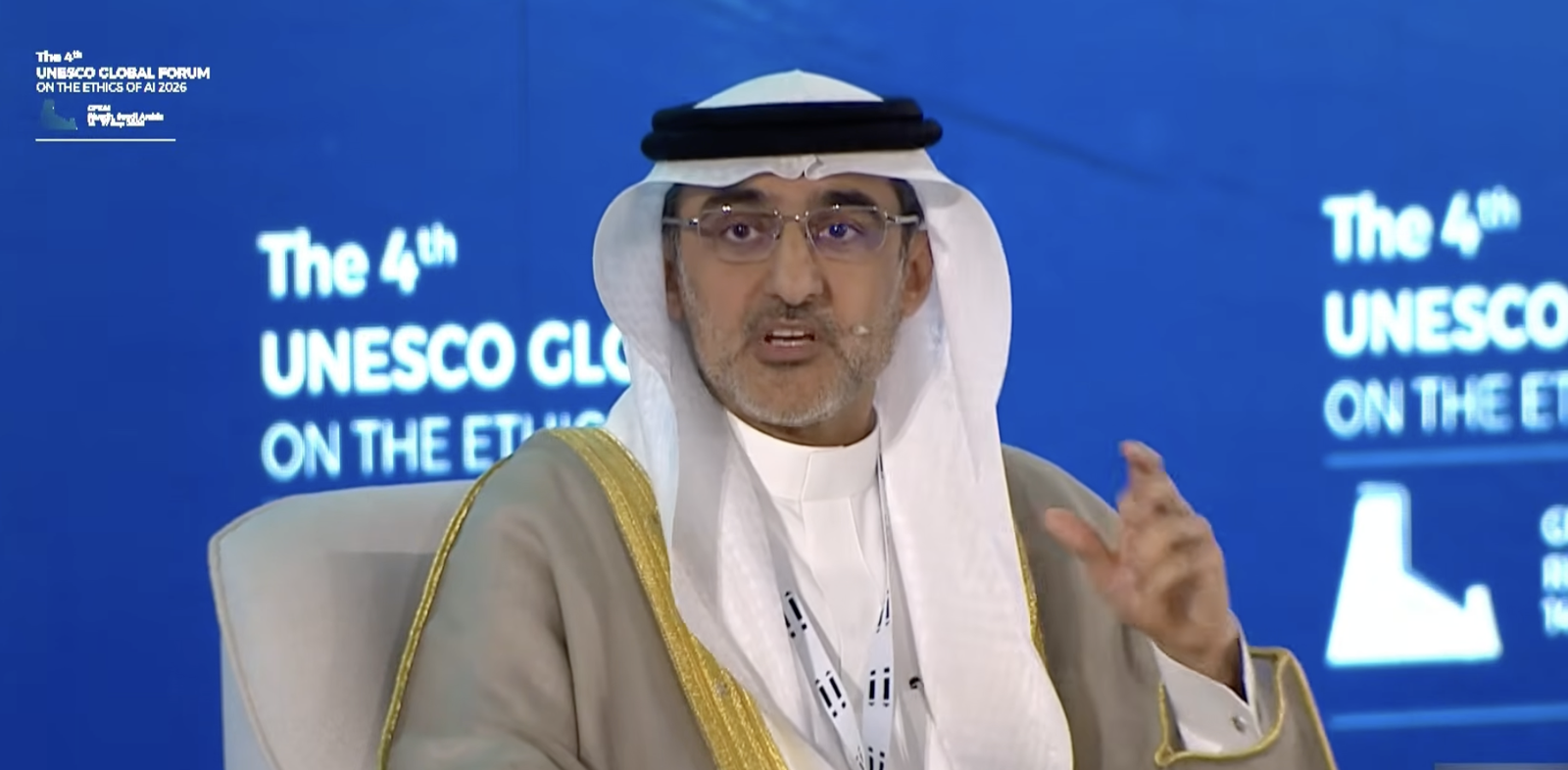
Saudi NCAI Keynote Details National Data Bank, 480 MW Data Center, and AI Maturity Index
Saudi Arabia's NCAI deputy director outlined the kingdom's institutional AI infrastructure including a national data bank, Hexagon data center, SAMAI training initiative, and ethical AI risk frameworks.
Why it matters: The keynote offers a comprehensive model for how a resource-rich nation can build end-to-end AI governance infrastructure spanning data, compute, workforce, and ethics from design through deployment.
Experts Say AI Ethics Must Be Embedded Across Entire Organizations, Not Just Tech Teams
A global panel concluded that building institutional AI capacity requires embedding ethics organization-wide, redesigning roles, and creating continuous learning cultures — not just technical training.
Why it matters: Research showed employees with less AI training are more exposed to automation yet have more confidence in AI outputs, creating governance risks if ethics are not integrated into everyday workflows.
United Nations
Saint Vincent And The GrenadinesUNESCO6d agoSeptember 15, 2026
Small and Least-Developed States Demand Data Sovereignty, Connectivity, and Education-First AI Adoption
Ministers from Saint Vincent, South Sudan, Angola, and Lao PDR stressed that responsible AI requires data sovereignty, reliable infrastructure, and education as the leading priority over technology.
Why it matters: These countries represent the most constrained contexts for AI adoption; their insistence on local data centres, sovereign AI strategies, and education-first approaches shapes the equity dimension of global AI governance.
United Nations
ICAIREUNESCO6d agoSeptember 15, 2026
ICAIRE Launches Elevate Phase 3 and Arab League AI Law Review as Part of Global Ethics Push
ICAIRE director Majid AlShehry outlined the centre's four-pillar strategy—awareness, capacity building, policy, and research—and announced partnership expansions covering 194 countries.
Why it matters: As UNESCO's Category 2 Centre for AI ethics, ICAIRE provides a permanent institutional platform that could sustain capacity-building beyond individual projects, addressing the implementation gap that ministers repeatedly flagged.
United Nations
UgandaUNESCO6d agoSeptember 15, 2026
Ministers From Five Nations Share Lessons From Piloting UNESCO's AI Readiness Tool
Ministers from Comoros, Somalia, Suriname, and Uganda detailed how RAM 2.0 helps small and developing nations diagnose gaps and build national AI strategies grounded in local priorities.
Why it matters: These are among the first countries to use RAM 2.0, showing that even small island developing states and least-developed countries can use the tool to drive inclusive, evidence-based AI governance.
United Nations
RAM 2.0UNESCO6d agoSeptember 15, 2026
UNESCO Releases First Global Meta-Analysis of AI Readiness Across 55 Countries
UNESCO launched a meta-analysis of 55 national AI readiness reports and introduced RAM 2.0 to standardize and strengthen ethical AI governance assessment worldwide.
Why it matters: For the first time, data from 55 countries — predominantly from the Global South — are comparable, revealing that while 82% integrate AI in education, only 13% train educators on AI ethics.
United Nations
RAMUNESCO6d agoSeptember 15, 2026
Twelve Countries Report How UNESCO RAM Process Drives Legislation, Data Governance, and Agricultural Investment
Ministers from the Bahamas, Chad, Djibouti, Ghana, Paraguay, Saudi Arabia, Argentina, Montenegro, Bahrain, and Tanzania described how the RAM process triggered data protection laws, AI strategies, and sector-specific investments.
Why it matters: The collective testimony shows the RAM is not just a diagnostic tool but a catalyst for institutional action, from Ghana's $100M AI-agriculture investment to Paraguay's pending AI legislation to Tanzania's Swahili language model ambitions.
United Nations
UNESCO Recommendation On The Ethics Of AIUNESCO6d agoSeptember 15, 2026
UNESCO's AI Ethics Recommendation Called More Relevant Than Ever as Counterweight to Silicon Valley Dominance
David Leslie and Dafna Feinholz argued that UNESCO's 2021 AI ethics framework has pushed back against international fragmentation and Silicon Valley-centric safety narratives while enabling 78 countries to assess AI readiness.
Why it matters: The recommendation remains the only globally adopted normative framework on AI ethics; its Readiness Assessment Methodology has now been used by 40% of UNESCO member states, producing concrete national strategies and legislation.
United Nations
Published Reports
Track this commission to get the latest reports in your inbox