
Oakland Approves Beer Sales at Pool Hall Near Schools With Enhanced Safeguards
Planning Commission • OaklandSeptember 24, 2026
Locunity is an independent informational service and is not an official government page for this commission. All information is sourced from public footage and an analysis of official agendas with the aid of responsible, fact-checked AI. to report an error or omission.
Oakland's Planning Commission unanimously greenlit on-site beer sales at a 23rd Avenue pool hall — but not before spending nearly an hour crafting conditions to protect students at neighboring schools. Separately, Rockridge residents signaled a coming political and legal fight over an 85-foot senior housing project they say will set a citywide precedent for density bonus calculations.
- Pool hall near schools cleared for beer sales with conditions requiring Friday and Saturday security guards, visible age-identification for under-21 patrons, and 30-day camera footage retention
- Rockridge neighbors blast proposed 85-foot senior housing tower at 6230 Claremont Avenue, calling it a "critical test case" for density bonus law across Oakland and warning of litigation
- Data center moratorium advances to City Council on Oct. 6 after draft considered at Life Enrichment Committee
- Oct. 21 Planning Commission meeting cancelled as the body operates with only four seated members and one absence eliminates quorum
Beer, Billiards and Schools: Commission Sets Template for Sensitive-Location Permits
The Commission voted 4-0 to approve a major conditional use permit for on-site beer sales at 23rd Billiards, an existing pool hall at 1437 23rd Avenue — the only alcohol-serving venue in a corridor flanked by BayTech Charter School and other schools. But the approval came loaded with four additional conditions that commissioners spent close to an hour negotiating, turning a straightforward permit into what amounts to a policy template for future alcohol permits near sensitive locations.
The basics: The case dates to October 2025, when staff recommended denial and commissioners overrode that recommendation, continuing the item with conditions. The applicants, brothers Oscar Cervantes and Julio Cervantes, returned with a revised proposal reflecting feedback from Oakland Police Department's Alcohol Beverage Action Team (ABAT) and the Commission. Key changes: barring anyone under 18 from the premises, eliminating an earlier youth sports component; requesting expanded hours from 2 p.m. to midnight daily; and proposing a licensed security guard only on Saturdays due to financial constraints.
Where things stand: Project Planner Mike Rivera outlined four areas where the revised application diverged from the Commission's earlier direction, including that "the applicant proposes a licensed security guard from 6 PM to 1 AM only on Saturdays, rather than what the Planning Commission recommended."
That gap became the central tension of the hearing. ABAT had recommended security on both Fridays and Saturdays, but the Cervantes brothers pushed back on cost grounds. Oscar Cervantes, part owner of 23rd Billiards, told commissioners: "I think it was a financial decision we made. We're basing it on our finances and how much it'll cost for two days or three days."
Vice Chair Alex Randolph was sympathetic but unmoved, framing the security question in experiential terms: "I do think, from just being someone who enjoys nightlife and entertainment that makes Oakland thrive, that specifically the closing hours or the end of alcohol service always seems to be the most craziest times, especially on a Friday and Saturday." He also emphasized the location's unique sensitivity: "You are literally right next to a high school and a couple other schools and public parks and the only alcohol-serving location in that area."
Commissioner Owen Li provided a different lens. He visited the pool hall in person and observed the locked-door entry system, where patrons must ring a doorbell to enter. "The gate in front was locked at all times, and then you have to ring a doorbell in order to get in," he noted, questioning whether security was needed for interior oversight or street-level monitoring. He also flagged the business's thin margins: "I occupied one table for an hour and I purchased soda and snacks and it was $20 total."
Commissioner Jennifer Renk supported the application but cautioned against conditions that could sink the business. "I think the security guard is overkill, especially now that I understand that the door is locked," she said, though she ultimately voted for the final package. She also probed the site's code enforcement history, noting "the staff report for today says that there have been no code violations. So I'm just wondering what happened?" — a reference to earlier compliance concerns.
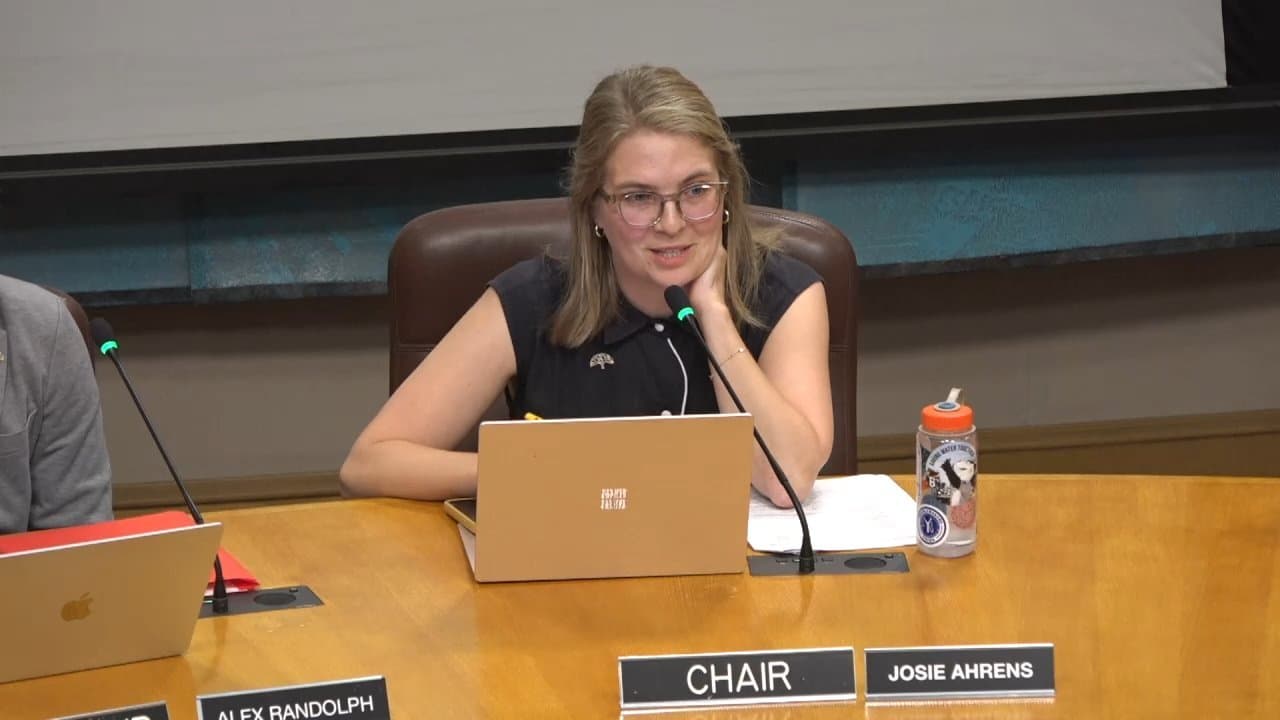
Chair Josie Ahrens expressed support for expanding beer sales hours and adding Friday security, noting that other Bay Area pool halls — including one on MacArthur and Telegraph that is BYOB and one in the Kono district that sells beer — offer alcohol as part of the customer experience. She also voiced disappointment that youth programming had been eliminated from the revised proposal.
Randolph also explored whether a two-year sunset clause could serve as a built-in check, but staff clarified that Oakland's planning code does not allow temporary permits. "We don't have temporary permits here in the City of Oakland under our planning code," staff said, though the applicant could return to revise conditions in the future.
Decisions: Randolph crafted the final motion, adding four conditions beyond staff's draft: (1) a licensed uniformed security guard on site from 8 p.m. to closing on Fridays and Saturdays; (2) a visible marking system — wristband, stamp, or equivalent at the operator's discretion — for patrons 21 and older; (3) alcohol sales restricted to on-site consumption only, closing a loophole in the Type 40 ABC license that otherwise permits off-premise sales; and (4) security camera recordings retained for at least 30 days for investigative purposes. Commissioner Li seconded. The vote was unanimous, 4-0 (For: Ahrens, Renk, Li, Randolph; Against: none; Absent: none). The decision is appealable to City Council within 17 days.
What's next: The Cervantes brothers must comply with all conditions before commencing beer sales. The annual compliance review built into the permit will serve as the ongoing enforcement mechanism in lieu of a sunset clause.
85-Foot Rockridge Tower Draws Fire as "Test Case" for Citywide Density
Three Rockridge residents used the open forum to mount an organized challenge to a proposed senior housing complex at 6230 Claremont Avenue — a project by the Ellis Company that they warned would set a precedent for how density bonus waivers are calculated across all of Oakland.
Why it matters: California's density bonus law allows developers to exceed local height and density limits in exchange for including affordable units. How staff interprets the mathematical formulas — and how aggressively developers seek waivers from development standards — has become a flashpoint in neighborhoods across the state. Residents are framing this project as a bellwether.
Where things stand: Leila Goff, speaking for Rockridge Neighbors for Sensible Housing, called the project "a critical test case" for density bonus application, arguing staff uses "overly liberal" calculations and urging commissioners to "scrutinize the rationale."
Victoria Griffith, a 25-year Florio Street resident, described how the proposed 85-foot structure would block sunlight, eliminate privacy, and obstruct airflow. She requested the developer step the building back on the residential side and shift height toward the Claremont commercial corridor.
Paul Laurie underscored the asymmetric stakes, arguing the building would leave a 100-year mark on the neighborhood while the corporate developer faces minimal business risk.
Staff confirmed the application is complete and under interdepartmental review, with the applicant planning a resubmittal. The project is not yet scheduled for a Commission hearing.
What's next: Watch for a formal hearing date. The organized opposition and explicit mention of litigation suggest this item will generate significant public turnout when it reaches the dais.
Minor Items
- Data center moratorium update: Staff confirmed a draft moratorium considered at the Life Enrichment Committee will go to City Council on Oct. 6, with potential implications for Oakland's planning code and data center development citywide.
- Red Fox Resources: Isaac Cosfried, a Parks and Recreation commissioner and District 2 resident, advocated during open forum for Red Fox Resources, a North Oakland green manufacturer he said a neighbor has "weaponized government" against. A tentative Oct. 21 hearing on the matter will need to be rescheduled.
- Oct. 21 meeting cancelled: Staff announced the meeting will not proceed because the Commission has only four seated members and one will be absent, eliminating quorum. Any scheduled items will be moved to a future date.
- Sept. 2 minutes approved unanimously, 4-0.
- Chair Ahrens requested that the Planning Director appear before the Commission before the end of the year for an update.