Oakland City Council - Jun 16, 2026 - Meeting

Oakland City Council - Jun 16, 2026 - Meeting

Oakland City CouncilOaklandJune 16, 2026

Sources:

Locunity is a independent informational service and is not an official government page for this commission.We use AI-assisted analysis and human editorial review to publish information.

Oakland Sends Strong-Mayor Charter Reform to November Ballot on Razor-Thin 5-4 Vote

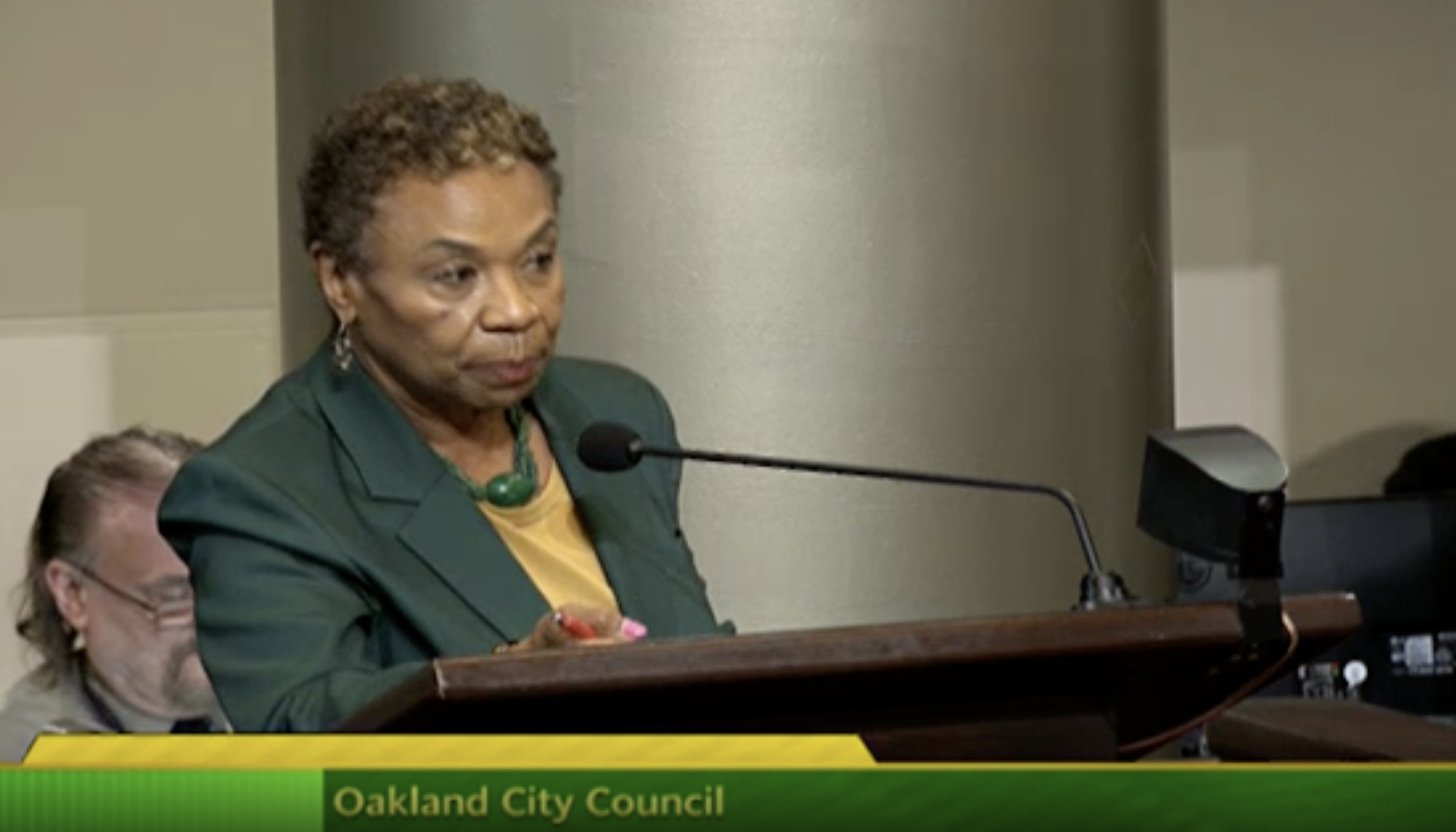
Oakland's City Council placed the most consequential governance question in a generation before voters on June 16, advancing a charter reform measure that would transform the mayor into the city's chief executive — but only after Mayor Barbara Lee broke a 4-4 deadlock to push it through. In a marathon session that also saw $38.1 million in violence prevention grants approved amid wrenching equity debates, the council showed just how deeply divided Oakland remains over who holds power and who gets funded.

  • Charter reform headed to November ballot after mayor breaks 4-4 tie, creating a strong-mayor system with executive veto, full-time council, and new oversight tools

  • $38.1M in Measure NN violence prevention grants awarded to 21 community organizations, but East Oakland groups say they were shut out of the process

  • East Oakland councilmember casts lone dissent on violence grants, demanding the city invest more in communities bearing the highest violence burden

  • Nine planning code amendments adopted unanimously to comply with state ADU law and modernize zoning standards

  • Parking division reorganized as employees protest that citations doubled while staffing hit historic lows

  • $26.5M MLK Jr. Way streetscape contract and Becker Boards advertising deal advance on consent, drawing objections from a competitor's attorney


Power Shift on the Ballot

Oakland voters will decide in November whether to scrap the hybrid governance model the city has operated under since 1998 and replace it with a strong-mayor system — but the council's own vote to put the question on the ballot was anything but a mandate.

The basics: The proposed charter amendment would make the mayor the city's chief executive officer, create a mayoral veto — including a line-item budget veto overridable by six council votes — require full-time council service, empower the Public Ethics Commission to set elected official salaries, and grant the council new oversight tools including subpoena power. The measure emerged from a working group process facilitated by the League of Women Voters and SPUR that drew more than 750 participants across 14 community sessions.

Why it matters: Oakland's current hybrid system has been blamed for years of blurred accountability, where residents struggle to know whether the mayor, city administrator, or council is responsible when things go wrong. If voters approve the measure in November, it would be the biggest governance change in decades, concentrating executive authority in the elected mayor while giving the council stronger checks through subpoena power and confirmation authority over key appointments.

Where things stand: Mayor Barbara Lee framed the proposal as a direct response to resident frustration.

"Oakland's current system too often makes it impossible for residents to know who is responsible when things go wrong," she said, citing the 750-participant engagement process as evidence of broad community support.

But the council split sharply. Councilmember Charlene Wang successfully amended the measure to add a council vetting process for department head appointments beyond those already subject to confirmation, arguing the provision was standard in strong-mayor cities.

"I think one danger of the strong mayor system is that a mayor could put in place an unqualified friend of theirs who has no business being the head of whatever department," Wang said.

Councilmember Ken Houston pushed further, proposing amendments that would have required council confirmation to remove or reprimand the city administrator and eliminated the veto entirely. City Attorney Ryan Richardson ruled both proposals out of scope of the noticed ballot measure title. Houston's third amendment — requiring the mayor to attend all discussions of items before vetoing them — was accepted.

The other side: Councilmember Zac Unger said he favored a council-manager system and had worked on an alternative measure, but ultimately concluded there wasn't enough support.

"I do favor a strong council manager system. I also don't believe that it's a good idea to have two competing ballot measures on the ballot at the same time," he said.

Councilmember Noel Gallo spoke in favor of a council-manager approach. Councilmember Janani Ramachandran opposed the Wang vetting amendment, warning it could enable discrimination.

Councilmember Carroll Fife voted yes but issued a pointed warning about the line-item budget veto's potential for abuse by future mayors beholden to wealthy interests.

"I had a tech billionaire who put a bunch of money against me in my race say I'm going to continue to do this in perpetuity because I believe I deserve to set the table, not to have a seat at the table, but to create it," she said.

Public comment was deeply divided. Keith Brown of the Alameda Labor Council, representing 45,000 union households, urged support for clear executive leadership. Gale Wallace of the League of Women Voters of Oakland compared the process to a relay race, asking the council to pass the baton to voters. Nicole Neditch of SPUR said the current hybrid system fails to secure the benefits of either governance model. Corey Cook of the Charter Reform Working Group asked members to consider whether the proposal was substantially better than the status quo — not whether it was perfect. On the other side, public commenter Ben Gould urged a no vote, arguing a strong-mayor system concentrates a dangerous level of power.

Decisions: The initial council vote was a 4-4 tie (For: Brown, Fife, Wang, and Jenkins; Against: Gallo, Houston, Ramachandran, Unger).

Lee broke the tie. "I'd like to break the tie on this," she said, casting the decisive fifth vote in favor.

What's next: The measure goes to Oakland voters at the November 2026 general election. Expect an intense campaign season as labor, good-government groups, and the mayor's allies square off against council-manager advocates and skeptics of concentrated executive power.


$38.1M in Violence Prevention Grants Approved, but East Oakland Says It Was Left Behind

The council approved Oakland's largest-ever community violence intervention investment — $38.1 million in Measure NN funds to 21 community organizations — but the 58-speaker public comment period exposed a raw divide over who benefits from the city's anti-violence spending.

The basics: Community violence intervention, or CVI, programs use credible messengers and community-based outreach workers to intervene with individuals at highest risk of gun violence. Measure NN, approved by Oakland voters, funds these efforts through the city's Department of Violence Prevention.

Why it matters: With federal CVI funding drying up, this award represents the backbone of Oakland's community-based violence prevention infrastructure. But organizations rooted in East Oakland — the neighborhoods bearing the city's highest violence burden — say they were shut out of the competitive process.

Where things stand: Dr. Holly Joshi, Chief of the Oakland Department of Violence Prevention (DVP), outlined a rigorous RFP process: the first round had a 34% technical failure rate, prompting DVP to cancel and reissue it. The second RFP saw a 9% failure rate with 40 responsive applications, each scored by three reviewers with conflict-of-interest attestations. DVP had originally recommended three-year grant terms for stability and evaluation, but the Public Safety Committee amended the term to two years and added a six-month report-back requirement.

Public commenter Daryle Allums, a founding member of Oakland's violence prevention movement, said no East Oakland CVI organizations had their contracts renewed. Organizations including the Mentoring Center and the Greater Community of East Africa African Resource Center — which requested $450,000 annually for African immigrant services — challenged the process as opaque and inequitable.

"If we can find money for everything else, why can't we find money for my people?" said Councilmember Ken Houston, who cast the lone dissent.

The other side: Joshi defended the results.

"43% of the agencies that we are recommending to this council to be funded are Black run. 19% are Latino run," she said,

She framed the awards as reflective of the communities most affected. Organizations that received awards — including Safe Passages, Youth Alive, Missy, and Dream Youth Clinic — spoke in support.

Mentoring Center Executive Director Celsa Sneed challenged the RFP process as inconsistent and asked the council to find additional funding rather than adopt the recommendations as presented.

Decisions: The measure passed 7-1 (For: Brown, Fife, Wang, Jenkins, Gallo, Ramachandran, Unger; Against: Houston; Absent: 0).

What's next: DVP will report back to the council in six months on grant impacts. The debate over whether East Oakland organizations can access additional CVI funding is likely to carry into upcoming budget negotiations. Councilmember Rowena Brown requested a six-month DVP report back on impacts.


Parking Reorganization Receives Staff Pushback

Employees in Oakland's parking division used public comment to push back on a reorganization that they say addresses a management problem that doesn't exist — while ignoring the staffing crisis that does.

Why it matters: Under the plan approved in the recently adopted budget, the Finance Department takes over back-office parking functions — the Parking Mobility Assistance center, citation processing, meter coin collection, residential permits, garage management, and technology operations — while the Department of Transportation retains enforcement, on-street infrastructure, traffic policy, and abandoned autos.

Where things stand: Finance Director Brad Johnson presented the informational report. But the most memorable testimony came from public commenter Michael Ford, a city employee and Local 21 member who had been removed from managing the division.

"The real problem is that citation issuance has doubled over the last three years while our customer service staffing levels are at historic lows. That's a math problem, not a management problem," he said.

Ford added that the city spent $1.2 million on new middle management positions rather than frontline capacity.

Decisions: The report was received and filed 7-0 (For: Brown, Fife, Wang, Jenkins, Gallo, Ramachandran, Unger; Against: none; Absent: Houston). The structural changes have already been implemented through the budget.


Planning Code Cleanup Sails Through

The council unanimously adopted nine amendments to Oakland's planning code (Title 17), including three changes to accessory dwelling unit regulations required to comply with state law.

Why it matters: State housing law requires cities to use only objective design standards for ADUs. Oakland's existing code contained subjective terms — "visible," "predominant," "visually similar" — that the California Department of Housing and Community Development flagged. Failure to comply could expose the city to enforcement actions and jeopardize housing production goals.

Additional amendments addressed nonconforming activity discontinuance standards, scenic route combining zones, Wood Street recreational assembly provisions, D-CO-2 zone front setbacks, development agreement timelines, and utility screening standards.

Two public commenters raised concerns: a Wood Street resident flagged displacement of unhoused residents, and another questioned bus route information related to fire safety evacuations.

Decisions: Adopted unanimously 8-0 (For: Brown, Fife, Wang, Jenkins, Gallo, Ramachandran, Ungerm, Houston; Against: none; Absent: none).


Billboard Revenue Deal Draws Fire on Consent Calendar

The 23-item consent calendar passed 7-0 with Councilmember Carroll Fife excused, but not before the Becker Boards advertising agreement (Item 6.10) drew pointed opposition.

Why it matters: The deal restructures the city's agreement with Becker Boards from a fixed annual payment to a 20% revenue-sharing model with a $250,000 city minimum. Supporters say the program has delivered nearly $3 million in free advertising through 582 ads to over 100 local organizations, including small businesses affiliated with the Oakland African American Chamber and the Chinatown Chamber.

Public commenter Chris Powell, an attorney with Hanson Bridget representing competitor Out Front Foster Interstate, urged the council to pull the item, arguing it slashes the city's guaranteed payment from $750,000 to $250,000 and contradicts the general plan's billboard reduction policy. Becker Boards community engagement director Eric Oliver countered that the program's community advertising value far exceeds the revenue difference.

Fife, Councilmember Zac Unger, and Council President Kevin Jenkins registered no votes on Item 6.10. Councilmember Charlene Wang and Councilmember Ken Houston registered no votes on Item S6.25, the Lyft bike share franchise extension, citing concerns about inequitable station distribution in East Oakland.


Minor Items

  • GHAD budget items (6.1 and 6.2) continued to the July 7 meeting by an 8-0 vote.

  • $26.5M MLK Jr. Way streetscape contract approved on consent.

  • Oakland Ice Center lease approved with Sharks Ice, backed by up to $10M in Measure U bond funds.

  • OaklandConnect fiber network partnerships with Sonic.Net and Monkeybrains approved on consent.

  • FY 2026-27 Master Fee Schedule amendments and property tax levies approved on consent.

  • Multiple emergency declarations, settlements, and ceremonial resolutions approved as part of the consent calendar.

Oakland Sends Strong-Mayor Charter Reform to November Ballot on Razor-Thin 5-4 Vote | Oakland City Council | Locunity