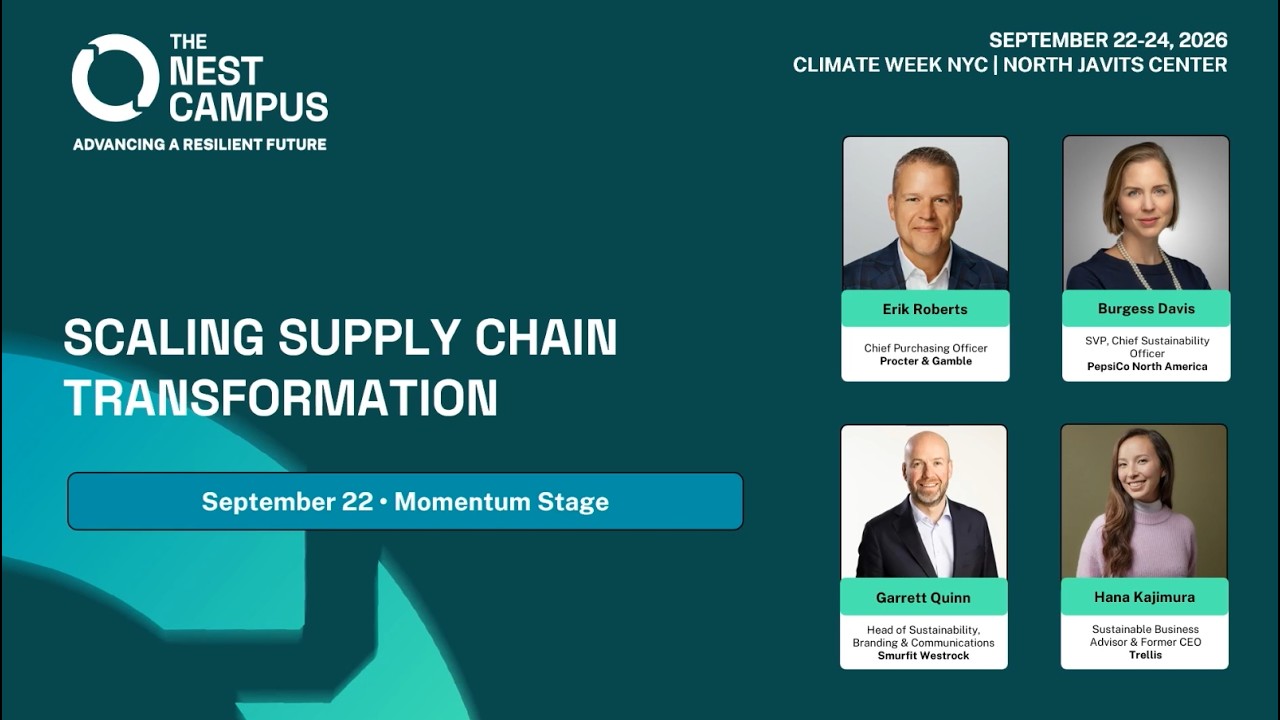
P&G, PepsiCo and Smurfit Executives Map the Path to Scaling Supply Chain Decarbonization
Nest Campus • United NationsSeptember 24, 2026
Locunity is an independent informational service and is not an official government page for this commission. All information is sourced from public footage and an analysis of official agendas with the aid of responsible, fact-checked AI. to report an error or omission.
At a United Nations Nest Campus panel, top procurement and sustainability leaders from three global companies laid out concrete examples of how brands and suppliers are collaborating to cut Scope 3 emissions — and named the systemic barriers still standing in the way.
- P&G's Tide Evo, a decade in the making, shows sustainable products can match conventional performance without a green premium — using fully recyclable, FSC-certified packaging and cold-water chemistry
- Carbon is now measured alongside cost in P&G's supplier evaluations, with 90% of the company's emissions sitting in Scope 3
- PepsiCo reaches 4.7 million acres of regenerative agriculture engaging over 20,000 farmers, with a 2-million-acre Walmart partnership targeting 2030
- Panelists call for carbon accounting reform, arguing current Greenhouse Gas Protocol and SBTI rules block the scale of investment needed in hydrogen, bio-based materials, and carbon capture
- Smurfit and PepsiCo co-develop a virtual power purchase agreement aggregating renewable electricity demand across the supply chain
Why it matters: The consumer goods industry has struggled for years with a core tension — sustainable products that underperform lose customers, while green premiums make them commercially unviable. Tide Evo is designed to prove that tension is solvable.
Get reports in your inbox
Follow this commission for free and get the next report delivered by email. You'll be able to access the full archive, get real-time updates, and track the topics or keywords you care about most.