
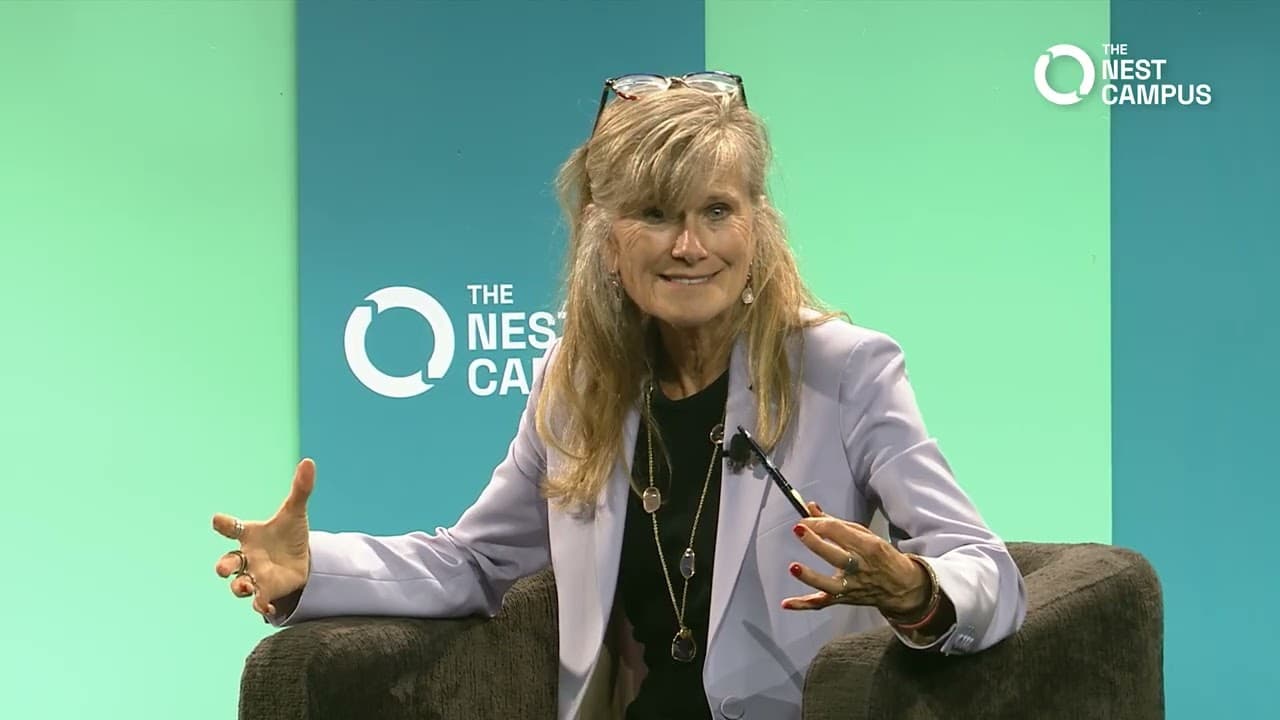
Climate Week Panel Pitches Global South Clean Energy as Smart Money
Nest Campus • United NationsSeptember 24, 2026
Locunity is an independent informational service and is not an official government page for this commission. All information is sourced from public footage and an analysis of official agendas with the aid of responsible, fact-checked AI. to report an error or omission.
Liberia's top diplomat, former Irish President Mary Robinson and Acumen's Jacqueline Novogratz told investors on Sept. 24, 2026, that climate capital does more good, and can earn more, in the Global South than at home. No votes were taken at the Climate Week panel at Nest Campus during the UN General Assembly week. Still, Liberia used the stage to preview a UN Security Council agenda that ties mining, conflict and climate together.
- Same dollar, bigger cut: Panelists said clean energy in countries like Liberia reduces more pollution than in Europe
- Liberia wants polluters to pay proportionately for the just transition, not offer "charity"
- AI's energy appetite is fueling fossil plants while 800 million people lack electricity
- Less than 1% of official climate funding reaches women working on the ground
- Liberia names the climate-conflict-resources nexus a 2026-2027 Security Council priority
1 Big Thing: The Investment Pitch for the Global South
The moderator opened with the panel's central question: "Why should Wall Street investors here in New York and Main Street investors all over the world allocate capital for climate action in the Global South specifically?"
Why it matters: The panel reframed climate finance from aid to strategy. The pitch targeted both institutional and retail capital, arguing that emissions impact, security and returns all point in the same direction.
Where things stand: Mary Robinson, former President of Ireland and founding member of The Elders, cited climate scientist Johan Rockström to make the efficiency case. "It reduces pollution to invest clean energy in countries like Liberia far more than to do it in my country, Ireland, or France, or Germany," said Robinson.
Robinson said she came to climate through human rights after seeing floods in Liberia between 2003 and 2008. She recalled the fear and confusion she heard there. "Women were saying to me, is God punishing us? What is happening?" said Robinson. Impact funds alone won't close the gap, she added: "We need really heavy investment."
Security, not sympathy: The Minister of Foreign Affairs of Liberia framed climate spending as an investment in food, human, national and international security. The minister warned wealthy-country investors that the risk runs both ways. "Lack of investments in this area point to insecurities in your own country," said the Minister.
The minister also made the profit case directly. "It's profitable to invest in climate action. It's profitable for investors," the Minister said. The minister pointed to Liberia's natural assets as proof: "Liberia has over 40% of the Upper Guinea rainforest, over 40% of the rainforest in West Africa. Huge carbon sink."
The minister rejected a pity-driven framing and called for partnership. "It's about coming to the table as equals and looking at mutually beneficial investments," said the Minister.
Leapfrog logic: Jacqueline Novogratz, founder and CEO of Acumen, argued Africa can skip legacy energy systems. She pointed to "off-grid solar electrification, which is the fastest, the most resilient way to build electricity on a continent that still has almost 700 million people without electricity."
She also pointed to demographics. By 2050, one in four people on Earth will be African, and the continent's median age is 19.7. Novogratz said countries that contributed least to climate change should not just join the just transition but help lead it.
Decisions and stakeholder impacts: No action was taken. The argument is aimed at asset managers, retail savers and development funders. It gives Liberia and similar nations a negotiating frame that trades on carbon sinks and returns rather than aid appeals.
Liberia: Just Transition Starts With Admitting Injustice
Asked what a "just transition" means for Liberia and the African Union, the minister started with history. A just transition means moving economies off fossil fuels without leaving workers and communities behind.
Why it matters: The position anchors demands for responsibility-based, grant-heavy climate finance. It also signals how African negotiators may press wealthy emitters.
Where things stand: "A just transition starts with recognition of the fact that there's been injustice," said the Minister. Support from wealthy countries, the minister added, "shouldn't be seen as a token or charity. It should be seen as taking responsibility for the damage that's been done."
The minister's remedy is cost-sharing. That means "looking at the cost, the cost for just transition and apportioning those costs to those who should have it proportionately." The goal is to keep African countries that never industrialized from bearing a disproportionate burden.
The AI squeeze: Novogratz flagged a new pressure on the global energy system. She warned of "artificial intelligence, which is going to require at least a 12x increase in the amount of energy we consume." Data centers are turning to gas, oil and coal, she said.
Meanwhile, 800 million people lack electricity. Of those, 700 million are in Africa, and 85% are concentrated in 22 African nations, including Liberia. "You cannot develop a country if your people don't have something as basic as electricity," said Novogratz. She called energy access both a moral and an economic imperative. Once people are "in the game," she said, "they can solve their own problems."
The other side of the ledger: Robinson offered Ireland's own transition away from peat as a contrast. "And we discovered bogs are worse than coal, less heat and more emissions," said Robinson. Ireland directed grant money to the Midlands for about 400 affected workers.
Developing countries rarely get the same deal. "What we do with developing countries too often is not grants, it's loans, it's further into debt," said Robinson.
Decisions and stakeholder impacts: No action was taken. Debt-burdened governments, off-grid energy firms and multilateral lenders are the parties most exposed to a shift from loans to grants.
Investing in Women Framed as a Shortcut to Resilience
Robinson said women leaders must be central to a just transition. She noted this is the UN Year of the Smallholder Farmer.
Why it matters: Citing Food and Agriculture Organization figures, Robinson said women smallholder farmers "could contribute $1 trillion to GDP if they were properly resourced." Yet funding rarely reaches them.
Where things stand: In an unplanned follow-up, the moderator asked how to integrate a gender lens into investing. The minister called women key to development and peace in Liberia. "Women are the ones that can take responsibility for having community-led initiatives around that transition to solar," said the Minister. The minister also pointed to household solar as a source of income for women.
Novogratz offered a case study. "We invested in a woman, Maya Douglas, in Malawi who was doing off-grid solar. Now, Malawi had a 19% electrification rate," said Novogratz. In that market, a gallon of gas cost $13 and average income was $2 a day.
Acumen's portfolio companies increasingly hire women, Novogratz said, "because they don't cut corners." She closed the point with the story of a 17-year-old girl who wants to become a nurse.
Decisions and stakeholder impacts: Women-led solar ventures and cooperatives are the direct beneficiaries of the gender-lens pitch. Funders were urged to build women's capacity into their investments.
Liberia Takes Mining and Climate to the Security Council
In the closing round, the minister made the panel's most concrete announcement.
Why it matters: Liberia plans to use its Security Council seat to treat extraction damage as a climate-security issue. That is relevant to mining companies and to communities in resource-rich regions.
Where things stand: The minister described Grand Cape Mount County, a gold-rich area where mining has left waters without fish. "One of our 5 priorities at the UN Security Council for our term 2026-2027 is the nexus between climate, conflict, and natural resources," said the Minister. The minister called for extraction "where communities are not made more vulnerable and exposed more to climate shocks."
What's next: The minister said the priority will be a highlight of Liberia's December presidency of the Security Council.
Everyone Gets an Assignment
The moderator asked each panelist for one action any audience member could take to support climate resilience in low- and middle-income countries.
Where things stand: Novogratz urged people to learn about the Global South and look outward as nationalism rises. She also encouraged them to use their consumer and crowdfunding choices. To discouraged young people, she said "if you just start, no matter how small, and let the work teach you, and if every single person did it, we'd be on our way."
Robinson aimed at the funding pipeline. "Less than 1% of official climate funding goes to women working on the ground in the way we've all been describing," said Robinson. "So it would help greatly if philanthropy would take some risks, which philanthropy is flexible enough to do."
She also urged private investors to claim emissions-reduction credit in developing countries. Recalling her role as the UN Secretary-General's special envoy around the Paris Agreement, she was blunt about the stakes. "Now we're tipping over the 1.5 because we didn't do any of the things that we should have done," said Robinson.
What's next: The moderator pointed U.S. retail investors to ClimateSolutionsStock.com and Energia, and Europeans to Energize Africa and Lend a Hand. These are "platforms where each of us as retail investors, as savers for retirement, can actually participate directly in financing this clean energy just transition," the moderator said.
Minor Items
- The moderator opened by citing recent climate disasters in Jamaica, Nepal, France and the U.S.
- The panel was informational only; no motions or votes occurred.
Looking ahead: Watch Liberia's December Security Council presidency. It is the first test of whether the climate-conflict-resources agenda moves from panel talk to Council action.