Data Center Boom Strains Grids but May Force Clean Energy Breakthrough
Nest Campus • United NationsSeptember 24, 2026
Locunity is an independent informational service and is not an official government page for this commission. All information is sourced from public footage and an analysis of official agendas with the aid of responsible, fact-checked AI. to report an error or omission.
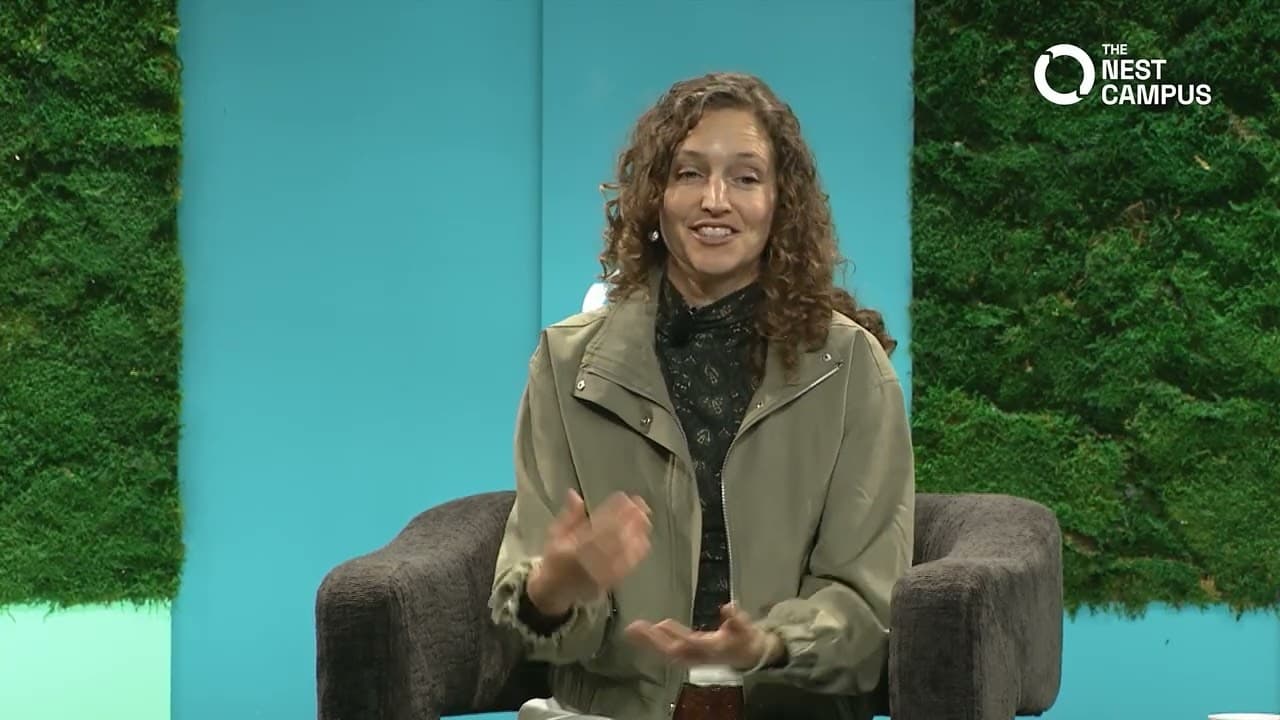
A Climate Week NYC panel convened by S&P Global wrestled with one of the defining tensions of the energy transition: whether the explosive growth of AI-driven data centers will lock in decades of fossil fuel emissions or become the market force that finally funds breakthrough clean energy at scale. Three startup CEOs — from geothermal discovery, energy regulatory intelligence, and photonic chip design — converged on a surprising answer: the decisive variable isn't technology. It's community power.
- Data center electricity demand is outpacing clean energy supply, forcing fossil fuel buildout even as gas turbines are backordered
- AI-powered geothermal discovery could offer carbon-free baseload power uniquely suited to data center co-location, Zanscar CEO says
- Solar and battery alone can't power large data centers at acceptable cost, creating the first buyer willing to pay "almost anything" for new nuclear, geothermal, and long-duration storage
- Social license — not technology — is the No. 1 risk for data center development, all three panelists agreed
- $45 trillion in U.S. retirement savings gives ordinary investors more collective power than endowments to hold companies accountable for pollution
- Communities passing 100% renewable requirements for data centers are emerging as the most effective policy lever
The Bear Case and the Bull Case
Why it matters: The scale of AI-driven electricity demand is the single largest new variable in global emissions forecasts. How that demand is met — with gas or with clean energy — will shape climate progress for decades.
Where things stand: Lindsey Hall, Global Head of Sustainability Thought Leadership at S&P Global, opened the panel with a stark framing: S&P Global's research found that more AI means more data centers, which means more electricity, which is driving up emissions and making corporate climate goals harder to meet. An audience poll showed more attendees skeptical about AI's net impact on the energy transition than optimistic.
Bruce, Co-founder and CEO of Halcyon, captured the tension as an unstoppable force meeting an immovable object — hyperscaler capital pushing against constrained grids, community opposition, and lengthy infrastructure timelines.
"There's a bear case way to look at that, which is lots of fossil fuels are being deployed. That's bad for the transition. But there's also a bull case. It forces the development of new technologies because we've run out of gas turbines," said Bruce, CEO of Halcyon.
Alex, Founding CEO of IR Labs and Founder of Sphere, added historical context, comparing the current buildout frenzy to the 2001 internet bubble and warning that the supply chain is out of balance. His company, spun out of MIT, developed the first processor chip to communicate using light — technology he said is working to cut the energy use of AI in half.
What's next: The panelists agreed the window for shaping outcomes is narrow. The technologies exist or are emerging, but the policy and community frameworks to steer investment toward clean options are still catching up.
Geothermal's Moment: AI Discovers What Humans Missed
The basics: Geothermal energy — heat drawn from the Earth — has produced electricity for over a century but was long considered tapped out at its best sites. New AI-driven analysis of geological data is changing that calculus.
Why it matters: Data centers need round-the-clock power. Solar and batteries can't cost-effectively deliver that at the scale hyperscalers require, which is why natural gas has become the default. Geothermal offers a carbon-free baseload alternative that could break the fossil fuel lock-in.
Carl, Co-founder and CEO of Zanscar, argued the economics are unambiguous:
"You actually can't build a data center of that size without a carbon-free baseload source. With solar and battery, the costs become enormous, like just unacceptable. So of course they're going to do natural gas," he said.
But Carl reframed natural gas deployment as evidence of opportunity rather than defeat. AI has revealed far more undiscovered geothermal energy than the industry believed existed, he said, by parsing unstructured, sparse geological data that human analysts couldn't efficiently process.
"You now, for the first time ever, have a buyer that's willing to pay almost anything to prove out new technologies. New nuclear, new geothermal, new long-duration energy storage — these technologies that have been missing and underfunded for decades and that are the last mile of full decarbonization," Carl said.
Geothermal's key advantage for the data center moment: it can produce power nearly time-matched to data center load, maximizing existing transmission capacity. Solar, by contrast, uses only 20% to 30% of grid capacity. Carl said data centers could co-locate in areas with known geothermal favorability, serving load without increasing emissions and providing spinning reserves that could reduce power costs for surrounding communities.
What's next: Carl noted that AI-driven scientific models are accelerating Zanscar's discovery timelines by years beyond original projections.
AI as Equalizer — or Accelerant of Inequality?
Why it matters: If AI's benefits accrue mostly to large corporations, the enormous energy cost is harder to justify. Evidence that it equalizes opportunity strengthens the case for net-positive impact.
Alex, who also serves as a Board Member of the Digital Citizens Fund, made perhaps the panel's most striking argument: energy use itself isn't bad — pollution is.
"Think about the invention of the washing machine. It uses energy, but it freed up half of humanity to be able to join the workforce and not be at home handwashing clothes all day, every day," he said.
He pointed to the Digital Citizens Fund's work in Afghanistan, where girls are legally barred from receiving a high school education. "AI has empowered our ability to educate those girls and educate so many more girls. It's so much easier to deliver that education," Alex said, noting that one student has since enrolled at MIT.
At his company Sphere, which offers climate-friendly 401(k) options, Alex argued that ordinary investors hold far more leverage than they realize: "Retirement savings in this country hold $45 trillion. We have more power than any of those large institutions when we pool our voices together and when we vote our shares to hold these companies accountable to the pollution they are creating."
Bruce echoed the productivity theme, saying AI has unleashed a "big creativity boom" at Halcyon, where employees can now build prototypes without waiting for engineering resources. But he drew a firm line: "I really hate the slop that gets produced by AI, and that is when somebody uses the tool to just produce output without putting any thought into it. We've actually banned that at my company. You're allowed to use AI to assist your work, but not to do your work for you."
Social License Emerges as the Decisive Variable
Why it matters: Local laws requiring 100% renewable-powered data centers are emerging as the most effective lever for forcing clean energy commitments from hyperscalers. Community opposition is reshaping corporate strategy in real time.
In a lightning round that was supposed to surface technology priorities, all three panelists pivoted to governance and social themes — a turn that surprised even the moderator.
Carl was blunt: "Every meeting I've been in with developers and investors in the space is focused on social license. This is now the number one risk for building a project."
Alex praised communities already passing laws requiring 100% renewable power for data centers, noting that renewably powered data centers "was the default a few years ago" before the urgency of the AI buildout changed corporate behavior. He also advocated for on-device AI as both an energy efficiency and privacy solution: "The models are getting so good that even slightly less good versions can be downloaded to your phone. You can use AI without having to share your personal data with large companies. And using it on your phone uses way less power."
Bruce called for constructive public debate about AI safety regulation: "There's a lot of shouting on both sides and there's not a lot of public debate. There's a lot of, you're a doomer if you think that, or you're a decel if you think this. And I think that's not constructive."
Lindsey Hall closed by observing what the audience had just witnessed: "It's so interesting to me that this is a panel about technology and its role in the energy transition, but all of your key takeaways in one way or another relate to social topics — social license to operate, data sovereignty, data privacy, governance."
She added that the pattern holds beyond the stage: "In a lot of the rooms that I'm in, including a lunch I just came from with large energy companies and hyperscalers, almost all of the discussion was about community pushback. They are hearing it. They are taking it seriously."
- Halcyon's regulatory platform aggregates data from 50 state Public Utility Commission websites into a single searchable tool, aiming to reduce friction for lawyers, developers, communities, and utilities navigating interconnection queues and regulatory proceedings. The company also operates an alerting service called "Be Advised" for data center-related developments.