
Municipal Transportation Agency Board of Directors - Jun 02, 2026 - Meeting
Municipal Transportation Agency Board of Directors • San FranciscoJune 2, 2026
Locunity is a independent informational service and is not an official government page for this commission.We use AI-assisted analysis and human editorial review to publish information.
Hayes Valley Gets Metered Parking Overhaul as State Funding Cuts Loom Over Muni
The SFMTA Board of Directors unanimously approved a sweeping expansion of pay-or-permit parking across 68 Hayes Valley blocks, piloting first-of-their-kind discount programs for residents' guests and small business employees that could reshape how San Francisco manages residential parking citywide. But the board's June 2 meeting was shadowed by a far larger fiscal threat: a California Air Resources Board vote that could slash hundreds of millions in transit funding the agency depends on.
Hayes Valley parking overhaul approved 7-0, converting 68 residential blocks from two-hour time limits to metered pay-or-permit parking with new discount programs for guests and employees
CARB vote threatens $600M+ in SFMTA transit funding by halving cap-and-invest revenue, putting train control upgrades, free fare programs, and affordable housing at risk
$200 million MTC loan authorized under AB 117 to shore up Muni transit operations amid ongoing budget pressures
Mayor Lurie signs event permit reform, eliminating hearings for 80–90% of street event applicants starting June 19
Late-night Muni shuttle planned for FIFA World Cup matches in Santa Clara, paired with a citywide business crawl promotion
Metered Parking Comes to Hayes Valley — With a Twist
The board's marquee action was a unanimous vote to expand pay-or-permit parking throughout the Hayes Valley residential parking permit (HV RPP) area, replacing traditional two-hour time limits on 68 block faces with hourly metered rates of $1.25 to $2.50. Permit holders will still park free.
Why it matters: The expansion introduces two pilot discount programs that staff and board members described as potential models for the rest of the city — a significant step in modernizing San Francisco's 40-year-old residential parking permit system.
Where things stand: Streets Director Victoria Wise framed the expansion around three pillars. "This is precisely the kind of innovative parking management that we need to be doing because of three things: number one, it is customer service forward," she said, citing operational efficiency and responsiveness to community feedback as the other two.
Project Manager Brian Manford presented data from the existing pilot showing measurable results. "Parking availability increased about 5%, or one extra space per block. This is because people without permits who would leave their car in an RPP area all day have decreased," he said, adding that twice as many visitors stayed two to four hours under the new system.
Two innovative discount programs drew the most board interest. Residents will receive 24 codes per year, each good for two hours of free guest parking, usable at pay stations. A separate small business discount will reduce employee parking from roughly $2 to roughly $1 per hour through corporate accounts on ParkMobile and PayByPhone. Both will be piloted for one year, funded by a $1.5 million MTC grant covering capital costs.
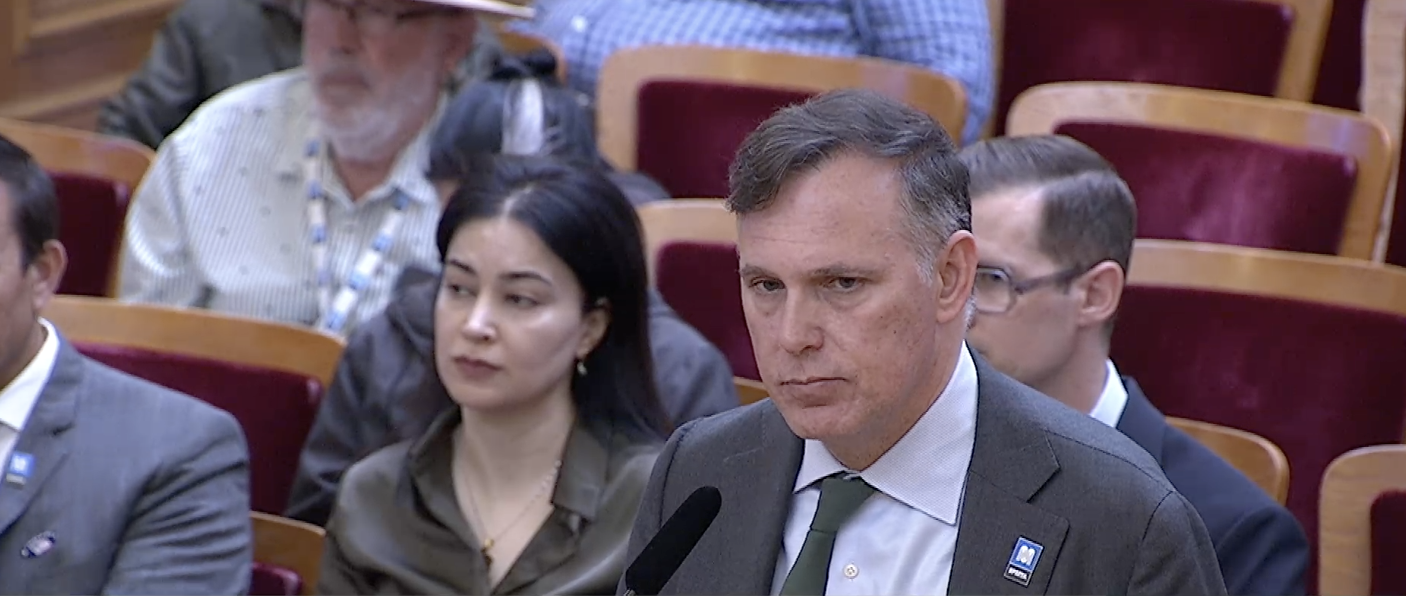
The other side: Public comment was sharply divided. Lloyd Silverstein, founder and past president of the Hayes Valley Merchants Council, backed the expansion. "The POSE Small Business Discount program is a smart and pragmatic refinement. It recognizes the important role small businesses play in the neighborhood vitality and provides a reasonable way to help employers and employees manage the cost of parking," he said.
Autumn Adam, current Hayes Valley Merchants Council president and owner of Dark Garden, echoed that support, emphasizing that employees currently must work two full hours at minimum wage just to cover metered parking costs. Andrew Signer of the Hayes Valley Neighborhood Association argued that free residential parking was an outlier in a neighborhood served by Bay Wheels, Muni, and BART.
But Michael Williamson, a 53-year Lily Street property owner, opposed the expansion, calling the existing meter system "not user friendly," especially for older residents. Richard of HV Safe argued Hayes Valley was being used as a "guinea pig" while other neighborhoods like the Marina, Cow Hollow, and Lower Haight were dropped after pushback. He noted projected net revenue of only about $250,000. Griffin Lee of Connected SF cautioned that residential streets should not become "a piggy bank" for the agency, warning that even small fees could deter visitors.
Decisions: The board approved the expansion 7-0 (For: 7, Against: 0, Absent: 0). Director Alfonso Felder praised the visitor permit innovation as a model for other neighborhoods. "My hope is actually that this gives an example of how we can easily accommodate in other neighborhoods that just have an RPP program — the ability for visitors, whether it's grandparents or parents or others, to easily access permits on demand," he said. Vice Chair Stephanie Cajina requested a one-year follow-up briefing. Chair Janet Tarlov expressed interest in exploring the Performing Arts Garage as an employee parking option to keep customer spaces free on commercial corridors.
What's next: Installation begins winter 2026–27 with operations starting early 2027. Staff will return for a one-year evaluation after launch.
CARB Cuts Could Gut Muni's Funding Pipeline
A $600 Million Question Mark
Director of Transportation Julie Kirschbaum delivered the meeting's most consequential warning: on May 29, the California Air Resources Board voted 10-3 to adopt regulations that would halve revenue to the state's Greenhouse Gas Reduction Fund, from approximately $4 billion to $2 billion annually.
The basics: California's cap-and-invest program generates revenue through carbon emission auctions. That money flows into tiers of state programs. SFMTA-dependent programs are in Tier 3 — the first to lose funding if revenue falls.
Why it matters: SFMTA has received more than $600 million in cap-and-invest funds over the past decade. "These amendments are estimated to reduce revenue to California's Greenhouse Gas Reduction Fund by half, from approximately $4 billion to just $2 billion annually," Kirschbaum told the board. At-risk programs include $130 million for the train control upgrade project (TCUP), $55 million for reliability improvements on the N-Judah and K-Ingleside lines, and roughly $17 million per year supporting free and reduced fare programs for seniors, youth, and riders with disabilities.
Director Steve Heminger did not mince words. "Julie, I wanted to talk a minute about this action by the California Air Resources Board, which is really a body blow. These are not small sums of money that we're talking about, and in some cases they were continuously appropriated, meaning we didn't think we had to worry about them," he said, urging that CARB become a prominent part of SFMTA's legislative agenda.
Chief of Staff and Director of External Affairs Judson True detailed the Sacramento response. "The vote at the California Air Resources Board on Friday was 10 to 3. There was also some very robust dialogue from some of the members who voted in favor of it, gesturing at the concerns over funding for transit and housing in particular," he said. Senators Wiener and Eggman have advanced a sign-on letter pushing for transit funding in the upcoming state budget. "The regulations that were approved take effect in September and the first auction would be in October. So that's where we might first see the revenue impacts," True added, noting the state must pass a budget by June 15.
What's next: Multi-year capital awards like the $130 million TCUP funding remain at risk — the money has been awarded but not yet fully dispersed. Board members and staff signaled this will be a top priority in the agency's legislative program heading into summer and fall.
Street Events Get Easier, World Cup Gets a Shuttle
Director Kirschbaum reported that Mayor Lurie signed legislation on May 20 making it easier to hold events on San Francisco streets. Effective June 19, applicants for low-impact events — those not closing more than three blocks, not affecting intersections or Muni routes — will no longer need to attend an ISCOTT hearing. An estimated 80–90% of event applicants will benefit, with permits handled through administrative review by SFMTA, the Entertainment Commission, and fire and police staff.
Separately, SFMTA is gearing up for a busy summer anchored by the FIFA Men's World Cup. Six matches will be played in Santa Clara in June and July, four ending after regular transit service hours. Muni will operate a late-night downtown shuttle connecting Caltrain and BART transfers to downtown, SoMa, and Union Square. The agency is also sponsoring the "Muni Goal Rush," a citywide World Cup business crawl in partnership with the San Francisco Chamber of Commerce and more than 100 participating businesses. The summer events calendar also includes the Juneteenth Parade, Fourth of July, SF Pride Parade, and Fillmore Jazz Festival.
Minor Items
$200 million MTC loan authorized under AB 117 for Muni transit operations, approved unanimously on the consent calendar.
2026 Public Transportation Agency Safety Plan approved on consent. Public commenter Joel Chemiser raised earthquake preparedness concerns, noting a major quake could disable communications systems needed to contact essential workers.
Routine parking and traffic modifications approved on consent, including a speed limit reduction on Taraval Street between Great Highway and 26th Avenue from 25 to 20 mph. Griffin Lee of Connected SF questioned the cost-effectiveness, citing SFCTA data showing average speeds already at roughly 15 mph.
19th Avenue repaving completed in 10 days instead of the planned 40, thanks to collaboration with Caltrans.
May 19 meeting minutes approved 7-0.
Closed session held with legal counsel; the board voted 7-0 not to disclose the discussions.
During general public comment, Richard of HV Safe reported 77 consecutive weeks of documenting non-compliance with the Hay Street shared spaces permit, accusing SFMTA of failing to enforce its own conditions. Barry Toronto praised SFMTA planner Maddie Rubelo for taxi outreach efforts and advocated for a minimum taxi fare from the airport. Andrew Signer of HVNA announced the launch of the first-ever Hayes Valley Farmers Market and reported 39 musical performances in the shared space. Herbert Weiner raised concerns about Muni route changes effective June 6 and parklet safety following a recent car crash.