Governing Board - Jan 21, 2026 - Meeting

Governing Board - Jan 21, 2026 - Meeting

Governing BoardMt. Diablo Unified School DistrictJanuary 21, 2026

Sources:

Locunity is a independent informational service and is not an official government page for this commission.We use AI-assisted analysis and human editorial review to publish information.

Adult Ed Programs Dominate MDUSD Agenda as Students, Staff Plead for Better Pay

The MDUSD's Governing Board ran through a packed agenda of recognitions and policy updates, but the meeting's emotional center came during public comment: a line of Adult Education students and instructors who credited the district's EMT and dental assistant programs with transforming their lives—then urged trustees to address the chronic underpayment driving talented teachers away.

  • Adult Education instructors say they rank "dead last in pay" and often work second jobs, threatening retention in high-demand programs.

  • Board unanimously adopts resolutions recognizing February as Career and Technical Education Month and Black and African American History Month.

  • Chief Business Officer contract extended through June 2027; General Counsel through February 2028.

  • Budget update signals reduced COLA projections for 2026–27, offset by one-time state grants.

  • Student Advisory Committee reports highlight facility problems—orange water, rats, restrictive bathroom policies—alongside calls for more school spirit.


Adult Education's Success Story Meets a Pay Crisis

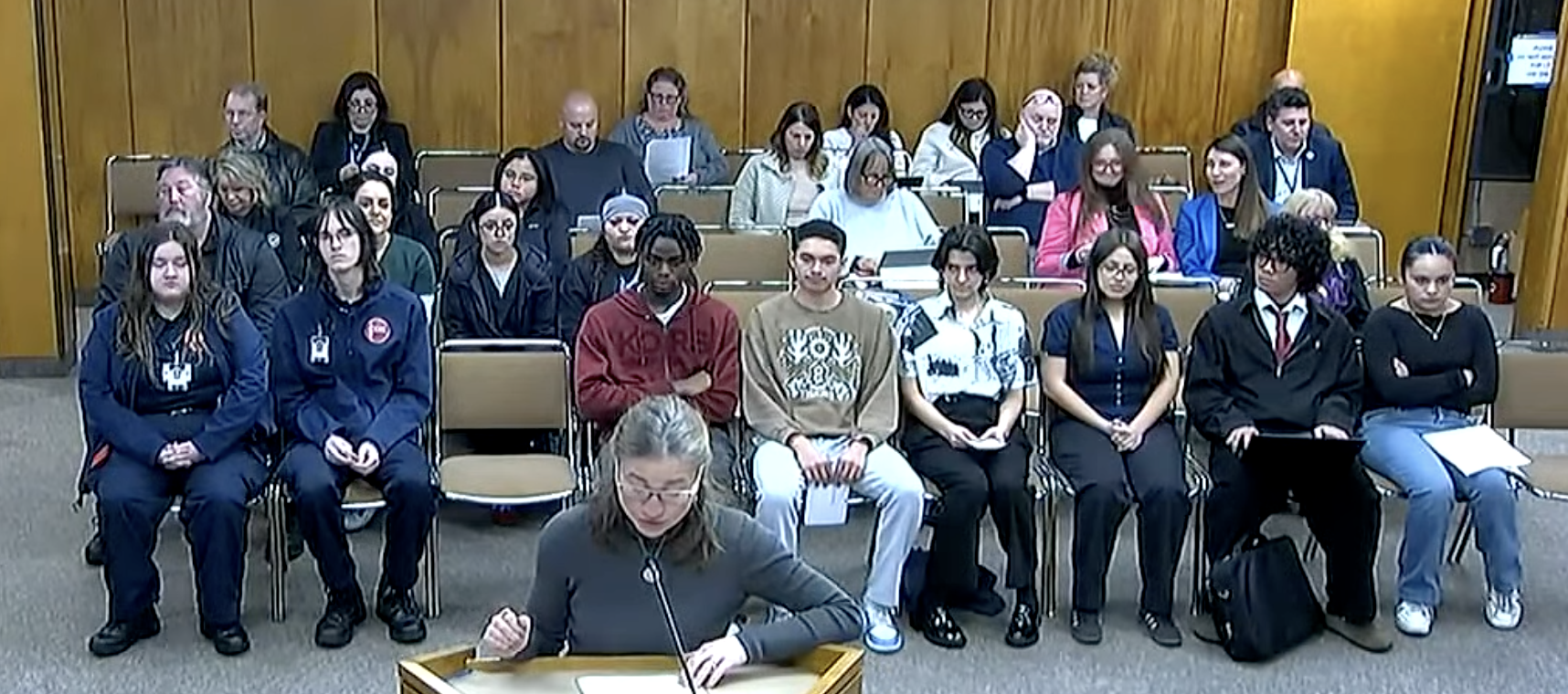
More than a dozen speakers—students, graduates, and instructors from Loma Vista Adult Center and the district's EMT and dental assistant programs—delivered a unified message: these programs work, but they're at risk.

Why it matters: Adult Education serves immigrant families, career changers, and young people seeking pathways into healthcare. Speakers described the programs as life-altering, but the district's instructor pay lags so far behind that veteran teachers are leaving or holding multiple jobs.

State of play: Troy Hess, an EMT program instructor, told the board his students regularly report saving lives in the field. But he didn't mince words about compensation:

"We are dead last in pay," Hess said, urging the board to address instructor retention before the programs lose their edge.

Katie Reynolds, who has directed the Dental Assistant Program for 16 years, reported a 98% hire rate for graduates—but said she still needs a second job despite working full-time. "I've had to watch instructors leave because we simply cannot pay them enough," she noted.

Stephanie Marquez, a program alum now teaching, echoed the concern, citing decades of community impact and near-universal job placement. "Our instructors often hold multiple jobs just to make ends meet," she said.

Students spoke with emotion about what the programs meant to them. Noor Hamid described how Loma Vista's Family Literacy program helped her develop English skills and eventually land a job in community services. Aubrey, an EMS Corps student, said the program gave her direction after high school: "Please make sure instructors and resources are compensated to sustain this program."

The other side: No trustees or staff pushed back on the speakers' claims. The board took no immediate action, but the volume and consistency of the public comment suggests compensation will surface in future budget or contract discussions.

Decisions: Public comment was received without a vote. The issue remains unresolved but clearly on the board's radar.

What's next: Watch for Adult Education compensation to emerge during labor negotiations or budget deliberations as the district absorbs the Governor's revised COLA projections.


Board Recognizes CTE, Black History Month With Unanimous Votes

The board adopted two ceremonial resolutions, both passing 5-0.

Resolution 2526-48 proclaims February as Career and Technical Education Month, spotlighting pathways that prepare students for healthcare, skilled trades, and other in-demand fields.

Resolution 2526-49 recognizes February as Black and African American History Month. Board Member Keisha Nzewi moved the resolution and urged the district to go beyond surface-level observance:

"Every child should be in a space that is culturally and linguistically affirming, not just responsive, but affirming," Nzewi said, encouraging teachers to seek out diverse books and deeper instruction year-round. She highlighted Black Children's Book Week as a resource.

Decisions: Both resolutions adopted 5-0.


Budget Outlook: Smaller COLA, One-Time Grants

Chief Business Officer Adrian Vargas briefed the board on the Governor's 2026–27 budget proposal, flagging several changes that will shape the district's multi-year projections.

State of play: The proposed cost-of-living adjustment (COLA) has dropped from earlier estimates. "With the new governor's budget proposal, those have dropped," Vargas said. The proposal also includes another one-time student support and professional development block grant.

Vargas noted that programs receiving the revised 2.41% COLA include youth and foster care, child nutrition, the mandated block grant, special education, and state preschool funding.

Why it matters: Lower COLA means less ongoing revenue growth for the district, even as staffing and operational costs rise. One-time grants help in the short term but don't build into the base budget.

What's next: The May budget revision and final state budget in June will clarify actual funding levels. The board will revisit projections as part of its regular budget adoption cycle.


Students Detail School Climate Wins and Frustrations

The Student Advisory Committee delivered a detailed report on conditions across the district's high schools, blending praise for engaged teachers with pointed criticism of infrastructure and policy.

State of play: Student presenters highlighted strengths like teacher engagement and extracurricular opportunities, but also flagged persistent problems:

  • Water quality issues, including "one case where the water was orange."

  • Pest infestations, including rats.

  • Restrictive bathroom policies: "The bathroom limit only allows students to go to the bathroom 24 times per semester," one student said, calling for more student feedback on the rule.

  • Calls for more rallies and school spirit events.

The Student Trustee shared a reflection on Martin Luther King Jr. Day, quoting King: "We must accept finite disappointment but never lose infinite hope."

Superintendent Dr. Clark responded to the presentations by framing the district's work as adult responsibility: "There is nothing wrong with our students. It's the adults that need work."

Why it matters: Student voice is increasingly central to district accountability. The specific complaints—about water, pests, and bathroom limits—signal potential facility and policy reviews ahead.

What's next: No formal action was taken. Staff may address individual concerns at the site level or in future facilities planning.


Personnel: CBO and General Counsel Contracts Extended

The board approved contract amendments for two senior administrators:

  • Adrian Vargas, Chief Business Officer, extended through June 30, 2027. (5-0)

  • Suzanne Storecki Kim, General Counsel, extended through Feb. 28, 2028. (5-0)

Why it matters: Extending key executive contracts signals board confidence in current leadership and provides stability during ongoing budget and labor cycles.


Minor Items

  • Consent agenda approved: Routine personnel, contracts, and operational items passed 5-0.

  • School Plans for Student Achievement approved: Plans for Delta View Elementary, Highlands Elementary, Oak Grove Middle, and other sites passed 5-0.

  • Attendance policy updated: Revisions to Board Policy and Administrative Regulation 5113.1 passed 5-0.

  • CSBA policy update adopted: June 25th quarterly policy changes passed 5-0.

  • Closed session report: The chair reported out on closed session actions; no additional details provided.


What to Watch

The Adult Education compensation issue now has a public record and a chorus of voices behind it. With budget pressures mounting and COLA projections shrinking, the board will face hard choices about where to invest. Meanwhile, student concerns about facilities and policies—especially bathroom limits and infrastructure—deserve monitoring as the district enters its next planning cycle.