
Commission - Jul 24, 2026 - Special Meeting
Commission • Metropolitan Transportation CommissionJuly 24, 2026
Locunity is a independent informational service and is not an official government page for this commission.We use AI-assisted analysis and human editorial review to publish information.
MTC Weighs Legal Action Against Clipper Contractor as Fare System Nears Migration Milestone
The Metropolitan Transportation Commission convened a rare summer special meeting Friday to consider litigation against Cubic Transportation Systems, the contractor building the Bay Area's next-generation Clipper fare payment system. After roughly 90 minutes behind closed doors, legal counsel reported that direction was given but no lawsuit was authorized — leaving the door open for negotiation even as staff reported the system is approaching a critical turning point.
- Commission gives legal direction on potential lawsuit against Clipper contractor Cubic Transportation Systems but stops short of authorizing litigation
- 2.3 million Clipper cards migrated to the new account-based platform, with over 50% of transit trips now processed through it
- System hits 30-day stability milestone, unlocking the next phase: bulk migration of discount cardholders
- BART vending machine fix imminent after intermittent card issuance failures frustrated riders and station agents
- Commissioner Mahan presses on customer service wait times, calling seven-minute averages unacceptable and flagging high drop-off rates
- Public commenters demand independent oversight of Bay Area transit spending, citing cost overruns seven times the global benchmark
Behind Closed Doors: Commission Signals Seriousness on Cubic Dispute
The single-item closed session dominated the meeting's first 90 minutes and carried the highest stakes of the afternoon. Under Government Code Section 54956.9, the Commission considered initiating litigation against Cubic Transportation Systems, Inc. — the primary contractor responsible for building the Next-Generation Clipper fare payment system used by millions of Bay Area transit riders.
Why it matters: A formal lawsuit against Cubic would mark a dramatic escalation in what has been a troubled, years-long system modernization effort. The Clipper program is the fare backbone for every major Bay Area transit operator, and contractual disputes between MTC and its vendor could ripple through deployment timelines and costs regionwide.
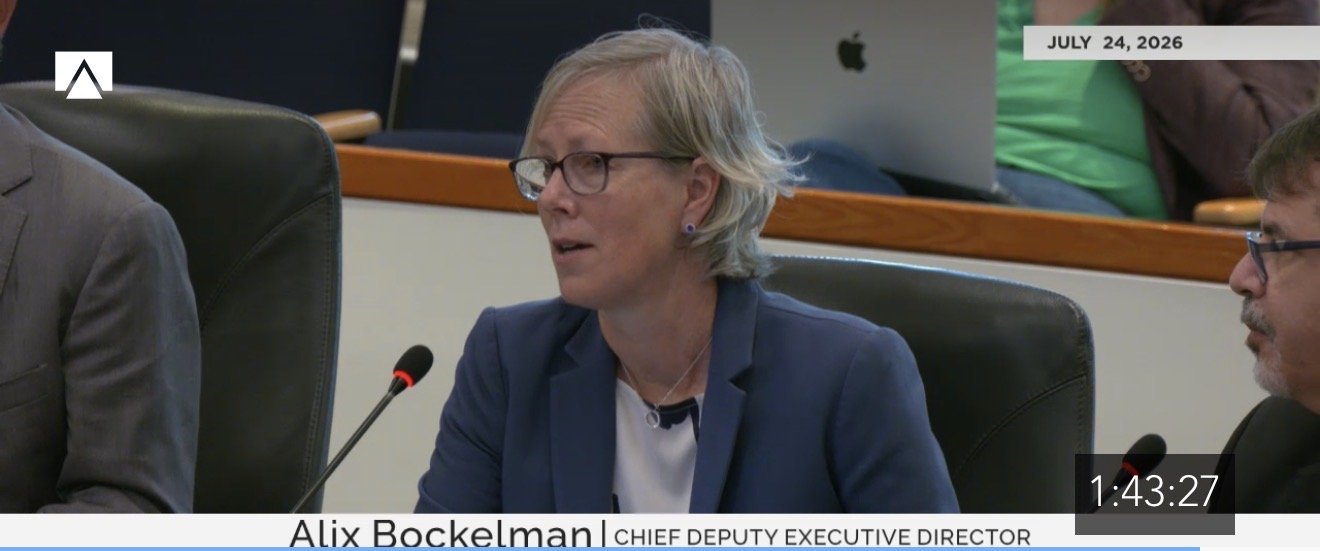
Where things stand: Chief Deputy Executive Director Alex Bockelman reported after the closed session that "direction was given, but no reportable action" was taken. In practice, that means commissioners instructed legal staff on how to proceed — potentially authorizing continued negotiations, demand letters, or preparation of a complaint — without formally voting to file suit.
Before commissioners went into closed session, public commenter Alita Dupree urged a fact-based approach. "We're dealing with probably the most complex first appointment that we've ever seen in the world," she said, asking commissioners to "be respectful in your conversations and look at the facts."
What's next: The Commission's next regular meeting is Aug. 26. Whether MTC files suit, reaches a settlement, or continues negotiations with Cubic will likely unfold over the coming weeks — and could reshape the trajectory of the region's billion-dollar-plus fare modernization effort.
Clipper Migration Passes 2.3 Million Cards as System Stability Holds
Jason Weinstein, MTC staff, delivered the meeting's most data-dense presentation: a comprehensive update on the Next-Generation Clipper transition that showed a system steadily gaining ground — with a few stubborn problems still outstanding.
The basics: The Next-Generation Clipper replaces the region's legacy magnetic-stripe fare card with an account-based platform that supports contactless bank cards and mobile wallets alongside traditional Clipper cards. Every major Bay Area transit agency depends on it.
Why it matters: The system has reached an inflection point. With 2.3 million cards now migrated — primarily through on-demand upgrades when riders tap at a reader — over 50% of all transit trips are processed through the new platform: 36% via Clipper cards and 15% via contactless bank cards. Nearly 60% of fare revenue now flows through the new system. The next step, bulk migration of remaining discount cardholders, would unlock regional transfer discounts for a significant number of riders.
Where things stand: Weinstein reported the system achieved its 30-day stability milestone with no outages — a key contractual prerequisite for beginning bulk migration. But he was candid about lingering issues:
- BART vending machines have experienced intermittent failures issuing new Clipper cards. "Cubic has identified a fix," Weinstein said, with deployment expected within days.
- A Microsoft Azure outage the previous day knocked out the call center, vending machines, fare inspection devices, and the mobile app for roughly four hours — though riders could still tap to ride. "You may have heard about Microsoft Azure outage yesterday," Weinstein told commissioners. "It was in the western United States. That outage also affected Clipper among other companies on the west coast."
- Fare inspection device error rates have dropped to under 1%.
- Financial reconciliation is significantly improved, with settlement process walkthroughs underway with operators, though fiscal year close-out work remains.
Customer Service: Seven Minutes Is Too Long
The sharpest exchange of the evening came over call center performance. Weinstein reported that "call answering time has averaged under seven minutes for the last month," down from nine minutes previously but still well above the 3.3-minute contractual target. He attributed part of the problem to a CRM system glitch that logs agents out, and said Cubic is also building self-help tools to reduce call volume.
Commissioner Matt Mahan, who represents San Jose, pushed back hard. "I believe our standard is 3.3 and waiting on the line for seven minutes in today's world's a long time," he said. "So I'm curious what is the path to getting to our target?"
After Weinstein walked through Cubic's remediation steps, Mahan returned to the customer impact: "I do think it's important we monitor the customer experience. And if we're seeing maybe one in six or something dropping off, that's not a good sign. That means people are giving up, they're frustrated, they're not having a good experience."
Chief Deputy Executive Director Alex Bockelman offered some reassurance, noting the most recent data showed wait times had fallen further. "I think the most recent one I saw was down at five minutes," Bockelman said. "So I do think that the trajectory as we watch it continues to come down."
Commissioner Gina Papan added a practical note, pointing out the call-back feature: "They do have this where you can push a button and they'll call you back. So you're not really waiting that period of time."
Public commenter Alita Dupree reported her own experience was positive, saying her calls were "answered in under two minutes," and encouraged continued card upgrades. But public commenter Cicero struck a different tone, questioning the absence of financial accountability in the presentation: "What's the cost benefit of this entire initiative? Where are the costs and the benefit metrics tracked and reported to this commission? And why is this information not part of the board packet in this presentation?"
What's next: If system stability holds, MTC staff will move toward bulk migration of discount cardholders — the highest-priority remaining group. The BART vending machine fix is expected imminently. Call center performance will remain a watched metric heading into the Aug. 26 meeting.
Public Commenters Push for Independent Transit Oversight
During general public comment, two callers broadened the conversation beyond Clipper to question MTC's institutional capacity to oversee Bay Area transit spending.
Why it matters: Bay Area transit construction and operating costs have drawn national scrutiny, and the commenters argued that MTC commissioners lack the independent analytical staff needed to hold agencies accountable.
Cicero cited the Manhattan Institute's finding that "the Caltrain electrification project cost seven times more than any previous electrification project in the world," scaring off other agencies considering similar work. He contrasted Bay Area performance with Vancouver's SkyTrain, which he said costs roughly one-ninth per passenger mile and carries far more riders than BART. His prescription: MTC should establish "an independent group of staff" and "inspectors general" to support commissioners in exercising fiduciary oversight.
Roland Lebrun raised a separate concern about transcript accessibility on MTC's website. Alita Dupree reflected on 56 years of Bay Area transit ridership and encouraged commissioners to continue their work.
Minor Items
- Chair Sue Noack briefly thanked commissioners for attending during summer break before the meeting moved to closed session.
- Next regular meeting: Aug. 26, 2026.