
Hazardous Materials Commission - Mar 27, 2026 - Meeting

Hazardous Materials Commission - Mar 27, 2026 - Meeting

Hazardous Materials CommissionContra Costa CountyMarch 27, 2026

Sources:

Locunity is a independent informational service and is not an official government page for this commission.We use AI-assisted analysis and human editorial review to publish information.

Pipeline Deregulation, Nuclear Waste Fears Dominate HazMat Commission Agenda

The Contra Costa County Hazardous Materials Commission achieved a rare strong quorum and used it to dig into a trio of emerging threats — federal pipeline safety rollbacks, small modular nuclear reactors, and unregulated consumer lithium batteries — all converging on the same question: who is responsible when safety regulations can't keep pace with policy and technology?

  • Federal pipeline safety rollback under national energy emergency alarms commissioners; staff directed to research whether the policy affects Contra Costa County pipelines

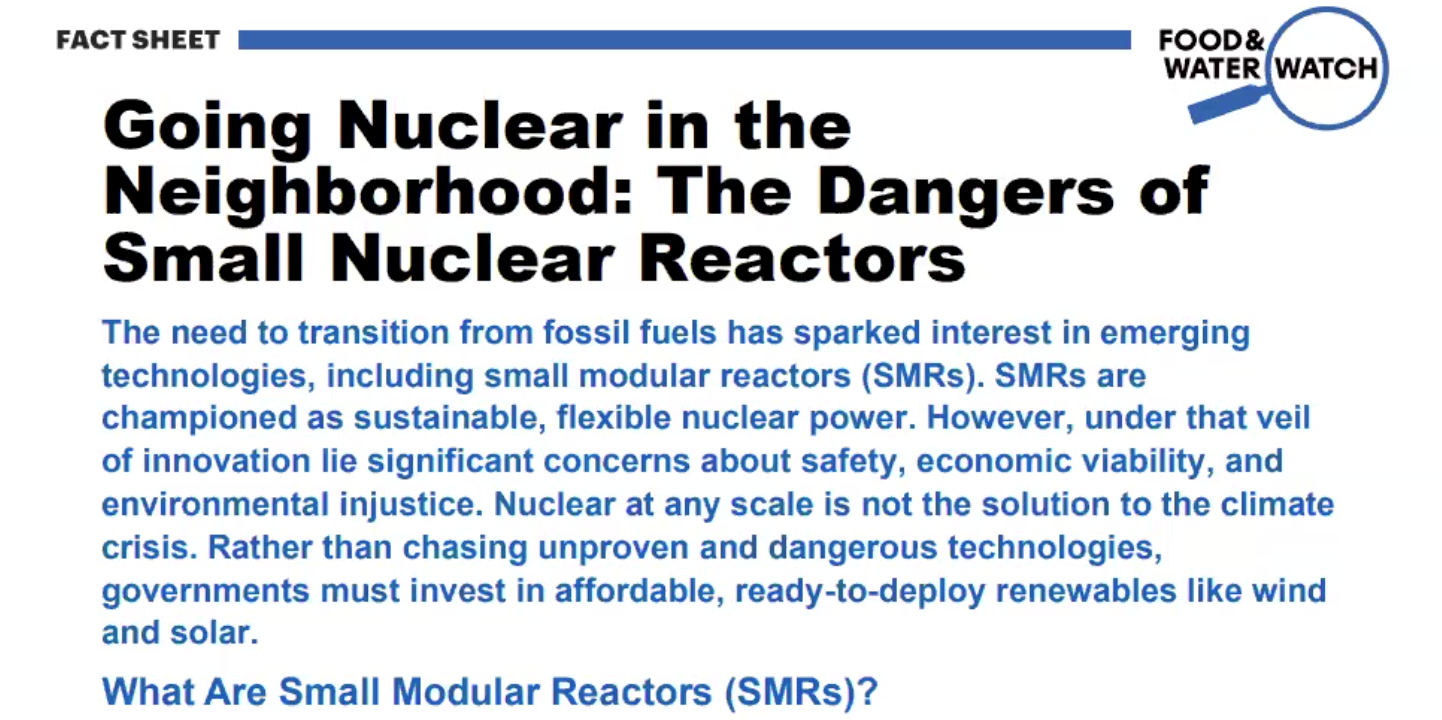
  • Small modular reactor debate centers on nuclear waste storage and drone security risks as AI data center demand drives private investment

  • Mislabeled organophosphate shipment hospitalizes FedEx workers and firefighters in Concord; nine-hour cleanup follows

  • West County Wastewater launches first-of-its-kind microplastics removal project on West Coast as EPA reclassification looms

  • State bills on solar panel waste, EV batteries, and producer responsibility advance through the legislature

  • Commission learns it can formally advocate on legislation — but must route through the county administrator


Federal Pipeline Safety Rollback Raises Red Flags

Why it matters: A federal policy allowing pipeline operators to skip safety requirements during a declared national energy emergency could directly affect Contra Costa County's significant pipeline infrastructure — and that emergency has been in effect since Jan. 20, 2025.

Where things stand: Chair Mark Hughes introduced the Pipeline and Hazardous Material Safety Administration policy, which he characterized as a potential free pass for operators. Commissioner Marielle Boortz clarified the policy's full title: "limited enforcement discretion in response to a national energy emergency." She noted that while it technically applies only during a declared emergency, President Trump declared one upon taking office, and it was renewed in January 2026.

"What they're allowing the pipeline operators to do is not — they don't have to comply with all the regulations and they don't have to notify regulators in advance," said Chair Hughes. "That's escape during the emergency, which has been for over a year now."

A staff member expressed blunt alarm: "It makes no sense even use those words because they're pointless, because they mean nothing while we have the current administration declaring national emergencies over a hangnail."

The other side: Commissioner Andrew D. Graham noted a potentially limiting factor: "There are currently no pipelines that run into the state of California over state lines. So the pipelines that are in California are only in California." That distinction matters because PHMSA's federal authority is strongest over interstate pipelines; intrastate lines fall under the California Office of Pipeline Safety. Whether the federal policy applies to California-only pipelines remains an open question.

Commissioner Jamie Purcell broadened the lens, citing a Georgetown article about coal and gas plants forced to remain open under related executive orders about grid reliability. He noted "it referenced a coal plant in Michigan and a natural gas plant in Pennsylvania that were scheduled to shut down."

Commissioner Maureen Brennan raised the possibility of pipeline flow reversals bringing Texas oil into California, and suggested linking this discussion to a planned April presentation on CO2 pipeline regulations and carbon capture.

What's next: The commission directed staff and the Planning and Policy committee to research whether the PHMSA policy applies to Contra Costa County pipelines and to check with a local pipeline contact. The issue is expected to return at the next meeting.


Nuclear Waste, Drone Risks Cloud Small Modular Reactor Discussion

The basics: Small modular reactors are compact nuclear power plants that tech companies and utilities are pursuing as reliable, carbon-free energy sources — primarily to feed voracious AI data center demand. Pending federal legislation includes tax credits of up to 40% of investment for new nuclear designs.

Why it matters: If SMRs arrive in the Bay Area, the commission wants to understand the local implications for nuclear waste storage, emergency response, and hazardous materials regulation before they're built — not after.

Where things stand: Commissioner Boortz shared findings from a Forbes article documenting 12 or more companies pursuing SMR technology, many backed by private tech investors.

"It was interesting. Coincidentally, I read Forbes magazine. So they had a whole article about the new nuclear age. And it talked about the small reactor listed," she said, noting the article covered diverse technologies including TRISO fuel — uranium pebbles coated in graphite — and various coolant systems.

The discussion quickly turned to waste and safety. A staff member argued the commission should focus on waste regulation, stating: "We need to know what the regulation is going to be on the waste material." She noted the long-term hazard and questioned the economics of smaller reactors relative to conventional plants.

Chair Hughes steered the discussion back to the commission's core mandate. "That's really what our focus is, hazardous waste. So that would be what is the strategy for disposal or storage of the hazardous" material, he said.

Commissioner Aaron Winer pushed back against the idea of bringing in only a policy critic, arguing even a pro-nuclear technical expert would be valuable: "You want to solve these things. It's safe. Why is it safe? What are the biggest safety concerns? What is your worst case scenario? That is probably still somebody who's more potentially valuable in my mind than somebody who's looking at it from a big policy perspective."

A member of the commission raised a concern that resonated broadly: "You don't have to be technical to be worried about a drone attacking a low local nuclear place. So if it's in our neighborhoods, that's my greatest concern, actually."

Commissioner Winer also disclosed a real-world radiation incident: West County Wastewater recently detected radiation in a trailer of dewatered solids heading to the Vasco Road landfill. "For the next three weeks, we were dealing with this periodic issue," he said, underscoring the practical relevance of radiation monitoring even without nuclear reactors nearby.

What's next: The commission agreed to find an independent speaker — not an industry advocate — who can address both technical feasibility and waste storage and security dimensions. Commissioner Boortz noted her brother-in-law formerly worked for the NRC and may be a contact.


Mislabeled Chemical Shipment Hospitalizes Workers in Concord

Why it matters: The incident exposed dangerous gaps in hazardous materials shipping labeling and driver training — the package's hazard diamond was blank, and the controlled chemical may have been deliberately under-labeled.

Staff member Adam Springer detailed the response: two one-gallon containers of an agricultural organophosphate — used for fruit fly control — were shipped via FedEx to the county Agriculture office. One arrived leaking. "The FedEx driver did not understand what it was and didn't understand that it was leaking at the same time. There were a number of individuals that were exposed," Springer said.

Two FedEx employees were hospitalized. Firefighters responding to what was initially a medical call were also exposed. The decontamination and cleanup operation ran from about 11:45 a.m. to approximately 9 p.m.

Springer noted the active ingredient was only 1% of the mixture, but other components — including an insect pheromone — could cause illness. The FedEx truck was assessed and showed no contamination, suggesting the container may have leaked on impact. The chemical is controlled, which Springer said may explain the deliberate under-labeling. Commissioners raised questions about whether FedEx drivers receive adequate hazmat training.


Microplastics: Commission Debates Its Own Jurisdiction

Commissioner Winer asked whether the commission had ever discussed microplastics, citing research showing the material in human brain tissue. Chair Hughes acknowledged the commission's purview is formally limited to defined hazardous materials.

Commissioner Eduardo Martinez pushed further: "Should some of our purview be to establish materials as hazardous that have not been designated as such when evidence shows that it is in fact hazardous?" Hughes said that's more a state function.

Commissioner Brennan provided key regulatory context: seven governors have petitioned the EPA to add microplastics to its hazardous materials list. "Microplastics are probably going to become hazardous waste material or hazardous material because there is this whole process," she said.

Commissioner Purcell noted most microplastics enter the body through water consumption rather than environmental dust, framing it as potentially more of a public health than environmental hazard.

Commissioner Winer then announced a breakthrough: "West County Wastewater, our board, approved a microplastics removal project which will be the first of its kind on the West Coast. So we'll be generating data." The project uses "artificial roots" — charged material that attracts microplastics through static. Data is expected later this year.


State Bills Track Solar Waste, EV Batteries, Producer Responsibility

Staff member Springer walked the commission through monitored state legislation. Key bills include:

  • AB864: Classifies end-of-life solar photovoltaic modules as universal waste, creating a regulatory pathway for recycling rather than hazardous waste disposal.

  • SB615/SB696: Address vehicle traction battery management and create a task group for battery-related emergencies and recycling policies.

  • SB501: The Hazardous Household Hazardous Waste Producer Responsibility Act, requiring manufacturers to manage products "cradle to grave."

Springer explained the distinction between universal and hazardous waste: "If you don't handle it appropriately as universal waste, it becomes hazardous waste. So if you don't follow the procedures that are outlined to manage it as universal waste, it automatically becomes hazardous waste."

Chair Hughes found the producer responsibility bill particularly noteworthy, calling it a long-discussed priority. Most bills are two-year bills from the prior session. Springer previewed upcoming items including vape product component regulation.


Commission Confirms It Can Advocate — With a Catch

Why it matters: The clarification empowers the Hazardous Materials Commission to formally weigh in on state and federal legislation for the first time, expanding its role beyond purely advisory recommendations to the Board of Supervisors.

Springer reviewed the county's policy on advisory board legislative advocacy. The key requirements: the chair must work through department staff to reach the county administrator's office; the administrator determines consistency with board-adopted policies; and position letters must be distributed by the administrator's office, not directly by the commission. "The position of the mandated advisory body or commission must be communicated in a manner that clearly states" it is not speaking as the Board of Supervisors, Springer explained.

Commissioner Graham drew an important distinction between recommending positions to the Board of Supervisors — which the commission has always done — and taking independent advocacy positions on legislation, which commissioners hadn't realized was permitted. The commission was visibly relieved to learn the process is less restrictive than initially feared.


Balcony Solar Panels: Unregulated Lithium Battery Kits Alarm Commission

Commissioner Purcell flagged SB868, a bill addressing plug-in solar panel and battery kits sold directly to apartment renters. "There's this company called Rightsaber that's a nonprofit, but basically they're small solar panels and batteries that can be installed in apartments that then you plug it into the wall," he said.

The systems are currently unregulated in California, though legal in Utah. Purcell noted the lithium batteries stack together without the safety clearances required for products like Tesla Powerwalls.

Springer clarified that since these are plug-in consumer devices, they fall in the same regulatory category as a microwave — exempt from interconnection agreements with PG&E. Commissioner Winer noted that all plug-in devices must still be tested by a nationally recognized testing lab per OSHA's list and California fire and electrical code.

The commission referred SB868 to the Planning and Policy committee for monitoring, focusing on battery fire risks and the hazardous materials nexus.


Minor Items

  • January meeting minutes approved by roll call vote (For: 7, Against: 0, Abstain: 2 — Commissioner Graham abstained; a second member also abstained). Commissioner Boortz flagged that a referral of policies and procedures to the Planning and Policy committee was omitted from the minutes.

  • Commissioner Brennan's request to swap from the Operations Committee to Planning and Policy stalled — no commissioner volunteered for the Operations Committee's Friday morning meetings. Commissioner Graham quipped that requiring alternates to show up at least annually might help, and suggested: "We should make the alternatives come at least once a year. Maybe just to say, like, I'm alive."

  • Attendance problems persist across the commission. Multiple seat holders and alternates have never attended. Staff reported that one seat holder never responded to outreach, another alternate's email is undeliverable, and application records from a former staff member were redacted. All commissioners were asked to verify their alternates' commitment before the next meeting; Planning and Policy will develop formal vacancy procedures for the bylaws.

  • Operations Committee proposed a public forum on Thursday, Sept. 17 from 6–8 p.m. at the IBEW hall, shifting from a 4–6 p.m. slot the committee found too early. Venue confirmation is pending.

  • County rodenticide exemption: Commissioner Purcell reported the county is applying for an exemption from California's ban on anticoagulant rodenticide to address ground squirrels damaging airport and bridge infrastructure. Staff offered to invite the county's Integrated Pest Management coordinator to present on environmental risks.

  • Benicia Industrial Safety Ordinance: Commissioner Brennan identified a Solano County contact who could present on Benicia's new ISO. The Air District is also discussing using the ISO framework for root cause analysis, and revisions are underway.

  • HazMat Program report was deferred; the staff lead was at a conference.

Pipeline Deregulation, Nuclear Waste Fears Dominate HazMat Commission Agenda | Hazardous Materials Commission | Locunity