

Locunity/CPUC, CA·Utilities Commission

California Public Utility Commission

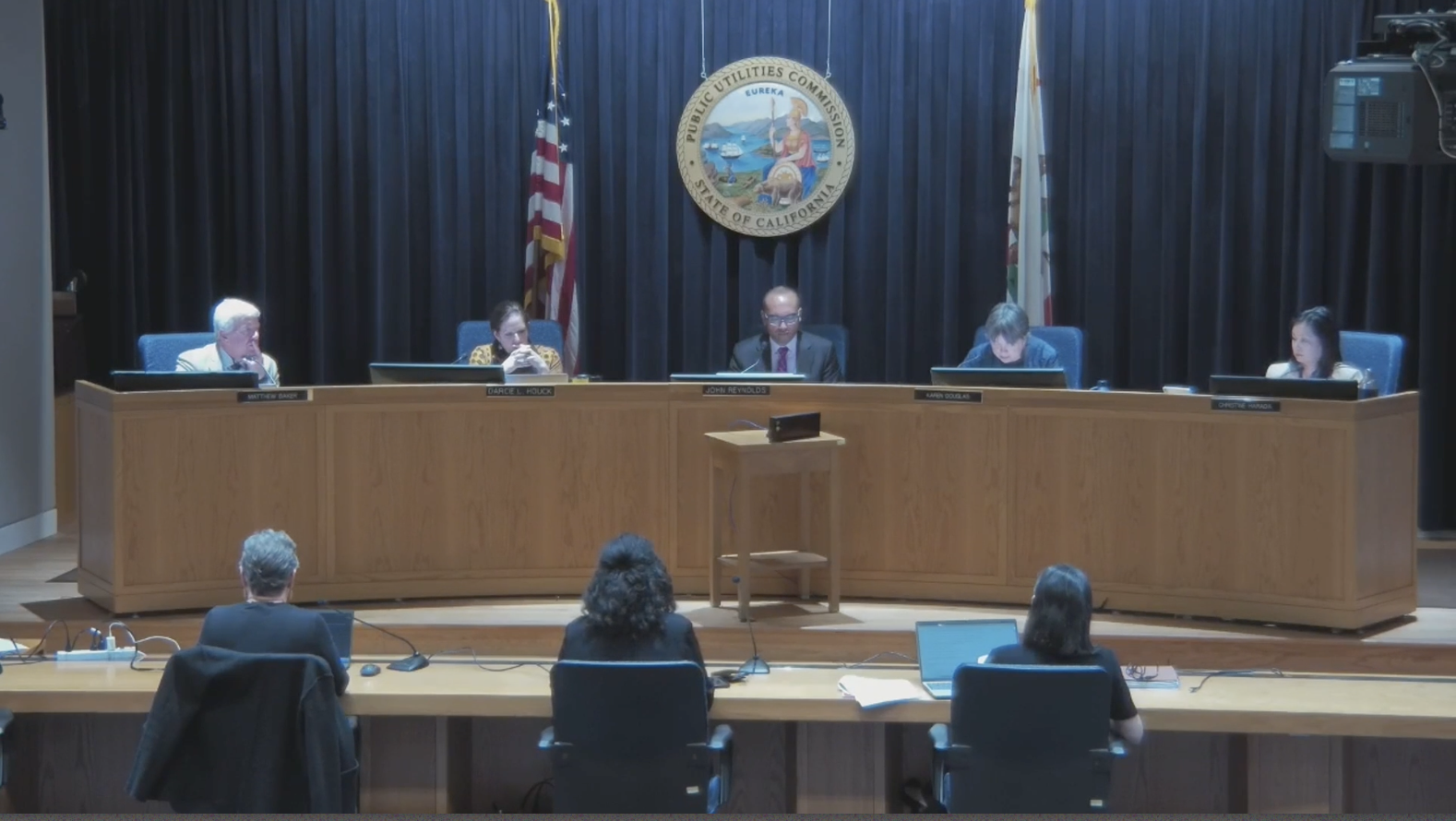
The California Public Utilities Commission (CPUC) regulates privately owned electric, natural gas, telecommunications, water, railroad, rail transit, and passenger transportation companies, and authorizes video franchises. Its five Governor-appointed Commissioners and staff work to ensure consumers have safe, reliable utility service at reasonable rates, protect against fraud, and promote the health of California's economy. The CPUC's core values — Accountability, Excellence, Inclusion, Integrity, Open Communication, and Stewardship — guide an agency culture built on transparency, evidence-based decision-making, respect for diverse perspectives, and responsible stewardship of California's human, financial, and natural resources. These values apply to all employees and commissioners as a shared mission, integrated into every aspect of the agency's work to ensure people feel valued, seen, and heard. Through recognized leadership in energy, communications, transportation, and water policy, the CPUC aims to empower Californians through access to safe, clean, and affordable utility services and infrastructure.

Official website
CPUC Auditorium, 505 Van Ness Ave., San Francisco, CA 94102; also available via webcast or phone
Schedule not listed

Locunity is a independent informational service and is not an official government page for this commission.We use AI-assisted analysis and human editorial review to publish information.

Latest Updates

Live

Recent updates from Governing Board

Liberty WaterCalifornia Public Utility Commission36d agoMay 14, 2026

CPUC Cuts Liberty Water Rates, Blocks Recovery for Unfinished Infrastructure Projects

Commissioners unanimously adopted an alternative proposed decision that reduces Liberty Water's revenue requirements and requires the utility to finish capital projects before collecting ratepayer funds.

Why it matters: The APD reverses proposed rate increases — cutting Apple Valley Ranchos rates by 7.7% instead of raising them 6.2% — protecting disadvantaged communities in historically redlined Southern California service areas from paying for infrastructure that has not been built.

CPUC
San Joaquin ValleyCalifornia Public Utility Commission36d agoMay 14, 2026

CPUC Denies Petition to Reopen San Joaquin Valley Clean Energy Proceeding but Pledges Action

The Commission unanimously denied a petition to reopen the San Joaquin Valley proceeding, finding no legal deadline, but debated how to ensure ongoing economic feasibility studies meaningfully engage affected communities.

Why it matters: About 170 disadvantaged communities in the San Joaquin Valley still rely on propane and wood burning for heating and cooking; the economic feasibility study that could unlock cleaner energy options has been delayed six years.

CPUC
BioMATCalifornia Public Utility Commission36d agoMay 14, 2026

Rural Counties Protest Exclusion of Their Comments from Biomat Decision

A Rural County Representatives of California spokesperson challenged the proposed BioMAT decision, asserting that timely-filed public comments were inaccurately characterized as nonexistent.

Why it matters: The claim raises procedural due process concerns about whether the CPUC's public comment system adequately captures and incorporates stakeholder input before decisions are finalized.

CPUC
Southern California EdisonCalifornia Public Utility Commission36d agoMay 14, 2026

Central Valley Advocates Demand Edison Rate Relief and Palantir Divestment

Power California organizers from Tulare County called on the CPUC to investigate SoCal Edison's rates exceeding $1,600/month and demanded the utility divest from surveillance contractor Palantir.

Why it matters: One in five Southern California Edison households are reportedly in debt averaging $800, while utility funds contract with Palantir — a company used by ICE — in a region with large immigrant populations.

CPUC
Copper LandlineCalifornia Public Utility Commission36d agoMay 14, 2026

Dozens Urge CPUC to Reject AT&T-Backed Plan to Retire Copper Landlines

Public commenters overwhelmingly demanded the Commission preserve copper landline phone service, citing emergency reliability, disability access, and electromagnetic health concerns.

Why it matters: AT&T's push to retire copper infrastructure could strand rural, elderly, and disabled Californians who depend on landlines during wildfires, power outages, and emergencies where wireless and VoIP fail.

CPUC