
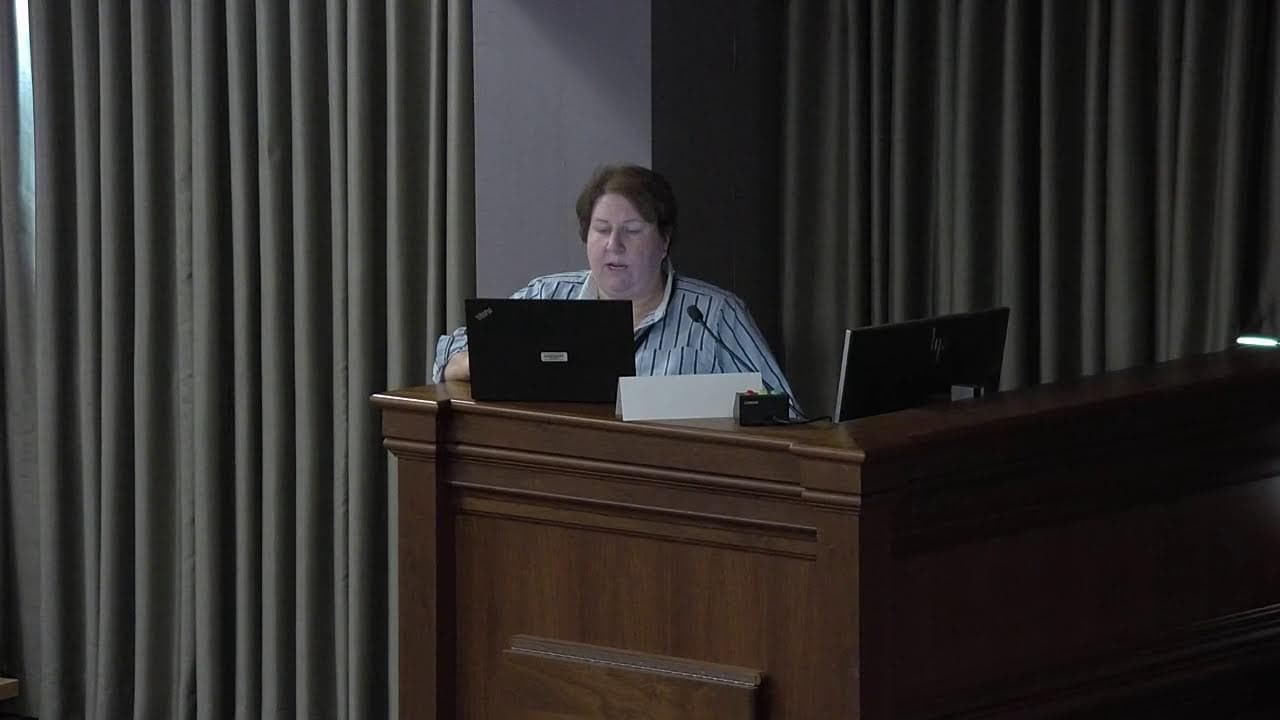
Board Clears Private Airstrip With Flight Caps, Approves Disc Golf Complex
Board of Adjustment • Buncombe CountyOctober 14, 2026
Locunity is an independent informational service and is not an official government page for this commission. All information is sourced from public footage and an analysis of official agendas with the aid of responsible, fact-checked AI. to report an error or omission.
A farmer whose family has worked the same valley since 1802 helped shape the rules for a new private airstrip next door. Buncombe County's Board of Adjustment granted him party status, then approved Kevin Barker's personal landing strip with binding limits on aircraft type, weekly flights and flight direction. The board also approved a fee-based disc golf, soccer and volleyball complex on Cane Creek Road and said goodbye to departing chair Andy Ball.
- Personal STOL airstrip approved off Aviator Trail, capped at three flights per week, STOL aircraft only
- Neighboring farmer granted standing after a split debate, then won conditions that run with the land
- Disc golf complex approved at 586 Cane Creek Road, with limits on food, sales and events
Airstrip Approved, With Rules That Outlast the Owner
The basics: A STOL aircraft is a small plane built for short takeoffs and landings. A special use permit (SUP) allows a use that the zoning code permits only after a hearing and board findings. In this quasi-judicial hearing, the board could weigh only competent, relevant and substantial evidence.
Why it matters: Permit conditions stay with the parcel. Future buyers will inherit the flight cap and direction limits. Board members noted that this precedent matters as personal airstrips become more common.
"Any decision that we make binds to the property forever," said a board member.
Where things stand: Griffin Kearns, county planner, described a 20.65-acre parcel in the Open Use district off Aviator Trail. The owner plans a landing strip there for his small single-engine STOL aircraft. Staff conditions barred commercial use and required safe fuel storage, adherence to the site plan and a site plan development permit.
Kevin Barker, applicant, described a strip 600 feet long and 75 feet wide. He said he expects to fly about once a week and would divert to KAVL, the Asheville airport, in poor conditions.
"This runway almost has to be private and exclusive because other planes can't land there," Barker said.
A Supportive Neighbor Still Wanted a Seat at the Table
Bruce Snailson farms 160 acres with cattle. The closest point of his land sits 318 feet from the site.
"We've farmed in that valley since 1802," Snailson said.
Snailson said his conversations with Barker had largely resolved his concerns about noise and his cattle. He still wanted formal party status for one reason. "Would this permit go with the property?" he asked. Under the permit as approved, the conditions do run with the landing strip parcel.
The other side: Paul Wilczynski, Board Member, argued that Snailson had effectively talked himself out of any harm. "If he doesn't have any harm, then he doesn't have standing," Wilczynski said.
Another member sympathized but noted that the applicant's informal assurances are not binding. "In my opinion, he meets the requirements to have standing," said a board member. Staff counsel advised that distance is one factor and that the board should gather more detail. The board then approved standing by show of hands. Tallies were not announced.
Who Can Fly, and How Often
The sharpest debate came over who may fly the plane. Wilczynski objected to that kind of restriction. "I totally disagree with the fact that we have any reason to restrict the number of people who are allowed to fly one airplane one or two times a week," he said.
County counsel added a legal limit. "You can't bind the property that's not one of the applicant properties," counsel said. That meant conditions could not reach the neighboring "donut hole" residence parcel.
Kearns pointed out that the ordinance already handles the question. He said "the definition of the personal landing strip is a landing strip or heliport for personal use of the tenant or owner of the site, not available for public use, and with no commercial operations."
Barker welcomed added limits. "I'm all for those stipulations being added to the permit," he said. The weekly cap started at two flights. It rose to three after Snailson agreed. "I'm fine with 3 times a week if you see fit to grant that," Snailson said.
Decisions and stakeholder impacts: The board adopted findings of fact, approved the SUP and approved the written order. All three motions passed on show-of-hands or voice votes; individual counts were not stated. Final conditions are:
- No commercial use
- STOL aircraft only
- Three flights per week
- Takeoff to the north and landing from the north
- Safe fuel storage and compliance with the site plan
Barker gets his strip. Neighboring cattle operations get enforceable protections in place of handshake assurances. Future owners take the parcel with those limits attached.
What's next: Barker must obtain a site plan development permit before building the strip.
Disc Golf Complex Wins Approval on Cane Creek Road
Why it matters: The decision shows how a private, fee-based recreation business can operate in rural residential zoning. The county set limits on food trucks and sales and ruled out an event venue.
Where things stand: "The applicant has applied for a special use permit to construct a recreational complex consisting of a disc golf course, volleyball courts, and a soccer field," said Jason Payne, county planner.
The 28.6-acre Residential Low Density parcel at 586 Cane Creek Road is owned by Jonathan Creek LLC and runs on septic and well. The existing home will become a clubhouse, and no new structures are planned. Staff conditions require:
- A floodplain permit
- An NCDOT permit
- Construction per the site plan
- Commercial activity limited to equipment sales and rental, beverages, prepackaged food and one food truck, with no commercial kitchen
Payne called the food truck limit a negotiated compromise. "That was an agreement between the county and the applicant," he said.
Board questions: Members asked about amplified music and events. Payne said neither is allowed in the district. He said any exterior lighting must meet county lighting standards, and the Sheriff enforces the noise ordinance. Members also asked about:
- Possible use of the parcel across Mills Gap Road
- Structures in the flood zone, which staff said sit outside the floodway
- A 20-foot evergreen buffer next to residential property
The other side: Wilczynski questioned the business model. "Why does an LLC want to own a non-commercial, non-governmental recreation area?" he asked. Staff explained that the label is a land use classification. "The LLC is going to operate this, and right now it's designed as primarily a disc golf club," said Derek Allen, the applicant's attorney with Allen, Stahl and Kilbourne.
Decisions and stakeholder impacts: No one sought standing or testified as a witness. "I think it's a good use of the property," said a board member.
The board passed three items by voice vote with counts not stated:
- Findings of fact, with an isolated "nay" heard before the chair declared passage
- The SUP
- The written order
Any additional commercial use will need approval from the zoning administrator or planning director.
Minor Items
- Minutes: September minutes approved, correcting who chaired the Sikorsky case.
- Disclosures: No ex parte contacts or conflicts of interest disclosed by members.
- Farewell: Members thanked Andy Ball, Board Chair, who has served as regular and alternate member since 2016.
- Vacancy: Ball's seat has been advertised but not yet filled.
Looking Ahead
The board's next meeting moves to Nov. 18, when two new members will be welcomed.