
Budget & Appropriations Committee - May 20, 2026 - Regular Meeting
Budget & Appropriations Committee • San FranciscoMay 20, 2026
Locunity is a independent informational service and is not an official government page for this commission.We use AI-assisted analysis and human editorial review to publish information.
Students and Labor Pack Chambers to Fight $3M Free City College Cut
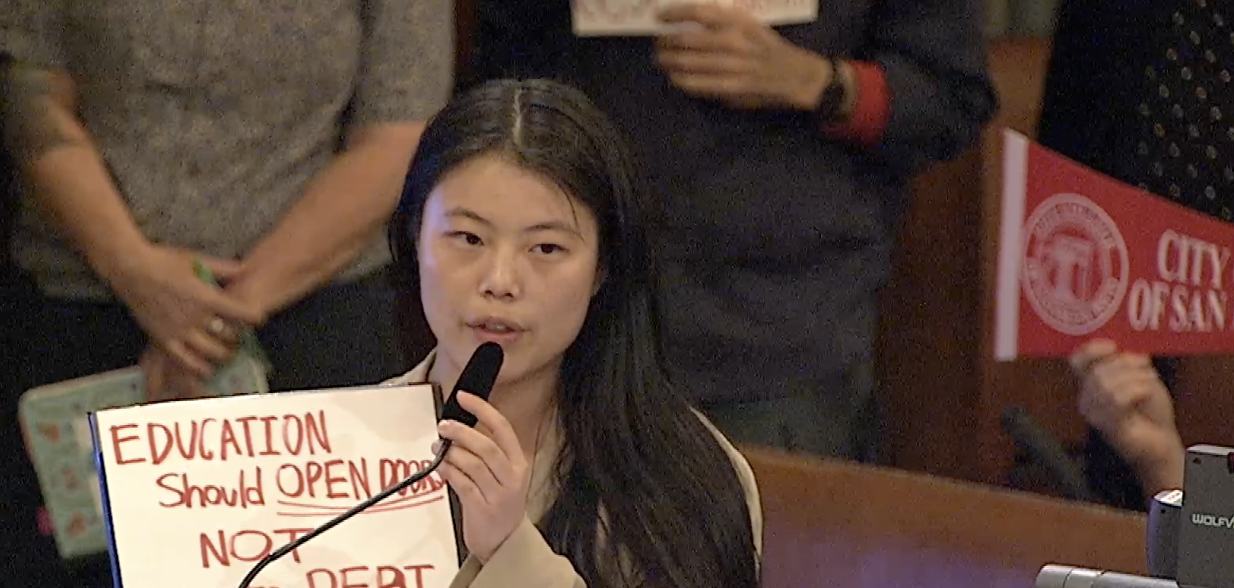
San Francisco's Budget and Appropriations Committee spent more than four hours hearing from students, faculty, labor leaders and community organizations who packed chambers to oppose the mayor's proposed 30% cut to the voter-mandated Free City College program — a fight that three of five committee members signaled they intend to win. In a sprawling session that also moved nearly $1.9 billion in public utility bonds and put $14 million in permitting technology funds on ice, the committee showed it is ready to push back on the mayor's spending priorities heading into June budget negotiations.
- Over 30 speakers demand full Free City College funding as committee commits to restoring program from $6.5M to at least $9.3M
- $1.9 billion in PUC revenue bonds advance for water, wastewater and power infrastructure with affordability concerns flagged for 2033
- $14M in Permit SF modernization funds placed on reserve as Civil Service Commission dispute stalls the technology contract
- Library keeps its cybersecurity chief post after Chair Chan rejects budget analyst's recommendation to delete the vacant position
- DBI vehicle purchases deferred after supervisors challenge replacing 20-year-old cars with low mileage
"Our Growth, Our Future": Free City Faces Its Biggest Budget Fight Yet
The basics: Proposition W, approved by San Francisco voters, committed the city to funding free tuition and cash grants at City College of San Francisco for a 10-year period. The mayor's proposed budget would cut the program from $9.3 million to $6.5 million — a roughly 30% reduction that college leaders say would strip direct grants from approximately 6,000 of the most economically disadvantaged students while maintaining fee waivers for the rest.
Why it matters: Free City served over 20,000 students in 2024-25, with 93% participation among eligible San Francisco residents and the highest enrollment in five years. The program's two-tier structure provides tuition waivers for all eligible residents and additional cash grants — covering books, transportation and supplies — for those with the greatest financial need. Eliminating the grants would hit the students least able to absorb the loss.
Where things stand: Chancellor Kimberly Messina called the program a partnership unlike anything she has seen nationally. "I've never seen a program like Free City before. It is a tremendous partnership with the residents, the voters, the city, the county, DCYF and City College of San Francisco," she said.
Dean of Enrollment Services Monica Liu presented data showing completion rates for Free City scholars exceed those of non-participants. Vice Chancellor of Finance and Administration Dr. Ligioso explained the proposed cut would leave the program at approximately $6.5 million — enough to maintain fee waivers but not the cash grants that serve the poorest students.
CCSF Board of Trustees President Alia Chisty argued the city has "fundamentally shifted the college-going culture in San Francisco" and that retreating now would undermine a decade of progress. DCYF Executive Director Cherise Dorsey Smith also presented on the program's administration.
The other side: Supervisor Chin questioned why cuts were proposed when transfer tax revenue was improving and expressed concern that the program's reserves were being depleted. No member of the mayor's budget team offered a public defense of the reduction during the hearing.
More than 30 public commenters testified, many with deeply personal stories. Sabrina Hall, a CCSF student senator, called Free City "a foundational lifeline for Black and brown communities, student parents, and people in recovery." Kelvin Ekman, a formerly homeless student graduating with a 3.95 GPA and transferring to SF State, credited the program with saving his life. Sofia Flores Guevara, a single mother of three from the Mission District and incoming student chancellor, said Free City gave her community, purpose and a better future for her children.
Labor organizations turned out in force. Kim Tavaglione of the San Francisco Labor Council called the cuts "obscene," arguing excess transfer tax revenue should fund education, not policing. Sasha Wright of Jobs with Justice described the program as a pipeline filling city vacancies in healthcare and the public sector, calling potential cuts "theft" of a voter-mandated program. Elisa Messer of AFT 2121 and Student Trustee Angelica Campos also testified, along with faculty and students from programs including automotive technology at the Evans Campus.
Decisions: The hearing was filed on a 3-0 vote (For: 3 — Supervisors Chan, Dorsey, Chin; Against: 0; Absent: 2 — Supervisors Walton, Sauter). No funding vote was taken, but the committee's direction was unmistakable.
Vice Chair Matt Dorsey, Supervisor, District 6, said he attended the college's Addiction and Recovery Counseling Certificate graduation and was already a believer: "I'm powerfully persuaded by what was said here, although you probably didn't need to persuade me because I'm a believer that this is money well spent."
Chair Connie Chan, Supervisor, District 1, committed to fighting for full restoration: "We want to see fully restored funding to $9 million for the very least." She also recommended updating the city's memorandum of understanding with CCSF to include fee waivers.
What's next: The committee's pledge to restore funding sets up a direct confrontation with the mayor's budget office in June negotiations. Three of five committee members have now publicly committed to at least $9.3 million for Free City — enough votes to prevail at committee.
Committee Puts $14M in Permit SF Funds on Hold
Why it matters: San Francisco's building permit system is more than 20 years old, and the Permit SF modernization project — a joint effort between the Department of Building Inspection and the Planning Department — is the city's path to replacing it. But the technology contract remains tangled in a dispute with the Civil Service Commission and the union representing city workers.
Where things stand: DBI and Planning presented jointly for the first time, reflecting their planned departmental merger. Permit SF Director Liz Waddy described a legacy system barely holding together: "The current legacy system is doing the job. But I say it's being held together with duct tape. If you walk away from your computer for about 10 minutes, it freezes and you have to control-alt-delete, force-quit your computer."
The OpenGov pilot contract expires in September with a one-year extension option. Performance metrics show improvement — completeness reviews now average 14 days against a 21-day target. But the Civil Service Commission has asked DBI to meet with Local 21 before proceeding with the contract, creating uncertainty about the timeline.
Decisions: Chair Chan placed approximately $7.1 million (FY 2026-27) and $7.3 million (FY 2027-28) for Permit SF on budget reserve, to be released only when the technology contract comes before the full Board. The approximately 2% building permit fee adjustment — the final phase of a multi-year fee study that brings DBI to full cost recovery at far less than the originally planned 15% increase — was approved separately and forwarded to the full Board on a 5-0 vote.
The other side: DBI also sought to replace four vehicles the Budget and Legislative Analyst recommended denying due to low mileage, arguing the vehicles are 20 years old and critical for earthquake response. Supervisor Shamann Walton, Supervisor, District 10, was unpersuaded: "Your response has to be better than 'we just replace them every year.' They're low mileage. I would love to see something in front of me that says industry standard is to replace cars as often as you are stating when the mileage is very low." Vehicle purchases were deferred to June.
What's next: DBI must resolve the Local 21/Civil Service Commission issue and bring the Permit SF contract to the Board before the $14 million in reserved funds can be released. Vehicle replacement decisions will be revisited during June budget deliberations.
$1.9 Billion in PUC Bonds Move Forward, but Affordability Clock Is Ticking
Why it matters: The San Francisco Public Utilities Commission's two-year capital budget appropriates over $2.4 billion, and three revenue bond authorizations totaling nearly $1.9 billion fund the infrastructure backbone of the city's water, wastewater and power systems. The BLA recommended approval of all four items — but flagged that water and sewer bills are projected to exceed the agency's own affordability targets starting in fiscal year 2033-34.
Where things stand: The three bond authorizations break down as follows: $1.17 billion for wastewater (the largest single debt authorization on the agenda), $570.5 million for water, and $138 million for power (covering Hetch Hetchy and CleanPowerSF). All four items were forwarded to the full Board on a 5-0 vote.
SFPUC Budget Director Anna Duning argued the agency has a self-imposed affordability policy and time to plan, noting that if the committee accepted the PUC's alternative proposal on remaining staffing disagreements, "that would mean we are agreeing to nearly 93% of what the BLA has proposed." Chair Chan recommended SFPUC provide a biennial affordability report tracking strategies to keep rates manageable.
On the operating side, the BLA recommended deleting or downgrading several vacant management positions. Assistant General Manager for Power Barbara Hale pushed back, arguing one position manages $500 million in annual energy transactions: "This is a position that manages about $500 million a year in purchases and sales, and that's a growing number because our load is growing." She noted fierce competition from tech companies and community choice aggregators for qualified candidates.
Vice Chair Dorsey was persuaded that positions should be retained, noting no general fund impact: "I am persuaded that these can be difficult positions to fill. And I don't think that there is an effect to the general fund. And in fact there may be an advantage to the extent there's layoffs elsewhere that we would find a place where there could be a soft landing for people who have dedicated their careers to the city."
What's next: Capital budget and bonds head to the full Board. Operating budget staffing disagreements, including management positions across water, wastewater and Hetch Hetchy enterprises, were deferred to June deliberations.
Chair Chan Backs Library's Cybersecurity Chief Over Budget Analyst's Objection
Why it matters: Three West Coast library systems were hit by cyberattacks in 2024-25. San Francisco Public Library's IT division manages a $17.5 million budget and 37 full-time employees — and has had no permanent leader since the Chief Innovation and Information Officer position went vacant in October 2025.
Where things stand: Library Chief Operating Officer Maureen Singleton argued the position is essential for cybersecurity, digital divide services and the library's long-term digital direction. The BLA recommended deleting it as a policy consideration, citing the vacancy.
Chair Chan signaled she would reject the BLA recommendation: "It's only been vacant since October 2025, so it's less than seven months. And it sounds like I'm going to trust that you will be hiring someone by the end of the calendar year."
Decisions: No formal vote was taken on the position; the broader budget hearing was continued to June. But the chair's stated intent to retain the role effectively settles the question heading into final deliberations.
Minor Items
- Friends of the SF Public Library grant ($1.12M): Resolution authorizing the library to accept and expend funds for programs including One City One Book and neighborhood branch open houses was forwarded to the full Board, 5-0.
- Prop J contract certifications: New security outsourcing at SFPUC's 525 Golden Gate and renewal of 12 existing contracted-out service certifications were forwarded to the full Board, 3-0, after two members departed.
- SFO Airport staffing: Airport Director Mike Nicornkett pushed back on BLA recommendations to deny four position substitutions and delete 10 vacant positions, arguing the airport's 10.6% vacancy rate already constrains its ability to serve growing passenger demand and execute a $12.5 billion capital plan. The airport delivers $60 million annually to the general fund. Deferred to June.
- SF Employees' Retirement System: CEO and CIO Allison Romano contested BLA cuts to non-personnel spending tied to pension technology upgrades and defended three vacant management positions needed for enterprise risk management and investments. Deferred to June, with some items linked to a pending discussion about SFERS office relocation.
- Salary ordinance and appropriation ordinances for the 13 enterprise departments were continued to the call of the chair for final action in June.
- Supervisor Mandelman was excused from the meeting on a 5-0 vote.