Budget & Appropriations Committee - Apr 22, 2026 - Regular Meeting
Budget & Appropriations Committee • San FranciscoApril 22, 2026
Locunity is a independent informational service and is not an official government page for this commission.We use AI-assisted analysis and human editorial review to publish information.
SF Budget Cuts Would Gut Youth Jobs, Immigrant Services as Federal Deadlines Loom
The San Francisco Board of Supervisors' Budget & Appropriations Committee spent more than four hours on April 22 hearing from city departments, laid-off workers, and dozens of community members about proposed workforce and community development cuts — revealing deep tensions over who bears the cost of closing a $400 million citywide budget gap. The testimony made one thing clear: the cuts fall heaviest on communities of color and immigrant families, at the worst possible moment — weeks before new federal work requirements threaten to strip food and healthcare benefits from tens of thousands of residents.
Proposed $2M cut to SF Youth Works would eliminate 80% of youth internship slots, prompting a Youth Commission resolution and fierce pushback from teens and nonprofits
OEWD lays off 13 staff; laid-off workers testify every workforce-side cut hit a Black, Brown, or queer employee
MOHCD ordered to cut $8.5M in community grants — four Filipino-serving organizations face complete defunding, and 69 grants serving extremely low-income residents are on the chopping block
HSA restructures programs to brace for federal HR1 work requirements taking effect June 1, with 19,000 CalFresh clients needing compliance pathways
People's Budget Coalition warns Prop I transfer tax repeal would cost city $390M over four years in affordable housing revenue
Chair Walton declares layoffs "not necessary in this budget cycle," citing decreased deficit and available reserves
Youth Works Faces "Draconian" 83% Budget Cut
The basics: SF Youth Works, operated by the Japanese Community Youth Council (JCYC), has provided first job experiences to more than 7,000 teens since 1997. Over 90% of participants are low-income. The Human Rights Commission proposed cutting $2 million from its $2.4 million budget — an 83% reduction that would eliminate roughly 200 of 250 summer internship slots and 120 of 150 school-year positions.
Why it matters: The cut would gut one of the city's longest-running youth employment programs at a time when youth unemployment is at its highest since the pandemic. Summer recruitment is already underway, meaning the timeline for reversal is extremely tight.
Where things stand: JCYC Executive Director Jon Osaki cited alumni success stories to make the case for the program's long-term returns.
"We've had a young person who literally was homeless, completed a PhD, and another young person who is the Deputy AG for the state of California," he told the committee.
The San Francisco Youth Commission passed a formal resolution urging the Board to reject the cut. Youth Commission Chair Gabbie Listana testified as both a commissioner and a former low-income participant who found a career path through the program. Multiple current and former interns described Youth Works as their first job, their introduction to financial literacy, and a pathway away from violence.
Acting Youth Commission Director Joy Zhan also testified in support, reinforcing the program's role in providing structured mentorship and economic mobility.
Mawuli Tugbenyoh, the Executive Director of the San Francisco Human Rights Commission (HRC), indicated that discussions with JCYC were ongoing to minimize disruption, but acknowledged the cuts were severe.
Decisions: Supervisor Shamann Walton, who chairs the committee, left no ambiguity about his position.
"I am always of the opinion that any cuts to youth programs are draconian, particularly in a city like San Francisco where wealth is tremendous," he said.
The hearing was filed on a 4-0 vote with no legislative action taken, but the testimony established a clear political marker against the cut.
What's next: The proposed reduction moves to the full budget process. With summer recruitment already underway, any reversal would need to come quickly during the mayor's budget phase.
OEWD Layoffs Draw Charges of Racial Targeting
Why it matters: The Office of Economic and Workforce Development is San Francisco's lead agency for job training, business support, and workforce placement. With federal HR1 work requirements taking effect June 1, reducing the department's capacity could leave thousands of CalFresh and Medi-Cal recipients unable to comply — and at risk of losing food and healthcare benefits.
Where things stand: Anne Taupier, Executive Director of the Office of Economic and Workforce Development (OEWD), reported a $10 million cut target, with $3.8 million in program reductions and $1.5 million from consolidating job center operations. The department eliminated 19 positions, resulting in 13 actual layoffs. Taupier denied rumors of a merger with HSA and highlighted program successes:
"With an 89% completion rate, graduates of our CitiBuild Academy are securing average starting wages of $31 per hour."
But the hearing's most pointed moments came from the workers themselves. Alex, a WIOA policy and data specialist, testified that his position is entirely federally funded — meaning his layoff generates zero general fund savings while jeopardizing federal compliance.
"It is disheartening that every individual on the workforce side that has been laid off was either Black, Brown, or queer," he told the committee.
Miriam Palma-Trujillo, a workforce impact specialist, described being told in less than 15 minutes that her position was eliminated. Ty, a laid-off workforce strategies specialist, corrected Taupier's numbers — stating the breakdown was 9 workforce, 2 economic development, and 1 Film SF layoff — and alleged the most efficient unit was disproportionately targeted.
The other side: Taupier could not provide a racial breakdown of the layoffs when pressed by Supervisor Shamann Walton, though she acknowledged the department is "one of the most diverse." Joe Wilson of the Hospitality House and Homeless Workforce Collaborative challenged OEWD's use of the city's 3.9% unemployment rate.
"A closer look at the total number of folks who are excluded from the traditional employment rate gives us a figure of closer to 12% unemployment in communities like the Tenderloin," Wilson argued.
IFPTE Local 21 Representative Alicia Flores argued the city has a billion dollars in reserves and $120 million from an Airbnb lawsuit settlement, calling layoffs a choice rather than a necessity.
Decisions: Walton stated flatly:
"Layoffs are definitely not necessary in this budget cycle. The deficit has decreased from last year into this year."
He connected workforce investment directly to the city's broader challenges:
"A healthy workforce development system is integral to fighting homelessness, to fighting crime, to fighting poverty. And without it, we're really going to see every bad statistic spike up."
The hearing was filed 4-0.
MOHCD's $8.5M Cut Would Erase Safety Net for Immigrant Families
The basics: The Mayor's Office of Housing and Community Development (MOHCD) manages approximately $100.9 million in community development funding across 11 grant portfolios, with the general fund comprising only 37% of the budget. As part of the citywide $400 million reduction target, MOHCD was assigned $8.5 million in ongoing general fund cuts.
Why it matters: Eighty percent of MOHCD community development clients are extremely low income. The proposed cuts concentrate on community-based services — 69 grants — along with digital equity programs covering 20,000 affordable housing units with free internet, and capital investments. The cuts were made to meet a financial target, not based on equity analysis or performance data.
Where things stand: MOHCD Deputy Director Julia Sabori acknowledged under questioning from Supervisor Chyanne Chen that no equity analysis was performed in selecting which programs to cut.
"Ensuring that working families aren't disproportionately impacted — it's non-negotiable," Chen told the committee.
Mayor's Budget Director Sophia Kittler was candid about the origin of the cuts:
"It was more us than them. And we don't like any of the cuts," she said.
Kittler acknowledging the reductions were driven by the mayor's office rather than MOHCD. She said the mayor's phase of the budget process would attempt to prevent duplicative cuts across departments.
The People's Budget Coalition flagged a discrepancy between the $8.5 million announced cut and $13.5 million in notifications sent to community-based organizations.
The other side: The most devastating testimony came from Elaine Villasper, Director of Filipino Community Center, who warned that the cuts would mean "the complete erasure of four organizations that provide comprehensive case management, service, connection in culture, culturally competent and language access services for the Filipino community of the entirety of San Francisco." This funding has existed for more than 25 years.
Multiple singe room occupancy families from Chinatown testified through interpreters about their dependence on organizations like the Chinatown Community Development Center (CCDC) for housing applications, language access, and basic survival. One resident described raising four children in a 100-square-foot room and relying entirely on CCDC for housing counseling.
Zachary Friel of Somcan and the People's Budget Coalition noted that general fund spending on public protection grew 28% over five years while community health decreased 7%, calling the budget priorities inequitable. He also testified as a renter paying 60% of his income on housing.
Decisions: The hearing was filed 3-0 (Supervisor Danny Sauter was excused for the balance of the meeting). No legislative action was taken, but the extensive record of community opposition sets the stage for a contentious full budget fight.
What's next: The budget moves to the mayor's final proposal and then back to the full Board of Supervisors. The committee's testimony creates a detailed equity critique that supervisors can reference during negotiations.
Federal Work Requirements Create June 1 Deadline
Why it matters: Starting June 1, CalFresh and Medicaid recipients must prove 80 hours of monthly work or training activity to maintain benefits. HSA estimates 19,000 CalFresh clients in San Francisco will need compliance pathways.
Where things stand: HSA Deputy Director Suzie Smith presented a $34.6 million workforce budget and outlined $2.1 million in cuts to specialized sub-population programs — including LGBTQ employment and homeless-specific services — to redirect resources toward scalable programs that can handle the volume. HSA reported that 72% of subsidized placement completers were hired into unsubsidized jobs and 58% of clients were earning independently after two years. The department also eliminated the Working Families Tax Credit, noting that state and federal EITC programs now exceed the local benefit.
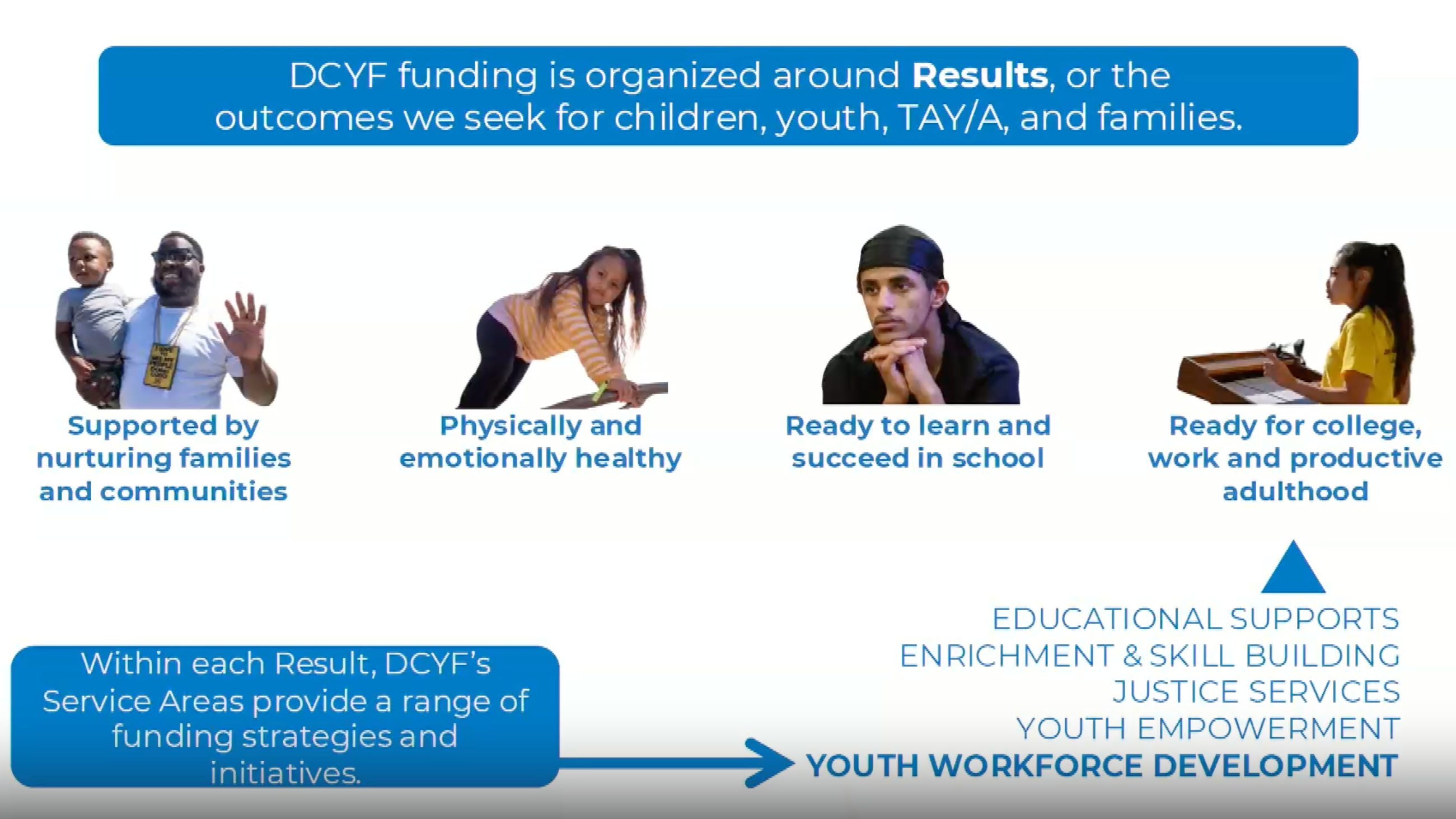
Department of Children, Youth and Their Families (DCYF) reported $23.3 million in youth workforce funding serving 3,764 participants with no cuts proposed.
Marnie Regan of Larkin Street Youth Services warned that without workforce pathways, unhoused people would lose food and healthcare benefits under the new federal rules.
What's next: The June 1 deadline is weeks away. HSA is working to expand community sites for CalFresh recipients and build on-site training partnerships with private-sector employers.
Prop I Repeal Would Cost $390M in Housing Revenue
Jeantelle Laberinto of the People's Budget Coalition presented data showing the proposed repeal of the Prop I real estate transfer tax — passed by voters in 2020 — would cost the city $390 million over four fiscal years, according to the City Controller's budget update. Since passage, Prop I has generated $200 million for affordable housing and rent relief. The coalition cited the Transamerica Pyramid sale at $691 million, which alone generated $20.7 million in Prop I revenue.
The coalition also flagged proposals to reduce inclusionary housing requirements from 50% to 5%, as recommended by the Technical Advisory Committee, and criticized the family zoning plan for encouraging small units while allowing developers to pay fees instead of building on-site affordable housing. Some 17,000 affordable homes sit in the development pipeline waiting for funding.
Immigrant Workers and Domestic Worker Protections at Risk
Multiple speakers across both hearings highlighted the intersection of budget cuts and immigration enforcement. Katia Padilla of the Latino Task Force testified that 94% of the 1,200-plus workers they serve are Latino, predominantly monolingual Spanish speakers. The California Domestic Workers Coalition reported that 60,000 San Francisco households rely on domestic workers — an industry with the highest rate of minimum wage violations: more than 5,000 per 10,000 workers.
Domestic workers testified in Spanish and Cantonese about wage theft, employer retaliation, and ICE threats. A Chinese domestic worker described having her wage claim nearly dismissed due to inadequate phone interpretation, saved only by in-language advocacy from the Chinese Progressive Association. Arab Resource and Organizing Center testified as one of the only Arabic-language service providers in Northern California.
The MOHCD cuts would eliminate the domestic worker program and culturally competent services that are often the only accessible pathway for immigrant workers seeking wage recovery.
Minor Items
Glenn Eagleson of Success Centers highlighted chronic city contracting and invoicing delays of three to six months that strain nonprofit operations.
The committee voted 4-0 to excuse Chair Connie Chan, Vice Chair Matt Dorsey, and President Rafael Mandelman from the meeting.
Supervisor Danny Sauter was excused partway through the second hearing.