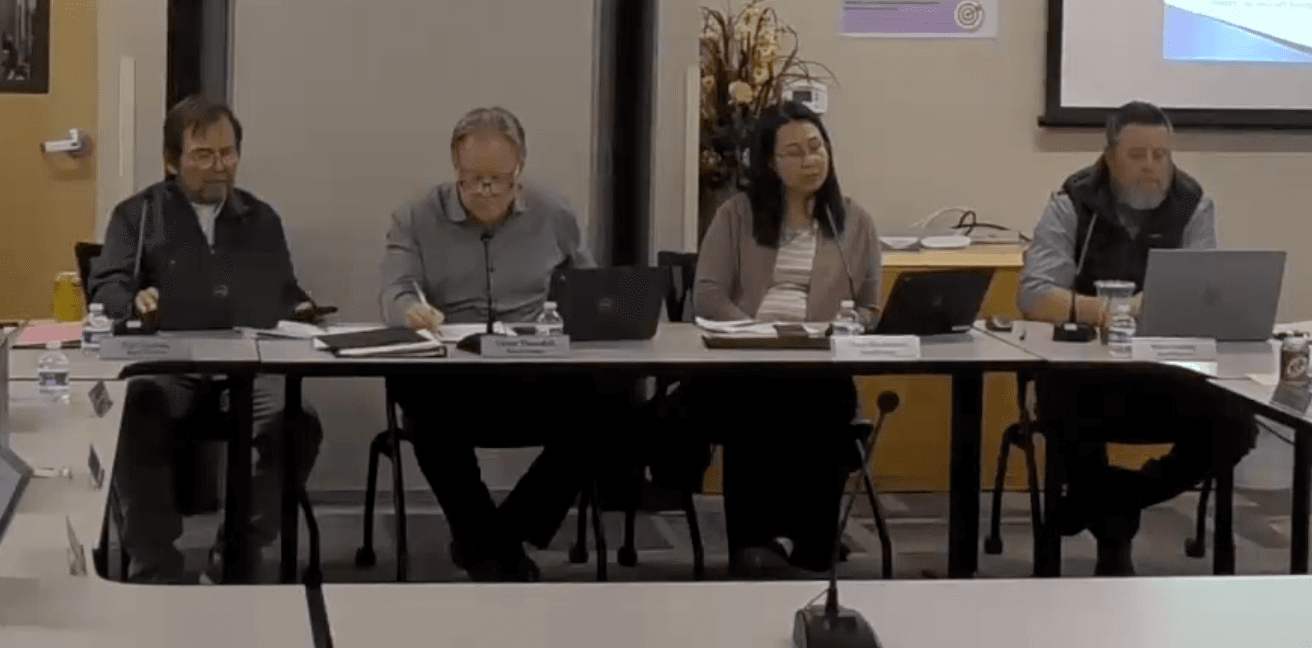
Governing Board - Mar 11, 2026 - Meeting
Governing Board • Brentwood Union School DistrictMarch 11, 2026
Locunity is a independent informational service and is not an official government page for this commission.We use AI-assisted analysis and human editorial review to publish information.
Brentwood Schools Hit Lowest Reserve in History as $1.6M in Cuts Loom
The Brentwood Union School District Governing Board certified a budget in crisis on March 11 — the district's unrestricted reserve has fallen to 4.54%, the lowest in its history, with $1.6 million in additional cuts projected for 2027-28. The meeting was bookended by grim fiscal math and pointed warnings from staff: a veteran teacher signaled potential labor action after nine months without a contract, and the superintendent called the governor's proposed underfunding of school finance guarantees "unconscionable."
Board certifies budget at historic low, with $1.6M in further reductions required by 2027-28 to stay above the 3% reserve floor
$501K in cuts approved for next year, but the board reversed course on IXL math software after community pushback, preserving it with potential one-time state funds
Teachers union pushes campaign to permanently extend Prop 55, the income tax surcharge that generates $7.7 billion annually for K-12 schools before it expires in 2030
36-year veteran teacher warns of labor action after all four employee groups spend nine months without a contract
Special education needs surge, with 18% of new enrollees arriving with IEPs and two new mod-severe classrooms planned for middle school
Classified staff layoffs scaled back significantly after HR scrubbed the list, reducing intervention aide cuts from 6.6 FTE to 1.0 FTE
The Budget: Worst Report in 30 Years
The basics: California school districts must file a "second interim" budget report midyear certifying they can meet financial obligations for the current year and two subsequent years. A "positive" certification means the district expects to maintain its required 3% reserve — but barely clearing that bar, as Brentwood did, signals deep structural strain.
Why it matters: At 4.54%, Brentwood's unrestricted ending fund balance is the lowest the district has ever recorded. The 2026-27 year projects a 3.53% reserve after $500,961 in cuts and a $739,000 transfer from Fund 17. By 2027-28, the district faces $1.6 million in "fiscal solvency reductions" — triple the $500,000 estimated just months ago at first interim.
Where things stand: Assistant Superintendent of Business Services Diane Deshler laid out the drivers in stark terms: "Our district budget is in critical condition and our ending fund balance reserve is the lowest in our district history."
She noted Brentwood is the lowest-funded district in the region: "Antioch Unified is the highest in our region. And per student they receive $8,152 more than us." Enrollment projections are softening — 49 to 74 fewer students than previously projected — with lower grades flattening even as housing development continues.
The state picture compounds the problem. The governor's January budget proposal would underfund the Proposition 98 minimum school funding guarantee by $5.6 billion. Superintendent Dr. Eaton did not mince words: "Proposition 98 was set up to be a minimum standard for funding education. It was never meant to be the maximum. And the fact that the January proposal has recommended proposing $5.6 billion under that minimum standard, which for us is about $9 million."
The district spends approximately 90% of its unrestricted budget on salaries and benefits — higher than surrounding districts — and no 2025-26 negotiated salary increases are included in the current projections. Special education costs continue rising at over 6% annually. One potential bright spot: proposed one-time discretionary block grant funds of up to $4.9 million from the state, though these cannot be booked until signed into law.
The other side: A long-serving board member who has served for 30 years was blunt: "This is the first time that I've seen a budget report like this, this bad, this negative and potentially even worse."
Decisions: The board approved the second interim report 5-0 (For: Board President Scott Dudek, Board Member Steve Gursky, Board Member Emil Geddes, Board Member Thuy Daojensen, Board Member Victor Thornhill; Against: none). The board also approved a $500,961 reduction plan for 2026-27, with one notable change: the IXL math software contract — initially on the chopping block — was preserved for one more year using potential one-time Learning Recovery Emergency Block Grant funds, based on community feedback. Dr. Eaton explained: "The one change was a direction from the board based on the feedback that they'd received around IXL to switch that to a one-time funding source rather than making a cut." A new math adoption next year will integrate similar functionality.
What's next: The May state budget revision will be critical. If the governor's Prop 98 underfunding holds or worsens, the $1.6 million cut target for 2027-28 could grow. The board will need to identify those reductions in the coming months.
'June Gloom': Contract Stalemate Draws Public Warning
Why it matters: All four Brentwood employee groups — the Brentwood Teachers Association, Confidential employees, CSEA, and Teamsters — have worked nine months without a contract. With the budget unable to accommodate salary increases, the standoff is set against the district's most constrained fiscal environment in decades.
Where things stand: Adams Middle School History Teacher Darren Spencer, a 36-year teaching veteran, used public comment to thank Board President Dudek for responding to teacher emails — then delivered a pointed warning. Spencer said he did not want to be "the June gloom guy gathering people out front and marching through," referencing a prior contract dispute, but made clear that outcome was on the table if negotiations remain stalled.
Spencer also read a statement from his wife, Tara Spencer, a classified employee in a Room 20 special day class that has gone the entire year without a credentialed teacher. She invited every board member to visit her classroom and see the differentiated curriculum she built. Spencer praised Dr. Eaton's increased visibility at school sites.
What's next: With the March 15 layoff notice deadline looming and budget projections leaving little room for raises, the spring bargaining season will test the board's relationship with its workforce.
Pioneer Teacher Details Facility and Scheduling Inequities
Why it matters: The complaint challenges the district's equity commitments by documenting specific, measurable resource gaps at Pioneer Elementary — particularly for its youngest students.
Where things stand: Pioneer Elementary TK Teacher Amy Reichen, a 22-year veteran, detailed what she described as systemic inequities at her school. Pioneer TK students receive 15 minutes of library time compared with 20 to 25 minutes at other schools. The school's carpet is 22 years old with no replacement plan. Portables installed in 2012 have exceeded their five-year lifespan with ripped carpet seams and uncleaned air ducts.
Reichen also challenged a new TK scheduling change requiring all 24 students to attend a single morning session, questioning the age-appropriateness for 3- and 4-year-olds — some not yet potty trained, some coming from preschool settings with 6-to-1 student-teacher ratios. She requested five student-centered reasons for the change. She noted Pioneer teachers were told the schedule was due in February or March while other sites had until April or until a TK MOU was settled, suggesting unequal treatment in the scheduling process itself.
Teachers Union Launches Prop 55 Campaign at Board Meeting
Why it matters: Proposition 55 — the income tax surcharge on California's highest earners that generates roughly $9 billion annually for public schools and community colleges — expires in 2030 unless voters act again. The California Teachers Association is pushing a permanent extension.
Where things stand: Brentwood Teachers Association President Connie Torres laid out the stakes at the meeting. Originally passed as Prop 30 in 2012 with 54.4% voter approval and extended as Prop 55 in 2016 with 63.3%, the tax applies to joint filers earning over $700,000 and sends approximately $7.7 billion to K-12 districts.
Torres warned: "A 15% budget cut would likely result in substantial educator layoffs that would severely impact our students. Look around the room. One in every six educators could lose their jobs if we don't pass a Prop 55 extension." She circulated petitions and requested the board pass a resolution of support. Dr. Eaton confirmed CTA has a sample resolution available.
Board President Dudek personally endorsed signing: "If you already haven't signed it, I, as a person, personal note, I strongly suggest you do so."
What's next: A board resolution of support could come at a future meeting. The presentation landed with particular force given the dire second interim budget report delivered earlier the same evening.
Special Education: Growing Costs, Growing Needs
Why it matters: Special education costs rise over 6% annually — roughly $2 million per year — and the district is absorbing a growing wave of students with intensive service needs mandated by federal law.
Where things stand: The annual special education department update revealed approximately 17% of district students are eligible for special education services, with 20 extensive support needs ("mod-severe") classes, 20 mild-moderate classes, and 342 classified staff. The Special Education Director highlighted a critical pressure point: "18% of the new enrollees came with IEPs. And you can see many, many students came who have very intensive needs."
Under federal law, the district must provide "like for like" services matching students' existing IEPs — meaning incoming students with intensive plans immediately require costly mod-severe classrooms, non-public school placements, or county placements. Two new mod-severe classes are planned at the middle school level for 2026-27 to accommodate a growing cohort.
The department also highlighted program improvements, including building continuums at sites so students can progress TK through fifth grade without changing schools, adapted PE training for general education teachers, and a new classified staff support position the director called "a game changer" for morale and retention. Early hiring is ahead of schedule, with three teacher offers already made for next year.
The board also approved a $396,128.50 special education settlement in closed session — underscoring the financial pressure these programs place on the general fund.
Staffing Cuts: Scaled Back but Still Painful
Why it matters: With enrollment softening and the budget at historic lows, the district approved reductions to both classified and certificated staff — but HR's last-minute review significantly reduced the scope.
Where things stand: Resolution 2026-12, covering classified staff reductions, passed 5-0 after HR substantially scrubbed the layoff list. Intervention aide cuts dropped from 6.6 FTE to 1.0 FTE. Campus supervisor cuts fell from 4.5 FTE to 1.2 FTE. Employee child care was reduced by 2.0 FTE. All affected positions are site-funded. Dr. Eaton acknowledged: "I just want to acknowledge HR's work on this. I think it's always been a constant with the board of we don't want to lay off and put anybody through a layoff procedure if they don't absolutely need to."
Separately, the board approved 2026-27 certificated and management staffing allocations showing a net reduction of five FTE teaching positions district-wide. Loma Vista gains one FTE to split a 4/5 combo class, and special education adds two mod-severe classes at the middle school level.
What's next: March 15 is the state deadline for issuing layoff notices to classified employees, making this week's vote a necessary step regardless of the board's reluctance.
Minor Items
Consent items 8.0 through 8.6 approved unanimously without discussion.
Resolution 2026-10 delegates authority to the superintendent to contract for public work projects up to $2.5 million each — specifically the Bristow gym HVAC replacement and Mary Casey Black building remediation — through December 2026, pending state architect approval. Approved 5-0.
Resolution 2026-11 eliminates a 0.2 FTE counseling position at Harvest Grove Virtual Academy due to low utilization. Approved 5-0.
LCAP process update: Draft Local Control and Accountability Plan goals are heading to school sites for parent and staff feedback, with board approval expected in May or June.
First read of board policies reflecting new legal requirements; will return for action at a future meeting.
Closed session actions: Board voted 5-0 to release temporary certificated employees and approve non-reelection of certain certificated employees, in addition to the $396,128.50 special education settlement.
East Contra Costa Historical Society honored with a plaque for its volunteer-run program serving approximately 1,600 third graders annually with 48 docents offering hands-on local history experiences.
Marsh Creek Elementary showcased its first-year house system modeled after Ron Clark Academy, with four student-led houses organizing community service — including collecting 34 pairs of gloves and 69 hats for mobile showers serving unhoused residents — and building school culture. Parents testified the system built confidence in shy students and gave fourth graders leadership opportunities.
Superintendent's report highlighted Brentwood Elementary earning a spot at Odyssey of the Mind World Finals, new district robotics programs, and a Rotary reader initiative.