
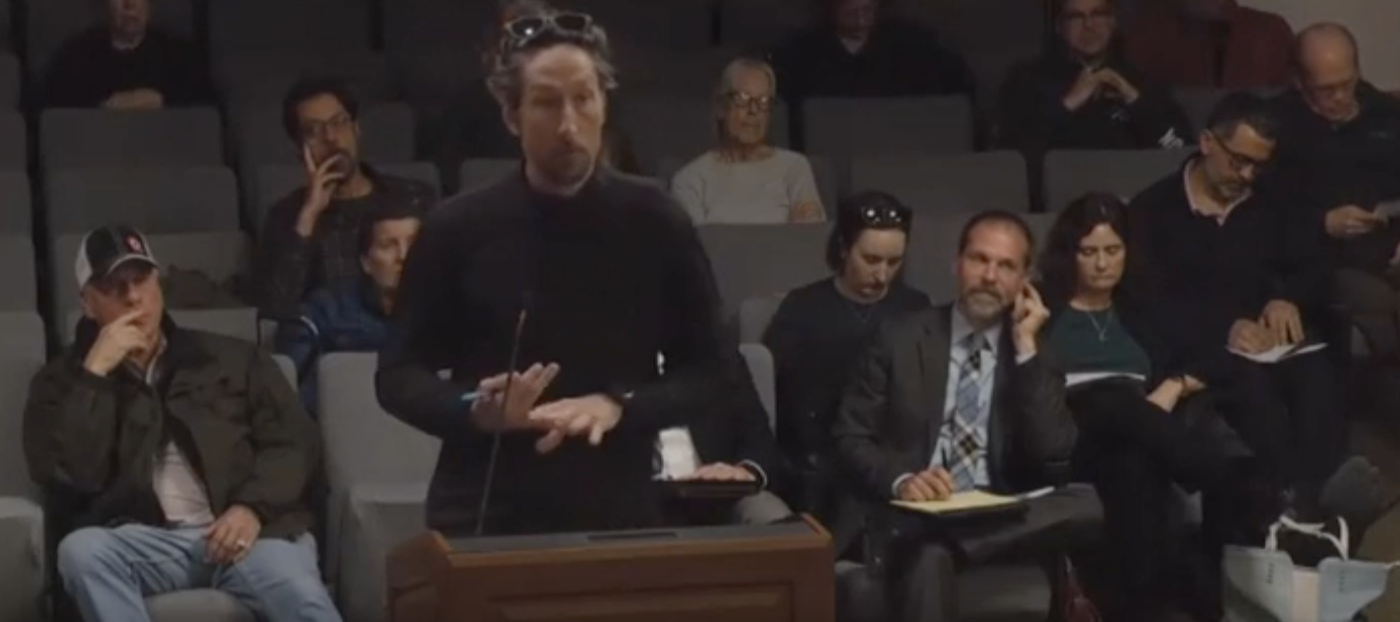
Bardstown Road/Baxter Avenue Review Overlay District Committee - Mar 17, 2026 - Meeting
Bardstown Road/Baxter Avenue Review Overlay District Committee • LouisvilleMarch 17, 2026
Locunity is a independent informational service and is not an official government page for this commission.We use AI-assisted analysis and human editorial review to publish information.
Mid-City Market Deferred as Committee Demands Walkability, Design Fixes
The biggest redevelopment proposal in the history of Louisville's Bardstown Road corridor hit a speed bump March 17 when the overlay committee unanimously continued the case, telling the Atlanta-based developer to come back with better answers on pedestrian access, a blank Baxter Avenue facade, and a color palette that doesn't ignore the neighborhood's red-brick character. The message was clear: the committee wants this project, but not like this — not yet.
- Overlay committee votes 6-0 to defer Mid-City Market to April 21, requiring revisions on three design fronts
- Branch Properties' grocery-anchored plan for the nearly 10-acre Mid-City Mall site draws roughly 15 public speakers — most supportive, but with conditions
- Four neighborhood groups formally back the project while the Metropolitan Housing Coalition and several residents push back on missing housing and dead frontage
- Committee members challenge developer on walkability, estimating a direct pedestrian path could cost just 23 parking spaces
- Black-and-white color scheme clashes with historic corridor, staff and members say; red brick needs a role
The $64 Million Question on Bardstown Road
The Basics
Branch Properties of Atlanta wants to demolish the circa-1962 Mid-City Mall at 1250 Bardstown Road and replace it with five one-to-two-story commercial buildings anchored by a roughly 50,000-square-foot grocery store — widely understood to be a Publix. Two existing tenants, Heine Brothers Coffee and Raising Cane's, would remain. The site spans nearly 10 acres with dual frontage on Bardstown Road and Baxter Avenue, making it the largest contiguous redevelopment opportunity in the overlay district.
Senior Planner Kat Grosskreutz presented staff findings recommending general approval with 13 conditions but flagged partial non-compliance on three overlay guidelines: pedestrian-friendly design (4B), building-to-property-line standards (4D), and historic compatibility (7B).
"The Baxter Avenue facade in particular did not meet this guideline," said Senior Planner Kat Grosskreutz, adding that "the reduced color palette of only black and white with a little bit of green we feel does not tie in as well with the historic references, which is a lot of traditional red brick."
Why It Matters
This isn't just a strip-mall replacement. The Highlands corridor has been losing ground — residents at the hearing described decades of decline — and this project represents the single biggest private bet on Bardstown Road's commercial future. The committee's conditions will shape what pedestrians, transit riders, and drivers experience at the neighborhood's geographic center for decades.
Where Things Stand: Three Sticking Points
1. No way to walk to the grocery store. The current site plan forces pedestrians arriving from Bardstown Road to walk along building edges and around a parking lot to reach the grocery entrance. Staff, committee members, and multiple public commenters argued this undermines the overlay district's core walkability mandate. Branch Properties President Jesse Shannon pushed back, explaining the routing was deliberate: "We don't really want people walking right through the middle of the parking field to the grocery store. We'd like them to go by the retail shops along the way."
Shannon added that a through-lot sidewalk would consume required parking spaces and that Branch was already under the minimum parking threshold set by its grocer. Committee Member Christopher Fuller estimated the actual cost of a direct path at roughly 23 spaces and urged the developer to think bigger: "If you're creating a pedestrian experience, you're making something as a destination for the pedestrian to come to," he said.
2. The Baxter Avenue "dead zone." The grocery store's loading docks and blank service walls face Baxter Avenue, one of the Highlands' most prominent corridors. Staff recommended faux storefronts, green walls, and varied parapet lines. A proposed masonry colonnade and "Rosewood Park" pocket park were noted as positive but insufficient. Public commenter Jack Trawick, a 37-year Highlands resident, drew a pointed historical parallel, arguing the Baxter side would replicate the same suburban design failure that doomed the original mall.
Shannon explained that retail along Baxter was not viable due to cemetery adjacency, loading logistics, and leasing risk. But the committee was unmoved, making the facade one of the three required revisions.
3. Black and white doesn't fit. Staff found the developer's restricted palette — black, white, and green — only partially met the guideline requiring compatibility with surrounding historic structures. Committee Chair Kendal Baker pressed the issue: "It's hard for me to not see with this new development some frontage, some street presence along Baxter." Fuller and other members agreed that incorporating traditional red brick would warm the design without compromising the project's identity.
Applicant attorney Cliff Ashburner of Dinsmore & Shohl argued the opposite, insisting the site should read as unified: "This is a single property and it needs to read as a single property. We think that the nature of Bardstown Road and the variation is largely driven by the fact that you have a lot of small sites and each building on each site is its own thing."
The Other Side: Community Support With Conditions
The hearing featured roughly 15 public speakers, and the majority came to support the project — but almost none without caveats.
Four neighborhood organizations formally backed the plan: the Cherokee Triangle Association (unanimous vote), Friends of Bardstown Road, the Highlands Commerce Guild, and the Tyler Park Neighborhood Association (majority vote). Rob Willey of the Cherokee Triangle Association conditioned support on pedestrian enhancements including elevated speed tables and historic brick crosswalks. Ben Botkins, a Friends of Bardstown Road board member and Bellwether Hotel owner, called the project "a colossal win" but urged the committee to refine details without delay.
Lenore Slosky, a supporter, captured the walkability tension succinctly, noting that bus riders carrying groceries will cut through the parking lot regardless of what the site plan says.
Long-term residents like Isaac White, who said he nearly left the Highlands due to corridor decline, urged the committee to champion canopy trees and green space, noting the site is the largest contiguous impervious surface in the neighborhood. Barbara Berman, a former Highland Douglas Neighborhood Association vice president who planted 1,250 canopy trees in the area, urged planting trees that would reach 50 to 100 feet at maturity rather than small ornamental species.
The Other Side: Opposition and Missing Housing
The sharpest dissent came from Tony Curtis, executive director of the Metropolitan Housing Coalition, who argued housing was not merely absent but ignored. He cited Louisville's 55,000-unit housing deficit and called the project a missed opportunity for mixed-use development.
Michael Houston, a former overlay district staff reviewer from Lexington, presented an alternative concept that would shave 60 feet off the grocery's Baxter Avenue side to accommodate tuck-under townhouses, arguing that Publix has adapted to urban formats elsewhere.
Patty McDowell argued the grocery store was simply too large and that housing should replace the small retail shops, with the grocery moved and downsized.
Decisions
After nearly three hours of testimony and deliberation, the committee voted unanimously — 6-0, with Committee Member Julia Williams absent — to continue the case to April 21, 2026. Member Christopher Fuller made the motion, directing the applicant to return with revised proposals addressing all three issues: pedestrian connection, Baxter Avenue frontage, and color palette.
Chair Kendal Baker offered the developer a clear signal: "I feel like the applicant can feel confident that this committee is poised to approve, but we would feel more comfortable seeing it again."
Ashburner accepted: "We are happy to continue today's hearing to the next meeting that this committee has."
What's Next
Branch Properties has roughly five weeks to redesign. The Board of Zoning Adjustment is expected to hold a separate hearing on the development plan on April 20 — one day before the overlay committee reconvenes — which could further alter the site layout. The committee's April 21 session will be the project's next critical checkpoint, and the three required revisions will test whether a national grocery chain and an Atlanta developer can meet the design standards of one of Louisville's most particular neighborhoods.
Vote: For: 6 (JonAnthony Floyed-Jackson, Christopher Fuller, Kendal Baker, Emily Paprocki, Aaron Givhan, Kelly Estep), Against: 0, Absent: 1 (Julia Williams)
- Alley traffic and buffering concerns raised by multiple Rosewood Avenue and Beechwood Avenue residents, including requests for stop signs and dumpster relocation away from homes
- Pecan tree preservation flagged by Friends of Beechwood Park president Brian Cottle, who warned that the property contains one of the largest pecan trees in Kentucky
- Developer proposed three minor modifications to staff conditions regarding material review scope, tenant-by-tenant window tinting flexibility, and lighting code references; these remain pending for the April 21 continuation