
Coachella Youth Commission Weighs Smoking Ban for Apartments, Public Spaces
Youth Advisory Commission • CoachellaJune 15, 2026
Locunity is an independent informational service and is not an official government page for this commission. All information is sourced from public footage and an analysis of official agendas with the aid of responsible, fact-checked AI. to report an error or omission.
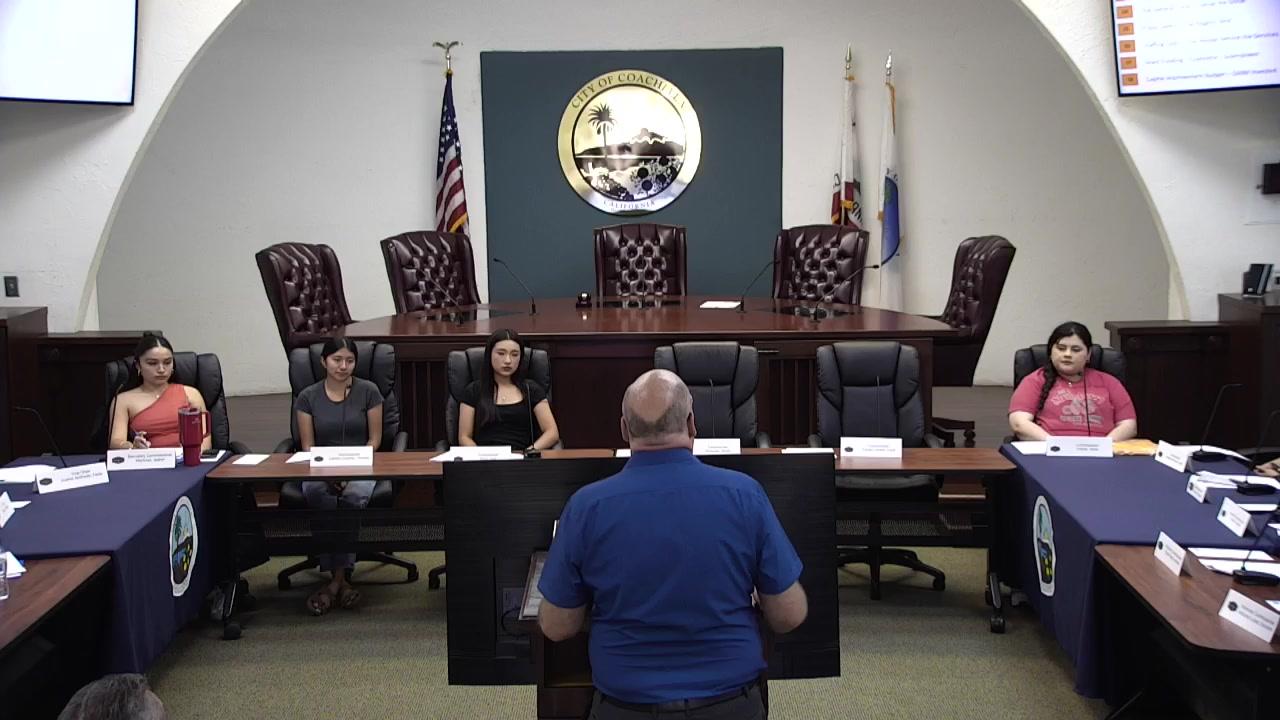
Coachella is drafting one of its toughest tobacco rules yet, a ban that would reach inside apartment buildings, across public spaces and into city-permitted events. At its June 15, 2026, meeting, the Youth Advisory Commission heard the draft and took public comment from health advocates. Members also got a blunt finance lesson: only about 8 cents of every general fund dollar is truly flexible.
- Draft smoke-free ordinance would ban smoking in multi-unit housing, public areas and events
- New leases after Jan. 1, 2027, would need smoke-free terms; 25-foot buffer proposed
- Three public commenters backed stronger rules, citing the city's D grade from the American Lung Association
- About $3.2M of the $40M general fund is discretionary; 47% goes to public safety
- Youth Leadership Conference reached 26 middle schoolers from three schools
Smoke-Free Draft Targets Apartments, Events
The basics: The draft Smoke-Free Areas Ordinance builds on state Health and Safety Code Section 104495. The commission was asked for feedback only. No vote was taken.
Why it matters: The rules would change daily life for renters, landlords and event organizers citywide. Advocates framed the proposal as a response to Coachella's poor marks from the American Lung Association.
Where things stand: Community Development Director Kendra Reif walked through the draft. It would prohibit smoking in:
- Public spaces, recreation areas and service areas
- City-permitted events
- Units and common areas in multi-unit residential buildings
Property owners would have to post signs. Private events and ceremonial Indigenous uses would be exempt.
"It would establish a 25-foot smoke-free buffer near entrances, exits, windows, and air intakes," said Reif.
The housing piece has a set start date. "New leases entered into after January 1st, 2027 must include smoke-free provisions," Reif said. Code enforcement would handle violations. Staff would start with education, and violations would be infractions under the municipal code.
One commissioner asked a practical question: "Would it also include some examples of where people could smoke that won't affect the ordinance?"
"It will just state where it's explicitly prohibited," Reif answered. She pointed to a single-family backyard or a private vehicle as examples of places outside the ban.
Another commissioner urged staff to reach out to Coachella Valley High School's Health Academy and HOSA students. "I would definitely say reach out to them," the commissioner said.
The other side: No speaker opposed the draft. The debate was over how hard to push.
- Public commenter Joseph Huesca cited the American Lung Association's State of Tobacco Control report card. It gave Coachella an overall D, F grades for smoke-free air and smoke-free housing, and an A for reducing tobacco sales. He urged stronger protections for youth and residents.
- Public commenter Edie Gomez offered Pasadena's tobacco-use ordinance as a model. Enforcement there is driven by complaints, owners must post signs, and fines run $500, $1,000 and $2,000, with misdemeanor options.
- Michelle Duarte, community transformation consultant with Blue Zones Project Coachella, backed smoke-free public spaces for youth health and less litter. She stressed education and help quitting over punishment, and she offered to partner on outreach and signage.
That leaves two approaches on the table. Gomez described Pasadena's escalating fines, while Duarte and the staff draft lean on education first.
Decisions and stakeholder impacts: The item was presented for feedback, and commissioner input was limited.
- Renters in multi-unit buildings would gain smoke-free protection in their units and common areas. Renters who smoke would face new limits at home.
- Property owners would take on signage duties and lease changes.
- Event organizers would need to keep city-permitted events smoke-free.
- Code enforcement would add a new caseload, starting with education.
What's next: Staff plan to collect feedback from the Health Academy. The draft will then go to the City Council for introduction and adoption.
Finance 101: Only 8 Cents Is Flexible
Why it matters: Grants and special funds, not the general fund, pay for most capital projects in Coachella. That limits how much room the city has for new youth or community programs.
Where things stand: Lincoln, a presenter from the city's Finance Department, explained how city money works. He covered modified accrual accounting and the city's fund types: general, special revenue, debt service, capital projects and enterprise.
The general fund draws on these sources:
- Sales tax and Measure U: about 35%
- Intergovernmental revenue: 20%
- Property tax: 15%
- Charges for services: 10%
- Licenses and permits: 8%
- Other: 12%
On the spending side, public safety takes about 47%, and police services alone account for about 33%. After staffing and debt, roughly 8 cents of each dollar is left.
"Out of the $40 million in revenues, we really only have about $3.2 million that's available for discretionary spending," said Lincoln.
The capital side tells a different story. The roughly $66M capital budget for fiscal 2026-27 relies heavily on outside money:
- About $24M in federal and state grants
- $10M in gas tax funds
- $10M in water and sewer funds
- $6M in impact fees
- $6M in CFA bonds
- $4M in other local grants
Lincoln summed up the strategy in four words: "Grant funding, our superpower."
Decisions and stakeholder impacts: This was an informational item, and commissioners asked no questions. The takeaway matters for any group seeking city dollars. New programs compete with maintenance and rising public safety contract costs for a thin slice of flexible money. Proposals that can tap grants have a structural advantage.
Youth Conference Reaches 26 Middle Schoolers
Where things stand: City staff member Rebecca Shepherd and Commission Secretary Isabel Martinez recapped the commission's May 2 Youth Leadership Conference, its signature project.
The event had three goals:
- Introduce career pathways
- Build confidence for the move to high school
- Encourage community engagement
"We wanted to create an event that would have helped us all when we were entering high school," said Martinez.
The conference drew 26 registered students from three middle schools. It featured six professional speakers, eight resource table hosts, 15 volunteers and five raffle prizes. Mayor Frank Figueroa and Councilmember Denise Delgado spoke. Chief Deputy Misty Reynolds of the Riverside County Sheriff's Department gave the keynote.
Decisions and stakeholder impacts: Resource partners included:
- Youth Leadership Institute
- Desert Recreation District
- College of the Desert
- Riverside University Health System
- Planned Parenthood
- Xavier College Preparatory
- Blue Zones Project
- Riverside County Behavioral Health
The event connected middle schoolers directly with local health, education and recreation providers.
What's next: Commissioners were invited to present the conference to the City Council at its next meeting.
Minor Items
- Minutes: Martinez moved to approve the March 9, 2026, minutes, and Vice Chair Daila Juarez-Andrade seconded. No vote result was recorded.
- New city manager: City Manager Gustavo Romo introduced himself on his first day. "I've never seen such an organized Youth Commission," he said.
- Council appearance: Staff member Selena asked commissioners to wear their golden yellow shirts to the next City Council meeting for the conference presentation.
- Quorum: Eight commissioners were present.
Looking Ahead
This was the commission's last meeting with its current members. Recruitment for the next cohort is expected in August or September, with new members seated around October.