
Church Parking Plan Gets 6-2 Roll Call, Long List of Conditions
Planning Board • VeronaOctober 27, 2026
Locunity is an independent informational service and is not an official government page for this commission. All information is sourced from public footage and an analysis of official agendas with the aid of responsible, fact-checked AI. to report an error or omission.
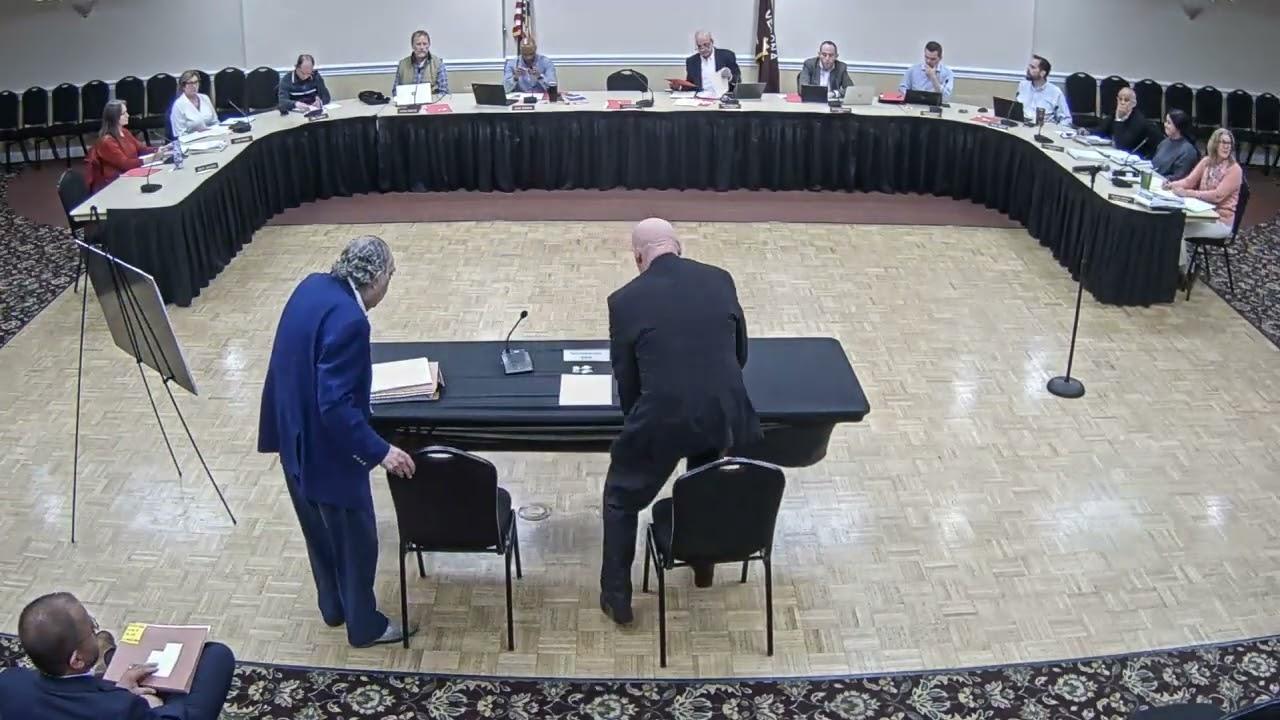
The Verona Planning Board spent most of its meeting on Our Lady of the Lake Church's plan to rebuild its Lakeside Avenue parking lot and add a garage. Members pushed for changes to school drop-off, a fire zone and stormwater fixes. A motion to approve with conditions drew six yes votes and two no votes in the roll call, but the board did not formally announce a result before adjourning.
- Application 2026-04 drew 6-2 in a roll call on a church site plan; no result was declared.
- Drop-off safety drove the debate at the Montrose Avenue and Hill Street intersection.
- The plan cuts 8 parking spaces, which requires variances, alongside a new 860-square-foot garage.
- Stormwater dispute: The board's consultant said a smaller paved area does not excuse the plan from state standards.
- The applicant agreed to fix stormwater compliance after approval, choosing the "hydrograph" route.
Drop-Off Danger Shapes Church Site Plan
The basics: Application 2026-04 seeks preliminary and final site plan approval for 22 Lakeside Avenue (Block 1806, Lot 13), home of Our Lady of the Lake Church and its school. The plan calls for a roughly 860-square-foot three-car garage, demolition of a vacant house, a reconfigured parking lot and added pedestrian circulation. It also needs several bulk variances, which are exceptions to zoning rules on size, setbacks and similar standards.
Why it matters: The site sits at a congested school intersection. Student safety during morning drop-off, not the garage itself, became the board's central concern. The plan also reduces parking by 8 spaces, which triggered variance requests.
Where things stand: The church's pastor told the board the current lot is dangerous during school drop-off. He said parking is adequate except at Christmas and Easter.
Board members were not fully persuaded. They questioned why the applicant submitted no parking study. They also raised concerns about the diagonal pull-in stalls, about a double-lane drop-off that municipal department reviews had suggested, and about traffic at Hill Street and Montrose Avenue.
One board member wanted fire safety written into the plan. Citing a request from the Fire Prevention Bureau to keep parking stalls out of a key area, the member urged a fire-zone requirement.
The other side: The sharpest skepticism came late in the hearing and focused on rush-hour conditions that no one had studied on site.
"I hesitate to approve this without somebody seeing that condition at 8 o'clock in the morning," said a board member.
Decisions and stakeholder impacts: The motion to approve included conditions discussed during the hearing:
- Eliminate the conflict created by double-sided drop-off stalls.
- Obtain fire official approval of a fire zone.
- Revise the tree and lighting plans.
- Explore a curb cut on the northwest side, with input from police traffic safety staff.
According to the roll call as voiced, the vote was For: 6, Against: 2, Absent: not stated.
- Voting yes: Board Member Lilly, Board Member Camuti, Board Member Freschi, Township Manager O'Sullivan, Mayor Tamburo and Vice Chair Heinemann.
- Voting no: Board Member Parker and Board Member DiBartolo.
The chair did not declare whether the motion passed before the board adjourned.
If the approval stands, the church gets a safer, reorganized lot. The trade-off is fewer spaces on its busiest holidays.
School families have the most at stake in how the drop-off redesign turns out. Neighbors near Hill Street and Montrose Avenue will feel any change in traffic patterns. The northwest curb cut is still only something the applicant must explore, so its effect on the street is unsettled.
What's next: The board's written resolution, normally adopted at a later meeting, should confirm the outcome and the final conditions. Residents can check the resolution and minutes for the official result.
Stormwater Fixes Deferred Past Approval
Why it matters: The church property drains toward the Peckman, which floods. The plan reduces impervious surface, meaning pavement and rooftops, by 4,443 square feet. It adds no detention, however, so it does little to hold back runoff during storms.
Where things stand: The applicant's engineer said the project lowers peak runoff and uses six Rapterra water-quality devices. He said it does not trigger state groundwater recharge requirements.
The board's engineering consultant identified two gaps:
- No compliance option chosen: The stormwater report never states which option under New Jersey's stormwater quantity rules (N.J.A.C. 7:8-5.6) the project uses.
- Some runoff skips treatment: The "offline" layout of the treatment devices lets some runoff bypass them.
The consultant called both issues fixable. He was clear that the reduced paving does not settle the matter.
"That fact doesn't exempt you from complying with the stormwater quantity standards," said the board's engineering consultant.
The applicant's engineer then chose the hydrograph method, which compares runoff before and after construction.
"We are going route 1, which is that we can prove with the hydrograph," said the applicant's engineer.
The other side: Members asked directly whether the project would help with flooding along the Peckman. They learned the plan includes no detention and no significant runoff reduction.
Decisions and stakeholder impacts: The applicant agreed to four stormwater conditions:
- Select a compliance option and demonstrate that the project meets it.
- Move the Rapterra devices.
- Inspect the downstream pipe by camera.
- Update the stormwater maintenance manual.
This approach lets the project move forward while leaving technical compliance to engineering review after approval. That is common practice, but it means residents downstream must rely on follow-up review rather than numbers presented at the hearing.
What's next: Revised stormwater calculations and plans will go to the board's engineer for sign-off as a condition of any approval.
Minor Items
- Minutes: The board approved its Sept. 24 meeting minutes by voice vote.
- 2027 calendar: The board moved its March and May 2027 meetings to Wednesday, March 24, and Wednesday, May 26, to avoid conflicts with Holy Friday and Memorial Day weekend. Staff confirmed Zoom can handle simultaneous meetings. The motion passed on a roll call.
Looking Ahead
Watch for the board's resolution on Application 2026-04. It will confirm the final vote and set binding conditions on drop-off, the fire zone and stormwater compliance.