United Nations – Unstoppable Africa – Sep 20, 2026
Unstoppable Africa • United NationsSeptember 20, 2026
Locunity is an independent informational service and is not an official government page for this commission. All information is sourced from public footage and an analysis of official agendas with the aid of responsible, fact-checked AI. to report an error or omission.
Africa Demands Ownership of Its Minerals, Data, and Future at Landmark UN Summit
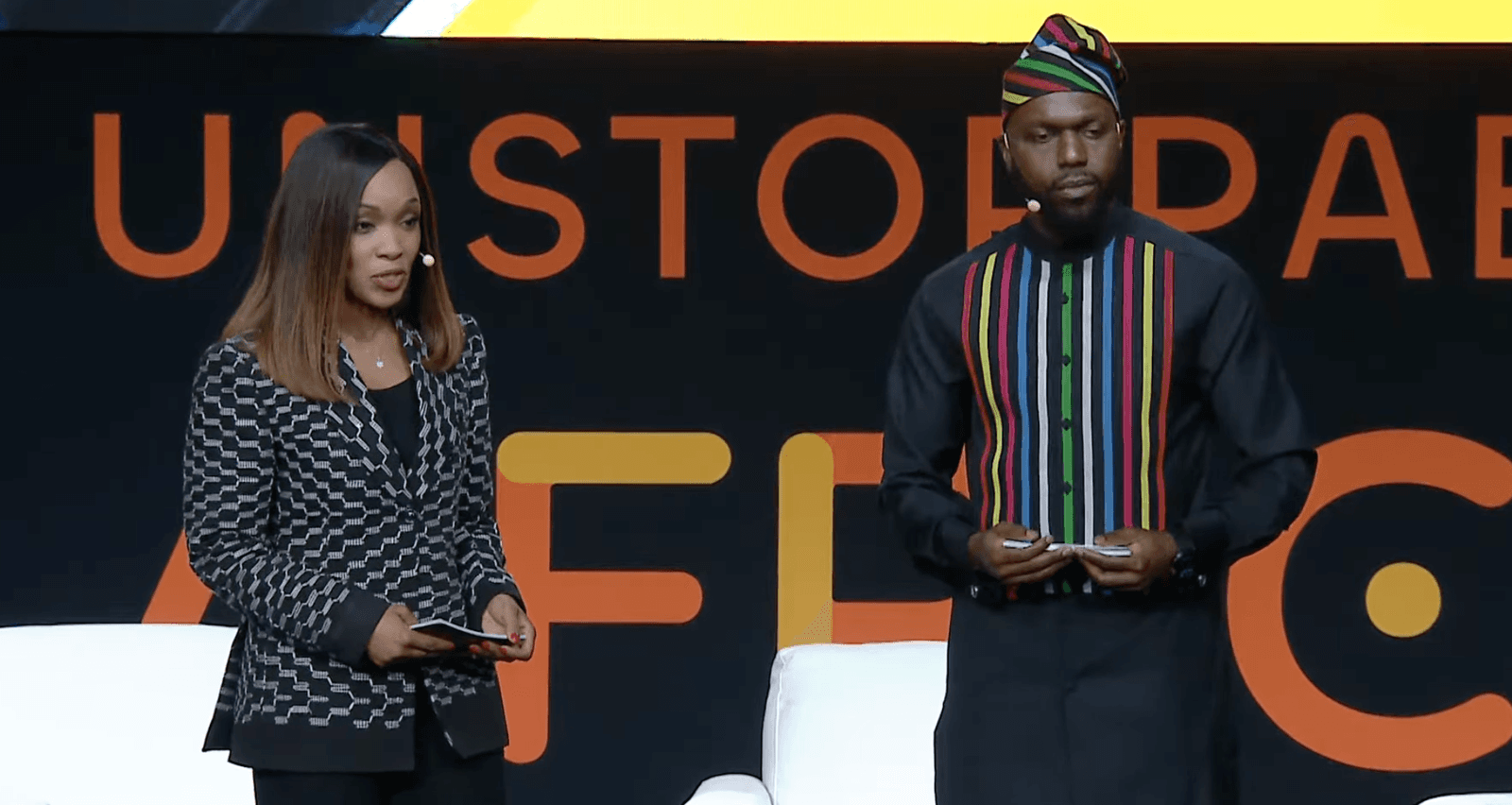
The fifth annual Unstoppable Africa summit at UN headquarters brought together 3,000 delegates, multiple heads of state, and the heads of the world's most powerful multilateral institutions around a single, urgent thesis: Africa must stop exporting raw materials — whether cobalt, oil, or data — and start capturing value at home. From a $300 million renewable energy fund that launched on stage to a blunt warning from the WTO's chief that the continent has two years to shape global trade rules, the daylong program moved between grand vision and concrete deal-making at a pace rarely seen at a UN side event.
- Sierra Leone's president vows African mineral sovereignty and term-limit honor, setting the tone for a summit focused on value addition over extraction
- UN Secretary-General Guterres declares "no more plundering" of African resources and calls for permanent African seats on the Security Council
- Nigeria's $300 million off-grid solar fund launches on stage, backed by Africa 50, World Bank, and International Solar Alliance
- Africa holds less than 1% of global data center capacity despite 19% of world population, Amini CEO warns in parallel to mineral extraction
- IFC triples capital mobilization to $22 billion; IMF quadruples Africa exposure to 36 billion SDR as development finance scales up
- WTO chief warns Africa will be "on the menu" without trade experts in Geneva within two years
- US advisor reports $25 billion in facilitated deals under Trump administration's aid-to-trade pivot
The Mineral Fight: Own It or Lose It
Africa's vast critical mineral reserves — at least 30% of the world's supply, and potentially more — dominated the summit's opening hours, with heads of state, mining executives, and trade leaders converging on a single message: raw export is economic surrender.
Why it matters: The continent supplies the cobalt, lithium, copper, and rare earths that power the global energy transition and AI revolution, yet processes almost none of it domestically. The result: exported jobs, imported finished goods at premium prices, and communities that sit atop immense wealth but see little of it.
Where things stand: President Julius Maada Bio of Sierra Leone opened the summit by calling on African nations to reject the colonial-era infrastructure model. "We should not allow the exploitation of natural resources with infrastructure that takes just from the mines into the port," he said, arguing that roads and rail must also serve agriculture and the movement of people.
Veronica Bolton-Smith, CEO, Critical Minerals Africa Group, noted that Africa has never been fully geospatially mapped and likely holds even more minerals than current estimates suggest. She cited Ghana's success attracting 17 car manufacturers in four years by screening investors for those willing to build local processing capacity.
Ambassador Bridget Motsepe-Radebe, Chairperson and Founder, Macau Mining, described South Africa's mining legislation requiring 30% Black ownership with community benefit sharing, reporting that rural communities received 298 million in dividends in 2023 under these frameworks.
The other side: Eddie Kioni, CEO and Founder, Wenasa, offered a private-sector counterpoint from the Democratic Republic of the Congo, where he is building a $2 billion copper-cobalt refinery as a Congolese-owned venture. He credited the DRC's mining code for supporting local ownership, demonstrating that policy and capital can align.
WTO Director-General Ngozi Okonjo-Iweala later sharpened the argument, urging sub-regional value chains rather than individual country efforts. "Can we make sure when we are negotiating these things, we have damn good lawyers at the table? And we have technical experts at the table, and we try to look at the right kinds of conditions," she said. She cautioned against export bans imposed without the processing infrastructure to receive investment, recommending equity stakes over after-profit taxation as a more effective tool for capturing value.
What's next: Bolton-Smith closed the minerals panel with a Bob Marley quote — "Emancipate yourselves from mental slavery" — a line that drew applause and encapsulated the summit's mood. The practical question remains whether African governments can coordinate the regulatory, infrastructure, and workforce investments needed to move from raw extraction to refining and manufacturing at continental scale.
Africa's Data Is Being Extracted Like Its Minerals
The summit's sharpest metaphor came from Kate Kallot, Founder and CEO, Amini, who drew a direct line between the extraction of African minerals and the extraction of African data.
The basics: Data generated on the African continent — agricultural, health, environmental, commercial — is overwhelmingly processed on foreign cloud infrastructure and sold back as premium AI applications, a digital replay of the resource curse.
Why it matters: "Despite the fact that we have close to 19% of the world's population, we have less than 1% of the global data center capacity," Kallot told the audience. "And the real number is closer to zero than one."
Where things stand: Kallot described losing a compute tender because her company could not post $10 million upfront despite having the best technology — a capital barrier that systematically excludes African firms. The exchange prompted immediate on-stage responses: Samaila Zubairu, President and CEO, Africa Finance Corporation, offered access to AFC's $100 million technology fund and digital free zone in Lagos. Makhtar Diop, Managing Director, International Finance Corporation, pledged to channel more equity to African tech startups. Nigeria's communications minister separately announced a $2 billion fund deploying 90,000 kilometers of fiber optic network.
What's next: Whether these pledges translate into sovereign compute infrastructure will determine whether Africa's AI future is built at home or rented from abroad.
$300 Million Solar Fund Launches to Power Off-Grid Nigeria
In one of the summit's most concrete moments, the Nigeria Decentralized Renewable Energy Fund was commercially launched on stage, with a signing ceremony involving multiple backers.
Why it matters: Africa needs 26 gigawatts of new installed capacity by 2030 but is adding only seven to eight; 600 million people still lack electricity access, requiring an estimated $64 billion annually.
Where things stand: The fund, backed by Nigeria's sovereign wealth fund (NSIA), Africa 50, the World Bank, and the International Solar Alliance, targets $300 million in equity capital for off-grid solar companies serving Nigerians beyond the national grid. Alain Ebobissé of Africa 50 announced the commercial launch, positioning it as a replicable model for other African nations.
Separately, President Netumbo Nandi-Dtaitwah of Namibia outlined her country's energy mix strategy, which includes the $10 billion Project Hyphen green hydrogen initiative alongside oil and gas development. She also announced 100% government-funded university tuition. Botswana's energy minister reported progress from 8% to 40% renewable energy, while the African Union Commissioner called for integrating the continent's five power pools into a Single African Electricity Market.
What's next: The Nigeria DRE Fund's success will be measured by how many off-grid connections it delivers and whether other nations replicate the structure.
Guterres and African Leaders Demand Security Council Seats
Why it matters: Africa's 1.4 billion people have no permanent representation on the UN Security Council, even though roughly 60% of the body's agenda concerns the continent — a legacy of exclusion from the founding of multilateral institutions.
Where things stand: President Bio, who serves as coordinator of the C10 committee pushing for reform, reported that all five permanent members have accepted in principle that Africa should be on the Security Council, but momentum is lacking. He called the current arrangement "abnormal."
UN Secretary-General António Guterres reinforced the message, calling Africa a "double victim of colonialism" — first from colonialism itself, then from exclusion when the multilateral system was created. "We must ensure that Africa's vast natural resources, particularly critical minerals, create local value and decent jobs, rather than simply being shipped overseas. No more plundering," he said.
In a symbolic but resonant moment, the UN General Assembly voted 164 to 1 to adopt the One Equal Earth Map, which depicts Africa in its proper geographic size — a corrective to the Mercator projection that has long minimized the continent visually.
$25 Billion in Deals: US Advisor Outlines Trump's Africa Pivot
Massad Boulos, Senior Advisor to the President on Arab and African Affairs, outlined what the Trump administration calls its aid-to-trade policy shift.
Why it matters: The reorientation signals a structural change in the US-Africa relationship, moving from development assistance channeled through NGOs toward direct government-to-government and private-sector partnerships.
Where things stand: "Since last year, the United States has — just the Department of State alone has facilitated about 60 transactions between the US and African countries totaling about $25 billion," Boulos said. He added that $15 billion in health memoranda of understanding are now directed to qualifying governments rather than intermediary organizations.
Boulos described President Trump hosting over 13 African heads of state individually rather than at a single summit, which he characterized as a record. He cited the Lobito Corridor — a rail and road project linking the DRC and Angola to Western markets — as a long-term strategic investment, and outlined counterterrorism and conflict resolution efforts across Sudan, Libya, Western Sahara, and the DRC-Rwanda agreement signed in Washington.
What's next: The aid-to-trade framework will be tested by whether facilitated deals produce measurable economic outcomes beyond headline figures.
WTO Chief: Two Years to Get in the Room or Get on the Menu
Ngozi Okonjo-Iweala, Director-General, World Trade Organization, delivered one of the summit's most urgent warnings.
Why it matters: Global value chains are diversifying due to geopolitical tensions, creating a rare window for Africa to attract manufacturing — but only if the trade rules are favorable.
Where things stand: Okonjo-Iweala described African ambassadors in Geneva as overwhelmed, covering WTO, WHO, ILO, and consular duties simultaneously. "If you're not at the table, you'll be on the menu. So we have to be at the table. But I have to be brutally honest with you. To be at the table, you have to have the right people and the capacity," she said.
She noted 132 critical mineral partnerships signed globally in five years, 36 involving Africa, but criticized their lack of transparency. She urged African governments to use the WTO's Investment Facilitation for Development Agreement and special economic zones to attract value chains, and to pursue equity stakes in mineral ventures rather than relying on after-profit taxation.
What's next: Okonjo-Iweala called for African trade experts to be deployed to Geneva immediately, framing the reform window as approximately two years before rules are locked in.
Financing Africa at Scale: From $9 Billion to $22 Billion
A day-long thread ran through nearly every panel: Africa's private-sector credit averages just 28% of GDP, compared to more than 100% in advanced economies. Closing that gap is the precondition for everything else.
Why it matters: Without deep local capital markets, every infrastructure project, every manufacturing plant, and every tech startup depends on foreign capital with foreign terms.
Where things stand: Makhtar Diop, Managing Director, IFC, reported tripling mobilized capital. "Four, five years ago, we were mobilizing capital markets apart from our balance sheets, the World Bank Group, $9 billion in Africa. This year it's $22 billion, three times," he said, noting the IFC had reached $112 billion in total.
Mandy DeFilippo, CEO for US and Americas, EMEA, Standard Chartered, highlighted a $300 million supply chain finance facility with the IFC across eight African countries. The IMF's Zain Zainuddin reported quadrupled exposure from 9 to 36 billion SDR. Samaila Zubairu of the Africa Finance Corporation called for standardized documentation to stop "starting from the beginning" on every deal.
In a separate panel, Standard Bank's Nkululeko Nyembezi emphasized the bank's 163-year, 21-market presence as critical for de-risking, while Equity Group's James Mwangi described building trust through financial inclusion as the foundation for capital markets. Citi's Stephanie von Friedeburg introduced a product lending excess local currency liquidity through multilateral development banks.
From 100th to 1st: Luol Deng's Case for Sports Infrastructure
Luol Deng, President, South Sudan Basketball Federation and former NBA All-Star, made a personal and financial case for sports as economic development.
Why it matters: Ten percent of NBA players are of African descent, but the continent lacks the infrastructure to develop and retain talent — or to capture the commercial ecosystem around sports.
Where things stand: "We started as 100 and something in the world to right now we're 24th in the world. We were 40th in Africa. Now we're number one in Africa and we're representing the continent," Deng said, describing how he financed South Sudan's basketball federation from scratch with his own money over six years.
He argued that African stadiums must be attached to restaurants, music venues, and other amenities rather than copying Western models. Claire Akamanzi, CEO, NBA Africa, reported $250 million in economic impact and 40,000 jobs from the Basketball Africa League's first six seasons, and outlined a transition to a semi-closed league with permanent teams. Both stressed that sports keeps youth engaged and provides scholarship pathways, not just professional athlete pipelines.
Local Manufacturing: A Solar Vaccine Fridge Built in Kenya
Norah Magero, Co-Founder and CEO, Drop Access, described developing her solar-powered vaccine fridge, called Vaxeevax, after seeing vaccines spoil during power outages in Kenya.
Why it matters: Africa imports most of its medical devices, technology, and manufactured goods; building local manufacturing creates jobs, drives innovation ecosystems, and reduces dependency.
Where things stand: Magero insisted on manufacturing locally despite pressure to import, noting that a 19-year-old volunteered to build the circuitry. "The markets need to unify. Being confined to just serving the Kenyan market, then shifting to Tanzania, it's a bit too small-scale. I need to serve the whole African market, and the market is not unified," she said, identifying a $5 million funding gap and calling for harmonized certification requirements across countries.
UNDP Administrator Alexander De Croo emphasized that "healthcare is a local activity" and highlighted the UNDP's Timbuktu project for scaling African innovation, noting that almost no medical trials happen in Africa, which limits the effectiveness of drugs developed elsewhere.
AfCFTA in Action: Tariff Cuts and a Pan-African Payment System
The African Continental Free Trade Area moved from theory to practice in a panel that featured a manufacturer who is already benefiting.
Why it matters: Intra-African trade is growing but remains hampered by shipping times of 45 to 65 days between East and West Africa, fragmented regulations, and $4 billion in annual payment routing costs through foreign banks.
Where things stand: Marianne Musangi of HACO Industries described setting up manufacturing in Ghana after AfCFTA reduced her import duties from 15% to 5%, though she noted the shipping route from Kenya to Ghana still takes 45 days via the Cape or 65 days via Malaysia. Afreximbank's Yusuf Dayah reported disbursing $40 billion in revolving intra-African trade support, extending $8 billion to 500 of 600 African commercial banks, and launching the Pan-African Payments and Settlement System, now adopted by 18 central banks and 200 commercial banks. The Intra-African Trade Fair has generated $120 billion in deals over four editions.
Phuti Mahanyele-Dabengwa of Naspers noted that digital trade still depends on physical logistics and that cross-border business registration costs can reach $200,000 — a barrier that keeps small and medium enterprises locked into single markets.
- Dangote IPO targets 10 million shareholders. Aliko Dangote, President and Chief Executive, Dangote Group, announced his upcoming IPO aims to democratize wealth across the continent. "We're looking at having 10 million shareholders. And I'm 100% sure we'll get 10 million shareholders," he said.
- President Bio pledges to honor term limits. Sierra Leone's president confirmed he will not seek a third term, saying, "My word is my bond. We have a time limit, and that is what is going to prevail."
- UN General Assembly votes 164–1 to adopt the One Equal Earth Map, depicting Africa in its proper geographic size.
- Standard Chartered launches $300 million supply chain finance facility with the IFC across eight African countries.
- Sanda Ojiambo, Assistant Secretary-General and CEO, UN Global Compact, provided opening and closing remarks framing the summit's themes.