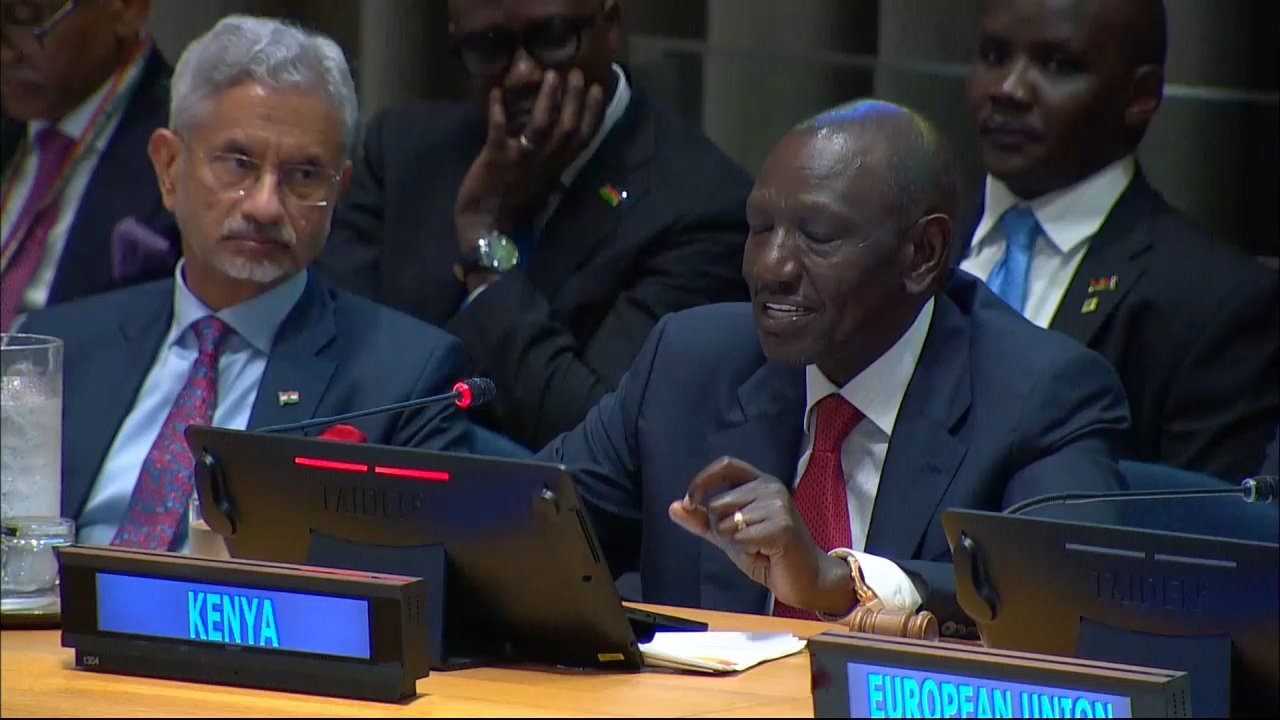
(Opening remarks only) Partnership for Multilateralism Summit
UNHQ Side Events • United NationsSeptember 21, 2026
Locunity is an independent informational service and is not an official government page for this commission. All information is sourced from public footage and an analysis of official agendas with the aid of responsible, fact-checked AI. to report an error or omission.
Seven-Nation Coalition Launches to Defend and Reform Multilateral Order
Leaders from the European Union, Australia, Barbados, Brazil, India, and Kenya convened the inaugural Partners for Multilateralism summit on the sidelines of the UN General Assembly, delivering a coordinated call to uphold the UN Charter, modernize post-1945 institutions, and confront what several speakers described as a rising tide of unilateralism. No votes were taken — the session consisted entirely of opening statements — but the rhetoric signaled a new cross-regional bloc willing to publicly challenge major powers it accuses of undermining international law.
- Seven co-hosting nations launch Partners for Multilateralism (#P4M), a new coalition aimed at defending the rules-based order and pushing UN Security Council reform
- Brazil's foreign minister delivers sharpest rebuke, accusing unnamed powers of attacking the UN, WTO, ICC, and WHO to block a multipolar world
- Barbados PM calls the United Nations outdated, citing "too much redundancy and bureaucracy" and demanding reform that reflects 21st-century realities
- India endorses P4M as co-sponsor, listing climate justice, terrorism, supply chains, and pandemic preparedness as interconnected tests of cooperative will
- Kenya's president invokes the 1955 Bandung Conference lineage, citing ITU and ICAO as proof multilateral cooperation works when institutions are properly designed
European Council President António Costa opened the summit by naming the initiative's three pillars: upholding the UN Charter and international law, making progress on global challenges including climate finance and artificial intelligence, and reforming institutions to match 21st-century realities.
Get reports in your inbox
Follow this commission for free and get the next report delivered by email. You'll be able to access the full archive, get real-time updates, and track the topics or keywords you care about most.