(1st meeting) UN-Women Executive Board, Second Regular Session 2026
UN-Women Executive Board • United NationsSeptember 9, 2026
Locunity is a independent informational service and is not an official government page for this commission.We use AI-assisted analysis and human editorial review to publish information.
Merger Opposition Dominates as UN Women Board Weighs Future of Gender Equality Architecture
The UN Women Executive Board's second regular session opened Sept. 9 with a clear message from the vast majority of member states: the Secretary-General's proposal to merge UN Women and UNFPA lacks the evidence to move forward. Roughly 30 delegations took the floor to respond to four cooperation alternatives presented by UN Women's leadership, revealing deep divisions over whether deeper integration would strengthen or dilute the UN's gender equality mandate.
- Overwhelming majority of delegations reject proposed UNFPA–UN Women merger as currently presented
- UN Women leadership unveils four alternative cooperation pathways with UNFPA
- France stands alone in explicitly backing the merger; Denmark and Norway open to exploring integration
- Belgium warns core donor funding should not finance institutional restructuring
- Executive Director sounds alarm on crises in Afghanistan, Sudan, Gaza, and Ukraine
- Funding pressures mount as regular resources projected to decline in 2026
The Merger Fight: Four Alternatives, One Dominant Concern
The centerpiece of the session — consuming more than two hours of floor time and drawing statements from approximately 30 delegations — was the Secretary-General's UN80 initiative proposal to merge UN Women and UNFPA into a single entity.
The basics: UN80 is the Secretary-General's reform initiative for the UN system. Work Package 4 of that initiative proposed merging UN Women, the dedicated gender equality entity, with UNFPA, the UN's sexual and reproductive health agency. The Executive Board asked UN Women to develop alternative options for deeper cooperation short of a full merger.
Why it matters: A merger would fundamentally reshape the institutional architecture for gender equality at the UN — consolidating or potentially diluting specialized mandates that took decades of advocacy to establish. The outcome will determine how resources, leadership, and accountability for women's rights are organized across 103 countries.
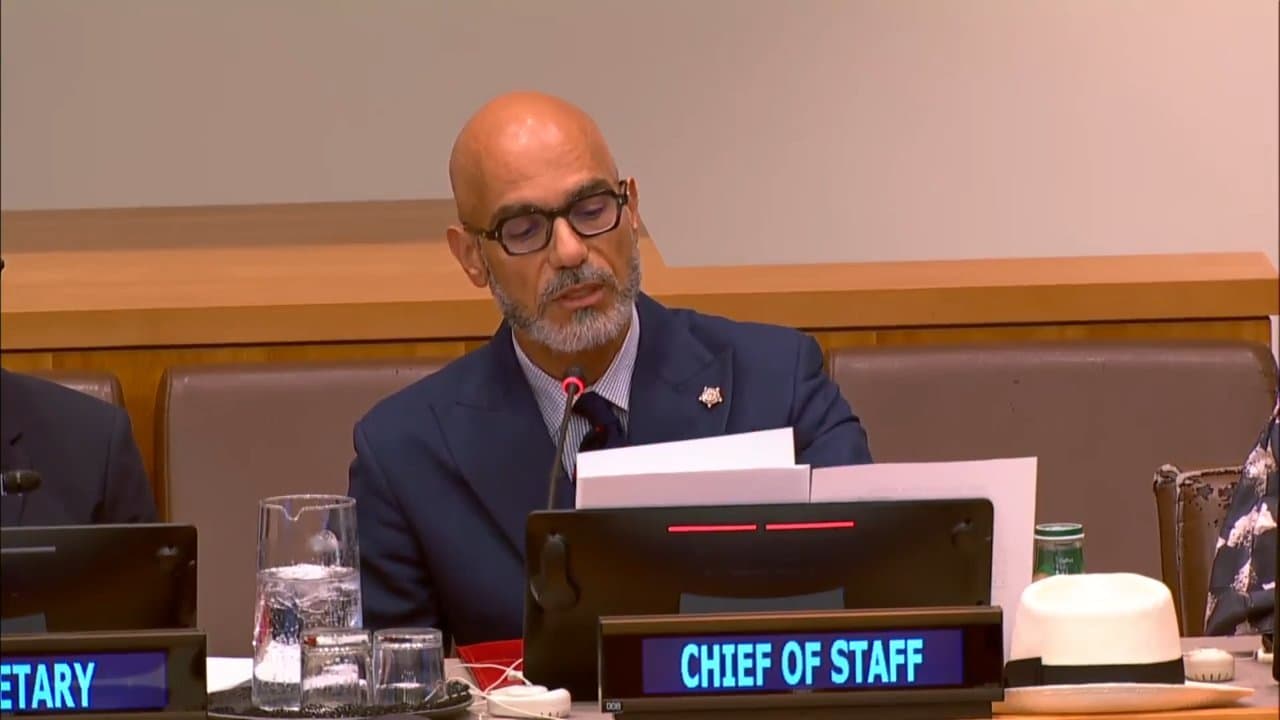
Where things stand: Chief of Staff Mohammed Nasiri presented the results of a joint UN Women–UNFPA analysis that identified four cooperation alternatives: (1) more integrated country-level delivery, (2) a joint strategic framework on ending violence against women and girls, (3) deeper collaboration on SDG 5 data analytics and foresight, and (4) greater operational interoperability including shared services and common premises.
"A merger could offer greater longer-term integration, transformation, and efficiencies, while the alternatives would provide more targeted and incremental gains with lower transition costs," said Chief of Staff Mohammed Nasiri.
The framing set the stage for a deeply divided debate — though the division was lopsided.
The Opposition Coalition
A joint statement delivered by the delegate from Canada on behalf of 16 member states drew a clear line: "The information presented to date has not demonstrated that the anticipated benefits of the proposed merger would outweigh the associated risks. We therefore remain unable to support the proposed merger as it is currently presented."
A separate, even larger joint donor statement delivered by the delegate from Spain on behalf of 24-plus states and the European Union called mandate preservation "paramount" in any reform scenario.
The breadth of opposition was striking. The African Group, speaking through the delegate from Uganda, called for reforms guided by "needs, priorities, and country realities" and demanded stronger sustainable financing including core resources. The delegate from Fiji, speaking for 12 Pacific Small Island Developing States, delivered one of the session's most forceful interventions: "Gender equality cannot be advanced through mainstreaming alone. It requires a dedicated institutional home and its own leadership voice, its own accountability and the capacity to uphold the international normative framework."
The delegate from the Russian Federation took a different tack, demanding unanswered structural questions be resolved before any decision: "We wondered about what the mandate of the new entity will be in case of a merger. Who will be covered, and how does it tally with the unique expertise of UN Women when it comes to attaining gender equality?"
The Financing Flashpoint
The delegate from Belgium delivered a pointed warning about how a merger would be paid for, noting that no member state has volunteered to fund the transition. "Core resources should first and foremost support mandate delivery. They should not be the default funding source for large-scale institutional reform," the delegate said. "Otherwise, we risk accelerating the shift from flexible to earmarked funding."
This concern resonated with several delegations worried that institutional restructuring costs would siphon resources away from programming at a moment when UN Women's regular resources are already projected to decline.
The Outliers
France was the sole delegation to explicitly endorse the merger: "We support the proposal to merge UN Women and UNFPA with their mandates unchanged."
The delegate from Denmark acknowledged seeing "clear value in exploring closer integration, including through a possible merger," but emphasized that mandates must be protected and the process must not become a cost-cutting exercise. Norway described the merger as a constructive proposition while echoing similar safeguards.
Decisions: No final decision was taken. Three draft decisions remain subject to informal consultations: Decision 2026/16 on financing the strategic plan, Decision 2026/17 on the JIU governance review, and a decision on UN80 engagement. Executive Director Sima Bahous closed by noting the range of views: "I have taken careful note of the range of views expressed on both the potential merger and the alternative options under consideration."
What's next: Informal consultations will continue during the session to negotiate draft decisions. The outcome will shape the trajectory of the UN's gender equality architecture for years to come.
Crises in Focus: Afghanistan, Sudan, Gaza, Ukraine
Executive Director Sima Bahous opened the session with an extensive review of humanitarian conditions facing women and girls across UN Women's 103-country portfolio, painting a picture of compounding crises against shrinking resources.
Why it matters: The situational reports underscored the operational stakes of the merger debate — any institutional disruption risks the delivery of protection services precisely when demand is surging.
On Afghanistan, now entering its fifth year under Taliban rule, Bahous was blunt: "Afghanistan remains a litmus test of our resolve, and we are failing, unfortunately. Five years on, women's and girls' ability to learn, work, and participate in public life has narrowed almost to disappearance."
She described women in Sudan facing "drone attacks by day and the threat of sexual violence after dark," noted that 1 in 4 households in Gaza are now women-headed, and highlighted Haiti's opening of its first state-supported safe houses.
The delegate from Ukraine delivered an emotional statement: "Thousands of Ukrainian women and girls were killed in barbaric attacks, missiles and drone attacks against civilian population, which was verified by the UN. Many, too many women have suffered conflict-related sexual violence and other grave violations committed by Russia. What a shame, what a disgrace."
The delegate from Cuba drew attention to the humanitarian impact of the energy blockade, citing child mortality rates rising from 4.4 to 9.9 per 1,000 live births: "These are not cold, hard facts. Behind this data, we have mothers and families that are suffering."
Nepal expressed gratitude for international solidarity following flash floods, and Norway opened with condolences for King Harald V.
Funding Pressures and Strategic Plan Progress
Why it matters: UN Women's 2026–2029 Strategic Plan is in its first year of implementation, but declining resources threaten to undercut results at a time of rising demand.
Executive Director Bahous reported that regular resources are projected to decline by less than 1% in 2026, with other resources dropping by less than 5%. She highlighted early wins: "Member states adopted or amended 69 laws advancing gender equality. Fifty-two countries established formal care systems, and women peacebuilders participated in every UN-led peace process."
Country-level results included Albania's violence prevention reforms, Jordan's modernization vision, Papua New Guinea's first National Action Plan on Women, Peace and Security, and Côte d'Ivoire doubling maternal leave to six months. The delegate from Moldova noted that following a 40% gender quota, women now hold 40 seats in parliament, with over 2,500 women leaders trained. The delegate from Bangladesh highlighted transformative initiatives including a family card issued in the name of the female household head and free education for girls up to postgraduate level.
The delegate from Finland warned that gains are fragile: "Gender equality financing is under pressure as pushback against women's rights is more organized and better resourced."
Sweden, as UN Women's largest bilateral donor, stressed expectations on effectiveness and transparency. Multiple delegations insisted that the strategic plan's success must be measured by outcomes on the ground, not by institutional architecture changes.
Minor Items
- Agenda and annual session report adopted: The Board adopted the annotated provisional agenda, work plan, and the report of the Annual Session 2026 by consensus without objection.
- Board Secretary transition: Outgoing Executive Board Secretary Jean-Luc Borriès was honored after 15 years of service; incoming Secretary Ziad Sheikh was welcomed.
- Croatia announced it will co-host a ministerial roundtable on technologically facilitated violence against women.