
St. Helena Finance Panel Finds No Structural Deficit, Urges Pension Prepayments
City Council • St. HelenaOctober 28, 2026
Locunity is an independent informational service and is not an official government page for this commission. All information is sourced from public footage and an analysis of official agendas with the aid of responsible, fact-checked AI. to report an error or omission.
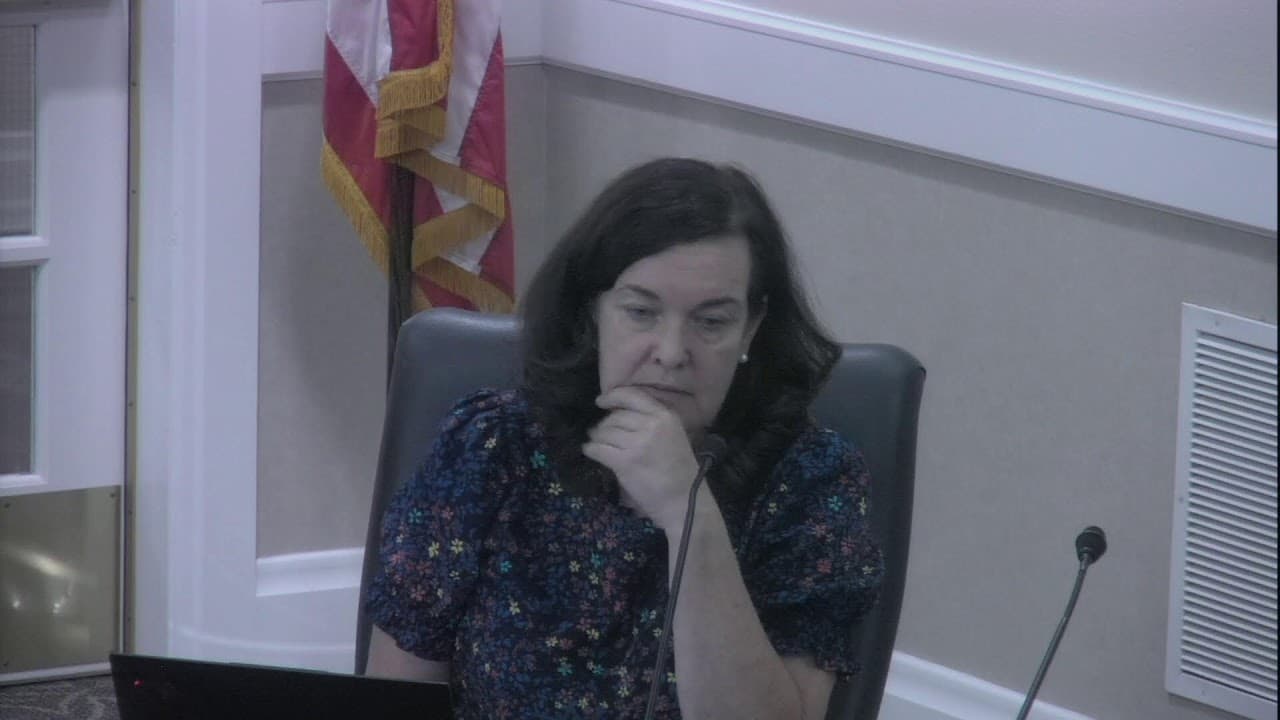
St. Helena's advisory Finance Committee told the City Council on Oct. 27, 2026, that the city has no structural deficit today. It also warned that paying only the minimum on pensions, and not following the city's own financial policies, carries real risk. The council voted 5-0 to receive the report, approved a City Hall reorganization, heard staff concede the water system's records are wrong, and expanded rebates for residents dealing with discolored water.
- No structural deficit today, Finance Committee finds, but it urges restarting pension prepayments.
- Reorganization approved 5-0, adding a net one position at up to $311,000 a year. Two director salaries were held back.
- Staff say water system records are inaccurate as flushing of asbestos-cement pipe begins.
- Water filter rebates expanded 5-0 to a 50/50 cost split with six months of retroactivity.
Finance Committee: Healthy Now, Risky Later
Why it matters: The committee's two years of findings on pensions, streets, compensation and financial reporting will shape the next council's budget fights. That includes a seat-by-seat question of whether the committee itself survives.
Where things stand: Committee Chair Chris Warner framed the group's limits up front. "Our role is solely advisory," said Warner, Finance Committee Chair. He noted that the committee's earlier recommendations on cash investment earned the city millions in interest.
His sharpest finding was about process. "We found in several cases that the city has really just not followed those financial policies," Warner said. He cited monthly treasurer reports required under Government Code 41004.
Committee member Greg Dawley targeted pensions. "There's significant downstream risk by continuing to simply fund the minimum payments," said Dawley, Finance Committee Member. He added that across all enterprises, "$450,000 to $600,000 a year should be going into additional discretionary payments."
On streets, Dawley said roughly $2.5 million a year from Measures U and T plus a maintenance-of-effort contribution is enough to reach a pavement condition index of 70 by 2030. That index is a standard 0-100 road-quality score. He also said funds exist for city buildings.
Committee member Gary Rose delivered the headline. "The conclusion is St. Helena does not have a structural deficit today," said Rose, Finance Committee Member. He then added a warning: "3 votes and a stroke of the pen can turn an aspirational expense into a service-level obligation."
The other side: Committee member Mark Smithers challenged the city's compensation study. He said it omitted the city manager, included cities St. Helena does not recruit from, and excluded private-sector data and benefits. He noted St. Helena was "the only agency that was in the class and comp study that didn't require any cost sharing by the employees" on health premiums. Even so, he concluded that "the employees in the City of St. Helena are fairly compensated."
Mayor Paul Dohring flagged the 2031–2033 outlook and a possible hit to vehicle license fee revenue. "If you have a policy, you should be following your fiscal policy," said Dohring.
Decisions and stakeholder impacts: The council voted to receive the report, with no policy action (For: 5, Against: 0, Absent: 0; Dohring, Deasy, Barak, Spadarotto, Diaz). It first extended the meeting to 9:15 p.m. by the same 5-0 margin.
Councilmember Scott Diaz endorsed four recommendations: financial leadership, a credible compensation study, regular reporting and compliance audits. He asked staff to work through his questions when building the next budget.
Resident Deanna Griffin, who attended about half the committee's meetings, backed continuing the group as a credibility check. The outcome matters most for employees and labor groups, who face scrutiny on benefit cost-sharing. Ratepayers in the enterprise funds are also affected, since any pension prepayments would be drawn from those funds.
What's next: Councilmember Aaron Barak asked for a proposal to make the committee permanent "as soon as possible." Vice Mayor Michelle Deasy asked to bring back pension paydown "for a real discussion." Rose urged the council to fill the committee's vacant and expired seats.
Reorganization Passes, Two Director Salaries Held Back
Why it matters: The restructuring, rooted in the Blackberg efficiency report, reshapes City Hall staffing. The pay debate previews arguments over how St. Helena benchmarks executive salaries.
Where things stand: Interim Administrative Services Director Sue Casey said six new classifications and two management analyst positions replace seven budgeted positions, for a net gain of one. The cost is up to $311,000 a year, with $116,000 from the general fund. "That's if everybody is hired at the top step and the top benefits," said Casey, Interim Administrative Services Director. Staff said about $700,000 in fiscal 2025-26 salary savings and current vacancies would absorb the increase. Meet-and-confer with labor is complete.
The other side: Vice Mayor Deasy questioned pay levels, including for the library and parks directors. She contrasted one $161,000 to $196,000 range with what the city paid four years ago. "They read to me sort of like a little bit old and tired municipal job descriptions," said Deasy.
Councilmember Barak pointed to "25% cumulative inflation." Public commenter Bonnie Shock said the job descriptions could have been written by AI. She urged the city to write them around the tasks it needs done.
Interim City Manager Jim McCann said salaries came from a 12-city comparator group and past schedules. He cited active recruitments. "We would like to press forward," said McCann. Mayor Dohring said, "I'm actually okay with the salaries," but he was open to a targeted review.
Decisions and stakeholder impacts: After a recess, the city attorney clarified that the two director positions are not on the current salary schedule. The council then approved the resolution without them (For: 5, Against: 0, Absent: 0). Barak moved the item and Councilmember Kate Spadarotto seconded. Staff will rework job descriptions with Deasy. Recruitments for the other positions can proceed.
What's next: The library and parks director salaries return Nov. 10.
Water Flushing Begins on Unreliable Maps
Why it matters: Residents dealing with sediment and discolored water are now living through a flushing program that staff are adjusting midstream.
Where things stand: "The records that we have for our water system are not accurate," said Joe Leach, Public Works Director.
Flushing of asbestos-cement pipe is underway, with door hangers carrying QR codes to alert neighbors. Systematic water-quality sampling is paused until flushing ends. Staff began asbestos sampling before and after work on the first pipe stretch.
Camera inspection of the Bell Canyon transmission main is complete. Staff are weighing AI-based video review proposals from Electroscan and Hazen and Sawyer, at about $10,000 to $12,000 each. Cleaning of Tank 1A slipped to Nov. 7, rehabilitation of Tank 2 is set to begin in December, and a design contract for SCADA, the remote system for monitoring and controlling the network, has been executed.
The other side: Resident George Kalerianidis objected to asking homeowners to shut off and reopen their own valves during flushing. "If I create a hazard, is it fair for me to shift protection to the affected?" said Kalerianidis, public commenter. He said the task is possible "for 10 to 15% of residents" at best, and asked the city to shut off meters instead. McCann promised follow-up.
Decisions and stakeholder impacts: No vote was taken. Vice Mayor Deasy asked about outreach to restaurants and grocery stores. Councilmember Spadarotto asked whether Spring Street work explained a neighbor's complaint. "We're doing a sewer lining project. We're not doing a water main project," Leach said.
What's next: Deasy asked to revisit State Water Board loans and technical assistance "early next year."
Filter Rebates Expanded 5-0, but Fund Is Thin
Why it matters: The 2024 program offered about $150, which did not cover the cost of a filter. "We've heard from folks that the rebates that were offered really were not significant enough," McCann said.
Where things stand: Staff proposed a one-third homeowner, two-thirds city split for new systems. The residential cap would have been about $3,350 to $3,500, against plumber estimates of $1,300 to $5,000, with a $5,000 cap for commercial customers.
Deasy questioned whether the money would stretch: "If $3,350 is the max people can do that, and we have $50,000, isn't that like 15 people?"
The other side: Resident Daniel Hale called a six-month look-back arbitrary. He warned the $50,000, drawn from the water enterprise fund, would go quickly. Councilmember Spadarotto urged waiting to see application volumes before setting caps. "It is our money. These are our rates," said Mayor Dohring, who supported testing the program.
Decisions and stakeholder impacts: Councilmember Diaz moved a 50/50 split. Councilmember Barak added six months of retroactivity, and Diaz accepted the amendment. Caps of $2,500 for residential customers and 50% up to $2,500 for commercial customers were clarified verbally. The motion passed with all five members voting yes (For: 5, Against: 0, Absent: 0). Ratepayers fund the relief, so a fast drawdown could force the council to add money.
Minor Items
- Turf ordinance: First reading introduced 5-0. It implements AB 1572, which bars potable water for decorative turf starting Jan. 1, 2027. Single-family homes are exempt.
- Electric trucks: The council reconsidered a consent item and switched to two electric Chevrolet pickups for Parks and Recreation. The new total is $98,844, which is $4,386 more than planned.
- Sidewalks delayed: The downtown sidewalks Phase 1B item moved to Nov. 10. The rest of the consent calendar passed 5-0.
- Library support: The Friends and Foundation of the St. Helena Public Library plans to distribute $175,000 in grants this year.
- Sulphur Creek: A bridge replacement on Sulphur Creek reopened about 3.2 miles of fish habitat, according to the Napa County Resource Conservation District.
Looking Ahead
The council meets next on Nov. 10. Recruitment for a permanent city manager has gone public, and Mayor Dohring said a donation of about $270,000 from a disbanded nonprofit is expected to come before the council.