
Planning Board Clears Valley Street Plan Aimed at Missing-Middle Housing
Planning Board • South OrangeOctober 5, 2026
Locunity is an independent informational service and is not an official government page for this commission. All information is sourced from public footage and an analysis of official agendas with the aid of responsible, fact-checked AI. to report an error or omission.
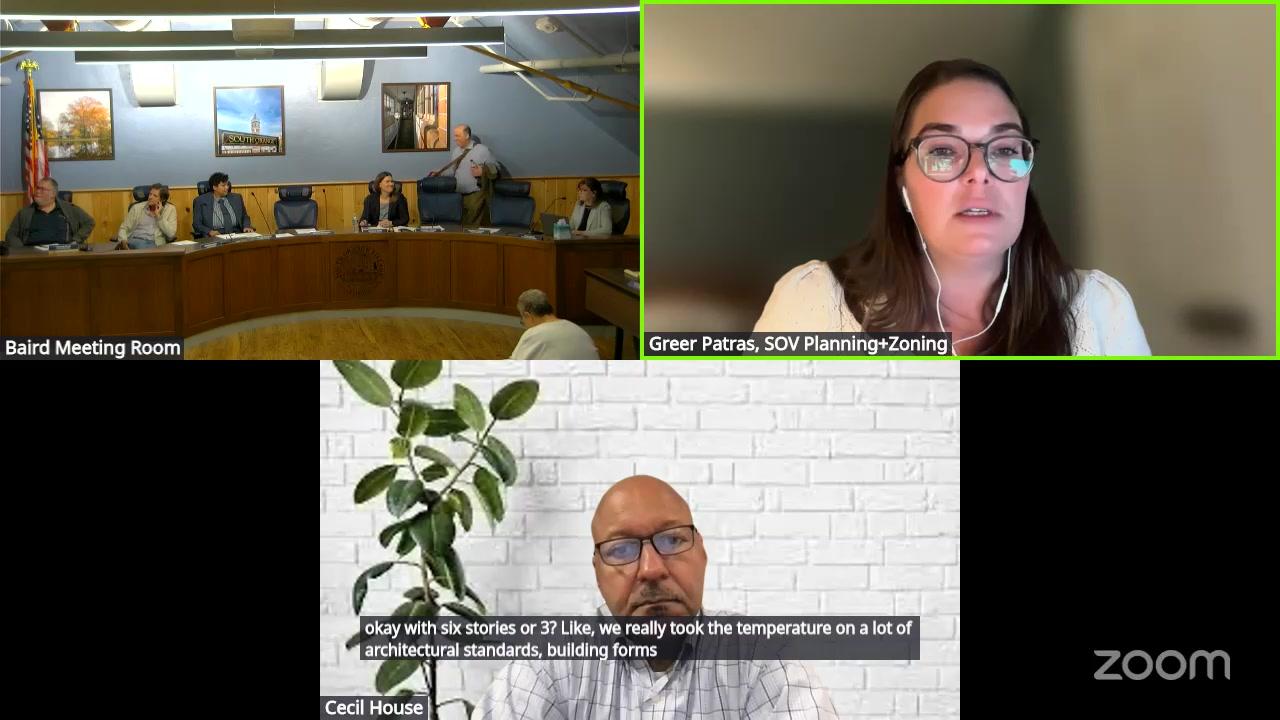
South Orange's Planning Board on Oct. 5, 2026, approved a rewrite of the rules for Valley Street that would legalize existing homes, open the door to small apartment buildings and require new sidewalks, trees and onsite stormwater management. By voice vote, the board found the amendments in Ordinance 2026-22 "not inconsistent" with the village Master Plan. That came only after Board Chair Harold Colton-Max pressed staff on whether the plan would actually produce the missing-middle housing it promises.
- Valley Street Redevelopment Plan amendments pass Master Plan consistency review by voice vote
- 2-to-8-unit "missing-middle" housing defined, existing one- and two-family homes legalized
- New streetscape and onsite stormwater standards codified for the corridor
- Board chair challenges whether the amendments will deliver new housing types
Valley Street Rules Clear a Key Hurdle
The basics: A redevelopment plan is a custom zoning rulebook for a defined area. The Planning Board's job on Ordinance 2026-22 was narrow. As Board Planner/Zoning Officer Greer Patras put it, the board had to determine "that the redevelopment plan is consistent with the master plan and that it's not inconsistent."
Why it matters: Valley Street runs along a county-road corridor. These amendments set its standards for housing types, ground-floor uses, sidewalks and stormwater, and every future project there will be measured against them. The rules also extend affordable housing requirements to all of Valley Street.
Where things stand: Patras presented the plan after summer public presentations, committee reviews and an additional town hall. She described three prongs:
- Active streetscape: ground-floor activity requirement plus "neighborhood production" uses like makerspaces and tool libraries
- More housing: legalizes nonconforming homes, defines 2-to-8-unit infill, allows townhouses in some areas
- Codified public realm: 6-foot sidewalks, 3-foot planting areas, tree pits, benches, lighting, bike racks
On housing, Patras was blunt about the starting point. "So first, we legalized the existing one and two families," she said. That provision addresses homes that predate current zoning and technically don't conform to it.
The plan also requires onsite stormwater management for what the village is calling "local major developments." The requirement shifts some runoff responsibility from the public system to the larger projects themselves.
Patras tied the provisions to the Master Plan, including a 2021 streetscape diagram on page 57 of that document. She stressed that the plan is not prescriptive. "Each site will need their own planning board review within that to make sure that they're compliant and to ask for deviations," she said.
The other side: No one opposed the plan outright, but Colton-Max questioned its teeth. "Is there anything actually in this plan or these amendments that would actually help to achieve those goals?" he asked about missing-middle housing.
Patras answered that the village previously had no rules for buildings of this size. "We didn't have any standards for a 4 to 8 unit," she said. She also pointed to new zoning and density provisions. Smaller projects below a set threshold would no longer have to become a designated developer, the formal redevelopment designation that can add time and negotiation to a project.
Board Member Dan Dietrich, who lives near the corridor and attended a feedback meeting, backed the plan. "I think this is a pretty good plan, and I think it's very consistent with what we're trying to do," he said.
Decisions and stakeholder impacts: A motion to find the amendments not inconsistent with the Master Plan was seconded and approved by voice vote. No tally was announced, and no opposition was called out.
Small-scale builders and property owners stand to gain the most. They get clear standards for 4-to-8-unit buildings and a lighter path for projects below the designated-developer threshold. Owners of existing nonconforming one- and two-family homes gain legal status. Larger "local major developments" take on new stormwater obligations. All new projects will carry streetscape costs and fall under affordable housing requirements.
Pedestrians and cyclists stand to benefit from wider sidewalks, trees, lighting and bike racks as sites redevelop. No members of the public spoke on the item. A screen-sharing failure kept the planner's memo off the meeting display, but it was sent by email and posted on the village website.
What's next: The consistency finding is one step, not a project approval. Each Valley Street site plan still comes before the board for review, and applicants may seek deviations. The chair's question is the one to watch: whether the 4-to-8-unit standards and threshold relief actually draw builders to the corridor.
Minor Items
- 270-299 Irvington Avenue: Village Administrator Julie Doran said the project was sold, but the development itself is unchanged. The new developer will re-present plans at a Meet the Developer night at Bethel at 7 p.m. The building permit application "is in and it's with the DCA for final approval," and construction is expected within about a month.
- Cottage Street Partners LLC (Case #314): The 15-unit proposal at 36-40 Cottage Street was carried to Nov. 2. It goes first to the Historic Preservation Commission on Oct. 15. "I don't expect that to be in the next month or possibly the month after," Patras said of its return to the board.
- Irvington 461 LLC (Case #315): The variance request for a wax spa at 461 Irvington Avenue in the RTH zone was carried to Nov. 2. Board Secretary Ojetti Davis said the applicant only needs to complete public notice.
- Redus LLC (Case #303): The plan to expand a medical office and add two apartments at 211 Irvington Avenue still has outstanding completeness issues, which Patras said the applicant is working to resolve.
- Minutes: The board approved its Sept. 8, 2026, minutes by voice vote.
Looking Ahead
The Planning Board next meets Monday, Nov. 2, 2026, at 7 p.m. The wax spa and Cottage Street cases are carried to that date, though Cottage Street's Historic Preservation Commission review on Oct. 15 comes first.