Non-proliferation - Security Council, 10224th meeting
Security Council • United NationsSeptember 17, 2026
Locunity is a independent informational service and is not an official government page for this commission.We use AI-assisted analysis and human editorial review to publish information.
Russia and China Veto Iran Sanctions Panel, Deepening Rift on Nuclear Monitoring
Russia and China blocked the renewal of the United Nations Panel of Experts tasked with monitoring Iran nuclear sanctions, leaving the Security Council without its primary independent enforcement tool at a moment when the IAEA has just referred Iran's safeguards non-compliance back to the Council. The double veto — following a contested procedural fight over whether the Council even has jurisdiction over the Iran file — mirrors the 2024 elimination of the North Korea sanctions panel and signals a deepening structural crisis in the UN sanctions architecture.
- Russia and China veto draft resolution S/2026/740 to renew the Iran sanctions Panel of Experts; the measure received 11 votes in favor but failed (11-2-2)
- Procedural vote to adopt the non-proliferation agenda passes 11-2-2 after Russia and China challenge the Council's legal authority over the Iran file
- US vows to press ahead on appointing a committee chair and publishing an updated sanctions list despite the veto
- IAEA Board of Governors referral of Iran's safeguards non-compliance to the Security Council cited by multiple delegations as evidence of urgency
- Bahrain highlights ongoing Iranian-linked regional attacks, calling for independent monitoring capacity
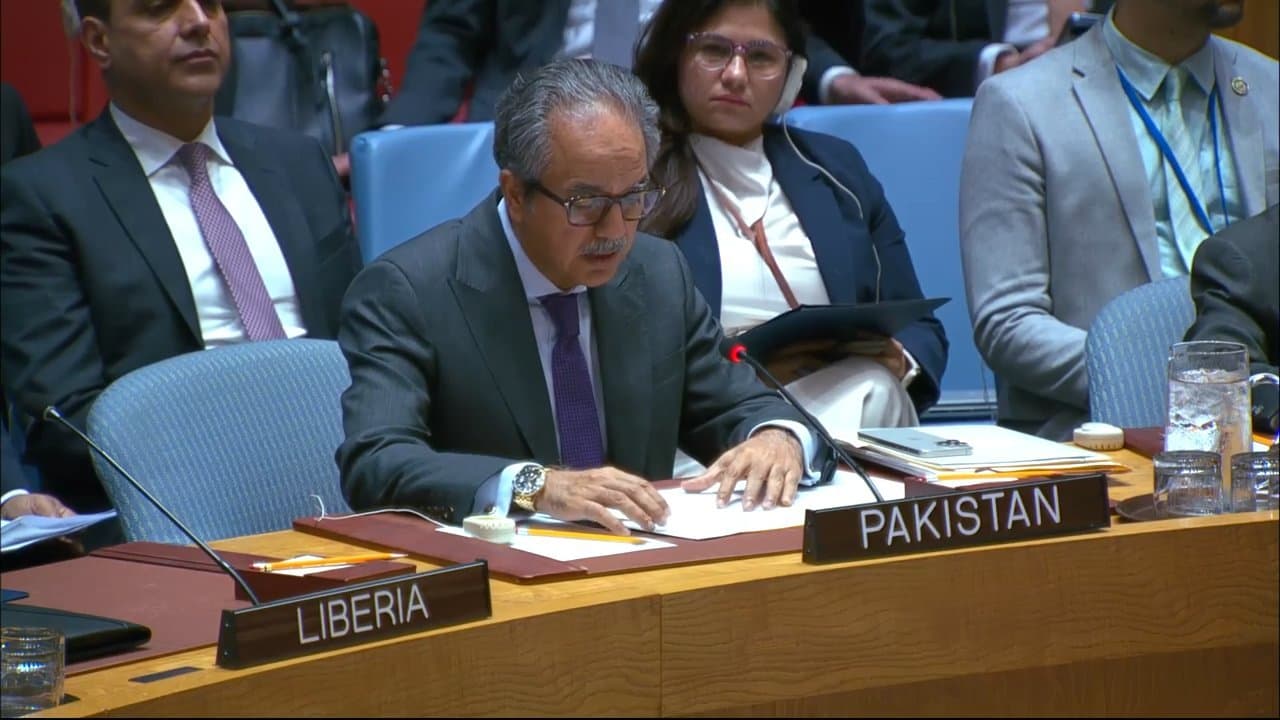
- Pakistan abstains, calling for a return to the Islamabad MOU diplomatic framework
The Fight Before the Fight: A Procedural Battle Over Jurisdiction
Before the Council could vote on the substance, it had to vote on the agenda itself — an unusual step that laid bare the depth of the P5 divide.
The basics: The Russian Federation requested a procedural vote on whether to adopt the provisional agenda item on non-proliferation. Russia argued that Security Council Resolution 2231 expired on Oct. 18, 2025, terminating the Council's authority over the Iran nuclear file.
"Security Council Resolution 2231 expired on the 18th of October 2025. On that day, the Security Council concluded its consideration of the Iranian nuclear issue and the item nonproliferation was removed from the list of matters of which the Council is seized," said the delegate of the Russian Federation.
The other side: The delegate of the United States countered sharply: "Several members of this body want to prevent this discussion to protect Iran, a country that continues to openly defy many of its most basic UN obligations."
China backed Russia, arguing the Council should facilitate dialogue rather than serve as a venue for pressure. "The Security Council should play a constructive role in promoting dialogue and easing the situation, rather than serving as the platform for individual members to engage in political confrontation and pressurization," said the delegate of China.
The delegate of the United Kingdom was blunt about the stakes: "Iran's nuclear program presents a threat to international security and to the global nonproliferation regime."
The delegate of Colombia offered a detailed international law argument, contending that blocking the vote would violate foundational legal principles: "Not allowing the vote of this panel of experts equals to say that we do not follow the principle of good faith in the commitments and also in the interpretation of the international rules."
President Jérôme Bonnafont, speaking in France's national capacity, recalled the Secretary-General's formal acknowledgment of the sanctions' reinstatement: "I'd like to recall the note sent on the 28th of September 2025 by the Secretary-General taking note of the reinstitution of these resolutions."
Decisions: The procedural vote passed 11 in favor, 2 against, 2 abstentions. The agenda was adopted, and the Council moved to the substantive vote.
Why it matters: The contested adoption is itself a signal. Russia and China are not merely opposing specific sanctions measures — they are challenging the Council's foundational jurisdiction over the Iran nuclear file. That argument, if it ever prevailed, would render every associated sanctions resolution unenforceable through Council mechanisms.
The Veto: Iran Sanctions Panel Blocked for the Second Consecutive Cycle
A Monitoring Gap by Design
Draft resolution S/2026/740, submitted by the United States, sought to renew the mandate of the Panel of Experts established under Resolution 1929 to assist the 1737 Iran Sanctions Committee. The panel is the Council's principal independent body for tracking sanctions evasion — weapons transfers, missile technology procurement, and financial networks supporting Iran's nuclear and ballistic missile programs.
Decisions: The resolution received 11 votes in favor, 2 against (Russia and China, both permanent members wielding veto power), and 2 abstentions (Pakistan and one unidentified member). It was not adopted.
Immediate Fallout
The delegate of the United States framed the veto as part of a broader campaign to disable UN oversight: "It is clear that this is part of a broader effort to prevent appointments or renew mandates of expert panels to stifle reporting that implicates their own activities in support of rogue regimes in defiance of their UNSCR obligations."
The US pledged to continue working within the existing committee structure: "The United States will not cease efforts within this committee to establish a panel of experts that befits the mandate of this committee, as well as name a committee chair and produce and post an updated sanctions list."
The UK Connects the Dots
The delegate of the United Kingdom drew a direct line between the Iran veto and Russia's 2024 decision to block the North Korea panel, arguing that both served Russia's material interests: "Russia has facilitated Iran and DPRK's evasions of sanctions and received Iranian-designed Shahed drones and the DPRK's ballistic missiles to fuel her brutal war of aggression against Ukraine."
The UK emphasized that the veto does not erase the underlying legal obligations: "Sanctions against Iranian proliferation remain fully in force, binding on each and every UN member state."
A Pattern, Not an Anomaly
The delegate of Latvia was among the most pointed in characterizing the strategic intent behind the veto: "Today's outcome is part of a deliberate pattern of weakening the UN sanctions architecture for the benefit of one member state, similar to Russia's veto on the mandate renewal of the Panel of Experts of the 1718 Sanctions Committee concerning the DPRK."
Regional Stakes
The delegate of the Kingdom of Bahrain brought the conversation to the ground level, emphasizing that Iranian-linked threats are not abstract for Gulf states: "The Kingdom of Bahrain and the countries of the region have been continuously attacked. These attacks targeted our territories, infrastructure, and civilian objects. These were condemned by the Council in Resolution 2817."
The Nuclear Clock
The delegate of Denmark highlighted the most recent international alarm bell: "Iran has developed a nuclear program that lacks any credible civilian justification, including enriching uranium up to 60%. Just last week, the IAEA Board of Governors referred Iran to this very Council over its safeguards non-compliance."
President Bonnafont, again in France's national capacity, underscored what the Council has lost: "This veto deprives the 1737 Committee and the Council of an indispensable tool to ensure the implementation of their decisions. It deprives the whole of the international community — deprives them of a reliable, impartial source of information on a key issue of international peace and security."
France also noted the IAEA referral: "We take note of the recent decision of the IAEA Board of Governors to refer to this council the question of the non-respect by Iran of its safeguards agreement under the Non-Proliferation Treaty."
Colombia's Legal Framework
The delegate of Colombia argued from first principles that the panel's work is essential precisely because the sanctions regime's subsidiary instruments remain valid under international law. Colombia stressed the practical cost of the panel's absence: "After almost a decade of suspension, the committee needs this technical independent information at a critical time at which a regional conflict is escalating to the international level."
The delegate of Panama warned of the precedent being set across all sanctions regimes: "The lack of this mechanism is hampering the committee's ability to fully undertake the responsibilities entrusted to it, and it lays a worrisome precedent, as well as denying the committee the relevant tools to ensure the effective functioning of the Security Council and UN sanctions regime."
Russia's Rationale
The delegate of the Russian Federation rejected the entire legal premise of the vote, maintaining that the snapback mechanism was never legitimately triggered and that Western states are weaponizing the Council for political purposes. Russia pointed to military action against Iran as undermining nonproliferation claims: "If that were to have been the case, the U.S. would not have withdrawn unilaterally from the JCPOA and would not have conducted, along with Israel, numerous strikes on Iranian peaceful nuclear infrastructure that were under IAEA safeguards."
Russia also raised the Austrian revocation of a visa issued to an Iranian official as emblematic of Western overreach: "The Austrian authorities deemed this as an excuse to revoke Mohammad Islami's visa that had already been issued, thus violating its obligations as the host country for the agency."
China's Three-Part Position
The delegate of China laid responsibility for the current crisis squarely on the United States: "The U.S. unilateral withdrawal from the JCPOA and its policy of maximum pressure against Iran, as well as its two rounds of military action against Iran during the negotiation process, including militarist attacks against peaceful nuclear facilities under the safeguards and monitoring of the IAEA, are at the root of the current crisis."
Pakistan's Middle Path
The delegate of Pakistan explained its abstention as a protest against the breakdown of diplomacy: "Regrettably, a non-consensual path was chosen with far-reaching consequences that have since continued to reverberate in this chamber and beyond."
Pakistan urged all parties to re-engage through existing diplomatic channels: "We call on all parties to implement the commitments agreed in the Islamabad MOU, return to the negotiating table, and allow diplomacy to deliver for the sake of regional and international peace and security."
What's next: The United States has signaled it will pursue administrative steps within the 1737 Committee — appointing a chair and publishing an updated sanctions list — even without the Panel of Experts. The IAEA Board of Governors' referral of Iran's safeguards non-compliance to the Security Council creates a parallel track that will force the Council to confront the Iran nuclear question again, potentially within weeks. Whether Russia and China's jurisdictional challenge gains any additional support — or whether the 11-vote majority holds — will shape the credibility of UN sanctions enforcement well beyond the Iran file.