
Brazil Emerges as Global Climate Litigation Powerhouse as Courts Fill Policy Gaps
Science Summit • United NationsSeptember 23, 2026
Locunity is an independent informational service and is not an official government page for this commission. All information is sourced from public footage and an analysis of official agendas with the aid of responsible, fact-checked AI. to report an error or omission.
A panel of distinguished Brazilian and international jurists convened at Columbia Law School during Climate Week to map the accelerating global landscape of climate litigation — and Brazil was the headline. With 368 tracked cases and counting, Latin America's largest nation has leapfrogged Australia to become the world's second-most-active jurisdiction for climate lawsuits, behind only the United States, deploying constitutional muscle, strict liability doctrine, and novel climate finance mechanisms that other countries are watching closely.
- Brazil now second globally in climate cases, jumping from 135 to 368 in roughly one year, per the Sabin Center database tracking 3,600+ cases across 62 countries
- São Paulo Attorney General's Office scaled environmental lawsuits from 17 to 812 per year and launched Finaclima, a climate finance mechanism funded partly by offender settlements
- International courts deliver new legal toolbox: advisory opinions from the ICJ, ITLOS, and Inter-American Court clarify due diligence standards, endorse the 1.5°C target, and open pathways to compensation claims
- U.S. Supreme Court to hear pivotal polluter-pays case Oct. 5 — Suncor v. County of Boulder could determine the future of 24+ pending climate liability suits
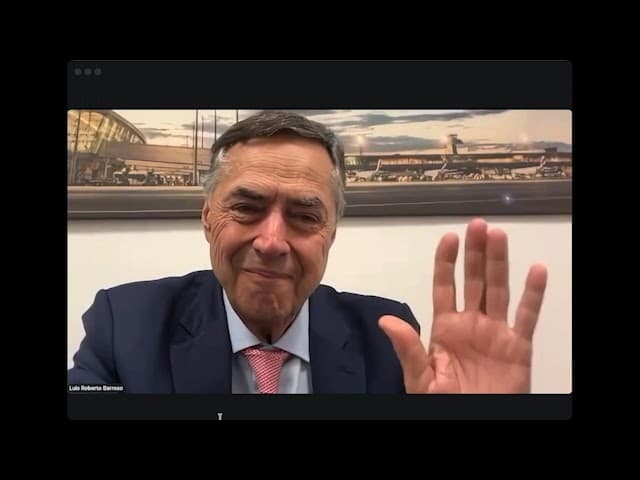
- Former Chief Justice Barroso joins virtually after Trump administration revokes his visa for presiding over the Bolsonaro conviction, underscoring geopolitical friction around climate governance
- New UN disaster treaty negotiations set for January 2027 in Bangkok, potentially creating the first binding international obligation for disaster risk reduction
Climate Cases Hit 3,600 Worldwide — and Brazil Is Surging
Why it matters: The sheer volume of climate litigation worldwide signals that courts, not legislatures, are increasingly becoming the primary venue where climate policy is tested, enforced, and expanded. Brazil's explosive growth — from a mid-tier player to the world's No. 2 — reflects both the maturation of its legal doctrine and the scale of its environmental stakes, from the Amazon to the Cerrado.
Where things stand: Professor Michael Gerrard, Founder and Faculty Director of the Sabin Center for Climate Change Law at Columbia Law School, presented data showing climate cases have spread to 62 countries, up from 17 a decade ago. "The U.S. has long been the leader in terms of the number of cases, but Brazil has jumped ahead of Australia and has the second-largest number of climate change cases in the world," he said.
The most influential case globally remains Urgenda v. Netherlands (2015/2019), which established government obligations to reduce emissions. Key corporate cases include Milieudefensie v. Royal Dutch Shell (partially reversed on appeal) and the TotalEnergies case in France addressing Scope 1, 2, and 3 emissions. No court anywhere has yet awarded money damages for climate contributions, though the Lua v. RWE case in Germany came close.
Gerrard predicted future litigation fronts including insurance crises, data center energy consumption, carbon dioxide removal, SLAPP suits against environmental groups, and Scope 3 disclosure requirements. He warned bluntly: "If you enjoyed the climate of 2026, you're going to love the climate of 2036."
What's next: The pivotal moment arrives Oct. 5, when the U.S. Supreme Court hears argument in Suncor v. County of Boulder — a case that could either enable or foreclose 24-plus pending polluter-pays lawsuits in the United States, with global implications for corporate climate liability.
Justice Barroso Makes the Case for Judicial Climate Intervention — From a Distance
The basics: Former Chief Justice Luiz Roberto Barroso of the Supreme Federal Court of Brazil connected virtually from Brazil because the Trump administration revoked his U.S. visa — retaliation, he said, for presiding over the trial and conviction of former President Jair Bolsonaro for an attempted coup.
Why it matters: Barroso's forced absence itself became a symbol of the geopolitical tensions surrounding climate governance. Professor Gerrard did not mince words: "As a U.S. citizen, I am more than embarrassed by the fact that my government is acting in this fashion, and this is being done at the behest of a U.S. president who himself tried to steal an election."
Where things stand: Barroso offered three justifications for why courts are increasingly intervening on climate: it is now recognized as a human rights issue; governments have demonstrably failed to meet their own commitments; and courts must protect minorities and future generations who cannot advocate for themselves.
"Facing climate change and protecting the environment is a human rights issue, as the Inter-American Court of Human Rights has decided, and as the Brazilian Supreme Court has also decided. And human rights and protecting human rights is the business of courts," Justice Barroso said.
He detailed two landmark cases. In ADPF 708, the Climate Fund case, the court ordered the government to present spending plans for earmarked climate money that sat idle under the previous administration. "The money was just stuck in the bank account, couldn't be used for anything else. And for some mysterious reason, the president and his team just left the money there. And the court ordered the government to present plans for spending that money," he explained. In a parallel case, the court also ordered removal of illegal loggers and miners from 10 Indigenous lands.
São Paulo Turns Enforcement Into a Climate Finance Engine
Why it matters: São Paulo's Attorney General's Office may have built the most replicable model discussed at the summit — one where environmental enforcement directly funds climate transition infrastructure, creating a self-reinforcing cycle of accountability and investment.
Where things stand: Amanda Modocci, State Attorney and Coordinator for Environmental Defense at the São Paulo State Attorney General's Office (PGE-SP), presented a dramatic scaling story. "We filed 17 cases in 2022. 75 in 2023, 108 in 2024, and 812 last year, and already 414 so far in 2026 as of September 15th," she said.
The strategy combines preliminary injunctions — including asset freezes — with cumulative claims for environmental restoration, interim damage compensation, and collective moral environmental damage. The office is now specifically pleading climate damage tied to greenhouse gas emissions from illegal deforestation, studying social cost of carbon and market-based carbon offset pricing anchored in CNJ Resolution 433/2021.
Deal math: São Paulo created Finaclima (established via Decree 68,577, June 2024), a private capital and climate finance mechanism whose resources never pass through the state treasury. The Acordo SP Mais Verde conciliation program offers environmental offenders up to 40% fine discounts conditioned on recovery commitments and Finaclima contributions. The pilot round yielded 13 settlements covering 2,578-plus hectares and R$5.3 million converted to Finaclima.
"The offender sitting down at the conciliation table today is in practice funding the climate governance that will oversee the next offender," Modocci said. The PGE Clima study group also built a business intelligence dashboard mapping 16,867 environmental cases across the state.
International Courts Build a New Legal Toolbox for Climate Action
Why it matters: Three international courts — the International Court of Justice, the International Tribunal for the Law of the Sea (ITLOS), and the Inter-American Court of Human Rights — have now delivered advisory opinions that give domestic courts worldwide concrete legal authority to enforce climate obligations.
Where things stand: Professor Cristina Voigt of the University of Oslo outlined five key developments. Courts confirmed climate obligations derive from multiple parallel legal sources — not only the UNFCCC and Paris Agreement, but also human rights treaties, UNCLOS, and customary international law. "The courts highlighted and made it very clear that climate obligations of states derive from several independent and parallel international legal sources," she said.
All three courts fully endorsed IPCC science as the best available evidence. ITLOS ruled that greenhouse gas emissions constitute marine pollution under UNCLOS — a significant expansion of ocean law. The ICJ endorsed 1.5°C as the primary temperature target, making the Paris Agreement guardrail more relevant than ever given overshoot scenarios. The obligations are of conduct — due diligence — not result, and the ICJ established a seven-point framework for what compliance requires, including legislation regulating private actors, reliance on science, and environmental impact assessment.
The compensation pathway: "The International Court of Justice made clear that any of the international obligations it outlined from all different treaties — if such an obligation is breached and is attributable to a state, that would constitute an internationally wrongful act and gives rise to state responsibility, which includes, amongst other things, the possibility to claim reparation," Professor Voigt said. With attribution science making causation increasingly provable, this opens a concrete legal channel for vulnerable nations seeking compensation from high-emitting states.
Brazil's Courts Build Climate Protection Into Constitutional Bedrock
Two presentations traced the doctrinal architecture that makes Brazil's climate litigation surge possible — a system of strict liability, reversed burden of proof, and constitutional principles that no legislature can undo.
Strict Liability With No Statute of Limitations
Justice Paulo Sérgio Domingues of the Superior Court of Justice of Brazil (STJ) — the country's final interpreter of federal law — explained how binding precedents (sumulas) establish: reversed burden of proof, strict liability under integral risk theory where traditional defenses like force majeure do not apply, joint and several liability of all polluters, environmental obligations that follow property transfers, no acquired right to degrade the environment, no statute of limitations on environmental claims, and state liability for failure to monitor.
On evidence, the STJ ruled that satellite images alone suffice to prove environmental damage — critical for monitoring the Amazon. "Satellite images are sufficient evidence of environmental damage even without an onsite expert examination. This decision is important for the protection of the Amazon and of other biomes where satellite monitoring is the main tool to detect deforestation," Justice Domingues said.
The frontier: extending these full reparation principles to climate damage specifically. A federal court in the Amazon has already ordered a deforestation defendant to pay compensation for climate damage — a precedent now under appeal. "Climate damage is becoming a new category of compensable environmental damage," he said.
Environment as Unamendable Fundamental Right
Professor Ingo Sarlet of PUC-Rio Grande do Sul traced how the Supreme Court progressively elevated climate protection from a constitutional article to a directly enforceable fundamental right — one immune to constitutional amendment. Unlike Germany, where environmental protection remains a general principle, or Spain and Portugal, where it has weaker status, Brazil's recognition means any judge can enforce climate protection directly without enabling legislation.
Sarlet argued the in dubio pro natura principle — resolving doubt in favor of nature — gives the environment a "preferred position in the constitutional framework, as freedom of speech has, or maybe had, even here in the U.S."
Private Law Fills Climate Policy Gaps: The Sugarcane Case
Why it matters: When governments fail to regulate, private law can allocate climate costs. Professor Patricia Iglesias of the University of São Paulo and President of IDPV (Institute Law for a Green Planet) demonstrated this with a concrete case study.
Where things stand: Brazilian environmental liability is strict — fault is irrelevant, requiring only conduct, damage, and causal link. Three legal developments reshape how causation is analyzed: attribution science now quantifies proportional contributions to warming; proportional and market-share liability theories from comparative law provide frameworks; and the doctrine of concausation means climate conduct need only be a concurrent contributing cause, not the exclusive one.
The signature example: a 2009 ruling by Justice Herman Benjamin that better technology must replace sugarcane burning in São Paulo triggered a voluntary agroenvironmental protocol with the private sector. The results were dramatic — the protocol eliminated sugarcane burning ahead of the 2030 deadline, protecting 132,000 hectares of riparian areas, preserving 7,000 springs, and avoiding 11 million tons of CO2 equivalent.
"The transition avoided 11 million tons of CO2 equivalent. Environmental protection and economic expansion were not in conflict. They moved together," Professor Iglesias said. She added that "the private law will not replace the climate policy, but it is becoming the forum where the gaps in policies are priced and where the cost of delay finally lands."
From Winning Cases to Changing Reality
Judge Ilan Presser, Counselor to the National Council of Justice and President of FONAMBI (National Environmental Forum of the Judiciary), posed the sharpest challenge of the day to the climate litigation community.
"Can courts change the climate? Of course not. Judges do not reduce greenhouse gas emissions. Judges do not restore forests. Judges do not replace fossil fuels with renewable energy," he said. "But courts can change institutions. Courts can change incentives. Courts can change behaviors."
Presser argued climate justice must be measured by real outcomes — forests standing, emissions falling, communities protected — not merely favorable rulings. "The first generation of climate litigation asked, can we win? Our generation must ask, did winning change anything?"
He emphasized the National Council of Justice's role in building judicial capacity for complex environmental disputes requiring satellite imagery, deforestation data, emissions inventories, and multi-agency coordination. He also stressed the importance of constitutional dialogue between courts — learning from each other's approaches without imitation — noting Brazil faces distinct development challenges from Germany, the United States, or the Netherlands.
Supreme Court Structural Injunctions as Climate Enforcement
Federal Judge Gabriel Wedy of the Federal Judiciary of Brazil and Professor of Climate Law at PUC-Rio Grande do Sul analyzed three sets of Supreme Court decisions that form Brazil's climate enforcement architecture:
- ADPF 708 (Climate Fund, July 2022): Held the executive has a constitutional duty to operate the climate fund and allocate resources; recognized the Paris Agreement as having supralegal status above ordinary statutes.
- ADO 59 (Amazon Fund, November 2022): Struck down decrees that abolished the fund's technical and steering committees, ordering reactivation within 60 days.
- ADPF 743/746/857 (Pantanal and Amazon Fires, March 2024): Found structural failures in fire prevention and ordered a plan within 90 days, followed by ongoing structural reform through "decisions in cascade."
Judge Wedy argued climate law is now an autonomous discipline with the climate system as its legal object. "Protecting a stable climate system requires no new legislation, and the judge who declares it is neither innovating nor legislating — the judge is interpreting and applying the Constitution according to sound constitutional hermeneutics," he said.
He framed the stakes intergenerationally: "We are not debating the stability of the climate system for some abstract time behind the horizon. We are debating the climate emergency within the lifetimes of these two children" — invoking Professor Gerrard's granddaughter Amelia and his own son Leonel.
New UN Treaty Could Create First Binding Disaster Risk Reduction Obligation
Why it matters: No binding international law currently requires states to reduce disaster risk. The proposed treaty would fill that gap, complementing the soft-law Sendai Framework with enforceable obligations directly relevant to climate adaptation.
Where things stand: Martina Miller, Program Officer at the United Nations Office for Disaster Risk Reduction (UNDRR), explained the treaty's origins in the 2004 Indian Ocean tsunami, which killed 240,000 people and exposed gaps in international law around practical disaster relief issues — humanitarian worker visas, medical licensing, quarantine requirements for search dogs, and customs for relief goods.
The International Law Commission produced draft articles referred to the General Assembly in 2016. In December 2024, the General Assembly decided to move forward with a convention. "The negotiations are going to happen in January, February next year. So it's like in four months from now, member states are going to meet in Bangkok for three weeks to negotiate this agreement," Miller said.
The draft's Article 9 would require each state to "reduce the risk of disasters by taking appropriate measures" to prevent, mitigate, and prepare. Of 45 submissions representing about 95 countries — including AOSIS small island states, the European Union, and Nordic countries — many focus on disaster risk reduction driven by climate change. Miller noted that "when we have early warning systems installed — early warning systems are what we call kind of the low-hanging fruit of disaster risk reduction — you can really reduce disaster damage by 30%."
What's next: Negotiations open in Bangkok in January 2027, with a target completion date by end of 2027.
- Closing remarks: Professor Gerrard praised the Brazil-U.S. legal dialogue and called for continued cooperation on climate law, noting the panel demonstrated how constitutional enforcement, private law liability, and international obligations are converging to close the gap between climate commitments and actual emissions reductions.