
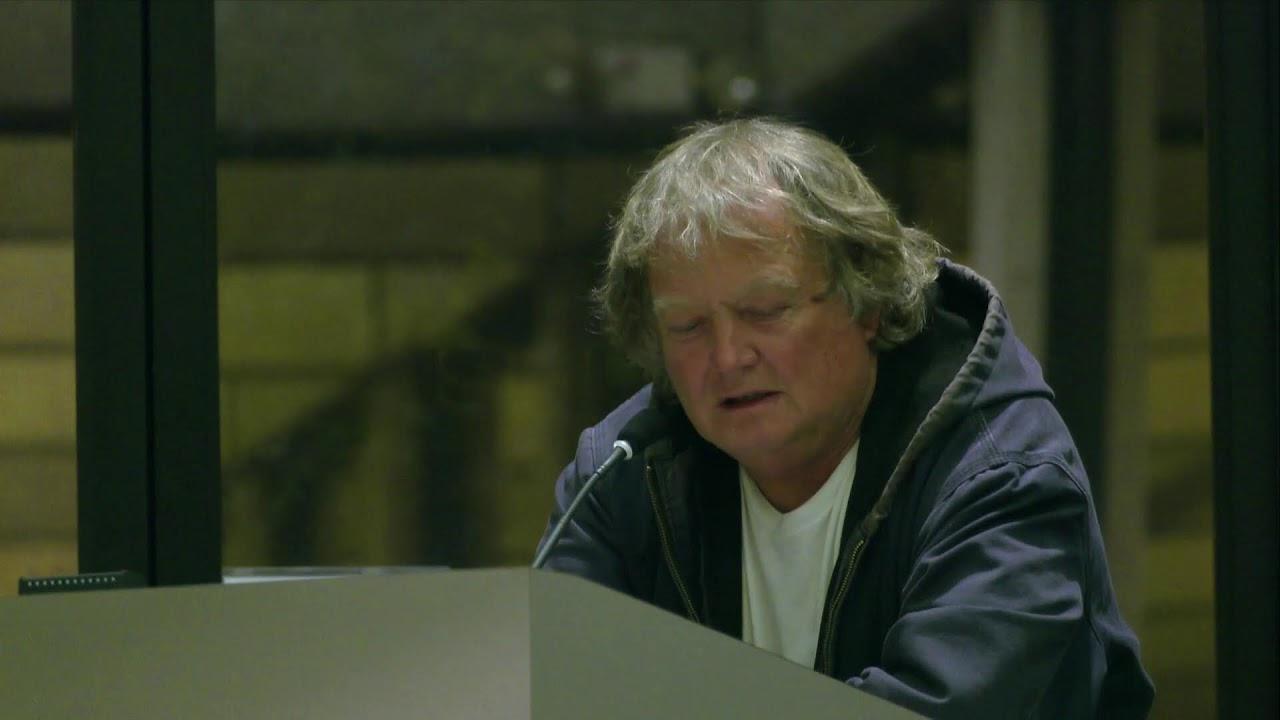
Santa Rosa Council Steers SB 10 Toward Targeted, Not Blanket, Rezoning
City Council • Santa RosaNovember 10, 2026
Locunity is an independent informational service and is not an official government page for this commission. All information is sourced from public footage and an analysis of official agendas with the aid of responsible, fact-checked AI. to report an error or omission.
Santa Rosa's City Council spent about two hours on Nov. 10, 2026, weighing SB 10, a state law that could allow up to 10 homes on 72% of the city's residential parcels. No vote was taken, but members steered staff toward a targeted approach built on design standards, affordability and hazard-area limits. The council also unanimously advanced stronger immigration non-collaboration rules and moved to brace for a forecast very strong El Niño.
- Targeted SB 10 rezoning favored over blanket upzoning; staff will return with options
- Immigration rules tightened 7-0: Council adopted a policy and introduced a Chapter 13-40 amendment
- Housing groups push broad SB 10, while Legal Aid seeks renter and fair-housing safeguards
- Proactive El Niño emergency proclaimed with six votes ahead of a strong storm forecast
- Countywide hazard mitigation plan adopted 7-0, preserving eligibility for FEMA grants
SB 10 Rezoning: Council Picks a Targeted Path
The basics: SB 10, in effect since 2022, is optional. It lets cities rezone parcels in transit-rich or urban infill areas for up to 10 units without California Environmental Quality Act (CEQA) review of the rezoning itself. Very high fire severity zones are excluded. Supervising Planner Amy Nicholson said the law sunsets Jan. 1, 2029.
Why it matters: A preliminary staff screening found 72% of residential parcels eligible, and the choice is permanent. "We can't go back on the rezoning," said Planning and Economic Development Director Gabe Osburn.
Where things stand: Osburn framed the law as "a product of the state looking at increasing density in areas that were traditionally zoned for single-family." Staff cautioned that existing setbacks, lot coverage and height limits would make 10 units hard to build without new objective design standards. Only one small jurisdiction in California has adopted SB 10.
Staff also cataloged tools the city already has:
- A missing middle ordinance that has drawn no submittals
- A downtown plan with about 800 units
- Accessory dwelling units (ADUs)
- 18 applications under SB 9
- Five projects under SB 1123
Advance planning has five staff. Osburn said a break in that workload would likely come in summer 2027.
The other side: Councilmember Natalie Rogers and Councilmember Dianna MacDonald questioned what SB 10 adds, along with staff workload, water and public safety capacity, and irreversibility. "I'm leaning towards the no further action," Rogers said, later challenging advocates to "make it make sense to me, because right now it doesn't." MacDonald said a blanket adoption "to me sounds like a nightmare based on the 72% of lots." Vice Mayor Jeff Okrepkie leaned conservative: "Obviously, I always have concerns about fire-impacted areas."
Councilmember Victoria Fleming strongly backed moving forward, excluding the wildland-urban interface and floodplains. "I'm fully supportive of you waiting till summer or using consultant time," she said. Councilmember Caroline Bañuelos wanted flexibility and said "the low and low-income housing be a focus and not just market rate." Councilmember Eddie Alvarez favored transit and central areas, with wider dispersal. City Attorney Ashley Crocker noted "the law itself doesn't mandate any low-income restrictions," and confirmed the city could attach its own inclusionary or affordability rules.
Decisions and stakeholder impacts: "No one here wants to take no action," said Mayor Mark Stapp. Osburn said he heard "a consensus of a very targeted approach that factors in affordability and factors in the environmental hazard areas." The direction narrows the potential map. Small builders and nonprofits may gain a by-right path. Renters, fire-prone neighborhoods and a thin planning staff carry the most risk.
What's next: "We will explore 10 units as the number. We will explore cap options," Osburn said. Staff will also draft SB 10-specific objective design standards and return to council. No date was set.
Housing Builders Rally; Legal Aid Urges Guardrails
Where things stand: SB 10 public comment drew a coordinated bench of housing producers and advocates. "I'm asking you to opt in to SB 10," said affordable housing veteran Mark Krug.
- Misty Bastoni, CEO of Habitat for Humanity of Sonoma County, pointed to an infill townhome project in Sebastopol.
- Omar Lopez, policy coordinator for Generation Housing, urged the council to go as broad as sensible, with ministerial approvals.
- Rich Wallach of Burbank Housing and Pauline Block of Cornerstone endorsed an annual cap.
- Abby Arnold of Santa Rosa YIMBY said more housing corrects the legacy of single-family zoning.
- Darryl Berlin of Common Space Community Land Trust backed broad infill upzoning.
Architect-developer Peter Stanley said SB 9's owner-occupancy requirement blocks his projects. He argued SB 10 would not open a floodgate.
The other side: Kate Vibe of Legal Aid of Sonoma County said SB 10 has no requirement protecting renters on redeveloped parcels. She asked for an analysis of affirmatively furthering fair housing. A public commenter warned that market-rate SB 10 units won't meet low-income needs.
Why it matters: The supporters' calls for caps and design standards echo where the council landed. Legal Aid's concerns align with Bañuelos' push on affordability.
Immigration Rules Tightened, Unanimously
Why it matters: The package reaches beyond SB 54 and police policy to cover all city staff and information sharing, backed by enforcement tools.
Where things stand: Interim City Manager Jason Nutt described a council policy consistent with the state Attorney General's guidance and SB 580. It sets protocols, training and documentation requirements. Crocker said the city's April ordinance restricted use of city property but did not directly bar staff collaboration or information sharing. She added that SB 54, a 2017 city resolution and police policy apply only partially.
The amended Chapter 13-40 bars officials, employees, boards and departments from using city property to collaborate with civil immigration enforcement. It does not require employees to block federal agents or ignore valid warrants. An assistant city attorney outlined enforcement through personnel discipline, exclusion from city facilities and civil injunctions. "It goes as far as we can go as a city," Crocker said.
MacDonald asked whether Santa Rosa now has "the strongest policy in place of any jurisdiction north of the bridge for immigration." "I can't say that for certain," Crocker replied.
Decisions and stakeholder impacts: Bañuelos moved the item. The council adopted the policy and introduced the ordinance (For: 7, Against: 0, Absent: 0). Fleming called it a moment to "make some noise" in standing up "to fascism." Rogers said "this is just a step, but it's not the beginning and it's not the end." Council members praised staff and the Sonoma County Sanctuary Coalition. Coalition member Mary Ann Michaels and Sonoma State student Dino Ortega spoke in support.
What's next: The ordinance returns for final adoption.
Storm Season Prep: Emergency Declared, Hazard Plan Adopted
Where things stand: Fire Chief Scott Westrope said NOAA forecasts a very strong El Niño, with an 83% chance of a historic event. Local impacts remain uncertain. "There's a 100% chance of a very strong El Niño this year," he said. Departments are repairing drainage, building a preparedness playbook and readying sandbags. "We are the largest city in Sonoma County to proactively declare an emergency," Westrope said. Roseland resident Duane DeWitt thanked staff for clearing creek bridges.
Decisions and stakeholder impacts: Alvarez moved the proclamation, and MacDonald seconded. It passed with six votes in favor; the final member's vote was not clearly announced. The proclamation frames coordination with the county and state and opens the door to potential assistance. The city's El Niño information is posted at srcity.org/elnino.
Separately, the council adopted the 2026 Sonoma County Multi-Jurisdictional Hazard Mitigation Plan and Santa Rosa Annex (For: 7, Against: 0, Absent: 0). MacDonald moved the item, and Okrepkie seconded. No one spoke during public comment. Twenty-two jurisdictions and partners built the plan through 10 public meetings and 580 survey responses. Santa Rosa's annex lists 28 mitigation actions, including new language for a California state parks dam repair grant at Annadel State Park. "FEMA requires this plan's adoption in order to get any hazard mitigation grant," said Emergency Manager Neil Bregman. Earthquake and wildfire rank as the city's highest-risk hazards.
What's next: The emergency proclamation must be renewed every 60 days. FEMA's final plan approval follows the city's adoption.
- Legal contracts: The council approved consent items 13.1–13.3 for outside counsel, including $130,000 for City Hall financing legal work (For: 5, Absent: 2).
- Disaster funds: DeWitt sought an item-by-item accounting of up to $35.5M in CDBG-DR/MIT funds; the item's outcome wasn't announced.
- Family Court Awareness Month: Rogers proclaimed November 2026, as survivors Emily Stifler and Connie Rodriguez urged court reform.
- Public comment: DeWitt urged restoring three-minute limits; a commenter sought accounting of police spending on gang incidents.
- Closed session: The council gave staff direction on the City Manager's evaluation; there was no reportable action.
Looking ahead: SB 10 options return to council with no date set. The immigration ordinance comes back for final adoption, and the El Niño emergency will need renewal every 60 days.