City Council - Mar 24, 2026 - Meeting
City Council • San RamonMarch 24, 2026
Locunity is a independent informational service and is not an official government page for this commission.We use AI-assisted analysis and human editorial review to publish information.
San Ramon Maps 10-Year Path to Close Budget Gap as Measure N Revenue Slides
San Ramon's City Council got its clearest picture yet of the fiscal math ahead: hold annual spending growth to 2.3% — less than a quarter of recent trends — or face service cuts when the city's signature sales tax expires in a decade. The March 24 budget kickoff also surfaced unresolved equity gaps for seniors in Dougherty Valley, a resident revolt over development pace, and a teen leader's pitch to let youth do more than advise.
- Finance director reveals Measure N revenue has fallen $2.1M below original projections, presenting a 10-year model requiring 2.3% annual expenditure growth to balance by FY36
- Senior Advisory Committee spotlights transportation and park gaps in Dougherty Valley, where the city's subsidized ride-share program doesn't operate
- Homeowner urges council to slow high-density development, citing school overcrowding, public safety staffing, and loss of green space
- Council proclaims Prescription Drug Abuse Awareness Month as NCAPDA reports four fatal overdoses in San Ramon Valley since 2023 and readies 15 naloxone distribution units
- Teen Council member proposes hybrid advisory-implementation model to fill youth program gaps at zero cost during the deficit
- Master fee schedule adoption delayed to April 14 as resident pushes for lower citizen appeal fees matching neighboring cities
The Fiscal Roadmap: 2.3% or Bust
The basics: Measure N, a half-cent sales tax voters approved to fund city services, generates roughly $13.5M annually and expires in 2035. San Ramon's current operating budget runs about $80.9M in revenue against $71.8M in expenditures, but the gap narrows fast if spending continues growing at recent rates.
Why it matters: Finance Director Jennifer Wakeman told the council the math is stark. Measure N revenue was originally projected at $15.6M but has been revised downward twice — first to $14.8M, now to $13.5M — a 14% cumulative decline driven by lower auto sales, tariff impacts, and expiring EV credits. Franchise fees also dropped $950,000. The only bright spot: property taxes are running 3.5% above expectations.
Where things stand: Wakeman presented a simplified 10-year model showing that if revenues grow at the historical 4% rate while expenditures are held to 2.3% annual growth, San Ramon can reach a balanced operating budget by FY36 — the year Measure N sunsets.
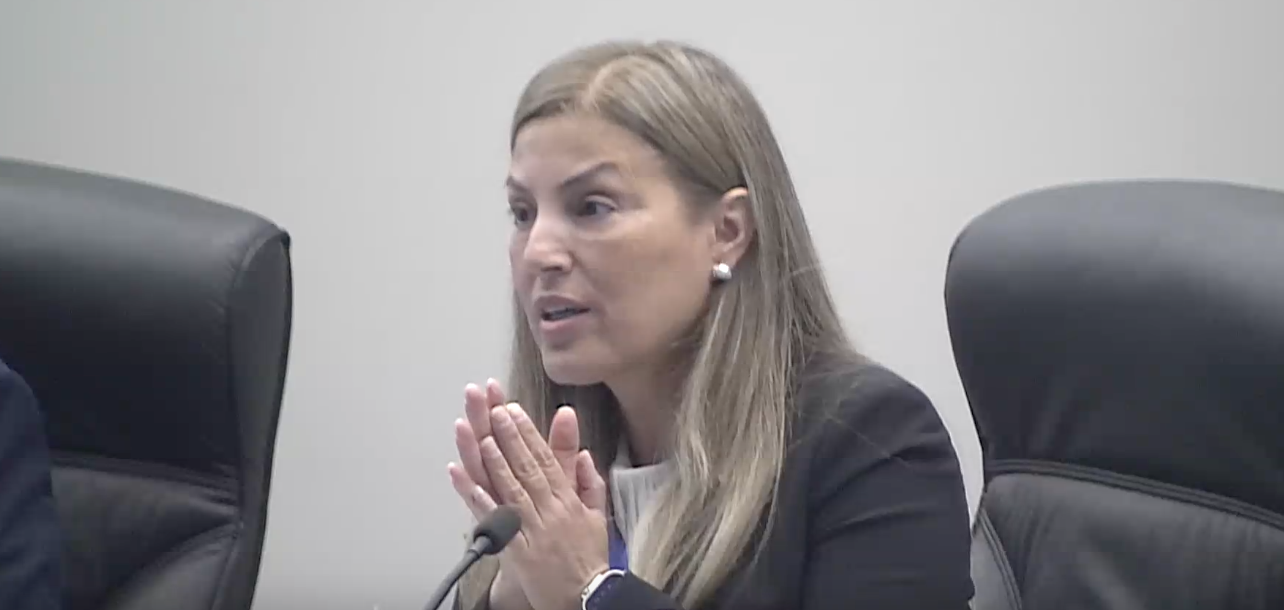
"Revenues and transfers in growing at a historical rate of 4% a year when compared with expenditures and transfers out that grow at 2.3% a year will enable the city to get to a balanced budget after the expiration of Measure N," said Finance Director Wakeman.
The 2.3% target is a dramatic downshift. Recent expenditure growth has run closer to 9%, and existing labor contracts commit the city to higher rates than the target. Wakeman acknowledged the gap between aspiration and current trajectory but said the model gives the council a concrete benchmark to track year over year. Budget guidelines remain unchanged: no new positions or programs without trade-offs, no spending money the city doesn't have, no unsustainable commitments.
Wakeman also flagged four policy areas the council will need to address: revisiting the OPEB (retiree health benefits) funding policy — the trust is at 80%, potentially allowing the city to reimburse $2.5M in annual retiree costs from the trust rather than the general fund; replenishing the pension trust, which has fallen to $1.9M; reviewing the general fund reserve policy; and establishing a formal infrastructure replacement policy.
"All of the departments showed up in a major way for finance, and I really appreciate it, them demonstrating so much effort and commitment to what we're trying to achieve," Finance Director Wakeman said, noting that department heads engaged seriously with cost containment rather than submitting historical budgets.
The other side: The City Manager cautioned the model is preliminary. "Things can change with a sneeze. You could have a recession, you could have a court ruling that removes several million in funding. We could have a funding windfall from somewhere," he said.
Public commenters pushed for more detail. Johannes Tillehan, a public commenter, called for six areas of greater transparency, including tracking recurring general fund revenue without Measure N — which, he noted, would show the city essentially flat at $66.2M. He also urged inclusion of capital improvement and equipment replacement costs in the long-term model and a downside investment scenario.
Greg Carr, a public commenter, asked for a current-year-end projection and cautioned the presentation lacked the detail behind the numbers. Small business owner Pascalis Natatos raised alarms about rising fees, noting that business license costs for 2-to-4-employee firms jumped from $100 to $350, and asked whether the city has a plan to retain small businesses.
Decisions: No formal action was required — the presentation was informational. A more detailed long-term financial plan with development-specific revenue projections will come to council in July via consultant Russ Branson.
What's next: Councilmember Robert Jweinat expressed confidence in the finance team's improved approach. Vice Mayor Marisol Rubio urged every committee and commission to proactively identify grant funding. "I can't tell you how many times I've sat in meetings — there's just money sitting there and people aren't using it," she said. Councilmember Sridhar Verose asked about plans to grow recurring revenue. The July presentation will be a critical milestone for whether the 2.3% target translates into concrete department-level spending plans.
Seniors Left Behind in Dougherty Valley
Why it matters: San Ramon's 55-plus population is its fastest-growing demographic, and the Senior Citizens Advisory Committee's annual report revealed that the city's newest and largest residential area — Dougherty Valley — has the fewest senior services and the weakest transit connections to the community center where most programming is concentrated.
Where things stand: Six-year committee member Colette Clark delivered a comprehensive report covering accomplishments — including a 225-response Senior Needs Assessment survey, expanded quarterly publication of the Encore newsletter, and four goals for the coming year centered on becoming an age-friendly community with walking loops, shade, non-slip surfaces, and seating in parks.
"As San Ramon population continues to grow, the demand for programs, services and resource allocation will also increase," Clark said. "On behalf of the senior advisory committee, I request your continued support and investment to ensure that the City Council can effectively meet the evolving needs of older adults."
She also flagged a practical barrier: "The woman who was teaching most of our classes has retired. So we're looking for instructors. And the instructors are really hard to come by."
Councilmember Sridhar Verose zeroed in on senior scams — "The study says that around $4.9 billion was scammed in 2024 on our seniors. Billion, billion dollars" — and asked about mental health services and transportation options for Dougherty Valley residents. Staff noted the quarterly "Lunch with Law Enforcement" program addressing scams, partnerships with medical providers for mental health referrals, and multiple transportation options including the senior express van, the Go San Ramon ride-share program, Wheels bus Route 4, and County Link paratransit.
The other side: Vice Mayor Marisol Rubio pressed hard on whether staff had actually followed through on specific requests from Dougherty Valley seniors for shade structures, back-supported seating, and group walking safety — issues she said she raised at advisory committee meetings. She pointed out a critical coverage gap: "Go San Ramon does not cover that area that Councilmember Verose and I represent. Unfortunately, it's south and west San Ramon that it covers."
City staff confirmed shade and seating improvements are included in upcoming capital projects and that transportation exploration is ongoing but still in early phases. Staff member Steve Cox from Parks and Community Services provided updates on programming, the forthcoming Mobility Matters presentation, and coordination with county transit services.
What's next: Mayor Mark Armstrong connected the committee's work to public comments about AI education for seniors and the Teen Council's technology assistance, and asked staff to bring the Teen Council's charter for review alongside the senior committee's bylaw evaluation. The transportation gap in Dougherty Valley will feed into upcoming CIP and transit planning, though no timeline for expanding Go San Ramon's service area was provided.
Homeowner Sounds Alarm on Development Pace
Susan Clayton, a public commenter who has lived in the San Ramon Valley since 2013, told the council she wants the city to slow high-density development. While acknowledging state housing mandates, she raised five specific concerns: school capacity protections to prevent overcrowding, workforce housing for teachers making five-year commitments, maintaining adequate police, fire, and public works staffing proportional to population growth, neighborhood traffic buffers to prevent cut-through traffic, and preservation of green space and tree canopy for climate commitments.
Clayton submitted her first written letter to the city. Mayor Armstrong acknowledged receipt. The comments reflect broader tensions between state housing element requirements driving rapid construction along corridors like Camino Ramon and residents' quality-of-life expectations — a friction point likely to intensify as the city processes its housing pipeline.
Overdose Deaths Down, but Naloxone Push Continues
Mayor Armstrong read a proclamation declaring March 2026 as Prescription Drug Abuse Awareness Month, citing Contra Costa County's fentanyl overdose rate of 10.2 per 100,000 in 2024, down from 14.72 in 2023.
Alice Power, NCAPDA project manager, presented the organization's 16-year track record and the national picture: fatal overdoses are down nearly 20% due to education, naloxone distribution, and treatment resources. But the local numbers still sting.
"Since 2023 through today, EMS data shows four fatal overdoses in San Ramon Valley, one in Alamo, one in Danville, and two in San Ramon. 115 times EMS was called out to a suspected overdose, and 39 times naloxone was administered," Power said.
NCAPDA has distributed over 10,000 naloxone kits and has 15 distribution units ready to deploy, seeking high-traffic locations including restaurants and bars. Councilmember Richard Adler endorsed the restaurant and bar placement idea. Councilmember Jweinat mentioned his Leadership San Ramon class's upcoming naloxone awareness project. Vice Mayor Rubio commended the preventive approach of going into high schools. Public commenter Santosh Kanjula advocated for installing naloxone stands at fire stations and police departments, noting county and state grant funding is available.
Teen Leader Pitches Youth Implementation Role
Suhani Goyal, a San Ramon Teen Council member, made a polished case during public comment for transforming the advisory body into a hybrid model.
"I'd like this council to consider evolving the Teen Council into a hybrid model, one that maintains its advisory role but also allows for limited program implementation," Goyal said, noting that 2024-25 ambassadors developed proposals on teen internships and cultural events that stalled because bylaws don't allow formal implementation.
She cited alignment with City Goal 3 — evaluating bylaws of committees and boards — and the $17.6M budget deficit as reasons to let 17 student volunteers execute low-cost programs under staff oversight. Mayor Armstrong later asked staff to bring a Teen Council charter review to a future meeting alongside similar reviews for other advisory bodies.
Minor Items
- Consent calendar approved 5-0 (motion by Councilmember Verose, second by Vice Mayor Rubio), including Ordinance 537 overhauling six categories of development impact fees — childcare, parks, open space, inclusionary housing, affordable housing linkage, and parkland dedication — based on the city's updated nexus fee study.
- FY27 master fee schedule adoption continued to April 14, 2026 (5-0, motion by Councilmember Verose, second by Councilmember Adler) due to California Government Code 66016 timing requirements. Budget Manager Julia Elbow explained the two-week meeting interval made it impossible to meet both the 14-day material availability and 10-day data availability windows. Public commenter Jim Blickenstaff urged a two-tiered appeal fee system — lower for residents, higher for commercial interests — matching practices in Pleasanton, Walnut Creek, and Dublin, arguing current fees act as a paywall blocking citizen access to elected officials.
- Public commenter Frenchonette Bryant, an AI consultant, offered to partner with the city and libraries to provide beginner-friendly AI workshops for seniors, small business owners, and community members.
- Public commenter Helena Klecker described being stalked by a neighbor relocated within the same apartment complex just outside restraining order distance, saying she no longer feels safe leaving her home. The City Manager committed to follow up.
- Councilmember Jweinat raised concerns about cybersecurity after Foster City's six-day IT breach, and flagged pedestrian visibility issues at night crossings.
- Councilmember Adler mentioned a countywide smart signals project and a federal transit advocacy trip to Washington, D.C.