
Board of Supervisors - Mar 10, 2026 - Meeting
Board of Supervisors • San Mateo CountyMarch 10, 2026
Locunity is a independent informational service and is not an official government page for this commission.We use AI-assisted analysis and human editorial review to publish information.
Board Questions $300K Lobbyist Spend, Shelves E-Bike Ordinance After Safety Debate
The San Mateo County Board of Supervisors used last week's packed session to put its own governance machinery under the microscope — questioning how much value the county gets from its Sacramento and Washington lobbyists, demanding sharper drafting on a high-profile e-bike safety ordinance, and signaling tighter oversight of Measure K as federal funding uncertainty looms.
All four supervisors questioned ~$300K/year in lobbyist spending and voted unanimously to create a subcommittee to overhaul the county's legislative advocacy
E-conveyance safety ordinance shelved after two supervisors raised concerns about vague definitions, a missing diversion program, and lack of stakeholder outreach — despite two fatal e-bike/emoto incidents in six months
Measure K hits $1.1 billion in total revenue since 2012; oversight committee reports 65.5% of program metrics on target and doubles reporting frequency
$4.5M boost approved for substance use treatment through Our Common Ground, backed by data showing 99% negative drug tests in a first-in-nation program
North Fair Oaks residents rallied against a private school expansion, with the community council already on record rejecting the project
Board honored retiring Schools Superintendent Nancy McGee, declaring March 10 Nancy McGee Day for 30-plus years of education leadership
Lobbyist Spending Under Fire
Board Creates Subcommittee to Overhaul Legislative Advocacy
Why it matters: San Mateo County faces a $158 million vehicle license fee shortfall and potential fallout from HR1's $2.4 billion cut to California's federal funding — yet four supervisors openly questioned whether the county's lobbying operation is equipped to fight those battles.
Where things stand: A routine quarterly legislative update turned into a two-hour examination of how the county spends roughly $300,000 a year on three state and federal lobbying firms — approximately $8,000 per month each — plus 75 association memberships spread across 30 departments.
Supervisor Jackie Speier, drawing on her years in Congress, delivered the sharpest critique: "I got very little traction, very little input personally from the lobbyists who were hired by local jurisdictions in San Mateo County."
She went further, calling the broader lobbying landscape "a cottage industry that's become a mega industry in Sacramento and D.C."
Supervisor Ray Mueller zeroed in on accountability, arguing the real test is whether lobbyists can move legislators outside the county's own delegation. He cited the long-stalled vehicle license fee issue as a case study: "What I keep hearing is, 'No one cares about it outside of our legislators.' And every time I hear that I think, well, who is our lobbyist? Because it's our lobbyist's job to make them care."
Supervisor David Canepa agreed the contracts need review: "We really need to revisit this, and especially in light of what's happening. I think we need to revisit these consultants and how much we're paying them, what's the value that they're bringing."
County Executive Mike Callagy offered a blunt alternative: "If it's the board's desire, I would be happy to terminate the lobbyist contracts. I'd rather actually put someone here full time to supplement our existing staff."
Board President Noelia Corzo added a transparency concern, expressing surprise that a request to lift the county's sales tax cap had been sent to Assemblymember Marc Berman without prior board discussion. She said the idea of "tangible action steps to increase taxes when our voters are not aware of that — or we don't understand, we're not communicating to them what we're even exploring — just feels inappropriate to me."
Corzo also noted this was the first time in her tenure the board had received a substantive legislative presentation, and proposed the subcommittee. Mueller pushed for the board to begin voting on individual legislative positions rather than delegating those decisions to staff.
The state backdrop: Chief Legislative Officer Connie Juarez-Diroll and two lobbying firms briefed the board on a challenging fiscal picture. The governor's proposed $348.9 billion budget carries a $2.9 billion deficit, while the Legislative Analyst's Office projects the gap at $18 billion. The state has roughly $18 billion in reserves but faces a projected $20–25 billion structural deficit over three years. State tax collections have exceeded projections by $6.1 billion, but the LAO warns of stock market overheating risk. Among the major bills being tracked: AB 1900 (single-payer health), SB 417 ($10 billion housing bond for the November ballot), and SB 884 (election procedure changes through 2028).
Decisions: The board voted 4-0 (For: Speier, Mueller, Canepa, Corzo; Absent: Gauthier) to create a legislative modernization subcommittee led by Corzo and Mueller.
What's next: The subcommittee will review the county's lobbying contracts, association memberships, and internal advocacy capacity, with potential restructuring ahead.
E-Bike Safety Ordinance Hits the Brakes
Board Demands Sharper Definitions and More Outreach Before Moving Forward
The basics: Supervisors Speier and Mueller co-sponsored an ordinance to regulate electric conveyances — e-bikes, scooters, and electric skateboards — in unincorporated San Mateo County, intended as a model for the county's 20 cities. The push followed two fatalities in six months: a 4-year-old killed on a Burlingame sidewalk in August after a car collided with an e-bike, and a 16-year-old killed on the Highway 1 shoulder in February while riding an illegal electric motorcycle at high speed. National e-bike sales have grown from 325,000 in 2018 to 1.7 million in 2024.
Why it matters: Twenty cities were watching San Mateo County for a model ordinance — but the board's decision to shelve the measure exposed a fundamental tension between cracking down on illegal devices and protecting legal micromobility users.
Where things stand: County Attorney John Niblin presented the ordinance's provisions: restating state law classifications (Class 1/2/3), prohibiting unsafe operation including acrobatics and stunts, banning sidewalk riding, establishing escalating fines ($100/$200/$500), providing for juvenile diversion, and allowing impoundment.
Speier framed the urgency: "Supervisor Mueller and I are introducing an ordinance today because lives are at stake. A growing number of people, especially teens, have been severely injured or killed while riding electric devices we call e-bikes."
Mueller highlighted a gap many families don't know about — there is no insurance coverage for e-bike accidents: "The problem is that if you're in a car accident, if you're in an accident with an e-bike, you're not covered by insurance." He offered to pilot the ordinance in his District 3 only.
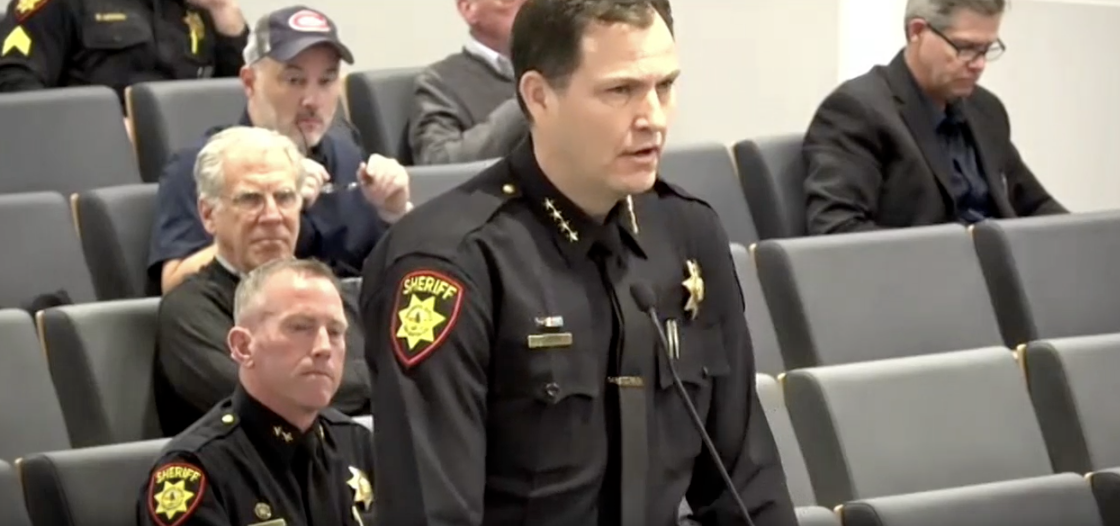
Expert testimony underscored the scale. Dr. John Ma, a trauma surgeon, cited a study showing e-bike crash fatality likelihood was 37 times higher than traditional bicycle crashes, and that Rady Children's Hospital saw e-bike youth injuries rise from 1 in 2021 to 220 in 2025. Superintendent Kristin Gracia of the Menlo Park City School District described how her school board's emoto ban led to zero throttle e-bikes on campus. Deputy Larson of the San Mateo County Sheriff's Office confirmed he encounters illegal emotos daily and described enforcement challenges.
The other side: President Corzo raised multiple concerns. The public health officer was not consulted. The ordinance text does not clearly distinguish between legal e-bikes and illegal emotos. A diversion program does not yet exist. The sidewalk ban could discourage legal e-bike use by minors on streets without safe infrastructure. And low-income residents — not just youth — need access to diversion.
"I don't want to see an unintentional impact of disincentivizing minors and adults from using bicycles or using e-bikes legally," Corzo said.
Canepa was more direct: "This legislation, make no mistake about it, it's not ready for prime time." He cited the tobacco retail license process — which took over a year — as a model for proper stakeholder engagement, and said he wanted to hear from the bike coalition and city council members before acting.
Public commenters reinforced the point. Mike Swire, a member of the Silicon Valley Bicycle Coalition, noted the SEACAG Bicycle and Pedestrian Advisory Committee was not consulted and pointed out that 2,000 San Mateo County residents were killed or seriously injured on streets in the past decade, overwhelmingly by motor vehicles. Councilmember Paul Nagengast from Half Moon Bay offered to share updates from a League of Cities e-bike task force.
Decisions: Speier agreed to continue the item. The board directed amendments to clarify e-bike vs. emoto distinctions, establish a diversion program for both adults and minors, and conduct additional stakeholder outreach including with the Silicon Valley Bicycle Coalition and SEACAG BPAC.
What's next: The ordinance returns to the board after revisions and additional community engagement.
Measure K Revenue Passes $1.1 Billion
Oversight Committee Doubles Reporting as Federal Uncertainty Grows
Why it matters: With HR1 threatening $2.4 billion in federal funds to California and a possible $18 billion state deficit, the county's half-cent sales tax may be asked to fill bigger gaps — and the board wants sharper data before that happens.
Where things stand: Bob G., chair of the Measure K Oversight Committee, reported that the tax has generated more than $1.1 billion since its 2012 inception. FY2024-25 revenue was approximately $115 million, a 1% decrease from the prior year, against expenditures of approximately $110 million. The total Measure K budget was $272.7 million, with the gap reflecting multi-year capital project obligations.
Performance metrics showed 65.5% of measures met their targets overall: 65% for Children/Families/Seniors (80 measures across 52 initiatives), 59% for Housing/Homelessness (45 measures), and 74% for Emergency Preparedness (22 measures). Many contracts started mid-year and staffing challenges impacted delivery.
Key programs highlighted included Second Harvest (nearly 4 million meals per year), the $10 million North County Wellness Center opening this year, the Flood Park renovation, Kiku Crossing (225 affordable units), and the Middlefield Junction reconstruction after a devastating fire. Roberto Manchia from the County Executive's Office detailed $85 million obligated for eight housing projects and in-progress capital projects including the Pescadero Fire Station.
Canepa praised the data-driven approach: "When we're able to look at data and make decisions, not only does it make sense for the board, but it makes sense for the taxpayer."
The committee recommended and implemented changes including separating service initiatives from capital projects in reporting, requiring twice-yearly performance reports (up from annual), and planning eight program evaluations.
Corzo noted that Measure K will face more scrutiny given federal funding uncertainty.
Two public commenters weighed in. Jose Reyes, a Navigation Center resident, asked the board to designate more housing for very low-income residents. Sid Young of Moss Beach requested Measure K spending data by zip code, noting the entire coastside has zero health facilities.
Decisions: The board accepted the report 4-0 (For: Speier, Mueller, Canepa, Corzo; Absent: Gauthier).
Substance Use Treatment Contract Expanded
Strong Outcomes Drive $4.5M Increase for Our Common Ground
Why it matters: California is the first state to approve contingency management for stimulant use — and San Mateo County's data shows the model works.
Where things stand: Dr. Jei Africa, Director of Behavioral Health and Recovery Services, presented the third amendment to the county's contract with Our Common Ground, which provides detox, contingency management, outpatient, intensive, and residential substance use treatment. The amendment adds approximately $4.5 million to the total contract, driven by significantly increased utilization after the state's shift from CalAIM to fee-for-service payment.
Key FY2024-25 outcomes: 57 clients enrolled in the contingency management program with 99% negative urine tests. Seventy-eight individuals went through detox with only a 6% readmission rate; 53% successfully completed detox and linked to residential services. Of 166 admitted to the residential program, only 9% were readmitted. Utilization rates: recovery residence at 92% capacity, detox at 67%, residential at 70–72%.
Corzo highlighted context that the headline contract figure can obscure: "Our county residents that are on Medi-Cal, they don't have that option. They have us or nothing." She noted that residents with private insurance can access facilities in San Jose or Southern California, but most clients served here have no alternative.
Decisions: Approved 4-0 (For: Speier, Mueller, Canepa, Corzo; Absent: Gauthier).
North Fair Oaks Residents Rally Against Private School Expansion
Six residents from North Fair Oaks delivered public comment opposing a proposed second campus for Synapse School — which charges approximately $40,000 in annual tuition — at the Sports House facility on Edison Way.
Gabriella Valencia, a 29-year resident, said the Sports House has already exceeded capacity and the expansion would add more than 130 cars to overwhelmed streets. She noted that most students come from wealthier communities while her neighborhood bears the traffic burden.
Everardo Rodriguez reported that the North Fair Oaks Community Council voted to reject the proposal, and he advised the county not to support the project. Multiple speakers criticized the lack of meaningful community engagement — describing a last-minute letter sent one week before the council vote. Speakers described streets without sidewalks where three parked cars have been totaled by reckless drivers.
What's next: Several speakers referenced an upcoming meeting with Supervisor Lisa Gauthier, whose district includes unincorporated North Fair Oaks.
Board Honors Retiring Superintendent Nancy McGee
The board unanimously adopted a proclamation declaring March 10 Nancy McGee Day in San Mateo County, honoring her retirement after more than 30 years in education, including 20 years in the classroom.
Speier led the presentation, crediting McGee's Coalition for Safe Schools and Communities — created after the 2012 Newtown massacre — with preventing potential tragedies: "We can say without fear of contradiction that there are 70 headlines in San Mateo County that didn't happen because we had those protocols in place."
Other programs under McGee's leadership included the Big Lift literacy program, the United for Youth Vision 2030 blueprint, and the Child Care Partnership Council. Mueller praised her leadership during COVID. Corzo called her someone who "creates more seats at the table for people." County Attorney John Nibbelin described a "warrior ethos around justice and fairness and equity in education."
Former colleague Claire Cunningham noted McGee's career was deeply shaped by the Santana High School shooting that claimed two of her students. Nancy McGee, joining via Zoom, credited former Congresswoman Jackie Speier and former Supervisor Don Horsley for supporting the Coalition, which has now expanded to Monterey, Santa Clara, and Marin counties.
Decisions: Approved 4-0 (For: Speier, Mueller, Canepa, Corzo; Absent: Gauthier).
Minor Items
Consent agenda approved 4-0 with no items pulled for discussion.
Board President Corzo reported no immigration enforcement actions within county departments during the Jan. 1–March 1 reporting period.
Jose Reyes, a Navigation Center resident, asked the board to designate the navigation center as temporary permanent shelter, describing himself as "homeless by circumstance" and disabled while waiting for an affordable housing lottery with only 12 units available at his income level.
A public commenter representing nearly 1,000 San Mateo residents opposed a proposed Horizon detox facility at 101 North El Camino Real, citing limited public comment at a Behavioral Commission hearing, 300 written comments in opposition, and proximity to an elementary school.
Deacon Lauren Patton McCombs praised collaboration between corrections staff, faith leaders, and advocacy groups on jail religious services, but urged the board to fix broken elevators at McGuire jail.
Nancy Goodman of Fix in San Mateo County echoed the jail elevator concerns and praised corrections staff for addressing 8 of 10 religious services issues raised through ICAC.
Dr. Patrick Horn of the Pescadero Municipal Advisory Council announced a housing element task force focused on affordable farm labor and workforce housing on the south coast, with a first meeting set for March 17.
Martin Fox advocated for repeal of the Lanterman-Petris-Short Act as a county legislative priority, arguing California's involuntary mental health treatment laws are among the weakest in the nation.
The board approved initiation of two litigation matters in San Mateo County Superior Court during closed session, 3-0 (Speier, Mueller, Corzo; Absent: Canepa, Gauthier). Details will be made public when filings are initiated.