
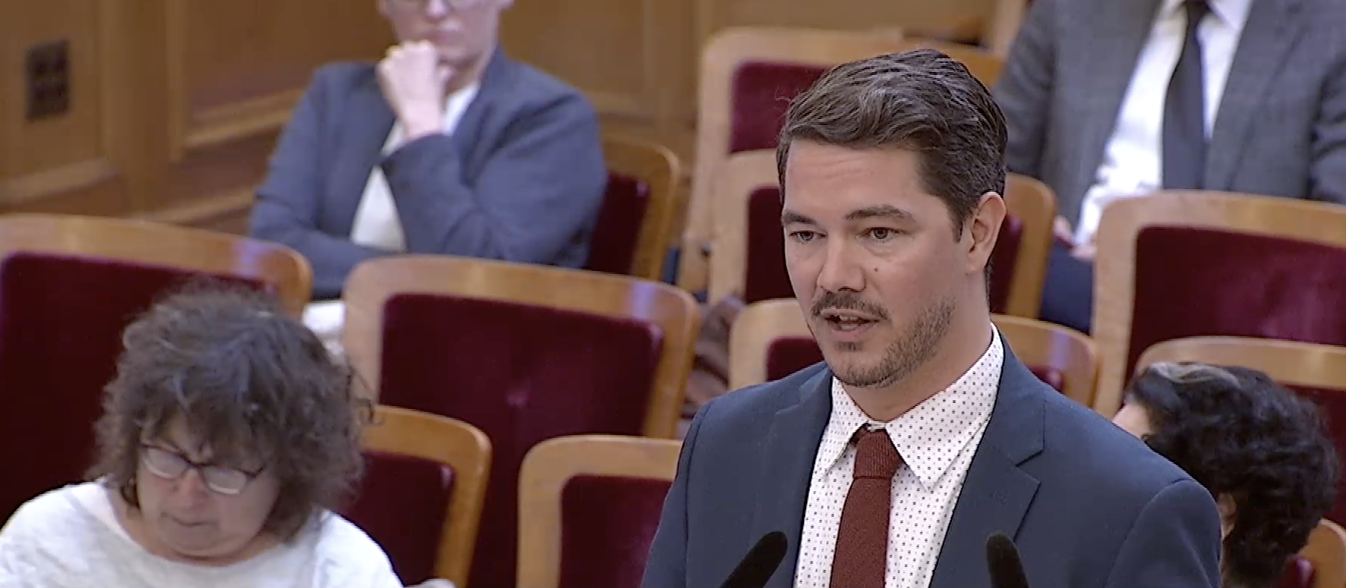
Planning Commission - May 28, 2026 - Meeting
Planning Commission • San FranciscoMay 28, 2026
Locunity is a independent informational service and is not an official government page for this commission.We use AI-assisted analysis and human editorial review to publish information.
SF Eyes 5% Inclusionary Rate and 67% Fee Cut to Restart Housing Production
San Francisco is preparing the most sweeping overhaul of its affordable housing funding model in a decade — slashing developer fees and inclusionary requirements that a new city analysis says have become economically meaningless, while betting on a ballot measure to triple annual affordable housing investment. The Planning Commission on May 28 received a detailed informational briefing on the proposal, drawing extensive public comment and pointed questions from commissioners about whether the plan goes far enough, and whether it goes too far.
- City controller finds all 80 residential development scenarios infeasible — even hypothetical 100% market-rate projects with zero affordable housing requirements can't pencil out
- Proposed legislation would cut the on-site inclusionary rate from 15% to 5% and slash development impact fees by 67%, with a 25-unit minimum threshold exempting small projects entirely
- Companion ballot measure would expand the Affordable Housing Trust Fund from $50M to $125M per year, using 20% of annual property tax growth and projecting $3 billion for affordable housing over 30 years
- Market-rate housing production has collapsed 70% since 2020, from over 3,000 units to just 924 in 2025, and inclusionary fee revenue has dropped 94% — from a pre-pandemic average of $31M to $2.1M per year
- Public comment was overwhelmingly supportive, with SPUR, the Housing Action Coalition, Abundant San Francisco, and multiple residents urging swift action
- Commissioners raised concerns about gentrification in sensitive neighborhoods, the security of the ballot measure strategy, and whether even these reductions are sufficient
The Math That Broke the Model
The basics: The city's Inclusionary Affordable Housing Program, codified in Planning Code Section 415, currently requires most residential projects of 10 or more units to set aside a percentage of units as affordable or pay in-lieu fees. A Technical Advisory Committee convened by the Controller's Office examined whether developers can actually absorb those costs.
Why it matters: The answer is a definitive no — not even close. The Controller's feasibility analysis, conducted by Century Urban and TBD Consultants, tested five construction prototypes across 80 scenarios. Every single rental prototype produced negative residual land values, meaning projects would lose money even if land were free. Only one condominium prototype — mid-rise — showed borderline feasibility, and only under a hypothetical scenario with zero inclusionary requirements whatsoever.
Where things stand: Chief Economist Ted Egan of the Controller's Office told the commission that "the maximum inclusionary requirement that projects could support is zero and that requirements that significantly exceeded zero risked reducing market-rate housing feasibility without corresponding growth in affordable housing inclusionary housing production."
The TAC voted unanimously to recommend setting the on-site rate at 5% — contingent on a Housing Trust Fund ballot measure passing in November — and defaulting to 10% if the ballot measure fails. Additional recommendations include exempting projects under 25 units, eliminating the highest-tier middle-income AMI requirement, and cutting non-inclusionary impact fees by 67%.
Planning Department staff member Ada Tan framed the urgency: "Annual production has declined from more than 3,000 units in 2020 to only 924 market-rate units in 2025, which is a 70% decrease."
Commissioner Derek W. Braun, who works professionally on housing feasibility studies across the Bay Area, confirmed the findings are not unique to San Francisco. "I'm currently working on studies for 14 different jurisdictions in Santa Clara and San Mateo counties with a similar kind of effort," he said. "In just about every jurisdiction for almost all of the development prototypes that we're looking at, the results are pretty similar."
Still, Braun added a note of caution: "I would still hesitate a little bit at 5% ordinarily because there are always edge cases, there are always projects that have unique circumstances and are able to move forward. And when development does start to move forward more quickly, conditions change pretty quickly."
What's next: The commission is scheduled to take an adoption vote on June 18. The Building Inspection Commission will hear the matter June 17, and the Board of Supervisors is targeting passage before the August recess.
The $125M Bet: A New Funding Model for Affordable Housing
Why it matters: The proposed ordinance doesn't just cut fees — it fundamentally restructures how San Francisco funds affordable housing, shifting from a model that taxes individual projects to one backed by citywide property tax growth.
Where things stand: The companion legislation, introduced by Supervisor Myrna Melgar with seven Board co-sponsors and mayoral support, would expand the Affordable Housing Trust Fund from $50M to $125M per year by dedicating 20% of annual property tax revenue growth. Over 30 years, the city projects the fund would generate an additional $3 billion for affordable housing. The city plans to issue revenue bonds against that stream beginning next year, starting with $70M earmarked for affordable housing preservation.
Jacob Bintliff of the Office of Economic and Workforce Development described the logic: "Shifting our strategy from relying on fees and inclusionary requirements imposed on new housing development that has significantly declined under current economic conditions to a broader-based funding source that grows in tandem with the city's overall economic growth."
Bintliff also justified the new 25-unit exemption threshold. "Over the past 10 years, 10-to-25-unit projects have provided 1.8% of the inclusionary units that the city has produced. So there's not a lot to lose there."
A key design feature: by setting local inclusionary rates below the minimum amounts required for state density bonus eligibility, the city intends to steer developers toward local zoning — particularly the Family Zoning Plan — rather than state programs like SB 423 and AB 2011. Bintliff explained that reducing local inclusionary to 5% would lower automatic state density bonus eligibility for rental projects from 50% to 20%.
Additional proposed changes include eliminating area-specific additional housing fees, expanding the land dedication option citywide, deferring 85% of impact fees to the first certificate of occupancy, and simplifying vesting and extension rules.
"10% of Zero Is Still Zero": Broad Public Support, Sharp Questions
Where things stand: Public comment on the proposal ran overwhelmingly in favor. Speakers from housing advocacy organizations and individual residents alike urged the commission to act quickly.
Lori Droste, Housing and Planning Director at SPUR, captured the central argument succinctly: "They studied 80 different scenarios and every single rental prototype was infeasible, even with no inclusionary requirements at all. Back in the day, some people used to say 20% of zero is zero. Even today, 10% of zero is still zero." She cited the 74,000-unit pipeline with only 4% under construction.
Wood Turner of the Housing Action Coalition praised the companion charter amendment: "We really love the companion charter amendment to more than double the Housing Trust Fund, ensuring the city is investing in affordable production at a scale we've never seen before. And that's not a trade-off. That's how you build at all income levels."
Several residents testified from personal experience. Jugal Patel, a District 8 resident who said he has experienced every form of housing insecurity from homelessness to shelters to rent control, supported the amendments, arguing that tying affordable housing to market-rate development that isn't getting built means no affordable housing gets built either. Nicholas Low, a District 2 resident of 10 years, said his generation wants to stay in San Francisco but is one or two rent increases away from leaving. Graham, a Duboce Triangle resident representing Abundant San Francisco, a grassroots network of more than 300 residents, urged prioritizing incentives for new home construction.
The other side: Public commenter Georgia Schuttish expressed skepticism, warning that high-end housing built by LLCs with out-of-town owners would dominate under the new framework and citing a Noe Valley project using SB 330 with state density bonus that includes no affordable units.
Commissioner Pushback: Gentrification, Gradualism, and Whether It's Enough
The commission's response was broadly supportive but far from unanimous in emphasis.
Commissioner Sean McGarry spoke passionately about the construction downturn's human cost: "I represent men and women who build this city on a daily basis. We're into the sixth year of a savage construction recession. We haven't been building market rate. The only thing that has been going in the last few years is affordable, keeping people to work." He also pushed the commission to think about housing as a fundamental right: "I want to step back for one minute and imagine that we actually looked at housing as a human right, something that is a necessity for everybody, for our society, and that we funded accordingly."
But McGarry also raised difficult questions about what the cuts would mean for neighborhoods that fought hardest for affordable housing protections: "A lot of these inclusionary requirements came from community, came from people that organized themselves and wanted to make sure that there's affordable housing coming in to their neighborhoods. And so as we cut this inclusionary housing, we're actually dismantling a lot of the work that took decades to bring about."
Vice President Kathrin Moore pressed staff on the risks of moving too aggressively. "Would it be more prudent to only gradually reduce the inclusionary rate from 10% and then further reduce it to 5% if indeed the trust fund charter amendment passes in November?" she asked. "Jumping directly from where we are to 5% is a major drop." Staff responded that the November 1, 2026, expiration deadline on current rates makes a phased approach impractical. Moore also questioned whether redirecting revenue from Prop I to the new trust fund amounted to "robbing Peter to pay Paul."
Commissioner Lydia So expressed strong support, saying she wants to "see construction cranes on our skyline again" and calling them a sign of "jobs, economic vitality, and most importantly new homes for our residents." She also pushed for opening Housing Trust Fund eligibility beyond traditional affordable housing developers, asking how the city can encourage social enterprises in the space.
President Amy Campbell raised perhaps the most pointed concern: "One sobering piece of data in here was in the technical report, the RLV per unit where we look at by typologies, we are looking at this hypothetical 100% market rate. So that means no inclusionary housing requirement in that hypothetical and we're still not seeing units pencil. So I guess for me my concern is — does this go far enough?"
Sheila Nicolopoulos of the Mayor's Office of Housing and Community Development and other staff addressed the commissioners' questions at length but the fundamental tension remained: the city is proposing to dramatically reduce what it charges developers in exchange for a political bet — a November ballot measure — that voters will fund affordable housing at unprecedented levels through property tax growth.
Minor Items
- Consent calendar approved unanimously 6-0 (Commissioner Theresa Imperial absent): conditional use authorizations at 1569 Slope Blvd and 2243 Mission St.
- General public comment: A public commenter raised concerns about a project at 248 Valley St. where a tantamount-to-demolition project received an alteration permit instead of a demolition permit from DBI, urging the Planning Department to ensure proper permit types are issued at intake.
- Vice President Moore recommended the department post a direct link to the full feasibility report on its website so the public can better understand the analysis.
- Adoption vote on the inclusionary housing and fee changes is scheduled for June 18. The Building Inspection Commission will hear the matter June 17, and the Board of Supervisors is targeting passage before the August recess.