Planning Commission - Jul 09, 2026 - Meeting

Planning Commission - Jul 09, 2026 - Meeting

Planning CommissionSan FranciscoJuly 9, 2026

Sources:

Locunity is a independent informational service and is not an official government page for this commission.We use AI-assisted analysis and human editorial review to publish information.

Bayview Residents Mobilize Against AutoZone as City Certifies PG&E Grid Takeover

The San Francisco Planning Commission's July 9 hearing was defined by a clash over the future of the Bayview's Third Street corridor — and a milestone vote on the city's bid to take over PG&E's local electrical grid. With only four of seven commissioners seated, the short-staffed body moved quickly through its calendar but could not avoid the intensity of community frustration over a proposed AutoZone at the site of a shuttered Walgreens.


  • Bayview residents flood hearing to oppose AutoZone at 5300 3rd Street, demanding a comprehensive economic development plan before any formula retail is approved

  • Commission certifies final EIR for PG&E grid acquisition 4-0, clearing a key environmental hurdle for one of the largest municipal power takeovers in the country

  • Westfield Mall sale collapses, extending downtown San Francisco's commercial vacancy crisis

  • Four of seven commission seats remain vacant, forcing indefinite postponement of officer elections and raising quorum concerns


Bayview Says No to AutoZone, Demands Bigger Vision for Third Street

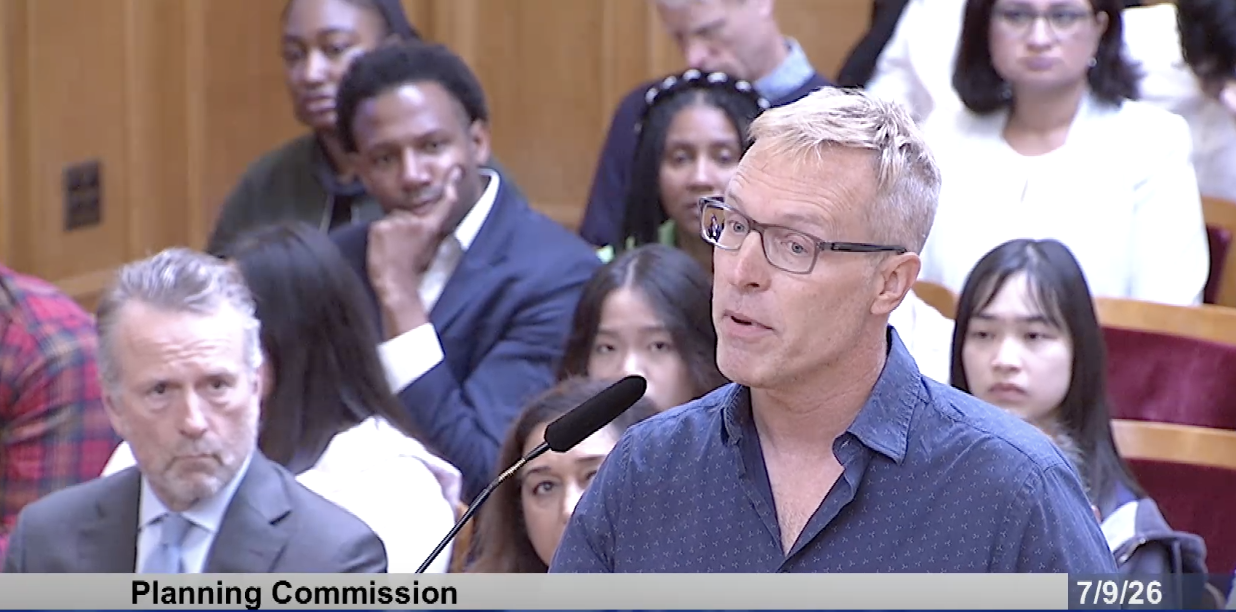
Even though the AutoZone conditional use authorization at 5300 3rd Street was on the continuance calendar — not up for a substantive vote — the item drew the hearing's most sustained public comment, with five community members delivering pointed opposition and only the property owner and an applicant representative supporting the project.

Why it matters: The Bayview Community Advisory Committee voted 6-0 against the proposal, and roughly 70 to 100 community letters poured in within 24 hours, signaling deep frustration with piecemeal commercial development on San Francisco's southeast side. Speakers framed the fight not as a dispute over a single auto parts store, but as a referendum on whether the Bayview deserves the same kind of comprehensive economic plan the city has produced for the Fillmore and Mission districts.

Where things stand: Theo Ellington, executive director of the Ruth Williams Bayview Opera House, told commissioners the community is not willing to accept another formula retailer without a broader strategy. "We are in the southeast side of San Francisco and we feel like we are fighting for our existence. We feel like we are unheard, underdeveloped, and under-resourced. And so we need a full-scale community and economic development plan," he said. Ellington also flagged AutoZone's $11 million environmental lawsuit settlement with the Attorney General, arguing the company's track record demands scrutiny: "When we look at all of the historic things that happen in our community, we can't sit idle and let this happen without commitments on the environmental side as well."

Tiffany Carter, a member of the SF African American Reparation Advisory Committee and the Planning Equity Council, urged the commission to honor the CAC's unanimous recommendation. "I am here today to respectfully ask that you honor the recommendations of the Bayview CAC, which unanimously voted not to support this proposal," she said, requesting the item be pushed to September to allow more community outreach. Tyra Finnell, a Bayview Hunters Point resident, challenged the city's ambitions for the neighborhood more broadly: "Why aren't we aggressively recruiting a full-service grocery store, a quality neighborhood market, restaurants and cafes, a fitness center, family entertainment or other businesses that allow our residents to shop, eat, and gather and spend their dollars right in the Bayview?"

The other side: The property owner, Raj, urged commissioners not to delay beyond July 23, describing years of financial strain since Walgreens closed in 2020. "The building has been empty. As the empty building goes, it's inviting vandalism, graffiti, all kinds of bad elements in the neighborhood," he said, adding that a new pharmacy is starting construction two blocks away. Chad White, a 10-year Bayview resident and air quality planner, countered by identifying inaccuracies in the planning department's staff report — including an incorrect date for the CAC vote — and said local merchants surrounding the project site were never consulted. "There's a lot of emphasis on protecting the building. We want that as well, but not about how any of this project serves the community," White said.

Decisions: The commission voted 4-0 to continue Items 1, 5, and 9 as proposed, setting the AutoZone hearing for July 23. Community members had requested August or September. (For: Commissioners McGarry, So, Braun, Campbell; Absent: Vice Chair Moore, Commissioners Imperial, Williams.)

What's next: The substantive hearing is scheduled for July 23, and community groups appear to be organizing for a large showing. The Bayview CAC's opposition, the volume of letters, and calls for a comprehensive economic plan suggest the commission will face significant pressure to either deny the project or condition it heavily.


Commission Certifies PG&E Grid Takeover EIR Over Union Objections

The commission unanimously certified the final environmental impact report for the PG&E Power Asset Acquisition Project — the procedural gateway for San Francisco's proposed purchase of PG&E's local electrical transmission and distribution infrastructure.

The basics: The project would physically separate the city's electrical grid from PG&E's system along the San Francisco–San Mateo county border. Construction would be concentrated at the Martin substation in Brisbane, with distribution line work in southwestern San Francisco.

Why it matters: If the acquisition ultimately proceeds, it would create a municipal electric utility serving all San Francisco customers — one of the largest such takeovers in U.S. history. Certification of the final EIR is a required step under the California Environmental Quality Act before any approval actions can move forward.

Where things stand: Julie Moore, Planning Department staff, told the commission that the draft EIR identified significant and unavoidable noise impacts from both construction and operations, even with mitigation. "The draft EIR found the project would have significant and unavoidable impacts related to construction and operational noise even with the application of mitigation measures," she said. Project refinements in the final EIR — including a slightly expanded Martin substation footprint, a new Baylands staging area, and additional equipment — did not trigger the need for recirculation, staff concluded.

The other side: Laura Maguire, representing the Coalition of California Utility Employees, argued the final EIR is legally deficient and should be sent back for revision. "The final EIR still contains legally deficient environmental analysis, inadequate mitigation, and lacks substantial evidence to support its conclusions," she said. Maguire specifically flagged the Baylands staging area, which is listed on the state Cortese list for known lead and arsenic contamination. "The proposed vegetation removal, grading, and fence excavation activities present new potential health risk to the hotel and residences located only 350 feet away," she warned. CCU also argued that emissions calculations and health risk analyses were not updated to reflect the expanded project scope.

Decisions: Commissioner Derek W. Braun moved to certify, praising staff's work: "In reviewing the final environmental impact report, I thought that it responded very well to the comments that were received by the department." The motion passed 4-0. (For: Commissioners Braun, McGarry, So, Campbell; Absent: Vice Chair Moore, Commissioners Imperial, Williams.)


Westfield Mall Deal Collapses, Clouding Downtown Recovery

Planning Director Sarah Dennis-Phillips told the commission that the anticipated sale of the Westfield Mall to new ownership has fallen through — a setback for a city still struggling with post-COVID commercial vacancy in its downtown core.

Why it matters: The Westfield Mall is one of the most prominent retail properties in San Francisco's central business district. Its continued vacancy compounds challenges that have defined the city's downtown recovery narrative since the pandemic.

"The deal that was hopeful to move forward there has fallen through," Dennis-Phillips said. "I know our office at the Planning Department, OEWD, and the mayor's office will be looking to see if there are other moves the city can make to hopefully support the next evolution of what that center becomes." She indicated the agencies would conduct a postmortem and explore options involving the ground lease with the school district and potential changes to allowable land uses.


Minor Items

  • Commission vacancies: Commissioner Derek W. Braun disclosed that his term technically expired at the end of June and he is serving as a holdover member for up to 60 days. Four of seven seats are now vacant or expired, leaving the commission at bare quorum and unable to elect officers.

  • 4100 24th Street conditional use authorization approved on consent, 4-0 (Case No. 2025-010163-CUA).

  • Minutes adopted for June 18 and June 25 meetings, 4-0.

  • SHADE Act CEQA legislation continued to July 23.

  • Board of Supervisors legislative update: Staff reported the Land Use Committee advanced the Cannabis Cafe Ordinance with a 600-foot buffer from competing retailers; the Government Audit and Oversight Committee approved inclusionary housing program updates and development impact fee reductions with Planning Commission modifications; Supervisor Walton's lab-use ordinance for UMU districts passed first read; hotel uses in RH districts were continued one week; and the Institutional Master Plan ordinance was amended to make post-secondary exemptions in C3 districts temporary through 2032.

  • Summer intern program: Director Dennis-Phillips highlighted 45 interns across three programs — 24 Young Planners, 10 from the Neighborhood XLabs program, and 11 college interns — with final presentations scheduled for July 31.

Bayview Residents Mobilize Against AutoZone as City Certifies PG&E Grid Takeover | Planning Commission | Locunity