Planning Commission - Mar 12, 2026 - Meeting
Planning Commission • San FranciscoMarch 12, 2026
Locunity is a independent informational service and is not an official government page for this commission.We use AI-assisted analysis and human editorial review to publish information.
Commission Approves Developer Tree Fee-Out Over 900+ Opposing Letters
San Francisco's Planning Commission voted to let developers pay a fee instead of planting required street trees — overriding what one public commenter called 100% opposed public sentiment — then unanimously cleared a separate reform that could shave months off the permitting process for small businesses seeking modest expansions.
Street tree in-lieu fee passes 4-2 despite over 900 opposing written submissions and unanimous opposition from in-person public commenters
All ADUs and newly legalized unauthorized dwelling units exempted from street tree planting requirements under approved modification
Permit streamlining for small businesses approved 6-0, codifying a 1988 zoning practice and delegating minor modification authority to the Planning Director
Adaptive Reuse of Historic Buildings ordinance clears final Board of Supervisors vote, opening a new pathway for converting historic structures
Developers Can Now Pay ~$2,590 Per Tree Instead of Planting
Why it matters: San Francisco's tree canopy has dropped to 12.8% — among the lowest of major U.S. cities — and with significant upzoning on the horizon under the family zoning plan, this ordinance fundamentally restructures how the city adds trees. Instead of requiring developers to plant street trees project by project, the new framework lets them pay into a dedicated fund that the Bureau of Urban Forestry would use for strategic, city-directed planting.
Where things stand: The ordinance amends the Public Works Code, Administrative Code, and Planning Code to create an in-lieu fee option of approximately $2,590 per tree, set through a nexus study. It also exempts all accessory dwelling units from street tree requirements — a concession to state law — and, per an amendment added at the hearing, extends that exemption to legalized unauthorized dwelling units.
BUF Superintendent David Moore told the commission his department reviews over 1,000 permits annually for street tree compliance, mostly small residential projects, averaging 32 days per review. He argued the current piecemeal system isn't delivering results. "The department does not have a fixed guaranteed source of income or funding to plant trees," said Superintendent David Moore, Bureau of Urban Forestry. He explained that Prop E, passed by voters in 2017, funds only pruning and maintenance of mature trees — not planting new ones.
Moore added that existing grants from the Inflation Reduction Act, Cal Fire, and state programs are restricted to specific equity zones, leaving large sections of the city with no proactive planting funding. "The scales are fully weighed for planting trees in equity priority areas … we still have an obligation to provide services to the rest of San Francisco," he said, making the case that unrestricted local fee revenue is essential to fill the gap.
900+ Letters, Zero Support
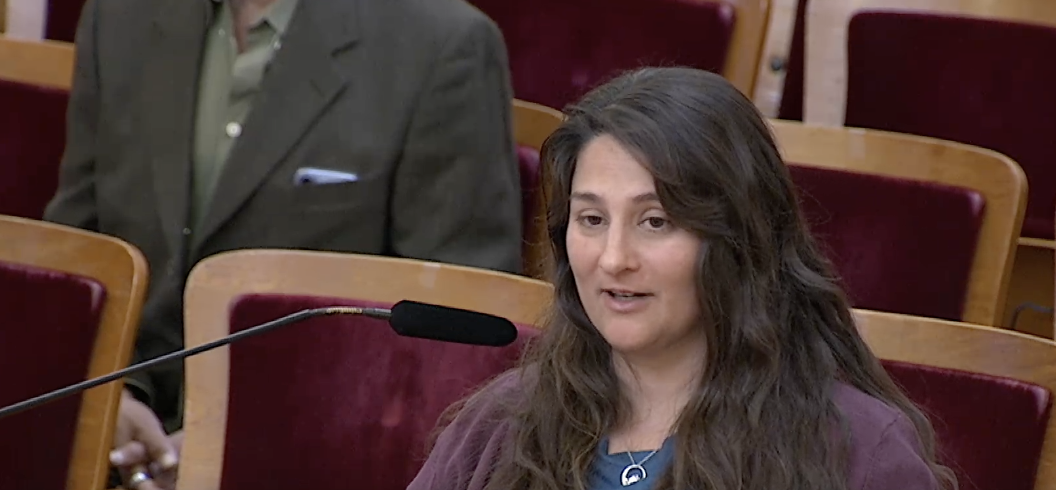
Public comment was entirely opposed. Sean Auckland, founder of fairtrees.org and a SOMA West resident, presented what he called a total failure across three Planning Commission mandates. "Well over 900 individuals and organizations has submitted feedback … the sentiment is 100% opposed," he told the commission. Auckland argued the CEQA categorical exemption is legally flawed for legislation that directly affects physical tree canopy, that the ordinance violates the general plan's environmental justice framework because fee revenue carries no geographic spending restrictions, and that it cannot satisfy the public welfare finding under Planning Code Section 302.
Michael Rothman, representing the Telegraph Hill Dwellers' Parks and Trees Committee, argued the fee barely covers planting costs and fails to account for three years of required watering. He urged the commission to raise it to $7,500. Katherine Howard, a landscape architect, warned that developers who opt out of planting won't design infrastructure for future trees — water lines, irrigation, sewer placement — making retrofitting far more expensive down the road. Razar Bell, a District 1 resident, said the ordinance normalizes tree removal by allowing people to "throw money at it." Michael Nolte, a Tenderloin advocate, noted his neighborhood has roughly 4% canopy, far below even the declining citywide average, and called for the legislation to be revamped. Mark Maloof of Teamsters Local 853 applauded the broader legislative effort but raised concerns about the tree trimming permit process.
The Commission Divide
Commissioner Sean McGarry was the ordinance's most vocal supporter. "We've got the smallest tree canopy of major cities, 13.7%. That is pretty sad. We require tree planting and maintenance at scale," he said, arguing that centralized professional planting through BUF would deliver better outcomes than the current developer-by-developer approach. He described his vision for BUF deployment: "I want to see a crew 3 blocks long … basically three concrete cutters basically going on each block."
Commissioner Derek W. Braun, who moved for approval, disclosed his professional experience preparing nexus studies for affordable housing and confirmed there is a legal maximum for the in-lieu fee amount — a constraint public commenters seeking a higher fee may not have recognized. He questioned BUF extensively about grant funding geography and was ultimately persuaded that the fee-out option provides critical unrestricted local revenue.
Commissioner Lydia So delivered an extended, personal defense of the fee-out for small homeowners. "People I talk to … they really want some trees. They understand trees are good. But the process to get to whether to prove that … they gotta have to spend enormous amount of time and money for engineers and architects to prove if it's even possible to put a tree there," she said. So proposed adding unauthorized dwelling unit legalizations to the exemption list, drawing a parallel to homeowners trying to do the right thing with century-old buildings. "I'm also thinking about what can we do to incentivize our normal people that like fourth generation San Franciscan try to do the right thing and stay here and make their unit legit," she said.
Commission President Amy Campbell supported the legislation, noting the 12.8% canopy proves the status quo isn't working. "I think really the biggest concern here is how do we avoid losing trees and how do we maximize gaining trees?" she said.
The Other Side
Commissioner Gilbert Williams delivered the sharpest dissent. "We shouldn't be giving them the option not to plant a tree when there's such a deficit, especially in the south of Market and the Bayview Hunters Point and other areas where there's a lot of development going on," he said. Williams connected tree equity directly to broader justice concerns: "I think that environmental justice is tied to racial justice and economic justice. And so if we're not enforcing our environmental justice, then we probably don't care much about racial justice or any other justice."
Williams cited letters from Assemblymember Matt Haney, who requested an attorney general inquiry into San Francisco's SB 1000 environmental justice compliance, and from Supervisor Matt Dorsey, who raised tree canopy equity concerns in District 6. Auckland, invited back by Williams, revealed that the city's official response to the attorney general stated the environmental justice framework is non-binding.
Commissioner Theresa Imperial expressed hesitation about how BUF would implement the Urban Forest Plan with fee revenue. "If there is the option fee to fee out, then my [question] is how do we really implement the Urban Forest Plan together with this," she said. Imperial asked that large-scale developments be exempted from the fee-out option, but this request was carried forward as a staff note to the Board of Supervisors rather than included in the formal motion.
Decisions: The motion passed 4-2 (For: McGarry, So, Braun, Campbell; Against: Williams, Imperial; Absent: Kathrin Moore).
What's next: The ordinance goes to the Board of Supervisors, where Assemblymember Haney's attorney general inquiry and Supervisor Dorsey's equity concerns could shape further amendments. Imperial's request to exempt large-scale developments from the fee-out will be conveyed to supervisors as a staff note.
Permit Streamlining Clears Path for Faster Business Expansions
The basics: Under Mayor Lurie's Permit SF Initiative, two linked items codify a 1988 Zoning Administrator interpretation and delegate new authority to the Planning Director. Businesses in neighborhood commercial districts can now expand up to 500 square feet or 25% of existing floor area — whichever is less — without a new conditional use authorization hearing. Converting one commercial space into two, adding a non-residential use, or adding or exchanging an ABC license type will no longer be treated as "intensification" requiring commission review. A companion item delegates authority to the Planning Director to remove outdated CUA conditions where uses are now principally permitted and to approve minor residential project modifications.
Why it matters: Staff estimated the current process adds six to nine months and thousands of dollars for businesses seeking modest changes — a timeline that can be fatal for small operators in competitive commercial corridors.
Where things stand: Staff recommended four modifications the commission adopted: requiring tenant notification when expansions reduce housing services (mirroring existing ADU procedures); exempting cannabis retail and formula retail from streamlined pathways due to heightened regulatory impacts; removing a prohibition on administrative approval of performance period extensions related to code violations to provide a more equitable path for small businesses; and ensuring consistency with state density bonus law.
Commissioner Williams pressed staff on whether delegating authority would strip tenants and communities of a meaningful voice. "We are giving away some of our authority as a planning commission … I just want to know that there's a way that we can figure out if that was a good decision," he said. Planner Liz Waddy responded that the Planning Director retains full discretionary authority to deny requests, the Board of Appeals remains available, and cultural districts are protected through the legislative process that changed underlying zoning rules.
Commissioner Imperial questioned whether tenant notification alone provided sufficient protection and asked about interactions with density bonus law. Commissioner Campbell endorsed the reform from personal experience: "There was something that came before us just in the last few months … a condition associated with a conditional use authorization. And if that same project had come forward today, it would have been principally permitted. They could have done it over the counter. And I thought, ugh, this is broken."
No public comment was received.
Decisions: The commission approved both items 6-0 with staff modifications (For: McGarry, So, Williams, Braun, Imperial, Campbell; Absent: Kathrin Moore).
What's next: The planning code amendment proceeds to the Board of Supervisors. The delegation of authority takes effect upon adoption.
Minor Items
Discretionary review at 2303 Filbert Street continued to March 26, 2026; the 100% Affordable Housing Planning Code Amendment continued indefinitely. Approved 5-0 (Absent: Moore, So).
Conditional use authorization at 38 8th Street approved on consent, 5-0.
Feb. 26 draft minutes adopted, 5-0.
Adaptive Reuse of Historic Buildings ordinance passed its second and final read at the full Board of Supervisors, enabling conversion of historic structures to new uses.
2245 Post Street Special Use District — facilitating redevelopment of the Holocaust Center site, previously approved unanimously by the Planning Commission on Jan. 29 — advanced from the Land Use Committee to the full board with support from Supervisors Mahoud and Chen and technical environmental language amendments.
Appeal of conditional use authorization at 524-526 Vallejo Street continued to April 7.