
Restoration Board Funds NOAA Stand-In as Federal Permitting Staff Thins
Governing Board • San Francisco Bay Restoration AuthorityJune 12, 2026
Locunity is an independent informational service and is not an official government page for this commission. All information is sourced from public footage and an analysis of official agendas with the aid of responsible, fact-checked AI. to report an error or omission.
The San Francisco Bay Restoration Authority is filling a federal staffing hole with its own money. On June 12, 2026, the Governing Board voted 4-0 to adopt a fiscal 2026-27 budget that funds a term-limited liaison to represent NOAA on the region's restoration permitting team. The board also approved three grants totaling about $5.4M and previewed a $25M Golden Gate Fields plan that could cost applicants a year of competitive funding.
- Budget adopted 4-0, adding $24.1M in new restoration commitments and a NOAA liaison position
- $5.4M in grants approved for SAFER Bay, Napa River Estuary and Brisbane shoreline work
- Golden Gate Fields: Staff eyes a $25M December recommendation, possibly skipping a grant round
- Oversight committee finds Measure AA spending conforms and flags trails, equity and county fees
Budget Backfills NOAA's Permitting Gap
The basics: BRIT, the Bay Restoration Regulatory Integration Team, brings permitting agencies together early so restoration projects can clear regulatory review faster. NOAA is one of those agencies.
Why it matters: Permitting is a chronic bottleneck for Bay restoration. Federal staffing losses threatened the early consultations BRIT depends on, and the Authority chose to pay for a workaround rather than wait.
Where things stand: The operating budget projects about $4.3M in revenue, including $3M in interest, against $2.7M in expenditures, leaving a $1.6M surplus. The life-to-date project budget rises to $238.5M with $24.1M in new allocations, including $10.5M for Newark Baylands and $13M left unallocated.
"Overall staff costs have increased by 25% compared to fiscal year '25-'26," said Arleicka Conley, Director of Budgets and Financial Planning and Analysis, Metropolitan Transportation Commission. The main driver is the new BRIT liaison.
Executive Officer Amy Hutzel said NOAA has stopped billing its BRIT grant. "What has happened at NOAA is they have lost 50% of their staff in California in the last year," she said. The new term-limited MTC position, modeled on an arrangement in Washington state, would represent NOAA on the team. Hutzel described the net cost this way: "It's probably a wash, but the BRIT funding is part of the project funding."
The other side: Board Chair John Gioia questioned the overhead the Authority pays by staffing through MTC and the State Coastal Conservancy. He asked whether hiring its own employees "would make sense both from an operational standpoint and a financial standpoint." Staff said setup costs and human resources work would be burdensome but offered to run the numbers.
Decisions and stakeholder impacts: Board Member Gaucher moved and Board Member Washington seconded adoption of Resolution No. 143 and sign-off on the staff work plan. For: 4 (Gioia, Gaucher, Manfrey, Washington). Against: 0. Three of seven members did not answer the opening roll call. The work plan keeps grant programs at about 65% of staff time, a signal to project sponsors that grantmaking remains the core job. No one spoke during public comment.
What's next: Staff will look at the costs of in-house hiring in response to Gioia's question. The budget memo has full figures.
Three Grants, One Theme: Rising Water
Why it matters: All three projects pair habitat restoration with flood or erosion protection for nearby neighborhoods. That pairing is how Measure AA dollars reach residents beyond the shoreline.
SAFER Bay, $3.85M: The largest grant of the day goes to the San Francisquito Creek Joint Powers Authority. It funds permitting for the full seven-mile project and final designs for ponds R1, R2, R3 and SF2 in the Don Edwards San Francisco Bay National Wildlife Refuge, including 568 acres of tidal marsh restoration and snowy plover habitat measures. The project aims to protect thousands of homes, a PG&E substation and Highway 84. Board Member Gaucher, whose district includes the project, credited former Supervisor Dave Fine as a champion. "It will provide sea level rise protection to the region that is the most vulnerable," she said. "We crossed a major milestone on May 28th when the JPA board certified the final EIR for the Safer Bay Project," said Margaret Bruce, Executive Director, San Francisquito Creek Joint Powers Authority.
Napa River Estuary, $600,000: The Napa County Flood Control and Water Conservation District, which bought a former vineyard in 2024, will fund outreach, designs, CEQA review and permits. The work would restore 46 acres of tidal wetlands, convert a barn into an interpretive center and build levee trails. Joe Panches, engineering technician for the district, said the three planned levee breach locations are conceptual and may shift. "The South Napa Wetlands Opportunity Area is a pressure release valve for the flood project," said Board Member Manfrey, who also suggested separate inlets and outlets for ecological benefit.
Brisbane Living Shoreline, $962,500: OneShoreline will collect data, prepare up to six concepts and 30% designs, and complete environmental review along 1.5 miles of hardened shoreline. "There's currently no eelgrass in this stretch of shoreline, and native oysters are present only in very low levels," said Alexis Barrera, Project Manager. Studies suggest potential for about 100 acres of eelgrass and 50 acres of oysters. Partners include Literacy for Environmental Justice, SF State and the Association of Ramaytush Ohlone. Gaucher disclosed she sits on the OneShoreline board.
Decisions and stakeholder impacts: Each grant passed 4-0 (For: Gioia, Gaucher, Manfrey, Washington). Manfrey moved and Washington seconded Napa; Gaucher moved Brisbane and moved SAFER Bay, with Gioia seconding the latter. Lower-income neighborhoods in Napa and disadvantaged communities near Brisbane and East Palo Alto stand to benefit. Sponsors should note a caveat: "Having a planning or design grant, it doesn't guarantee that we're going to fund implementation," said Hutzel.
What's next: OneShoreline must submit a separate future application for Brisbane construction funding.
The $175M Racetrack and a Possible Skipped Round
Why it matters: Golden Gate Fields, the former Albany racetrack, could become a signature East Bay shoreline win. Funding it could also mean less competitive grant money for everyone else.
Where things stand: The Trust for Public Land holds a $175M option on the property. Gov. Gavin Newsom has proposed $125M, the East Bay Regional Park District has pledged more than $20M, and a $30M gap remains. Staff plans to bring a $25M recommendation in December 2026 if milestones are met. The board might skip a year of the competitive grant round to cover that cost alongside the $25M Newark Baylands grant, which the board authorized in December 2024 and which still lacks a purchase agreement.
"The decision of whether to fund the acquisition of the Golden Gate Fields property is not before the authority at this time," said Jessica Davenport, Program Manager.
Robert Chastity, Executive Director, Citizens for East Shore Parks, and a former Albany mayor, backed both acquisitions and recounted 50 years of efforts to green the East Bay shoreline. "Golden Gate Fields is the Mount Everest, the most difficult," he said.
Decisions and stakeholder impacts: No vote was taken. Gioia framed big, leveraged purchases as politically strategic. "The ability to get an extension of this depends on the public seeing what we're doing with the money," he said. East Bay park advocates gain a clear path; applicants elsewhere face a potential gap year.
What's next: A funding recommendation is expected in December 2026. Details are in the staff memo.
Watchdog Gives Clean Bill, With a To-Do List
Why it matters: The Independent Citizens Oversight Committee is the public's check on parcel tax spending, and its findings shape the case for any extension.
Where things stand: "We continue to find that Measure AA funds are being allocated appropriately for the purposes specified," said Garth Hall, Vice Chair, Independent Citizens Oversight Committee. He cited a clean audit. Recommendations covered reporting beyond tidal marsh, workforce development and internships for economically disadvantaged communities, a simple survey of those communities, remaining Bay Trail gaps, and shellfish and submerged aquatic vegetation goals, which are at about 2%. The committee also called for construction updates every two years, BRIT capacity and a communications plan.
Gioia noted Measure AA projects must include restoration, so trail-only projects are ineligible. Manfrey urged leveraging the report for press coverage because "there's such a news desert."
The other side: County collection fees vary sharply. "There's quite a wide disparity from something like less than 1% to an amount in excess of 6% of the parcel taxes, depending on the county," Hall said. The Authority has limited leverage, Gioia said, "because assessors are independently elected and not even under the control of the Board of Supervisors." He said new assessors in Contra Costa and San Mateo counties may offer an opening.
What's next: Staff will bring a formal response to the board at its next meeting.
Minor Items
- Round 10 grants: Resolution No. 144 released the RFP, pre-application and application 4-0, adding a Bay Trail/Water Trail coordination checkbox.
- Oversight seats: Gioia, Manfrey and Gaucher will interview applicants for East Bay and at-large seats; passed 4-0.
- Measure AA turns 10: The parcel tax passed with 70% of the vote in June 2016's election, Gioia noted.
- Media push: Washington will represent the Authority on Open Road TV, visiting Montezuma Wetlands and Suisun Marsh.
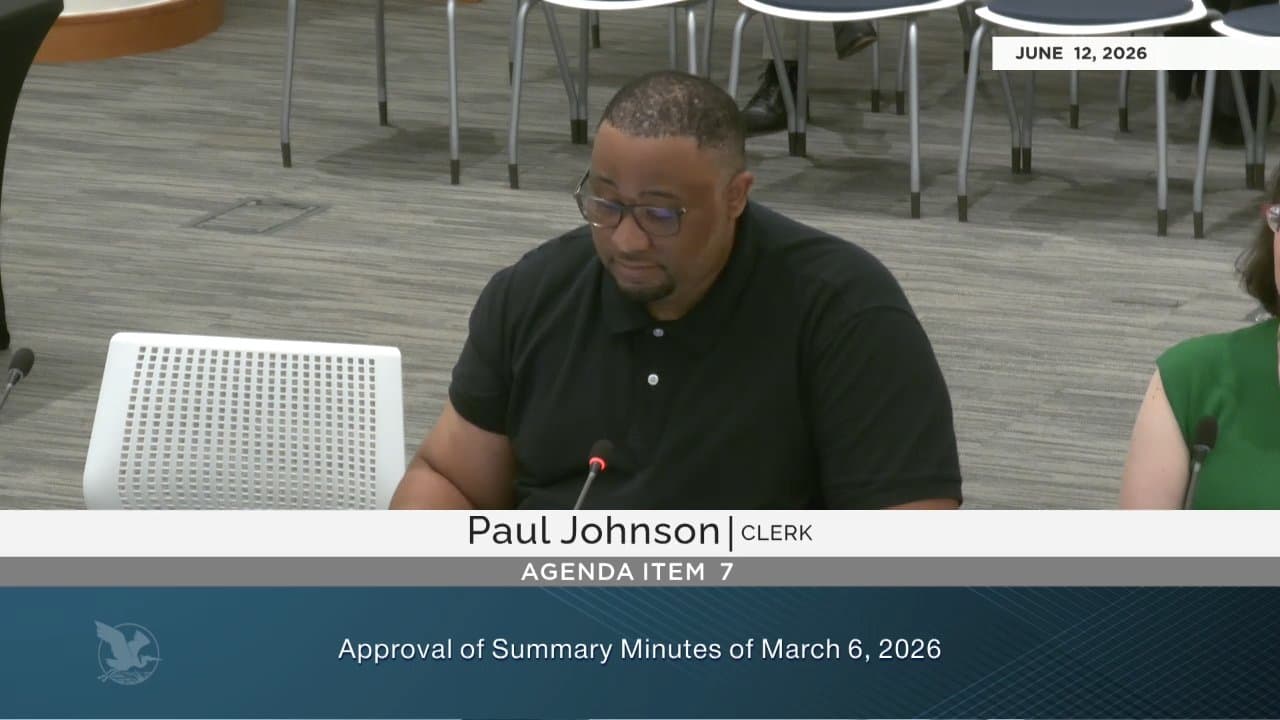
- Minutes: March 6, 2026, summary minutes approved 4-0.
Looking ahead: The Restore America's Estuaries summit comes to San Francisco Sept. 22-25. Round 10 applications are due in the October time frame, with recommendations in spring 2027. Oversight committee applications open this summer, with interviews in the fall and an appointment item in December.