Commission - May 21, 2026 - Meeting
Commission • San Francisco Bay Conservation and Development CommissionMay 21, 2026
Locunity is a independent informational service and is not an official government page for this commission.We use AI-assisted analysis and human editorial review to publish information.
New Online Tool Maps $96 Billion Bay Area Sea Level Rise Challenge
The San Francisco Bay Conservation and Development Commission tackled the staggering scale of the region's climate adaptation challenge at its May 21 meeting, previewing a first-of-its-kind web application that will let funders and local governments sort through hundreds of shoreline resilience projects — with the price tag estimated at up to $96 billion. The commission also unanimously approved emergency maintenance on a submarine power cable that delivers 40% of San Francisco's electricity, and heard that its three-year strategic plan is nearly complete as the agency prepares for its next planning cycle.
$96 billion adaptation price tag laid out as BCDC and MTC/ABAG preview online investment strategy tool launching in August
Transbay submarine power cable wins unanimous 15-0 approval for protective concrete mattresses after bay floor erosion exposes critical infrastructure
Strategic plan nearly finished: agency doubled its staff to 65 in three years; RFP for next-cycle planning consultant coming this summer
New permitting rules take effect July 1, eliminating permit requirements for 20 categories of low-impact activities
NOAA coastal grants survive House Appropriations Committee for a third year despite Trump administration push to eliminate them
The $96 Billion Question: Can a Web App Unlock Climate Adaptation Funding?
The basics: BCDC and the Metropolitan Transportation Commission/Association of Bay Area Governments are jointly building an online investment strategy application — essentially a searchable, filterable catalog of hundreds of locally submitted shoreline adaptation projects across the nine-county Bay Area. The tool draws from the Shoreline Adaptation Project Map (SAPMAP) database hosted on EcoAtlas and is guided by a steering committee including the Transportation Authority of Marin, San Francisco Estuary Institute, Bay Area Flood Protection Agencies Association, and Coastal Quest.
Why it matters: The cost of building out the region's climate resilience was recently pegged at up to $96 billion under the Plan Bay Area 2050 Plus framework — but the cost of inaction is far higher. "A recent estimate as a part of the Plan Bay Area 2050 Plus showing that a cost for a resilience project list could be up to $96 billion — but this large number obviously pales in comparison to the cost of inaction," said Cory Copeland, BCDC staff. Roughly $230 billion in property is at risk. The tool aims to connect funders with projects and drive coordinated regional spending.
Where things stand: Copeland and Kate Lyons of MTC/ABAG demonstrated the application, which lets users filter projects by geography, cost, project status, habitat features, and nearby vulnerable assets — including population, jobs, critical infrastructure, and socially vulnerable communities. Individual project detail pages and regional rollup summaries are included. Version 1.0 is targeted for an August release, with fall data updates and outreach to follow.
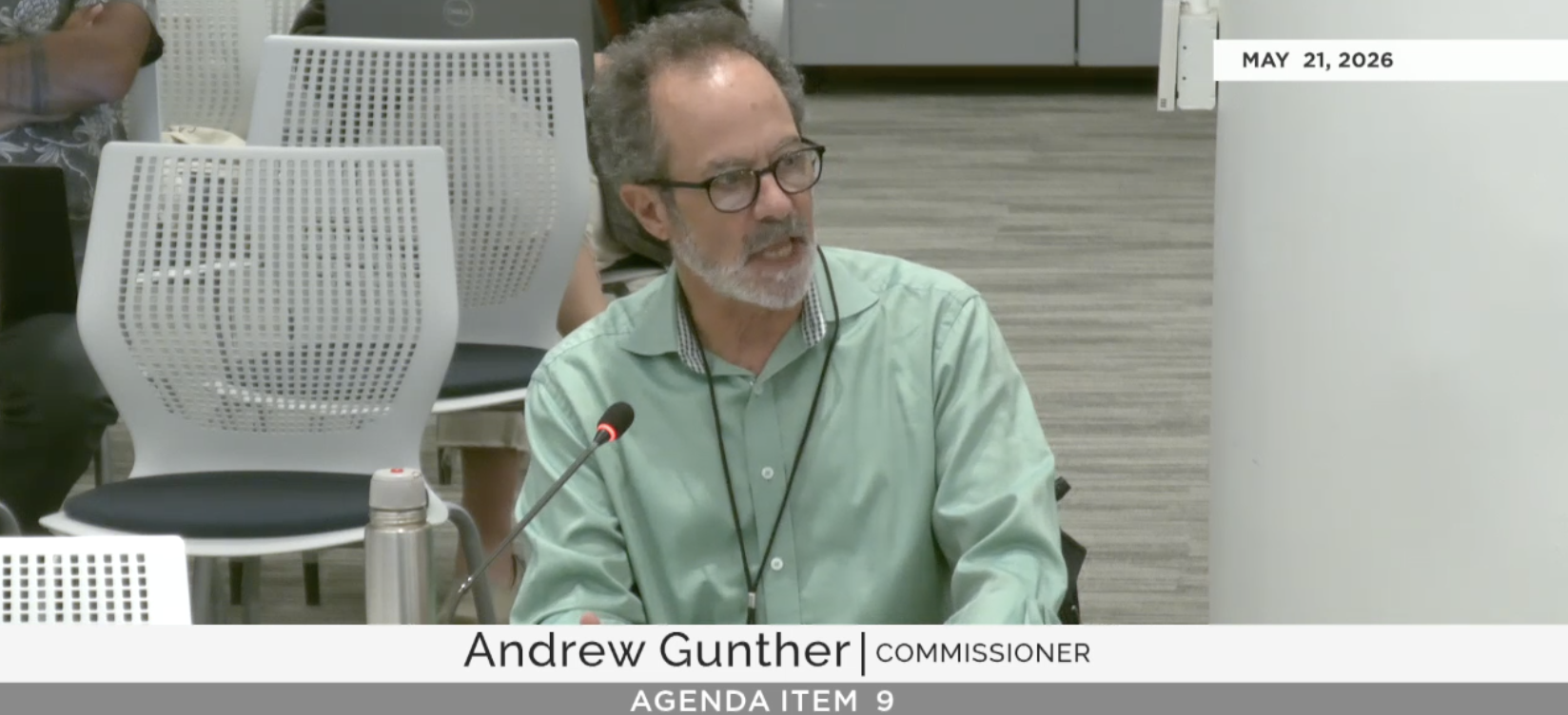
The other side: Commissioner Dr. Andrew Gunther did not mince words about the cost estimates or the tool's sustainability. "I'm really glad to see you start with those estimate of costs. But I don't believe them for a second," he said, arguing the figures are likely underestimates. He also flagged the operational burden: "You have bid off an enormous O&M budget to keep this thing up to date. And from what you said, it appears updating will be dependent on people submitting updated information to you."
Commissioner Pat Eklund raised a different concern — local government capacity. "It's going to be really hard for cities and counties to come up with the money to even try to hire a contractor to do these RSAPs," she said, pointing to tight municipal budgets. Chair R. Zachary Wasserman closed the discussion by stressing the eventual need for priority-setting and visual communication to build political will: "We're going to have to connect all of this to the visual visceral mechanisms that we do not yet have."
What's next: The 1.0 version launches in August. Staff from MTC/ABAG noted that placeholder project costs will be replaced by real data as sub-regional adaptation plans come in through the Regional Shoreline Adaptation Plan process. No vote was required; this was an informational briefing.
Submarine Cable That Powers San Francisco Gets Unanimous Protection
Why it matters: The Transbay Cable — a 52-mile submarine high-voltage direct current (HVDC) line installed in 2009 connecting Pittsburg to San Francisco — supplies roughly 40% of San Francisco's electricity. Progressive bay floor erosion has caused approximately 15 feet of cable drop from its original burial depth, leaving sections dangerously exposed in East San Pablo Bay and the Carquinez Strait.
Where things stand: The commission voted 15-0 to approve a fourth amendment to the cable's permit, authorizing placement of approximately 2,700 cubic yards of protective concrete mattresses and polyurethane sleeves over two segments of exposed cable — covering about half an acre of bay floor. BCDC staff analyst Sam Fielding and applicant consultants Kelly Baer of ACOM and Mike Mueller presented the project. Reburial was deemed infeasible because the cable under tension lacks sufficient slack. Mueller explained that bathymetric data, not modeling, drives the repair decisions: "The bathymetry is really what tells us what is actionable here. And with this piece of infrastructure, we know where it's located in the area where the river is coming out."
The other side: Commissioners pressed hard on long-term strategy. Commissioner Gunther questioned the erosion dynamics — possibly linked to upstream Napa River hydrology changes — and urged staff to leverage the applicant's bathymetric monitoring data for BCDC's broader beneficial reuse working group. "Here we have a permittee who has some long-term knowledge of bay sediment movement in the bay, and I haven't heard that this information integrated into our discussion in the beneficial reuse working group," he said.
Commissioner Eklund pushed for the applicant to evaluate dredge material and econcrete as future alternatives to concrete mattresses. "How can we put in this motion for them to look in the future as dredge material as an option? I just don't want to make sure that we lose this," she said. Executive Director Larry Goldzband responded with a concrete commitment: "What we will do is we will make sure there is an exchange of communication that is in the file between BCDC and the permittee saying during the next few years, as you figure out how you're going to come back to us, please ensure that you consider the following issues."
Decisions: The permit amendment passed 15-0 (For: 15, Against: 0, Absent: 0). Conditions include three years of quarterly bathymetric surveys and one-to-one benthic habitat mitigation through purchase of estuarine credits from the San Francisco Bay In-Lieu Fee program. Commissioner Eklund moved the approval; Commissioner Gunther seconded.
What's next: The current BCDC permit runs through 2031, at which time the applicant must return for full reauthorization. The permit file will now include a formal letter requiring the applicant to evaluate dredge material and econcrete alternatives ahead of that renewal.
Strategic Plan Nearly Complete as BCDC Doubles in Size
Why it matters: BCDC has grown from approximately 45 to 65 staff members in three years — a transformation that has tested the small agency's capacity even as it pursues an ambitious regulatory and planning agenda around Bay Area resilience.
Where things stand: Executive Director Larry Goldzband and staff reported that nearly all tasks in the 2023–2026 strategic plan are on track or completed across five goal areas. Key milestones include:
Regulatory modernization: The Office of Administrative Law approved regulation changes on May 4, taking effect July 1, that eliminate permit requirements for 20 categories of low-impact activities. Salesforce was selected as the vendor for a new digital permitting platform.
Regional planning: Four major Bay Plan amendments have been approved since 2023 (Seaport Plan, Regional Shoreline Adaptation Plan, San Francisco Waterfront Special Area Plan, and a cartographic update). The Sediment Bay Plan Amendment was initiated two weeks prior.
Staffing surge: "We have had 35 new hires and or changes to positions in the past year, which is actually more than half of the number of people we actually have on staff," Goldzband said. A new HR staff member starts soon to formalize onboarding.
Equity and outreach: Coastal tribal consultation training was held in February, new environmental justice policy guidance was completed, and a new public affairs specialist was hired in January.
Enforcement: Compliance and enforcement functions have been fully integrated with a complete team for the first time. Abandoned and derelict vessels were flagged as a major next challenge.
Commissioner Gunther praised the agency's quantitative accountability: "The idea that we set out quantitative goals and then we're evaluating how we have met those is really important."
What's next: BCDC will issue an RFP for a strategic planning consultant with a budget of up to $100,000. Chair Wasserman is expected to create a commissioner working group to guide the next plan's development.
Minor Items
Consent calendar approved unanimously 16-0, including the May 7 meeting minutes. Vice Chair R. Sean Randolph moved; Commissioner Mark Addiego seconded.
Chair Wasserman urged all commissioners to attend the June 4 in-person workshop on a potential Bay Plan amendment to expand beneficial reuse of sediment and soil for wetland restoration. Zoom will not be available for the workshop format. The commission is also recruiting six new Design Review Board members, including a coastal engineer, landscape architect, and urban designer architect.
NOAA coastal zone management grants survived the House Appropriations Committee despite the Trump administration's third consecutive proposal to eliminate the program. "The House of Representatives Appropriations Committee has voted to sustain that program," Executive Director Goldzband reported. Senate action is expected in June; BCDC maintains a zero in that budget line until a presidential signature.
Administrative matters were received without discussion.