Rules & Legislation Committee - May 21, 2026 - Meeting
Rules & Legislation Committee • OaklandMay 21, 2026
Locunity is a independent informational service and is not an official government page for this commission.We use AI-assisted analysis and human editorial review to publish information.
Charter Reform Heads to Full Council as Oakland Weighs Strong-Mayor Overhaul
Oakland's Rules & Legislation Committee unanimously advanced a sweeping charter reform ballot measure to the full City Council, setting up the most consequential governance debate the city has seen in years — even as three of four committee members signaled they personally prefer a council-manager alternative. The committee also processed 26 scheduling items under fiscal year-end pressure, including a contested billboard revenue deal and tens of millions in grants and contracts.
- Charter reform ballot measure advances 4-0 to June 2 Council, proposing to make the mayor chief executive with veto power and require full-time councilmembers
- Mayor Barbara Lee frames Oakland as "at a turning point," dismissing characterizations of the proposal as a power grab while labor, faith and civic groups split sharply over the strong-mayor vs. council-manager question
- Becker Boards billboard deal delayed to June 16 after city attorney flags 17-day newspaper notice requirement; competitors call the restructuring a "major retrade"
- $38.1M in community violence intervention grants for 21 organizations scheduled for Public Safety Committee
- Master Fee Schedule fast-tracked to June 2 — city cannot charge updated fees if not adopted by July 1
Oakland's Governance Future: Strong Mayor, Council Manager or the Status Quo?
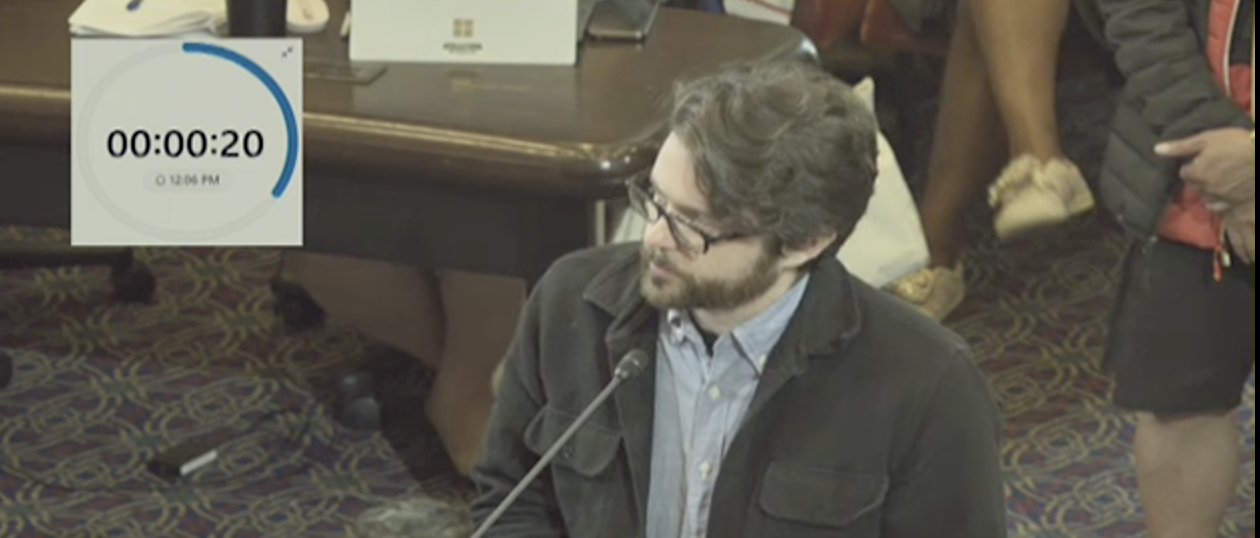
The marquee event of the May 21 Rules & Legislation Committee meeting was a nearly 90-minute hearing on a proposed ballot measure that would fundamentally reshape how Oakland governs itself — and the room was packed with people who cared deeply about the answer.
The basics: Sponsored by the Office of the Mayor and Council President Kevin Jenkins, the measure would make the mayor the city's chief executive officer, create a mayoral veto (including line-item budget veto with a two-thirds council override), empower the council to confirm appointments of directors of Finance, HR, Public Works, and Transportation, create an independent budget and legislative analyst's office, replace Section 218 (the current non-interference provision) with affirmative right-of-inquiry language, require full-time council service, and empower the Public Ethics Commission to set salaries. If approved by Council and voters, the changes would appear on the November 2026 ballot.
Why it matters: Oakland currently operates under a hybrid charter that blends elements of a strong-mayor system and a council-manager system. Supporters and opponents alike agree the current structure diffuses authority and obscures responsibility — the question is what replaces it.
Where things stand: Mayor Barbara Lee presented the proposal as the product of six months of public engagement — 750-plus residents across 14 public meetings and 60 interviews — and pushed back on critics directly.
"Oakland is at a turning point and the status quo needs to change. Our residents expect clear leadership, clear accountability, timely decisions and delivery of city services in an efficient manner," said Mayor Lee.
She also addressed the racial dynamics swirling around the debate: "There's a long history in this country of describing Black leaders, especially Black women leaders seeking executive authority or structural reform as dangerous. We should be honest enough to recognize that when rhetoric begins to echo those patterns, we have to say no."
Public comment was sharply divided, with more than two dozen speakers weighing in. Faith in Action East Bay brought a substantial organized contingent — Elsa Stevens, Cherie Woods, Leonardo Godinez, Linda Grant, Barbara Lafit Oluwole, Arlington Tugwell, and Valeria Ochoa — all urging the committee to let voters decide. The Alameda Labor Council (representing 45,000 Oakland union households) and AFSCME Council 57 spoke in strong support. SPUR and the League of Women Voters of Oakland, which co-facilitated the charter reform working group, urged advancing the measure. Working group member Fred Blackwell put it bluntly: "The worst possible thing that could happen is being stuck with what we have."
SPUR representative Nicole Nutich noted three independent polls found over 60% of respondents want a strong mayor.
The other side: A vocal contingent urged either a council-manager model or what several speakers called "option three" — a professional city manager with enhanced council authority. Former city manager Charles Long warned that a strong mayor "basically puts the public in the position of having to recall the mayor if things are not going right."
Ben Gould of the Oakland Charter Reform Project acknowledged the proposal follows best practices but argued the strong-mayor model puts the mayor and council at odds. Katrina Burton, a 20-year Oakland resident and budget professional, specifically warned against the proposed independent budget office based on San Francisco's adversarial experience with its own version. Brooke Levin requested a complete fiscal analysis before action, including costs of the independent budget office, salary increases, and the at-large seat.
Public Ethics Commission Executive Director Suzanne Doran reported that the PEC voted unanimously to support the salary-setting provisions with four amendments: aligning all salary-setting to 2028, clarifying PEC discretion on consultants, suggesting four-year salary cycles, and limiting PEC enforcement to Section 218D only — the provision maintaining the prohibition on councilmember interference in administrative affairs, rather than the broader instructive sections.
Decisions: All four committee members voted to forward the measure — but the vote masked deep reservations. Councilmember Janani Ramachandran was the most direct: "I'm respectfully disagreeing and would rather we move towards the council manager system. That being said, I do believe this should be voted on by the full council. I would not support it at the full council, nor at the ballot box if it moves forward."
Councilmember Carroll Fife expressed ambivalence, citing unresolved accountability questions. She pointed to the recent resignation of City Administrator Justin Johnson and allegations of OPD spreading misinformation: "I want to know how in a strong mayor model that will be addressed. I want to know how 218 violations will be held accountable."
Council President Jenkins said he supports the public deciding but personally favors keeping current council powers with a strong manager. Councilmember Rowena Brown moved to forward the item. Councilmember Houston, a non-committee member participating after the special meeting was convened, said he supports letting voters decide but also favors keeping current council powers with a strong manager.
What's next: The measure heads to the full City Council on June 2 as a non-consent item, meaning it will receive a full debate and vote. If Council approves, it goes to Oakland voters in November 2026.
Billboard Deal Hits Legal Snag as Competitors Clash
A proposed restructuring of the city's advertising sign agreement with Becker Boards drew heated opposition from a major billboard competitor and was delayed after the city attorney identified a procedural barrier.
The basics: The item, sponsored by Councilmember Noel Gallo, would amend a 2023 relocation agreement to convert Becker Boards' fixed annual payments of $750,000 to a revenue-sharing structure. Under the new terms, 20% of advertising revenue would be split evenly between the city (with a $250,000 annual floor) and four community health nonprofits: the Native American Health Center, Asian Health Services, La Clinica de la Raza, and Baywell Health.
Why it matters: The restructuring would cut guaranteed annual payments to the city and nonprofits from $750,000 to as little as $250,000 — a fact that competitor Outfront/Foster Interstate seized on aggressively.
Where things stand: Nima Link of Becker Boards described the deal as "a little dip in the short term and a lot more money for the community groups in the city in the long run." Supporter Isaac Koss Reed said Becker had been challenging the "big two billboard monopoly" since 2020.
The other side: Jason Overman of Outfront/Foster Interstate called the amendment a "major retrade" that would reduce guaranteed payments and retroactively credit prior payments, effectively clawing back money from community organizations. Attorney Christopher Powell of Hanson Bridget LLP, representing Outfront/Foster Interstate, urged rejection, arguing Becker "simply wants to make these signs more profitable so it can sell them to a completely different operator and walk away."
Decisions: The city attorney flagged a 17-day newspaper notice requirement under Oakland Municipal Code Title 17.104.060, making a June 2 hearing impossible. The committee scheduled the item for June 16 Council. Council President Jenkins noted the deal needs to close before fiscal year end to deliver $2.375 million already budgeted.
What's next: The item goes before the full Council on June 16 as a public hearing.
Minor Items
- Master Fee Schedule update fast-tracked to June 2 Council as a public hearing with Rule 24 urgency finding; requires two readings before July 1 or the city faces a revenue gap from inability to charge updated fees.
- $38.1M in community violence intervention grants for 21 organizations (2026–2029) scheduled for June 9 Public Safety Committee.
- Annual property tax rate adjustments for nine voter-approved measures (funding EMS, libraries, violence reduction, parks, children's services, Oakland Zoo, and wildfire prevention) scheduled for June 2 Council on non-consent; requires two readings.
- $200M in Tax and Revenue Anticipation Notes (short-term cash-flow borrowing) pushed to June 23 Finance Committee per staff request.
- $14.7M HUD grant package (CDBG, HOME, ESG, HOPWA) delayed to June 23 Community & Economic Development Committee and July 7 Council as a public hearing.
- Oakland Ice Center lease with Sharks Ice LLC, including up to $10M in Measure U bond funds for a new refrigeration system, scheduled for June 9 CED.
- $26.5M MLK Jr. Way streetscape contract scheduled for June 9 Public Works & Transportation Committee.
- Election code ordinance fast-tracked to May 28 Rules with urgency finding to update election materials before the nomination period begins.
- Arthur E. Thompson Way intersection renaming, honoring the founder of Thompson Funeral Home's nearly 60 years of service to Oakland families, placed on June 2 Council consent.
- AANHPI Heritage Month resolution placed on Council consent with Councilmember Ramachandran added as co-sponsor.
- International Blvd. right-turn restrictions aimed at disrupting sex trafficking activity at 9th, 10th, and 11th Streets scheduled for June 23 Council.
- SB 1415 support resolution (mixed-income affordable housing property tax exemptions) withdrawn by Councilmember Ramachandran.
- Multiple commission appointments fast-tracked to address quorum challenges across Cannabis Regulatory, Budget Advisory, Library, and Privacy Advisory commissions.
- General Plan update study session moved to the rules pending list while staff coordinates scheduling before recess.
- OPD Part II crime data report withdrawn to be combined with an existing crime report scheduled for October.