
Rules Committee - Jun 29, 2026 - Regular Meeting
Rules Committee • San FranciscoJune 29, 2026
Locunity is a independent informational service and is not an official government page for this commission.We use AI-assisted analysis and human editorial review to publish information.
Supervisors Slam State-Mandated Remote Comment Rules as Housing Fund Advances
San Francisco's Rules Committee advanced two charter amendments toward the November 2026 ballot — one expanding the city's Housing Trust Fund and another restructuring city boards and commissions — while saving its sharpest words for a state mandate forcing the board to accept remote public comment from callers anywhere in the world. All four substantive items passed unanimously, but one went forward without recommendation, a rare signal of discontent.
Housing Trust Fund charter amendment clears committee with backing from an unusually broad coalition spanning Mayor Lurie, labor, and housing advocates
Supervisors call state-mandated remote public comment rules "incredibly stupid," forwarding the policy without recommendation
Government restructuring charter amendment advances despite neighborhood coalition's warning about expanding the SFPUC's autonomous authority
Two Health Authority appointments approved to fill seats overseeing managed care for low-income residents
State Tells SF to Open Phone Lines; Supervisors Push Back Hard
The sharpest exchange of the morning came over File 260563, a set of amendments to the Board of Supervisors' rules of order implementing a state mandate on remote public comment. The new rules would conform existing policies to allow anyone — regardless of location — to call into board and committee meetings, while adding companion provisions on disruption and disorderly conduct.
Why it matters: San Francisco already provides call-in access for individuals with disabilities and through special accommodations. The state law removes geographic limits entirely, meaning callers from anywhere in the country — or beyond — can participate. Supervisors on the committee warned this will lengthen meetings, invite organized disruption, and ultimately discourage non-wealthy residents from running for office.
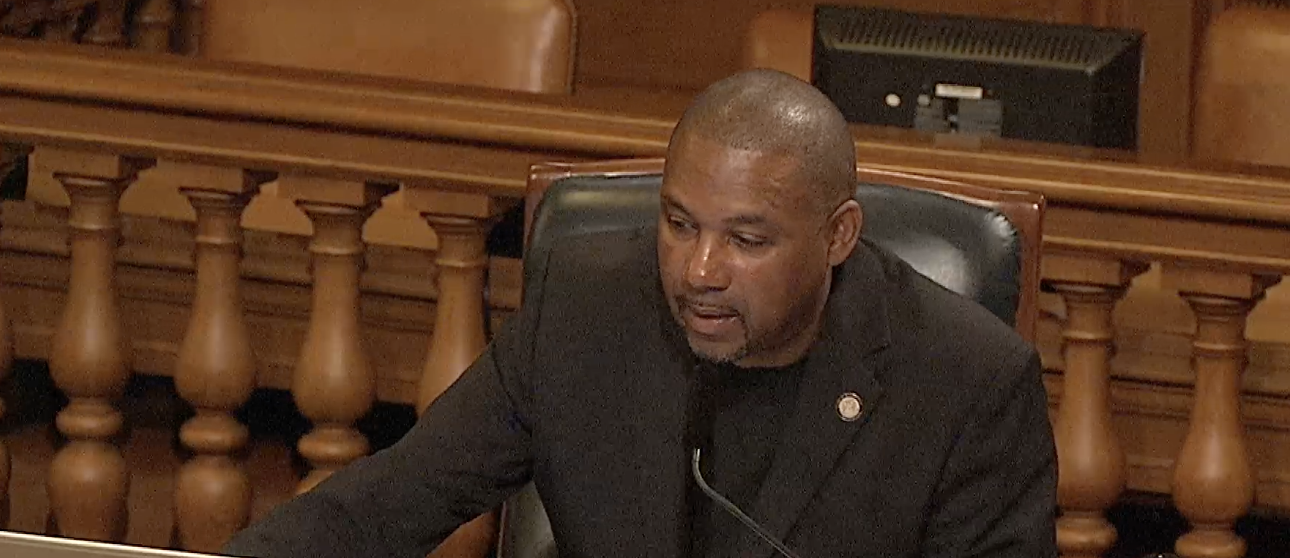
Where things stand: Chair Shamann Walton opened the discussion by framing his objection bluntly: "I am 100% in support of residents and community and neighbors being able to have full access to our meetings and being able to voice their opinions and thoughts. However, I'm not excited about people calling in from all over the world or other places that have no stake here in San Francisco calling in to disrupt meetings."
He went further, pointing to the state's own practices: "This is a rule that has been placed upon us by the state, and they don't follow the same rules. They don't have public comment at their meetings."
Vice Chair Stephen Sherrill delivered the meeting's most forceful remarks, calling the mandate counterproductive to the democratic participation it claims to support: "I think this is incredibly stupid and thoughtless that the state is forcing us to do something they're unwilling to do. And it makes governance harder and it makes being willing to serve in public office harder at a time when we should be increasing representation, especially from communities that have a lot of different things going on that may not be able to afford to pay for childcare all night long."
Sherrill pressed Deputy City Attorney Brad Russi on whether the board could tightly define its subject-matter jurisdiction to limit misuse. Russi confirmed the state law does not limit callers by geography and that existing subject-matter rules apply equally to remote and in-person speakers: "The state law doesn't limit by geography who can call in the remote public comment. And the same rules would apply to people who call in as people who speak in public." He cautioned, however, that restricting the board's jurisdiction could be complex, since the board regularly takes positions on matters outside San Francisco.
The other side: Sherrill argued the policy would backfire on its own terms: "This kind of rule makes governance harder. It encourages potential candidates for public office to be wealthier. It discourages people who are like real people who have real lives from serving. This is so thoughtless and so stupid. It does not increase public participation. In fact, I think it will decrease real thoughtful public participation."
No public comment was received on the item.
Decisions: The committee forwarded the rules changes to the full board without recommendation as a committee report, 3-0 (Sherrill, Mandelman, and Walton voting aye). The "without recommendation" designation — unusual for a unanimous vote — signals the committee's reluctance to endorse a policy it is legally compelled to adopt.
What's next: The full Board of Supervisors will take up the rules changes. Because the policy implements a state mandate, the board has limited room to reject or substantially alter it.
Housing Trust Fund Gets a 15-Year Extension and a Big-Tent Coalition
A charter amendment (File 260537) to increase mandatory city appropriations for the Housing Trust Fund and extend its life by 15 years cleared the Rules Committee unanimously on its way to the November 2026 ballot.
The basics: The Housing Trust Fund supports creation, acquisition, and rehabilitation of affordable rental and ownership housing, as well as down payment loans, housing stabilization, and housing-related infrastructure. The amendment would increase required annual city appropriations, push the fund's sunset date from July 1, 2043, to July 1, 2058, and include a temporary freeze-and-reduction mechanism during fiscal downturns — a concession designed to broaden political support.
Why it matters: Affordable housing funding in San Francisco is perpetually contested between competing priorities. By locking in higher baseline spending through the charter — rather than the annual budget process — the amendment insulates the fund from year-to-year political shifts. The 15-year sunset extension provides long-term certainty for developers, lenders, and nonprofits that rely on the pipeline.
Where things stand: Supervisor Myrna Melgar presented the item, describing the approach as deliberately incremental: "We believe it does so incrementally, fiscally, responsibly, but also ensuring we have a proper foundation so that anything we add on on top of that guarantees our success and are planning for affordable housing as the infrastructure that it is."
The coalition behind the measure is notably broad. Melgar listed co-sponsors including Chair Walton, Supervisors Sauter, Cheryl Wong, Dorsey, and Mahmoud, Board President Mandelman, and Mayor Lurie along with members of his administration — Ned Siegel, Ali Bondi, Ben White, Lee Latinsky, Jacob Bittliff, Director Dan Adams, and Controller Greg Wagner. Community partners span the Council of Community Housing Organizations, SF Community Land Trust, Nonprofit Housing Association of California, Housing Accelerator Fund, MEDA, CCDC, Todko, Mercy Housing, Mission Housing, Episcopal Community Services, Self Help for the Elderly, Pingyun Residents Association, Firefighters Local 798, and Building Trades Carpenters Union Local 22.
Bill Barnes of the Nonprofit Housing Association of Northern California was the sole public commenter, praising the coalition-building: "She was able to bring people together across ideological differences, across strategy differences, across geographic differences to really build a broad coalition. And that's when we do affordable housing. That's what it works." He added the amendment would fund projects ranging from traditional affordable to social housing.
Decisions: The committee forwarded the measure to the full board with a positive recommendation, 3-0 (Sherrill, Mandelman, Walton aye).
What's next: The full board must approve placing the measure on the Nov. 3, 2026, ballot. Voters will have the final say.
Government Restructuring Amendment Moves Forward Over SFPUC Concerns
A second charter amendment (File 260536) updating city departments, boards, commissions, and advisory bodies also advanced, though it drew pointed opposition from a neighborhood coalition concerned about the San Francisco Public Utilities Commission's autonomy.
Why it matters: The SFPUC operates under an "exclusive charge" — a charter provision that gives it broad independent authority over water, power, and sewer operations. Critics argue this makes the commission largely autonomous from Board of Supervisors oversight, an arrangement they say is unique among city departments and rare among utilities nationwide.
Where things stand: Board President Rafael Mandelman, the measure's author, noted the item had been heard and amended the prior week: "Last week we heard this item and offered some amendments. And I don't think I have anything beyond what we said last time. I hope we can forward this to the full board with positive recommendation." Vice Chair Sherrill requested to be added as co-sponsor.
The other side: Eileen Bokan of the Coalition for San Francisco Neighborhoods delivered the sole public comment opposing the measure. She flagged that the ballot title and summary had been revised between drafts from "expanding" to "updating" the SFPUC's exclusive charge — without corresponding changes to the amendment text itself. "I would strongly oppose expanding the SFPUC's exclusive charge. No other city department has it. No water utility in the US or abroad seems to have it. The current exclusive charge has made the PUC largely autonomous from the board's oversight and needs to be scaled back," she said. She urged expanding the PUC commission from five to seven members with split appointments and requiring the general manager to have at least 15 years of direct utility industry expertise.
Decisions: The committee forwarded the amendment to the full board with a positive recommendation, 3-0 (Sherrill, Mandelman, Walton aye).
What's next: The measure heads to the full board. Bokan's concerns about the SFPUC's exclusive charge may resurface during the board debate or in a public campaign if the measure reaches the November ballot.
Minor Items
San Francisco Health Authority appointments: The committee unanimously approved Michael Chung, new CEO of Chinese Hospital (succeeding the retired Dr. Jian Zhen), and Tangerine Brigham, chief operating and strategy officer of the San Francisco Health Network within the Department of Public Health, to seats on the Health Authority. Both received residency waivers. The Health Authority oversees Medi-Cal managed care for the city's low-income population. (3-0; File 260656)