City Council - May 26, 2026 - Meeting
City Council • RichmondMay 26, 2026
Locunity is a independent informational service and is not an official government page for this commission.We use AI-assisted analysis and human editorial review to publish information.
Richmond Budget Balanced on Unfilled Jobs as Police Union Files Staffing Mandate
Richmond's City Council sat for a marathon budget session that laid bare the tensions at the heart of the city's finances: a balanced budget achieved by leaving hundreds of positions vacant, a police union demanding 187 sworn officers by ballot measure, and a beloved scholarship program warning it could shut its doors within a year. The choices ahead — at a special session scheduled for June 9 — will determine whether Richmond invests in services, staffing, or austerity.
- City budget balanced by keeping 12-14% of positions unfilled, saving $16.4M — but five-year outlook shows deficits up to $41.5M
- Police union files ballot initiative mandating 187 sworn officers, announces it will stop filling discretionary overtime
- Richmond Promise scholarship program warns of closure by 2031 without $2.1M annual city investment; council directs staff to find funding
- Park equity debate erupts as council advances landscape district assessments for Marina Bay and Hilltop while other neighborhoods lack basic maintenance
- Housing element zoning overhaul advances, eliminating parking minimums near BART and shifting to objective design standards
- Fire department reports major rebuild: 16 new hires, 31% overtime cut, but 57% of calls still come in simultaneously
A Budget Built on Empty Desks
The basics: Richmond's FY 2026-27 operating budget is technically balanced — but only because the city plans to leave 12-14% of its authorized positions unfilled, saving approximately $16.4M. City Manager Shasa Curl called it a "baseline" budget, noting that more than $29M in departmental requests were left on the cutting room floor.
Why it matters: The structural reliance on vacancy savings means the city is funding its operations by not hiring. That approach constrains service capacity at a moment when demand — from fire response to park maintenance — is rising. And a newly filed police staffing ballot measure could blow up the math entirely.
Where things stand: The five-year fiscal outlook modeled three scenarios, none of them comfortable. A pessimistic projection (1% revenue growth) produces a $41.5M deficit by 2031. A middle-of-the-road scenario (3% growth) still leaves a $15.4M gap. Only an optimistic 5% growth rate yields a $14.2M surplus. Key revenue drivers include property tax growing at 2.74% and sales tax at 2-3%, but Richmond's housing market is contracting — average home prices have dropped roughly $65,000 to approximately $650,000, threatening documentary transfer tax collections. CalPERS unfunded liability for safety employees is projected to climb from $21M to $27M.
"The way that we're able to achieve a balanced budget is by providing somewhere between a 12 to 14% vacancy rate, and that's how we're achieving a balanced budget," said City Manager Curl, who noted the city has added a net 92 full-time positions since FY 2020, growing from 581 to 673 FTEs.
The other side: RPOA President Benterio challenged the vacancy-rate approach as "built-in austerity," questioning whether hiring numbers without separation data give an accurate staffing picture. SEIU President Kevin Tisdale asked what it means to raise the vacancy target from 11% to 14% and urged the council to focus on maintaining existing infrastructure. Carrie Sullivan, speaking for the CCRP Community Crisis Response Program Board, urged the council to fund Care Navigator positions for the ROCK program.
What's next: The council scheduled a special session for June 9 at 3:30 p.m. for budget questions and direction. The budget checklist is due June 16, with final adoption set for June 23.
Police Union Draws a Line: 187 Officers or the Ballot
Why it matters: The Richmond Police Officers Association delivered a charter amendment initiative to the City Clerk on May 22 that would require the city to maintain 187 sworn police positions — a number the union says comes from the city's own staffing studies and the Contra Costa Civil Grand Jury. If voters approve it in November, the mandate would significantly increase the police budget beyond current projections, potentially widening the structural deficit.
Where things stand: Senior Assistant City Attorney James Atencio outlined the timeline: the city must produce a ballot title and summary by June 8; the union expects to collect signatures through June and July; verification must be complete before the Aug. 7 council meeting for November ballot placement. City Manager Curl said staff would model the budget impacts in time for the June special session.
But the RPOA didn't stop at the ballot box. President Benterio announced the union will no longer encourage members to fill discretionary overtime shifts, citing nearly a year without a successor contract.
"The POA is not going to encourage members to fill discretionary council or manager initiated overtime requests that fall outside of core public safety operations," Benterio said.
What's next: Budget modeling for 187 sworn positions is expected before the June 9 special session. Signature gathering begins after the ballot title and summary are finalized.
Fire Department Rebuilds From Rock Bottom
The basics: Two years ago, the Richmond Fire Department was operating at record-low staffing with overtime costs spiraling out of control. Fire Chief Aaron Osorio presented a progress report showing meaningful gains — but a department still stretched thin across seven stations handling about 45 emergency calls daily.
Why it matters: The department responded to 14,284 calls in the most recent year, a 5.8% decrease from the prior period but part of a longer upward trend. Critically, 57% of incidents involve concurrent calls — meaning multiple emergencies overlap, straining resources and requiring mutual aid from neighboring agencies.
"In the fiscal year 2022-23, we had 78,000 hours of overtime positions we had to fill. That's the equivalent of 31 firefighter spots in one year," Chief Osorio said.
The department has since promoted 18 personnel, hired 16 firefighters with 7 more in the academy, reduced overtime by 31%, and cut mandated overtime by 71%. Three facilities are now on a five-year capital improvement plan, and 14 apparatus have been ordered. A Youth Academy has 25 cadets. Pending priorities include launching an ALS (Advanced Life Support/paramedic) program, replacing aging communications equipment, and planning replacements or repairs for Fire Stations 63 and 66.
Park Equity Tensions Surface in Landscape District Vote
Why it matters: Two routine landscape maintenance district votes became the vehicle for a much bigger conversation: why do some Richmond neighborhoods get manicured parks and professional landscaping while others wake up to mattresses and illegal dumping?
Where things stand: Parks Superintendent Jason Lacy introduced a framework of three service levels — enhanced/manicured, functional, and safety/cleaning — and placed the city's current baseline at roughly Level 2.5 citywide and Level 1.5 in landscape maintenance districts (LMDs). Contract Engineer John Bliss of SCI Consulting Group explained that under Proposition 218, LMD assessments fund service "above and beyond" a general baseline, with property owners paying the majority and the city covering general benefit offsets. Marina Bay's proposed assessment totals $780,780 with a $520,475 city contribution. The total city contribution for Hilltop is approximately $782,000.
Councilmember Jamelia Brown forcefully argued the system is fundamentally inequitable.
"It just doesn't sound appropriate to say that this district not only deserves or not only has this high level of service, but they get special benefits because you pay into it. And not only that, you get above and beyond service," Councilmember Brown said, describing conditions in District 1 as far worse than what assessed neighborhoods receive.
Vice Mayor Doria Robinson credited the LMD debate for opening a deeper inquiry: "Learning about special districts took us on a really great journey that made us ask the question, what is minimum service?"
The other side: Councilmember Cesar Zepeda flagged numerical discrepancies in the Hilltop engineer's report and questioned whether LMD staff were being used for work outside the districts — and voted no on the Hilltop resolution. Councilmember Soheila Bana asked about dissolving the districts entirely; City Manager Curl explained there is not currently a high enough citywide base service level to justify dissolution.
Decisions: The Marina Bay LMD resolution passed 6-0-1 (Councilmember Zepeda abstained). The Hilltop LMD resolution passed 6-1 (Councilmember Zepeda voted no, citing unresolved discrepancies in the engineer's report). Both items advance to public hearings on June 23.
Richmond Promise: Fund Us or Lose Us
The basics: Richmond Promise, the city's signature scholarship program, has awarded more than 4,600 scholarships over its 10-year history — $1,500 per year per scholar, no GPA requirement, supporting students at 220-plus colleges. Seventy percent attend four-year institutions. Ninety-one percent of scholars are people of color, 70% are low-income, and 64% are first-generation college students.
Why it matters: Financial projections from Wells Fargo show the program's $20.5M portfolio will be depleted by 2032 without changes. Without $2.1M in annual city support over five years, the organization would need to stop accepting new applicants as early as the class of 2027.
"Without new anchor funding in 2026, Richmond Promise must consider closing our scholarship to new applicants beginning as early as the class of 2027," said Executive Director Christopher Whitmore.
Decisions: The council unanimously directed staff to explore funding sources, including potential revenue from the Kids First program. City Manager Curl, who serves on the Richmond Promise board, committed to bringing back recommendations.
What's next: Staff will return with funding options. The program was one of 15 nationally to receive a College Promise Impact Award.
Housing Element Overhaul: Parking Minimums Out, Density In
Why it matters: Richmond's council introduced, on first reading, a zoning ordinance that implements the city's 6th cycle housing element adopted in January 2023. The changes will reshape how housing gets built in the city's transit corridors.
Where things stand: Planning Manager Avery Stark outlined the key changes: minimum residential densities of 20 dwelling units per acre in medium-density and commercial mixed-use zones; building height increases from 35 feet to 85 feet to accommodate taller ground floors in mixed-use buildings (same three-story limit); replacement of subjective design review language like "sense of place" and "aesthetics" with objective standards required by state law; elimination of parking minimums within half a mile of high-quality transit under AB 2097; and density bonus provisions aligned with state law by reference.
The other side: Councilmember Bana confirmed the changes do not affect high fire hazard severity zones. Councilmember Zepeda raised concerns about parking impacts on residents near BART stations.
Decisions: The ordinance was introduced unanimously on first reading (For: 7, Against: 0). A second reading will follow.
$214M Capital Plan: Solar Streetlights, Road Rehab, Parks
Public Works Director Daniel Chauri presented a five-year capital improvement plan totaling approximately $214M across 104 active projects. Highlights: 163 new solar streetlights installed in six months across 12 sites; a concrete shaving program that has completed 1,300 locations (40% done) with all parks targeted by July 1 and schools next at $900,000; and a major arterial road rehabilitation effort costing $42M from 2026-2029, with $8M needed for base repairs alone. Senior Transportation Planner Gail Payne presented a data-driven scoring system for complete streets and neighborhood safety projects. Staff requested $11M for pavement including ADA curb ramps. The main library renovation remains on track for November 2027 completion.
Police Chief Tim Simmons offered a striking tribute to the difference infrastructure investment can make: "Never in a million years would I have envisioned the transformation of that space and the life that that park has brought to a community," he said of Shields Reed Park.
Minor Items
- Air district grant application approved 6-0-1; Vice Mayor Robinson recused due to a conflict of interest (her partner is executive director of Rich City, part of the grant application).
- Fireworks ordinance amendment (S3) moved to consent calendar over objections from Councilmembers Wilson and Jimenez, who wanted substantive discussion. Councilmember Wilson voted no, citing research that higher fines do not deter behavior but cause hunger and housing instability. Residents from the Stop Illegal Fireworks Richmond group urged higher fines, per-device penalties, and host liability. San Pablo has already raised its fines, potentially pushing illegal fireworks activity into Richmond.
- $35,000 Chevron grant accepted unanimously for the Office of Neighborhood Safety street outreach program.
- Special assessments levied unanimously on 15 properties for unpaid nuisance abatement costs, including five related to homeless encampment cleanup. Liens will attach to the properties.
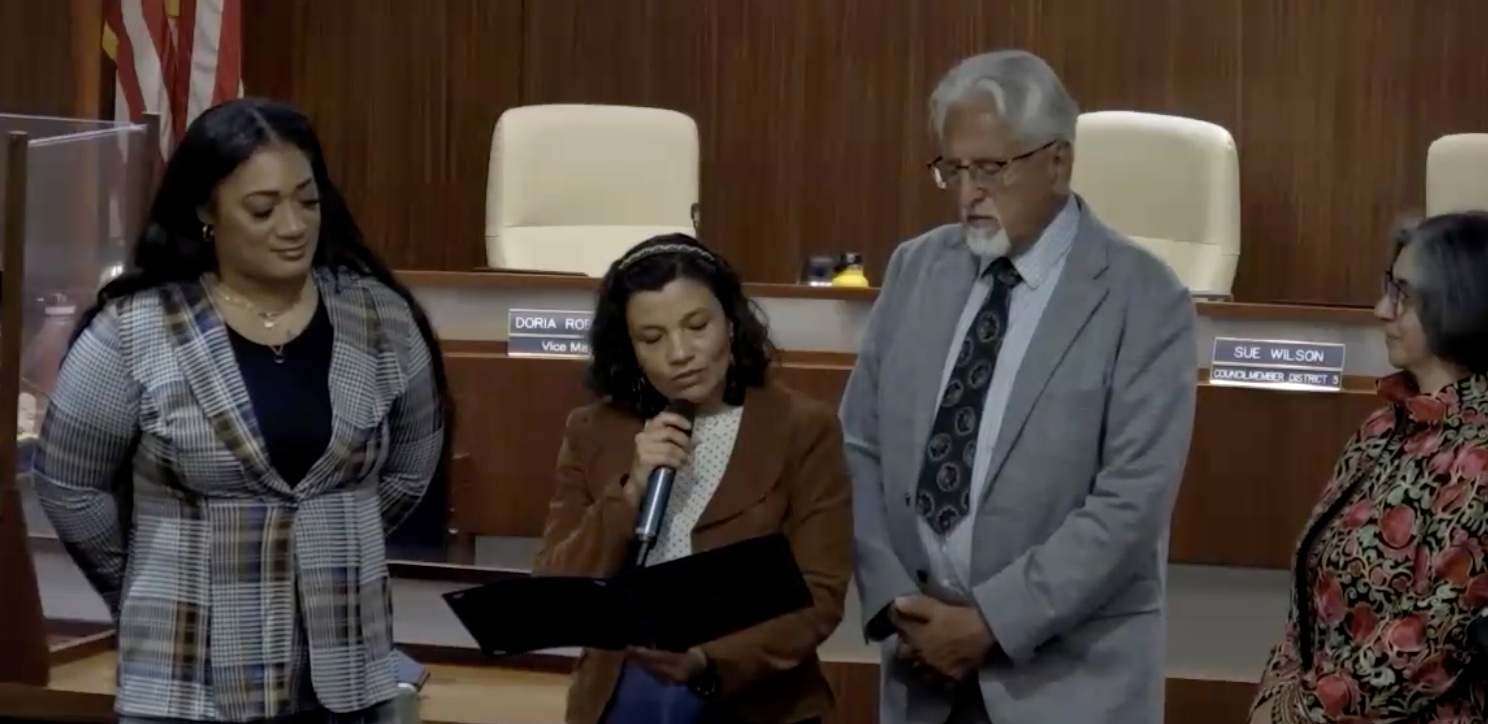
- Library literacy space dedicated to late LEAP Director Abigail Sims Evelyn; council also proclaimed July 3 in her honor.
- Richmond United Soccer Club recognized for 30 years of service; club leaders noted the city still lacks sufficient fields per its 2010 master plan.
- May declared Affordable Housing Month; proclamation highlighted threats from proposed state and federal housing cuts affecting 44% of affordable housing assistance.
- National Bike Month proclamation issued.
- Master fee schedule update (4.1% increase) continued to the next meeting due to time constraints.