
City Council - Jun 16, 2026 - Meeting

City Council - Jun 16, 2026 - Meeting

City CouncilRichmondJune 16, 2026

Sources:

Locunity is a independent informational service and is not an official government page for this commission.We use AI-assisted analysis and human editorial review to publish information.

Richmond Council Closes $2.67M Budget Gap While Vacancy Crisis Looms

Richmond's City Council spent more than five hours shaping the FY 2026-27 budget on June 16, preserving $19.9 million in unhoused services and routing funds to shovel-ready trail and park projects — but a sobering vacancy report revealed the city is operating with nearly one in five positions unfilled, and unions say the breaking point is close.

  • Council directs staff to close $2.67 million in capital project shortfalls by swapping lower-priority funds, keeping unhoused services and arts corridor funding intact

  • Over 20 SOS Richmond supporters rally during public comment to protect mobile showers, outreach, and job readiness programs for unhoused residents

  • 18% citywide vacancy rate far exceeds the 12% budgeted, with SEIU nearing the 20% threshold that triggers mandatory action and police 81 officers below recommended levels

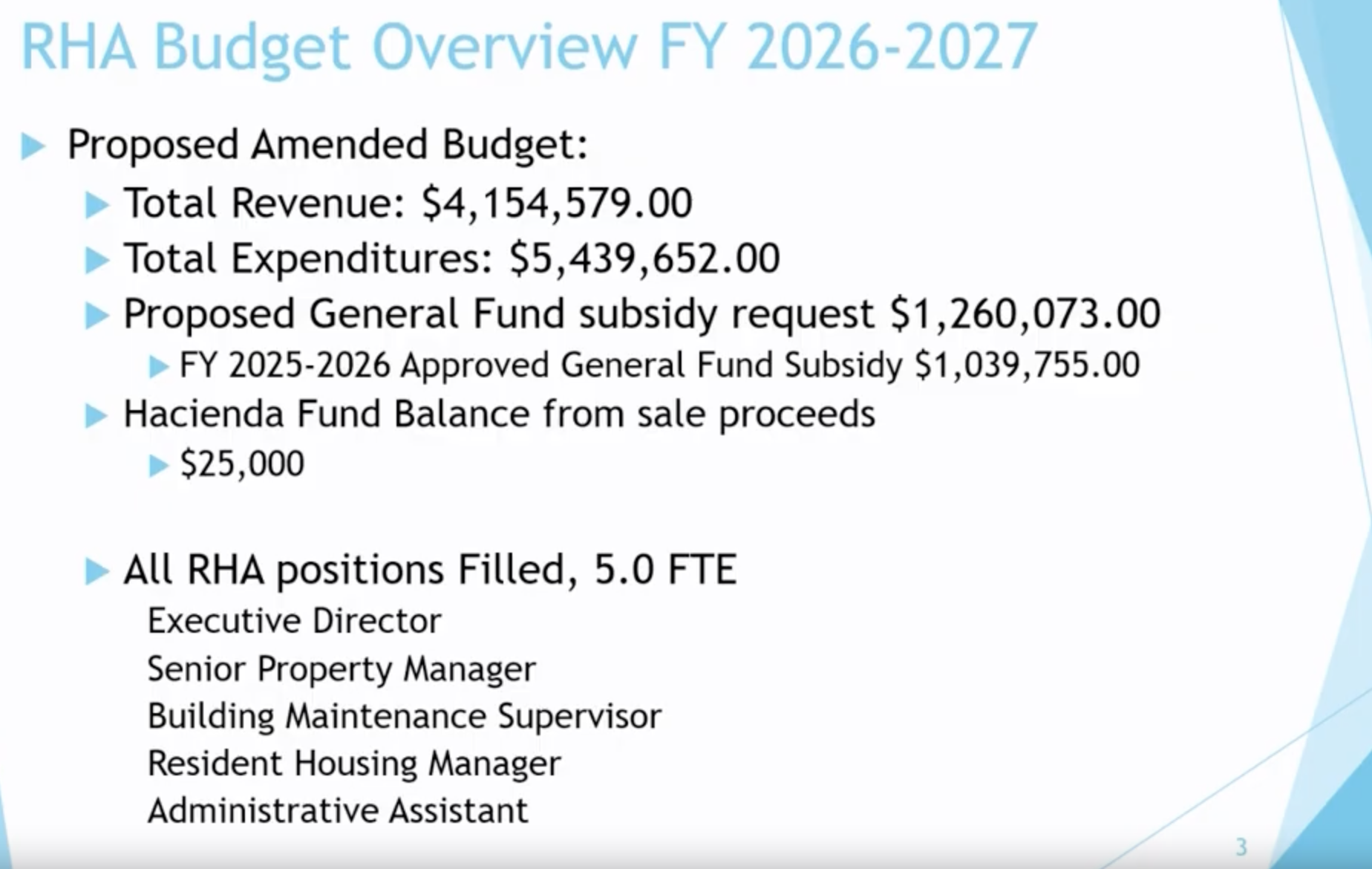
  • $5.4 million Housing Authority budget approved with a $1.26 million general fund subsidy as federal HUD subsidies decline

  • Master fee schedule update introduced with new tobacco retail licensing fees, fire code alignment, and a projected $460,000 in new revenue

  • $60,000 allocated for Hilltop Green emergency egress, where 1,400 residents have a single road in and out


Budget Balancing Act: $2.67M in Gaps, No Cuts to Social Services

Why it matters: Four construction-ready projects — the Point Molate Bay Trail, Richmond Wellness Trail Phase 2, Shields Reid park improvements, and a Wendell Park restroom — faced a combined $2.676 million shortfall that threatened to stall work already underway or locked into regulatory timelines.

Where things stand: City Manager Shasa Curl presented the eighth budget work session in the FY 2026-27 cycle, walking council through a revenue picture that has grown from $188 million in FY 2020-21 to a projected $310 million over five years, driven by property tax, utility user tax, and Measure U business license tax receipts.

Staff recommended covering the gap by redirecting funds from the Point Molate Beach Stabilization allocation and other deferred capital items — not by cutting the $19.9 million earmarked for unhoused interventions or the Arts Quarter corridor.

"It's important that we think of the budget as an envelope and that as new expenses emerge and new priorities, we will have to shift the budget to accommodate those new turn of events," said Curl.

Curl also flagged a potential $3.5 million supplemental insurance assessment from the city's liability risk pool, calling it an emerging fiscal risk whose timing and exact amount remain uncertain.

The other side: Councilmember Cesar Zepeda warned about a potential state ballot measure, Initiative 1983, that could retroactively undo city tax measures not passed by a 60% superthreshold.

"There's a proposed ballot measure, Initiative 1983, that's potentially, if passed by the voters, it could undo tax measures passed by the city, retroactive for anything not passed over a 60% threshold," he said.

Vice Mayor Doria Robinson proposed a "bike rack" system to track deferred priorities — including the corporation yard and the e-bike lending library — so they receive first-in-line funding when new resources emerge. Robinson drew a distinction between truly shelved projects and those awaiting their turn.

Councilmember Sue Wilson pressed staff on whether the Point Molate Bay Trail alignment would require invasive beach stabilization such as riprap, requesting plans before the formal budget adoption vote. Public Works Director Daniel Chavarria confirmed the trail and beach stabilization are separate but connected projects.

Decisions: Council gave unanimous direction to move forward with staff's recommended fund swaps (Option 1) and added a $60,000 allocation from wildfire mitigation funds for the Hilltop Green emergency egress project while preserving $200,000 for the city's grazing contract. Formal budget adoption is scheduled for June 23.

What's next: Staff will return at the next meeting with the final budget for adoption. The e-bike share program was noted as expiring due to lack of new appropriation; the e-bike lending library has been deferred to future discussion.


Dozens Rally for SOS Richmond: "Don't Cut What's Working"

Why it matters: Safe Organized Spaces (SOS) Richmond provides the front-line connective tissue between the city's unhoused population and pathways to employment, housing, and health services — mobile showers, laundry, job readiness training, and workforce development. No other provider fills that role at the same scale.

Where things stand: Approximately 20 speakers — including current and former clients, staff, volunteers, and partner organizations — came to the microphone during open forum to urge the council to protect SOS Richmond's full budget allocation. Multiple speakers shared personal stories of transitioning from homelessness to employment through the program.

Councilmember Sue Wilson confirmed during the budget session that the proposed budget does not reduce unhoused services funding.

"We're not making any sort of cuts to our overall budget for unhoused interventions," she said.

However, she noted that specific vendor contracts remain subject to procurement processes, meaning the total dollar commitment is preserved even if individual program operators could change.


18% Vacancy Rate Draws Union Warnings

Why it matters: The gap between the city's 12% budgeted vacancy rate and the 18% actual rate means surplus personnel funds are being redirected to capital projects while departments report burnout, slower response times, and inability to do proactive work. SEIU is approaching the 20% threshold that triggers mandatory action under state law.

The basics: AB 2561 requires cities to publicly report vacancy and recruitment data and allow union presentations. This was Richmond's first report under the new law.

Where things stand: HR Director Sharon Taylor reported 802 authorized positions with 659 filled, 91 new hires, 49 promotions, and an 11% turnover rate as of December 2025.

SEIU Local 1021 President Kevin Tisdale told council the union's vacancy rate has hit 19%.

"19% is not sustainable. This is a hiring issue, not a performance issue. Employees are performing to the best of their ability," he said.

Tisdale noted the city saved approximately $12.6 million through SEIU vacancies alone and criticized the practice of using contractors for union work.

Richmond Police Officers Association President Ben Therriault reported 106 officers and sergeants on patrol against recommendations of 179–187 from three independent studies.

"Measured against the RPA's goals, Richmond is 81 officers short, in our opinion," he said, citing the Contra Costa County Civil Grand Jury's May 2025 recommendation for 179 officers and a concrete staffing plan.

Councilmember Sue Wilson challenged the administration directly:

"Last year we budgeted for a 9% vacancy rate, approximately, and it was 18% and there was no variable. So why last year was there such a discrepancy between what we budgeted and the positions that were posted and filled?"

City Manager Shasa Curl confirmed that salary savings from unfilled positions have been directed to built environment projects and explained that unsettled police and fire MOU negotiations create budget uncertainty.

Public commenter Sarah Cantor questioned whether the 12% budgeted rate would hold or double again as it did last year, noting that SEIU and IFPTE are the most impacted bargaining units.

What's next: The vacancy report was received for information. The underlying staffing tensions will play out through ongoing labor negotiations and the final budget adoption.


Housing Authority Budget: $1.26M Local Subsidy Fills Federal Gap

Why it matters: Nystrom Village is more than 85 years old and won't be replaced until at least 2030. Without local subsidy, maintenance deferrals would threaten habitability for current residents across the Housing Authority's 783 units.

Where things stand: Richmond Housing Authority Executive Director Antoinette Terrell presented the FY 2026-27 budget: $5.44 million in expenditures against $4.15 million in revenue, requiring a $1.26 million general fund subsidy and $25,000 from Hacienda sale proceeds. HUD Capital Fund dollars ($2.5 million) remain the largest revenue source, but operating subsidies for Nystrom Village are projected to decrease by $360,000 and Nevin Plaza subsidies have been reduced to zero.

Terrell detailed substantial rehabilitation work: 40 units rehabbed since 2023, representing 40% of Nystrom Village inventory, along with 350 maintenance work orders completed annually by five full-time staff.

City Manager Shasa Curl framed the subsidy as a smart investment.

"The cost to build a new unit from scratch is upwards of $700,000. And so to the degree to which we can preserve and completely rehab and add new units, this subsidy essentially provides a significant return on investment," she said.

The other side: Councilmember Cesar Zepeda questioned reliance on declining HUD funding and flagged new federal rules.

"HUD has been changing the rules around gender. So certain individuals in our community are no longer going to be qualified to go into housing because they're part of the LGBTQI community, because HUD has put that new regulation in," he said.

Decisions: The joint resolution passed 5-0 (For: Martinez, Jimenez, Wilson, Robinson, Zepeda, plus Tenant Commissioner Scott; Absent: Brown, Bana).


Fee Schedule Update: Tobacco Licensing, Fire Code Alignment

Why it matters: Updated fees are projected to generate $460,000 in additional revenue while aligning city charges with actual service delivery costs. A comprehensive citywide fee study is expected by spring 2027.

Where things stand: Accounting Manager Antonio Benoz presented the annual master fee schedule update, which includes a 4.1% Employment Cost Index adjustment required by the municipal code, new tobacco retail license fees covering application, renewal, appeals, and enforcement, fire department permit alignment with the 2025 California Fire Code, a new 25% non-resident surcharge for recreation programs, tool library fines, and updated Memorial Auditorium rental rates. Impact fees continue year three of a four-year phase-in.

Councilmember Sue Wilson and Councilmember Claudia Jimenez advocated for making community meeting spaces more affordable. A Contra Costa College staff member noted during public comment that the Memorial Auditorium is currently too expensive for their graduation ceremony, prompting discussion of tiered nonprofit and education rates.

Councilmember Cesar Zepeda asked about increasing tobacco inspection fees and whether taxi permit fees could be applied to ride-share companies. Councilmember Soheila Bana raised the idea of a blanket insurance option for block parties.

Decisions: The ordinance was introduced unanimously on first reading, 6-0 (Brown absent). Second reading will follow at the next available meeting.


Hilltop Green: $60K for a Second Way Out

Councilmember Soheila Bana championed funding for an emergency egress for the Hilltop Green neighborhood, where approximately 1,400 residents have a single point of entry and exit — located near a gas station. Multiple residents, including HOA representatives, described the evacuation risk during public comment.

"I'm just emphasizing on Hilltop Green budget, which is only $120,000 for the lives of 1,400 people," Bana said, urging prioritization.

The proposed exit at Pinole Vista Shopping Center is reportedly less than 100 steps from the neighborhood boundary.

After discussion with the city manager, fire chief, and Public Works director, council directed $60,000 from the $260,000 wildfire mitigation budget toward the project, preserving $200,000 for the grazing contract. Bana requested the item also be placed on the "bike rack" list for additional funding.


Minor Items

  • Consent calendar approved 6-0 (Brown absent) after items W3C, W10E, and W5B were pulled for separate discussion. Item Z5 was continued to June 23.

  • Closed session held on labor negotiations with multiple unions; no final decisions were reported.

  • Asset Inventory and Management (AIM) initiative: Deputy Public Works Director Tofik Halaby presented a new NextGen software system funded by a Hellman Foundation grant to inventory and assess over 100 city buildings and parks. Staff training begins June 22, 2026, with prioritized five-year repair recommendations expected in early 2027.

  • Grant portfolio has reached $328 million in total awards with $79 million in pending applications.

  • E-bike share program noted as expiring due to lack of new appropriation. Public commenter Carlos Torres shared a personal story of relying on Rich City Rides after his car broke down, commuting across the Richmond-San Rafael Bridge by bike for six months.

  • Councilmember Jimenez advocated for Care navigators for the RACC program, arguing that without them, first responders cycle through repeat calls without connecting people to services.

  • Vice Mayor Robinson disclosed a conflict of interest related to the Transformative Climate Communities grant, noting she remains the executive director of Urban Tilth, a grant recipient.

Richmond Council Closes $2.67M Budget Gap While Vacancy Crisis Looms | City Council | Locunity