
Clipper 2 Carries Two-Thirds of Trips as Device Fixes Lag
Regional Network Management Council • Metropolitan Transportation CommissionSeptember 28, 2026
Locunity is an independent informational service and is not an official government page for this commission. All information is sourced from public footage and an analysis of official agendas with the aid of responsible, fact-checked AI. to report an error or omission.
The Bay Area's new fare system now handles most rides, but it still can't retire the old one. At a joint meeting Sept. 28, 2026, the Regional Network Management Council and Clipper Executive Board heard that fare inspection devices and unwritten settlement rules are keeping Clipper 1 alive. A rider's account of $550 in missing benefits drew apologies from both the chair and Clipper staff.
- 3.95 million cards migrated to Next Generation Clipper, with 66% of trips now on C2
- Fare inspection fix at least two weeks out, and inspection units are nearing end of life
- Rider reports about $550 missing after 17 calls; leaders apologize and promise a list of open issues
- Clipper payment comes to paratransit, with a San Francisco pilot this winter
- MTC will cover paratransit integration and the first five years of operating costs
- Kirschbaum asks to discuss sunsetting the Clipper Executive Board
Clipper 2 Gains Ground, but Blockers Remain
Why it matters: The region pays to run two fare systems until Clipper 1 is shut down. Unresolved device and settlement defects are holding up the Cubic operations term and leaving transit operators without certainty about their funding.
Where things stand: "As of today, we're at 3.95 million cards migrated," said Angus Davol, Assistant Director for Clipper Development and Budget, MTC. C2 carried 10.1 million of 16.7 million August trips, which is 66% of trips and $28.5M in fares. August ridership topped the prior peak and ran 14% above August 2025.
About 130,000 youth and senior cards still need to move over. Staff paused operational migrations so Cubic, the system contractor, could fix a memory problem in the inspection app. Staff proposed resuming migrations for later priority groups while keeping pressure on Cubic.
The device problem: Three of the four critical blockers involve fare inspection devices or financial settlement, the process of dividing fare revenue among operators. A software update is in testing, but Davol said "production readiness of that release is still at least 2 weeks away." Michelle Bouchard, General Manager, Caltrain, confirmed the target version as 1.18. She said "critical to us nailing these final issues is just a complete and transparent communication about how things are going."
The hardware is aging, too. Carolyn Gonot, General Manager, VTA, asked, "Are we talking about only the batteries, or are we talking about the whole unit is now near the end of life?" Staff answered that the whole unit is at end of life. The units are made by PAX. "Cubic has a responsibility in the contract to maintain and replace devices as they become end of life," a staff member said. Staff put the replacement timeline in years, not months.
Settlement rules: Denis Mulligan, Vice Chair, Clipper Executive Board, and General Manager, Golden Gate Bridge, asked for a schedule to finalize apportionment rules, which set how fares are split among agencies. Derek Hansell, CFO, said staff are assembling a comprehensive list. Bouchard called for a requirements-setting working group for the next inspection device. Jason Weinstein, Director, Clipper program, endorsed a co-project-manager staffing model.
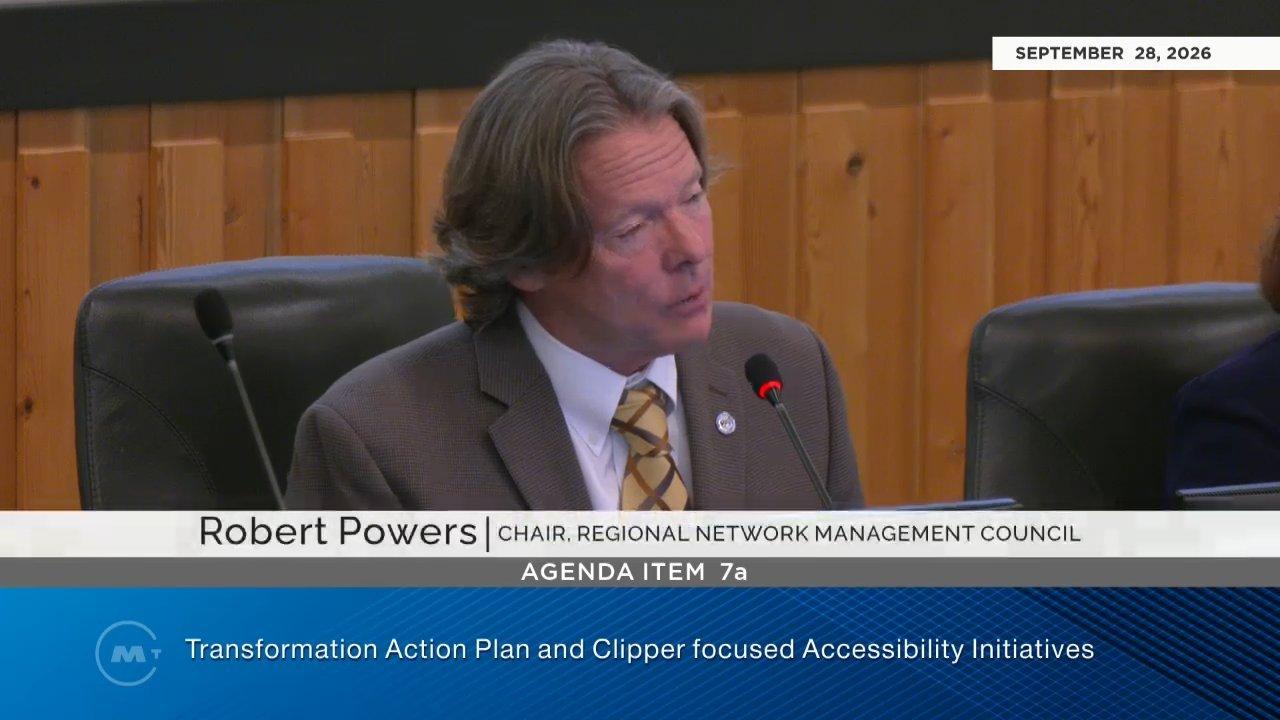
Decisions and stakeholder impacts: This was an information item, and no action was taken. Julie Kirschbaum, Chair, Clipper Executive Board, and Head, SFMTA, said moving discount users onto C2 is "an important equity issue." Andrew Fremier, Executive Director, MTC, said "we really are focused on getting Clipper 1 decommissioned." Robert Powers, Chair, Regional Network Management Council, told staff, "I think you're moving in the right direction." Public commenter Alita Dupree said her card and inspections work well and urged more migration, given the cost of running two systems.
What's next: Staff will continue migrations and push Cubic on the inspection fixes.
A Rider's Missing $550 Tests Accountability
Why it matters: Officials acknowledged that one rider's ordeal may reflect problems affecting hundreds of others. That raises accountability questions about the migration and the Cubic-run call center.
Where things stand: Public commenter Lawrence Berland, a rider with a disability, said, "I'm missing approximately $550 in transit benefits value." He described 17 calls since mid-December, repeated follow-up promises that went unfulfilled, and escalations to Cubic.
"So first, on behalf of the Bay Area, I apologize for what the Bay Area has put you through," said Chair Powers. He said someone would contact Berland before the meeting ended. Weinstein repeated the apology.
Mulligan pressed beyond the single case. "It would be helpful if staff put together a list of the issues that are out there where there may be hundreds of people impacted that are still open," he said. Weinstein committed to provide the list.
Delegate Hassan Baig, representing Member Llamas of AC Transit, raised a separate problem: "We have received about 700 complaints, or 700 students from UC Berkeley where they're having challenges with AC Transit service as well as BART service."
The contract angle: Christy Wegner, a council member, asked for the top call center trends and how they have changed. Kelly Jackson, Assistant Director, Clipper customer service, MTC, said "the good thing is most of it is account management." She said Berland's issue likely falls into that category. Weinstein said the call center runs on a fixed price for a set number of monthly contacts. That arrangement is under evaluation ahead of a contract amendment.
The other side: Adina Levin of Seamless Bay Area welcomed the two-thirds C2 usage. She also urged that "the same level of attention going to this individual with a really tough customer service issue will go into forensics as to whether there are many other people." She asked for more social media outreach about how riders can upgrade their own cards.
What's next: Staff owe the boards a list of open issues. The pending call center contract amendment gives members leverage over Cubic's service levels.
Paratransit Riders Move Toward Clipper Payment
Why it matters: Paratransit is door-to-door service for riders who can't use fixed-route transit, as required by the Americans with Disabilities Act. Unified Clipper payment and one-seat rides would ease travel for these riders and go beyond federal minimums.
Where things stand: Staff walked through two items from the Transformation Action Plan:
- Action 25 standardizes paratransit eligibility. It includes a June train-the-trainer session for about 30 eligibility staff and an opt-in alignment of Clipper Access with ADA paratransit eligibility.
- Action 23 integrates paratransit with C2.
The RTC discount card was rebranded Clipper Access in December, and existing cardholders don't need to do anything. Fourteen operators will use Clipper-enabled booking software, and three will use card readers.
"We'll have a limited launch to select San Francisco Paratransit participants coming in winter this year," said Lydia Elias, a presenter for MTC. Napa and Marin/Golden Gate follow.
Who pays: Gonot called paratransit "one of the most costly services we run as a transit operator." A staff member answered that integration "is covered by MTC. It is state funding, state transit assistance funding, so the operators are not paying for the implementation." MTC also pays operations and maintenance for the first five years. Starting in year six, operators fold those costs into their existing booking-vendor contracts.
Elias said that "if an agency does change booking vendor, there is a path to do integration," and cited SolTrans's move to Spare. Baig asked for an update on East Bay Paratransit, which BART and AC Transit run with a different vendor. He noted it is "the largest paratransit agency in the region."
The bigger gap: Asked by Wegner about transfers, John Sanderson, a presenter for CCCTA, said, "To my knowledge, there are no free transfers between paratransit systems." Bill Churchill of County Connection noted that "one-seat rides are not part of the federal baseline ADA requirements." Powers said a VTA–BART one-seat ride pilot may be nearing agreement.
Decisions and stakeholder impacts: No action was taken. Members praised the work. Churchill said paratransit had been "kind of the forgotten stepchild for many, many years in the Bay Area." Powers called unified payment "a fundamental game changer for paratransit." Dupree argued that "nobody should have to go and get different kind of fare media to use the system." Kirschbaum urged MTC to join an APTA paratransit working group.
What's next: At Powers' request, Melanie Choy, Director, agreed to produce a fact sheet for members. Staff will return with pilot data and later rollout phases.
Calendar Talk Opens Door to Board Sunset
Where things stand: Akash Ghosal, staff, said the meeting calendar "must be adopted annually per the procedures manual." The proposed 2027 calendar keeps fourth-Monday meetings, except for the third Monday in November and the second Monday in December. Staff flagged conflicts with an APTA marketing workshop in February and the APTA Transform Conference in September.
Gonot noted that many members sit on the APTA board. Powers told staff, "And I would encourage you, just move it, right?"
Why it matters: Kirschbaum asked "to talk about a more formal possibility of sunsetting the Clipper Executive Board," which would restructure Clipper governance. Fremier suggested also considering canceling one meeting a year.
What's next: Approval is expected next month.
Minor Items
- American Express on Clipper: The board approved an $800,000 C2 contract to accept American Express cards on the consent calendar, by unanimous voice vote (moved by Vice Chair April Chan, seconded by Kirschbaum). Dupree backed it as inclusive.
- Minutes approved: The council approved its Aug. 24 minutes by unanimous voice vote (moved by Mulligan, seconded by Rachel Ede).
- BusAid results: Choy said San Jose signal priority at nearly 200 intersections cut average bus delay 18%.
- Bay Pass growth: Trips rose from about 1.5 million in 2024 to more than 5.5 million in 2025, and UCSF joins in January 2027.
- Transit Month: Weinstein reported more than 25 events and BART's highest ridership day since the pandemic.
Looking Ahead
The next joint meeting is Monday, Oct. 26, at BART headquarters. Watch for the 2027 calendar vote, the open-issues list Clipper staff promised, and an update on the inspection software.