
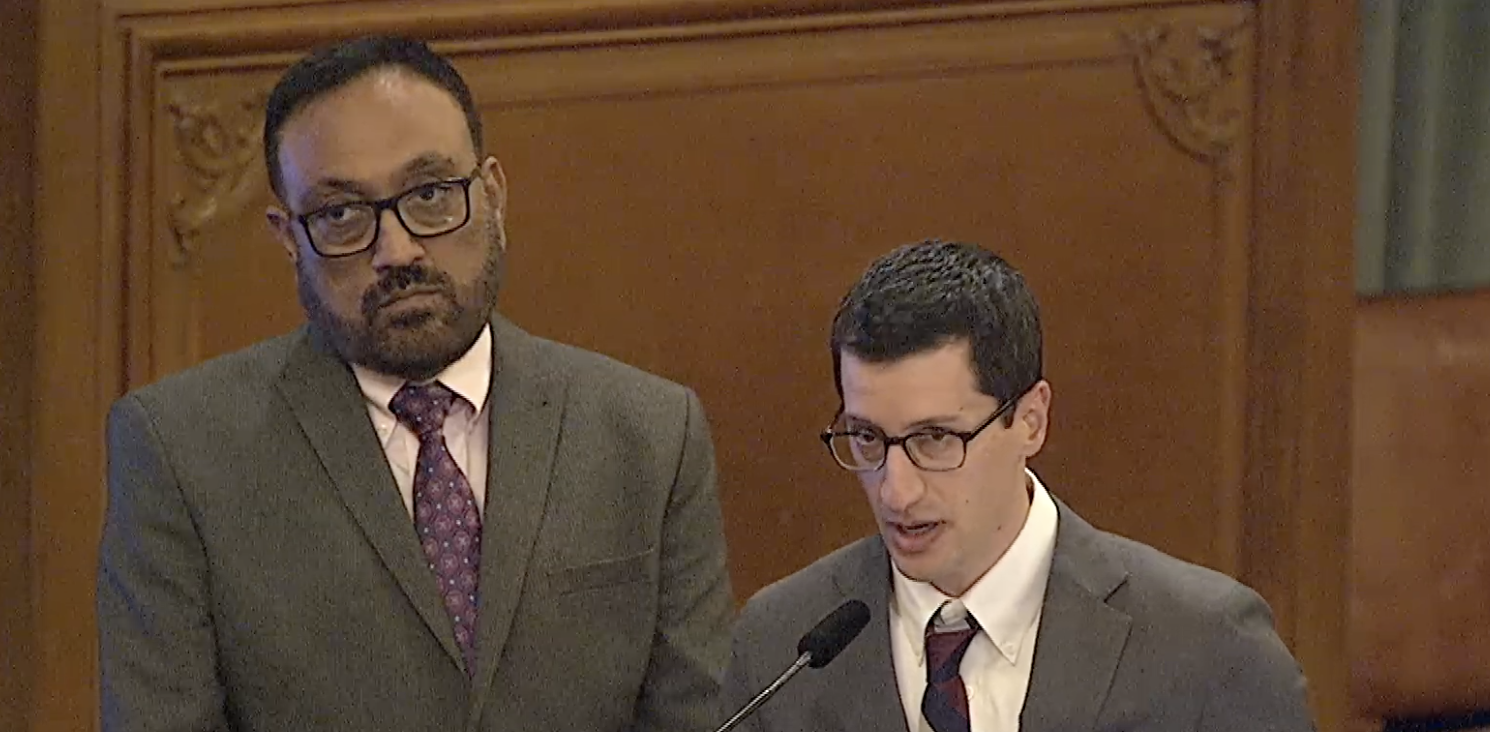
Public Safety and Neighborhood Services Committee - May 14, 2026 - Regular Meeting

Public Safety and Neighborhood Services Committee - May 14, 2026 - Regular Meeting

Public Safety and Neighborhood Services CommitteeSan FranciscoMay 14, 2026

Sources:

Locunity is a independent informational service and is not an official government page for this commission.We use AI-assisted analysis and human editorial review to publish information.

Drug Court Admissions Triple as DA, Public Defender Clash Over Violent-Offense Diversions

San Francisco's Public Safety and Neighborhood Services Committee spent nearly three hours last Wednesday dissecting two failures of critical city systems: a Drug Court program buckling under triple the caseload it was designed to handle, and a single PG&E substation fire that plunged 120,000 residents into darkness for up to three days. Both hearings exposed sharp disagreements over who is responsible — and neither is resolved.

  • Drug Court admissions surged from 180 to 608 in two years, with mental health diversion cases now accounting for 91% of referrals — including violent offenses the DA says bypass the original agreement between her office, the Public Defender, and the courts

  • DPH is staffed for 260 Drug Court clients but now manages 420, with monolingual Spanish-speaking clients waiting months longer for treatment beds

  • PG&E's direct-cause report on the December 2025 blackout drew bipartisan skepticism from supervisors who say broken ventilation fans were documented for two years before the fire and never repaired

  • SFFD was not notified of the substation fire until 72 minutes after the arc flash, prompting PG&E to retrain control center operators

  • Video parking enforcement in transit lanes advances toward a seven-year extension after committee backs AB 1837 resolution, 3-0


Drug Court Under Fire: A Program Designed for Recovery, Now Overwhelmed by Scale

The basics: San Francisco's Drug Court was built as a small, voluntary program for people whose offenses were driven by addiction — an alternative to incarceration with structured treatment, regular drug testing, and supervision. Under California's mental health diversion statute (Penal Code 1001.36), judges can divert defendants with qualifying mental health conditions out of the traditional criminal justice system and into programs like Drug Court.

Why it matters: Admissions have tripled from 180 in 2023 to 608 in 2025. The Department of Public Health, which provides treatment and case management, is 62% over its staffing capacity. And the District Attorney and Public Defender are locked in a fundamental disagreement over whether the program is being used as intended — or exploited to avoid accountability for violent crimes.

The DA's Case: "An End Run Around the MOU"

District Attorney Brooke Jenkins told the committee that mental health diversion cases now represent 91% of Drug Court referrals, and that violent offenses — attempted murder, armed robbery, assault with a deadly weapon — are being admitted over her office's objections.

"It has essentially become an end run around the MOU that was signed by the two offices and the court, allowing now violent and dangerous offenders into the court, scaling up in a manner that I believe is destructive to the program," said DA Jenkins.

She detailed specific cases: "The examples include road rage shootings, a gang related shooting that wounded a victim in both legs, a firing into an occupied bus, a Watson murder."

DA Jenkins also disclosed that the Public Defender's office filed at least 70 peremptory challenges against newly assigned Judge Merlene Randall after the previous presiding judge, Judge Michael Beggar, was reassigned. She said the court now intends to remove Judge Randall from the assignment as a result. In 2024, DA Jenkins said, there were 134 Drug Court graduations versus 259 terminations — meaning nearly twice as many participants failed or were removed as completed the program.

The Public Defender's Response: "Not Fear Mongering"

Managing Attorney Anitha Naba of the Public Defender's office pushed back sharply, arguing the mental health diversion statute reflects the legislature's recognition that mass incarceration failed.

"Recent reporting indicated that while there was recidivism rates or rearrest of about 43% of drug court graduates, it was at 67% for those engaged in the traditional system," Naba said.

She called the system under-resourced, not over-used: "There is not treatment on demand in this city the way it has been promised. There are especially monolingual Spanish speaking clients who wait months longer than their English speaking counterparts to access treatment because of the lack of program availability."

Naba urged expanded treatment capacity, more DPH staffing, and additional Drug Court days per week. "If we care about public safety in our community, we need to be evidence based and not just fear mongering. We are not moving backwards from the MHD statute," she said.

Deputy Public Defender Erin Morgan described Drug Court as rigorous, with four phases, regular drug testing, and written graduation applications — arguing it works effectively when properly resourced.

DPH: Staffed for 260, Serving 420

DPH Director Dan Tsai confirmed the department is stretched past its breaking point.

"We are staffed for a caseload of 260. We now have 420 clients in drug court. The drug court treatment referrals that we've gotten have tripled since 2023 and our staffing has stayed flat," Director Tsai said.

He noted one case manager serving monolingual Spanish-speaking clients carries a caseload of 90 — more than double the ideal of 40. When asked whether his department had communicated its capacity limits to the court, Director Tsai was blunt: "The court just continued to add new cases."

DPH's Jose Luis Guzman presented additional data showing the average Drug Court stay is 14 months, with treatment capacity, wait times, and monolingual Spanish program access as key bottlenecks.

Where Both Sides Agree — and Diverge

Both offices agreed the system needs more treatment funding. DA Jenkins opposed requiring guilty pleas specifically for Drug Court but supported amending the MHD statute to narrow eligibility for violent offenses. The Public Defender's office opposed mandatory guilty pleas, arguing there is no evidence they improve outcomes.

Chair Matt Dorsey, who has spoken publicly about his own recovery, framed the stakes personally. "I think money for recovery and drug treatment is money well spent. And I completely agree that we're not living up to the promises of treatment on demand that San Franciscans expect of us," he said.

A representative from Connected SF spoke in public comment, calling the tripling of referrals "hard to fathom" and characterizing the mental health diversion system as an abuse with insufficient accountability.

Decisions: The hearing was heard and filed, 3-0 (For: Dorsey, Sodder, Wong; Against: none; Absent: none).

What's next: Chair Dorsey committed to working with both the DA's office and the Public Defender's office on state legislative recommendations regarding reforms to the mental health diversion statute. The capacity gap at DPH could also factor into the city's next budget cycle.


"A Third of San Francisco Into Darkness": Supervisors Reject PG&E's Blackout Explanation

Why it matters: On Dec. 20, 2025, a fire at PG&E's Mission Street substation knocked out power to approximately 120,000 customers — roughly a third of San Francisco — for up to three days. Five months later, PG&E returned to the committee with a report that three supervisors called incomplete, evasive, and insufficient.

What PG&E Said

PG&E Regional Vice President Jake Ziggleman presented findings from a report commissioned from Exponent, an engineering consulting firm. The report concluded the fire was caused by a combination of factors — humidity, contamination, and a breaker arm contacting a degraded insulating board — rather than a single cause.

PG&E outlined remedial actions: more than 3,000 enhanced inspections across all 31 San Francisco substations, humidity and temperature monitors in all 16 indoor substations, dehumidifiers, thermostatic heater controls, and engagement of an engineering firm for long-term environmental controls.

What Supervisors Found in PG&E's Own Records

Supervisor Alan Wong drew a sharp distinction between what PG&E delivered and what the committee asked for.

"There is a difference between asking what failed and asking why it was allowed to fail," Supervisor Wong said.

He then cited PG&E's own maintenance records: "PG&E's own maintenance records document broken fan belts on basement supply fans in December 2023, August 2024 and October 2024. More than two years of documented issues and failures. The report work order was not completed until January 2026 after the blackout."

The report also did not explain why a failure at one substation cascaded into a citywide outage, or why neighboring substations could not absorb Mission's load.

Supervisor Bilal Mahmood noted that an inspection six weeks before the fire had already revealed water damage and burn marks on the insulating board that later failed — yet PG&E crews only wiped down the front and deemed it serviceable.

"A $35 Billion Corporation" Without a Thermostat

Vice Chair Danny Sodder pressed PG&E on why basic environmental monitoring equipment was absent from its indoor substations.

"I have a dehumidifier in my apartment. I think every San Franciscan does. It's pretty common knowledge in San Francisco. You need that," Vice Chair Sodder said. "I have a thermostat. Again, it's remarkable that a $35 billion corporation doesn't have that."

Sodder also challenged PG&E's communication to the committee, noting the utility told supervisors the report found "no single cause" when the report itself identifies a most likely direct cause — surface breakdown of the insulating board.

Fire Department: 72 Minutes Without a Call

Deputy Fire Chief Patrick Rabbit testified that the San Francisco Fire Department was not notified until well after the fire began.

"The arc occurred at 1:04 p.m. at the Mission Street substation. And San Francisco Fire Department was not notified through our dispatch system until 2:16 p.m.," Deputy Chief Rabbit said.

He noted that when firefighters arrived, PG&E could not provide information about the fire's location or size, and there were no digital building plans available. PG&E also needed to confirm the equipment was de-energized before firefighters could enter. PG&E acknowledged retraining control center operators to notify fire immediately upon the first alarm going forward.

Public Comment: Language Access Gaps

Leon Chow, representing the Chinese Sunset Cultural District and Wa Me School, said his organization's reimbursement claim was handled promptly but criticized the lack of Chinese-language support in outage communications and reimbursement processes. He offered to partner with PG&E to improve cultural and linguistic competency for immigrant communities.

Vanessa Pimentel, reading a statement on behalf of the San Francisco Minority Chamber of Commerce Foundation, praised PG&E's post-outage community support, including multilingual outreach and small business workshops, and urged continued collaboration.

Decisions: Supervisor Wong moved to continue the hearing to the call of the chair pending PG&E's full root cause report. The motion passed 3-0 (For: Sodder, Wong, Dorsey; Against: none; Absent: none).

"A single fire at one PG&E facility should not be able to throw a third of San Francisco into darkness," Supervisor Wong said, demanding a full root cause report, a public corrective action plan, and clear deadlines.

What's next: The committee will reconvene on this item once PG&E delivers a complete root cause analysis — not just a direct-cause report. Supervisors signaled they will not close this matter until the utility explains why the failure cascaded and proves system-wide corrective actions are complete.


Minor Items

  • AB 1837 transit-lane enforcement: The committee recommended to the full Board, 3-0, a resolution supporting Assembly Bill 1837 by Assemblymember Mark Gonzalez, which would extend San Francisco's authority to use video imaging for parking enforcement in transit-only lanes from Jan. 1, 2027 to Jan. 1, 2034. Lorenzo Rosas from Supervisor Stephen Sherrill's District 2 office presented the item, noting the SFMTA pilot reduced transit delays by as much as 20%. Vice Chair Sodder asked to be added as a co-sponsor.

  • United Airlines centennial: The committee recommended to the full Board, 3-0, a ceremonial resolution recognizing United Airlines' 100th anniversary. Chair Dorsey, presenting on behalf of Board President Rafael Mandelman, highlighted United's SFO hub as an economic driver and cited the airline's longstanding LGBTQ community support, including being the first major U.S. airline to recognize domestic partnerships in 1999.