Gaza's Economy Erased: UNCTAD Documents Worst Crisis on Record
Press Briefings • United NationsSeptember 24, 2026
Locunity is an independent informational service and is not an official government page for this commission. All information is sourced from public footage and an analysis of official agendas with the aid of responsible, fact-checked AI. to report an error or omission.
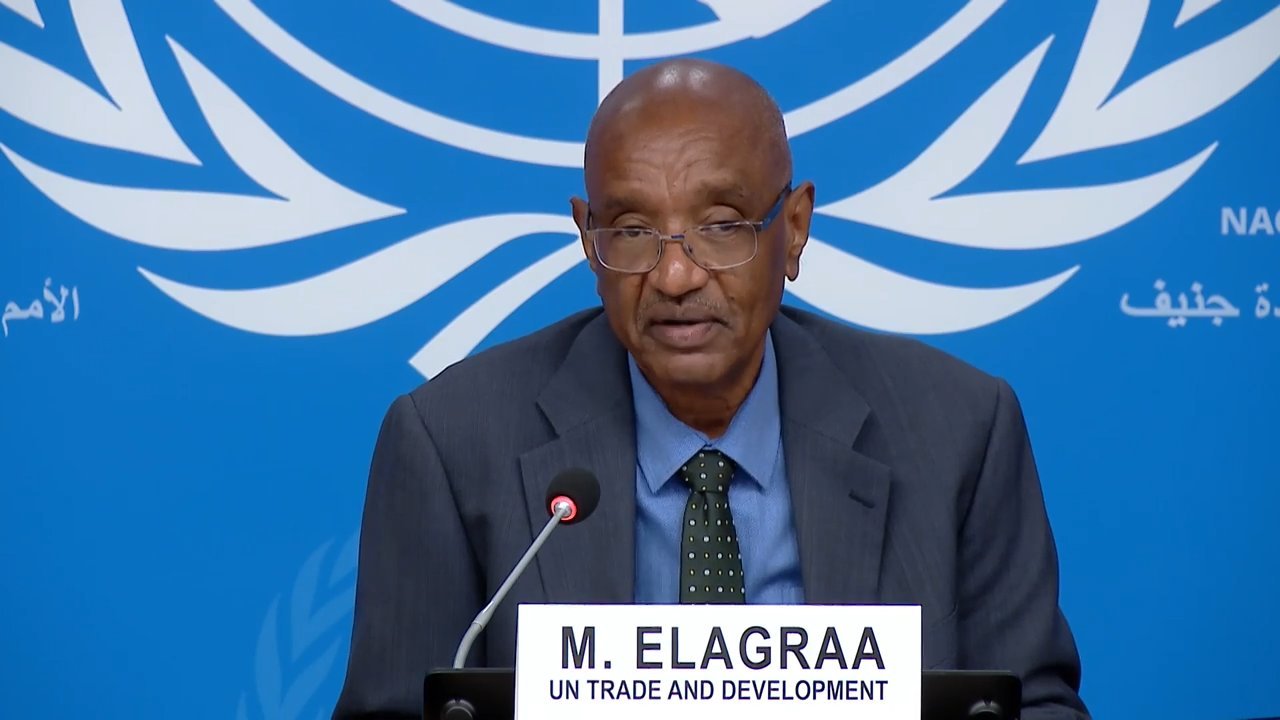
UNCTAD's 2026 report on the Palestinian economy lays bare a catastrophe without modern precedent: Gaza's GDP per capita has collapsed to 58 cents per day, 92% of businesses are destroyed, and the international community faces a $71.5 billion reconstruction bill that no one is yet positioned to pay. Presented at a sparsely attended Geneva press conference on Sept. 24, the findings drew sharp questions from journalists — about the scale of the collapse, the path to recovery, and why the report itself was handled in a way that undercut its own reach.
- Gaza's economy suffers the worst collapse on record, with GDP per capita at $212 per year, 90%+ unemployment and 100% of the population now multidimensionally poor
- Israel has withheld all Palestinian fiscal revenues since May 2025, threatening a banking-sector collapse that could destabilize governance across the territories
- Settlement expansion accelerates toward formal annexation of West Bank land, with 925 movement obstacles and 1,660 demolitions recorded in 2025
- Reconstruction estimated at $71.5 billion, but materials entry remains "severely restricted" and "far from sufficient"
- Apparent 34% GDP growth in Gaza dismissed as a "statistical illusion" reflecting a tiny uptick from near-zero
- Geneva press corps criticizes UNCTAD for embargoed re-release of a report already presented publicly 10 days earlier
The basics: UNCTAD's annual report on the Occupied Palestinian Territory, mandated by the UN General Assembly, provides the most comprehensive economic assessment of conditions in Gaza and the West Bank. The 2026 edition was first presented to the Trade and Development Board on Sept. 15 and publicly briefed to journalists on Sept. 24.
Get reports in your inbox
Follow this commission for free and get the next report delivered by email. You'll be able to access the full archive, get real-time updates, and track the topics or keywords you care about most.