
Council Freezes New Data Centers for 45 Days, Exempts Avayo Phase 1
City Council • PittsburgOctober 26, 2026
Locunity is an independent informational service and is not an official government page for this commission. All information is sourced from public footage and an analysis of official agendas with the aid of responsible, fact-checked AI. to report an error or omission.
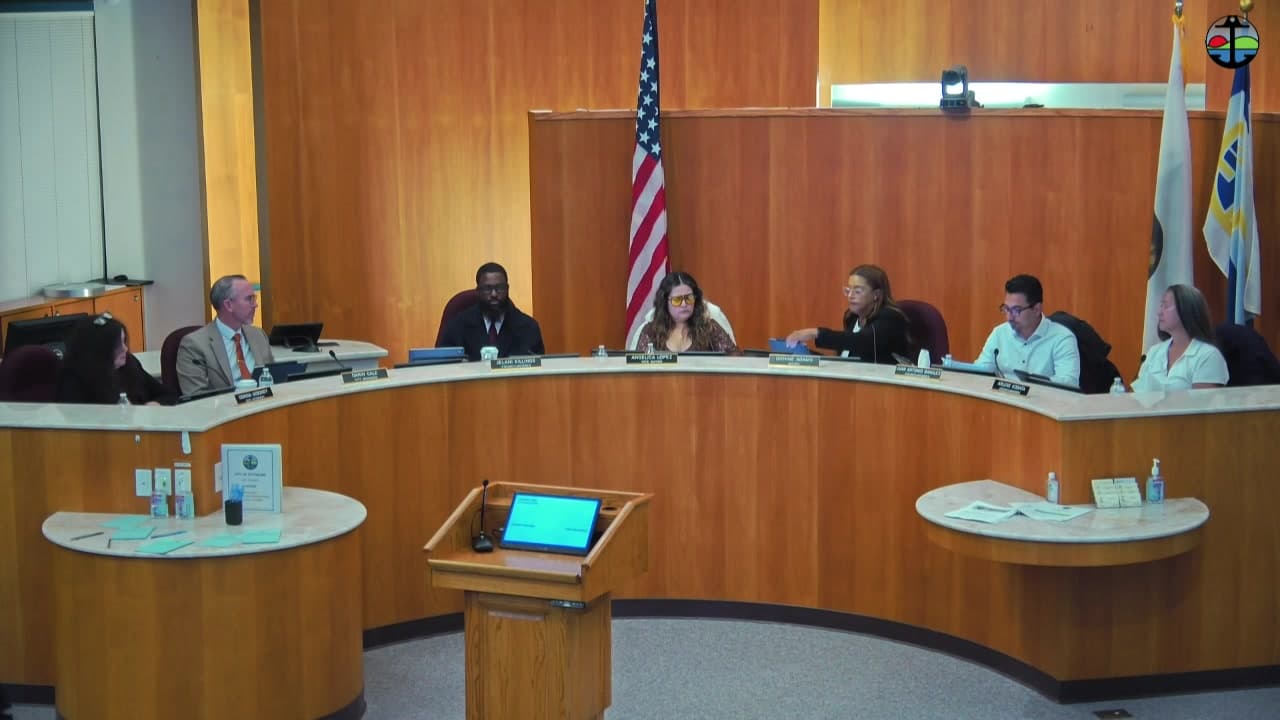
Pittsburg put a 45-day hold on new and expanded data centers Monday, but the project that drew a packed, angry room, Avayo's already-approved Phase 1, keeps moving. At an Oct. 26, 2026 special meeting, the City Council adopted an interim urgency ordinance 4-0, with Mayor Dionne Adams recused. The vote buys time, but residents say it doesn't buy them what they asked for.
- 45-day citywide data center moratorium adopted 4-0, covering Avayo Phases 2 and 3
- Avayo Phase 1 exempt; staff and the acting city attorney cite completed entitlements and environmental review
- Residents demand 90 days, a Phase 1 halt and an outright ban; staff says 90 days isn't legal yet
- Building trades oppose any moratorium, pushing labor standards instead
- Mayor concedes the city "fell short" on communication; Councilmember Killings reads the public record back
A 45-Day Pause, Built to Be Extended
The basics: California Government Code Section 65858 lets cities adopt temporary "urgency" zoning moratoriums while they study new rules. They take effect immediately but require a 4/5 council vote.
Why it matters: Outside the Avayo specific plan area, Pittsburg's zoning code has no definition or standards for data centers. New state laws on data center electricity, water and ratepayer protection take effect Jan. 1. The pause gives the city room to write local rules before any new applications land.
Where things stand: Jordan Davis, Director of Community and Economic Development, said the city has no pending data center applications. The ordinance pauses acceptance, processing, approval or expansion of data centers and related entitlements citywide. That includes Avayo Phases 2 and 3 and any changes beyond the approved Phase 1.
"What is exempt is phase 1 of the Avayo Data Center Project, as are IT facilities under 5 megawatts serving a different primary use," said Davis. Staff cited hospitals and schools as examples of that second category.
The study list covers electricity demand, water and recycled water, air quality, emissions and noise. Staff pointed to Gilroy and Oakley as cities that have taken similar steps.
The 45-day ceiling: "We have heard the demands for a 90-day moratorium, but that is not legal at this juncture," Davis said. Under state law, 45 days is the maximum initial term. Extensions require noticed hearings and another 4/5 vote, and can stretch to one year and possibly two. A written report is due 10 days before the moratorium expires.
The other side: Kylie Cabral, speaking for the Western Steel Council and the California Construction Labor Management Trust, was the lone voice against any pause. "We believe an urgency moratorium is unnecessary," she said, arguing standards can be developed quickly by sharing information with San Jose, Santa Clara and other jurisdictions.
She added that "the city retains authority over all applications that may be received for development until the final entitlements are either approved or denied." Cabral cited research from ASU, MIT and Lawrence Livermore National Laboratory and noted Santa Clara recently declined to adopt a moratorium. She urged that any framework include labor standards for the local skilled workforce.
Decisions and stakeholder impacts: After an unidentified councilmember moved adoption and Councilmember Jelani Killings seconded, Vice Mayor Angelica Lopez announced, "Motion has passed 4 to 0." (For: 4, Against: 0, Recused: 1, Mayor Adams.) Individual votes were not recorded. Staff had also recommended a CEQA exemption finding, a determination that the action is exempt from state environmental review, but the motion as stated did not reference it.
Residents opposed to future phases get a temporary freeze. Avayo's expansion plans are on hold. The building trades lost this round but signaled they'll press for labor standards in whatever rules emerge.
What's next: Staff recommended returning within 45 days for a noticed extension hearing. That vote, which again needs four of five members, will decide whether the pause becomes a months-long study period.
Phase 1 Carve-Out Becomes the Flashpoint
Why it matters: The project residents most oppose is the one the moratorium doesn't touch. That gap drove most of the night's anger.
Where things stand: Killings asked staff to explain "why this moratorium cannot or does not apply to Phase 1."
Davis said the urgency rationale rests on the cumulative impacts of additional, unanalyzed data centers. "Phase 1 was analyzed in multiple instances where we did, prior to approval, analyze noise, air quality, water," Davis said, adding that Phase 1 uses 100% recycled water and 100% carbon-free electricity.
Acting City Attorney Giovenco said the moratorium targets future discretionary land use approvals, which Phase 1 no longer needs. That portion of the project, she said, "has already gone through the environmental review process and has discretionary entitlements that were approved for it."
The other side: Public commenter Lynn Doherty said "the legal architecture of this proposed interim urgency ordinance is fundamentally flawed." She argued the city can't declare an immediate threat to public welfare while exempting Phase 1. She also faulted the 5-megawatt exemption, the bypassing of the data center subcommittee and continued talks with Avayo, and asked that her critique be entered into the record.
Another commenter compared exempting Phase 1 to telling a three-pack-a-day smoker to cut back. A third called the pause a political tactic given its timing days before the election.
Decisions and stakeholder impacts: "There is really nothing that we can change about the entitlements for Phase 1," Killings said. He noted that ongoing agreements with Avayo must still return to the council in open session. That makes those future agenda items the only remaining public checkpoint on Phase 1.
Residents Want 90 Days, a Halt, a Ban
Why it matters: Most of the roughly 15 public commenters accepted the pause only as a first step. Several urged voters to remember the issue on Nov. 3.
Where things stand: A coordinated demand surfaced repeatedly, in person and online. "We demand a 90-day moratorium on all phases of the Avayo Data Center project," one commenter said, later adding, "But excluding Phase 1 makes this formal pause completely useless." A Zoom commenter named John made the same 90-day demand nearly word for word.
Carolyn Bourne welcomed the Community Advisory Committee on Data Centers' coming report and pointed the city toward San Jose's environmental standards and community-benefit approach. "In the best interest of transparency and remaining honest with the community, there should be no further contract negotiations at this time with Avayo," she said.
Health and siting: Cynthia Cardinale read a comment, which she said was AI-generated, about "an industrial facility with diesel generators proposed next to our homes, our school, and our parks." She asked for health studies, monitoring, setbacks and battery backup. Keisha Johnson described dust, noise and 24-hour construction and said residents are establishing baseline testing for water, air and noise.
Adam, a local middle school teacher, disputed claims about jobs and prosperity. "So I'm in favor of moratorium, but keep renewing that moratorium, put a stop to Phase 1, and yeah, no data centers welcome in Pittsburg," he said.
Trust and politics: Coco said "it took just this amount of fighting to get a 45-day moratorium" and criticized how disruptive attendees were treated. Jessica Rojas accused the council of seeking votes with a pause that doesn't stop the data center. She also made allegations about union funding and a PG&E link against two councilmembers; those claims were not substantiated during the meeting. A Zoom commenter, Anthony, questioned the impartiality of a member of the city manager's data center advisory panel and asked whether taxpayers would pay for any site cleanup.
Staff Fields Generator, Battery and Cleanup Questions
Where things stand: Councilmember Arlene Kobata pressed staff on residents' top operational concerns. Asked "Why can't batteries be used to power the data center?" staff said batteries were examined during the California Energy Commission's review of Phase 1 and found infeasible. Staff described the battery option as a massive array with its own environmental impacts.
Staff said Phase 1 generators will run on biodiesel, which produces far fewer carbon emissions than fossil diesel. Staff did not have exact figures on hand and said they would be posted. Asked about smoke, staff said there would be exhaust, not smoke, and that "these generators will be required to be Tier 4 standard, which is the highest standard in the country." Staff also said no water would be dumped into the canal or river.
Who pays if Avayo leaves: Kobata asked who would be responsible for cleanup. "Ultimately, cleanup does lie with the property owner," Davis said, adding that city discussions on the matter continue.
What's next: Watch for staff's posted biodiesel emissions numbers and any cleanup terms in Avayo agreements returning to the council.
Mayor Concedes Outreach Failures, Killings Reads Record
Why it matters: The fight over whether residents were ever told about the data center is shaping public trust as much as the project itself.
Where things stand: Before recusing, Adams pointed to the council's unanimous 2018 approval of the technology park agreement and residents' sense of being left in the dark. "As a city, we have fallen short, and we need to own that," she said. She pledged earlier outreach and plainer information on major projects, calling the moratorium "a meaningful step in the right direction" while warning it is likely "not the end."
The other side: Killings said he did not fully agree that the project was hidden, though more can be done on public awareness. He read 2018 staff statements, 2018 and 2022 press accounts, and Sept. 25, 2024 Neighborhood Improvement Team minutes into the record, arguing "the topic of data center has been ongoing since 2018." Phase 1 was entitled in 2024, he said, and future Avayo agreements must come back publicly: "It is not a backroom deal that just allows things to move forward."
He also reminded the room that council service "is literally a volunteer job," paid with a small stipend. Commenters countered that residents were neither notified nor heard.
What's next: The Community Advisory Committee on Data Centers is expected to report back with a white paper.
Minor Items
- Mayor Adams recused herself from the data center item; Vice Mayor Lopez presided.
- Meeting disruptions: The presiding officer issued warnings and called a recess during public comment.
- Hate speech objection: City Manager Darin Gale objected after a Zoom commenter targeted a religious and ethnic group; the commenter was muted.
- Ballot note: One commenter urged voters to review Prop 45, which she said limits environmental and tribal review.
Looking ahead: Staff is expected back within 45 days for an extension hearing requiring a 4/5 vote, with new state data center laws taking effect Jan. 1.