City Council - Jul 20, 2026 - Meeting

City Council - Jul 20, 2026 - Meeting

City CouncilPittsburgJuly 20, 2026

Sources:

Locunity is a independent informational service and is not an official government page for this commission.We use AI-assisted analysis and human editorial review to publish information.

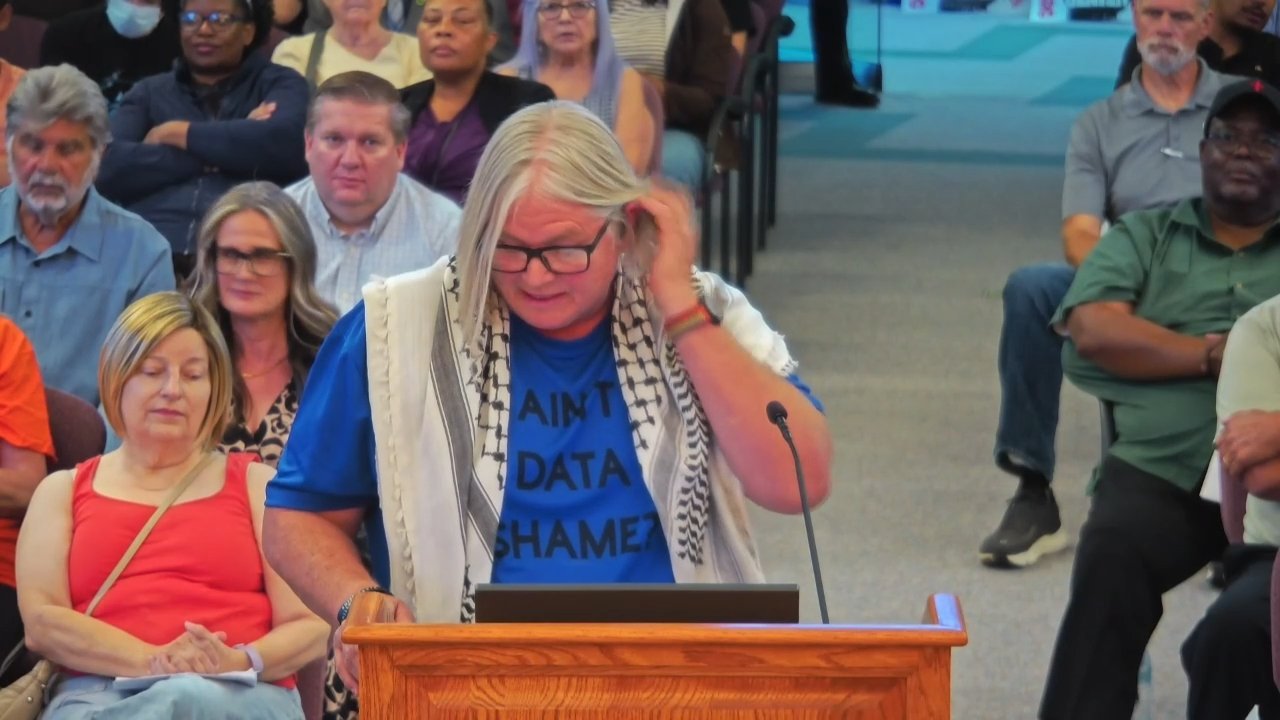
Residents Overwhelm Pittsburg Council Demanding Data Center Moratorium

The Pittsburg City Council's July 20 meeting was dominated by a wave of public opposition to the VIO/Avio data center project, with more than 30 speakers demanding a moratorium on the development approved last year on the former Delta View golf course. Beyond the data center fight, the council approved a $500,000 forgivable loan for youth housing, renewed landscape assessments plagued by a $1.4 million funding gap, and celebrated a completed $4.2 million waterfront park renovation.

  • Over 30 speakers denounce VIO/Avio data center, citing water use, diesel emissions, and inadequate Spanish-language outreach; city announces dedicated Aug. 3 workshop
  • $500,000 forgivable loan approved for 15-unit permanent supportive housing project serving homeless young adults ages 18–24
  • Landscape assessment deficit hits $1.4 million as council renews levy at rates unchanged since 2008; parks now maintained only twice yearly
  • Wednesday farmers market returns to City Hall Lawn for first time since COVID, with one-year pilot starting Aug. 1
  • $4.2 million Central Harbor Park renovation accepted as complete, with grand opening set for July 26
  • Bliss Avenue mixed-use development paused after developers signal weak demand for the city's vision

Data Center Backlash Dominates Public Comment

The approved VIO/Avio data center project on the former Delta View golf course drew an overwhelming response from residents, consuming the bulk of the meeting's public comment period and prompting the city to schedule additional engagement opportunities.

Why it matters: The project, approved in late 2024, has generated a petition with more than 25,000 signatures and exposed deep frustration over community notification — particularly to Pittsburg's large Spanish-speaking population, which residents say was excluded from the approval process.

Where things stand: The City Manager opened with an extended statement acknowledging community frustration and outlining the city's planned response: a virtual study session on July 30 and a dedicated council workshop on Aug. 3 with the data center as the sole agenda item. He defended the project's environmental review, noting CEQA is the strongest environmental statute in the nation and that the project underwent a programmatic EIR with project-level Phase 1 analysis.

But he also addressed the tone of recent meetings, saying some residents had been deterred from participating. "I've actually spoken to several people who did not share their views of the views of the speakers, but they felt intimidated to speak up or express alternative viewpoints. I don't think that is healthy for democracy or for Pittsburgh," said the City Manager.

Mayor Dionne Adams announced the Aug. 3 meeting directly: "I requested that we hold a dedicated meeting on August 3rd at 6 p.m. where this will be the sole item on the agenda."

Despite those announcements, speaker after speaker opposed the project. Key concerns included:

  • Water consumption: Speakers cited 58,000 gallons per day in normal operations plus periodic million-gallon flush-outs. Sadie Cisneros detailed evaporative cooling systems and noted alternative waterless cooling methods exist but cost more.
  • Diesel emissions: The project includes 37 backup diesel generators near residences and Rancho Middle School.
  • Low-frequency noise: Residents raised concerns about continuous noise pollution from the facility.
  • Language access: Multiple speakers alleged no Spanish-language outreach materials were produced during the 2024 approval process, despite 43% of Pittsburg residents being Hispanic. Leticia Prado demanded the project be brought back as a regular agenda item for a decision — not just discussion — and cited failures under the Brown Modernization Act. Isabel Morales called for translated documents and simultaneous interpretation at council meetings.
  • Environmental justice: Speakers framed the siting as disproportionately burdening a predominantly Black and brown community.

Angelica Connolly, a 32-year resident, called the developer a private equity firm "with zero track record, zero operating data centers, and zero evidence its promises will be kept," citing the 25,000-signature petition.

Marifer Miranda of Monument Impact demanded a two-year moratorium and urged the council to pursue a citywide ordinance banning AI data center development.

The other side: Jason Lindsey, president and business agent of Ironworkers Local 378, was the lone voice in support, arguing the project had been through proper environmental review and that blocking it would deter future development and good-paying construction jobs.

Phyllis Gordon, a 40-year resident, did not take a side on the project itself but urged civility and suggested community mediation boards, saying the previous meeting's tone was unlike Pittsburg.

What's next: The July 30 virtual study session and Aug. 3 dedicated council workshop will be the next formal opportunities for community engagement. Opponents are pushing for the project to return as a votable agenda item, not merely a discussion, and continue to demand a two-year moratorium on all phases.


$500K Forgivable Loan Advances Youth Housing Project

Village of Hope: 15 Units for Homeless Young Adults

The Housing Authority unanimously approved a $500,000 forgivable loan from Housing Successor Agency funds to Village of Hope Pittsburgh LLC for 15 permanent supportive housing units at 5305 Kirker Pass Road.

The basics: The project, developed by Hope Solutions in partnership with the Pittsburgh Church of the Nazarene — which donated the land through a 55-year ground lease — will serve transitional age youth ages 18–24 experiencing homelessness. Total development costs are approximately $11.7 million, with a 20-year operating budget of $11.5 million bringing the total investment to $23 million.

Why it matters: "Without stable housing and supportive services, young adults experiencing homelessness are six times more likely to become chronically homeless adults. That is why this investment matters," said Jasmine Tarkov of Hope Solutions. The organization reported 80% of clients exit to permanent housing and 96% retain housing through prevention programs.

Where things stand: Funding sources include the Bezos Day 1 Family Fund, Contra Costa Health, Measure X, HOME funds, and the city's loan. The city's $500,000 is structured at 0% interest with a 20-year term, forgiven in two 50% installments at years 10 and 20 — contingent on continued affordable housing operations. Five legal agreements protect the city's investment, including a tri-party agreement with the church.

Councilmember Jelani Killings extensively questioned long-term maintenance and the city's recourse if Hope Solutions defaults, asking about "how we work with the property and the service providers to make sure that things are properly being maintained and certain elements aren't becoming visible or becoming a nuisance in the area." Staff provided assurances about municipal code enforcement, housing authority inspections, and operator assignment provisions.

Councilmember Arlene Kobata asked about resident participation requirements and community outreach to neighboring senior housing. Construction will use prevailing wage labor, with groundbreaking expected late August or September 2026, an eight-month build, and anticipated move-in by spring 2027.

Decisions: Passed unanimously (For: 4, Against: 0, Absent: 1 — Councilmember Angelica Lopez).


Landscape Funding Crisis: $1.4M Gap, Parks Maintained Twice a Year

The council renewed the citywide landscape and lighting assessment district levy at rates unchanged since 2008 — a decision that locks in a growing structural deficit now topping $1.4 million.

The basics: The citywide district (1988-1) covers 2,300 street lights, 415 acres of landscaping, and 18,270 city-maintained trees. The voter-approved assessment stands at $102.18 per benefit factor for residential parcels. Any increase requires voter approval under Proposition 218.

Why it matters: The true cost per benefit factor is $186.27 — an $84.09 gap on every parcel. "One benefit factor actually costs $186.27. So with the current applied assessment rates approved by the voters, the revenue falls short," said Sharon Paz, city staff. Total district expenditures are $6.8 million against revenue of $5.3 million (including $1.6 million in general fund gap funding), producing a projected year-end deficit exceeding $1.4 million on top of a $418,000 opening deficit.

Where things stand: The consequences are visible: parks receive maintenance visits only twice per year instead of monthly. Staff noted the Landscape Maintenance Master Plan adopted in 2020 estimated $12.9 million annually for proper maintenance — more than double current spending — but remains unfunded.

The City Manager noted the city is addressing the problem incrementally, requiring new developments to annex into the district at properly calculated higher rates. "Anytime someone has a development agreement, they're trying to reduce, renew their development agreement, a condition of approval, their project will be annexing into a LLAD which is properly collecting revenue to meet the needs of the city," he said.

Public commenter Wolfgang Kroski urged a systemic fix, noting the landscaping in front of his business is "dead dirt" and recommending CPI indexing rather than periodic catch-up increases.

Decisions: Both the citywide (1988-1) and Oak Hills (1988-2) levies passed unanimously (For: 4, Against: 0, Absent: 1 — Councilmember Lopez). The smaller Oak Hills district has a $10.90 per-benefit-factor deficit currently covered by its $71,400 fund balance.


Wednesday Farmers Market Returns to City Hall Lawn

A Year-Round Pilot After COVID Shutdowns

The council approved a one-year pilot license for a certified farmers market at City Hall Lawn — the first regular market in Pittsburg since the Pacific Coast Farmers Market Association departed during COVID.

Why it matters: Pittsburg has lacked consistent fresh-produce access since the pandemic. The new operator, Your Community Farmers Advocate, led by John Gallardo, runs markets in Napa and Sausalito with 30-plus vendors weekly.

Where things stand: The market will operate Wednesdays, 9 a.m. to 1 p.m. year-round, beginning Aug. 1, 2026. The Wednesday slot was chosen because no competing Contra Costa County farmers market operates that day — weekend markets are saturated. The city collects a $1,000 security deposit and $3-per-vendor fee, generating an estimated $15,000 annually. The market is not subsidized.

Public commenters Lynn Doherty and Angela Carmouche both expressed excitement but raised concerns about weekday-only hours excluding working residents. Carmouche suggested early evening hours so working-class families could attend.

Councilmember Killings acknowledged the concern but framed the schedule as a necessary compromise with a willing operator. The City Manager emphasized the market's survival depends on community patronage.

Decisions: Passed unanimously (For: 4, Against: 0, Absent: 1 — Councilmember Lopez).

What's next: The pilot runs one year from Aug. 1; council and staff indicated the schedule could be reassessed based on turnout and community feedback.


$4.2 Million Central Harbor Park Renovation Complete

The council formally accepted the completed Central Harbor Park and Boat Launch Facilities project, capping a multi-year renovation of Pittsburg's waterfront.

Why it matters: The $4.2 million project — funded primarily by a $3,544,395 Sacramento-San Joaquin Delta Conservancy grant plus EPA and local funds — transforms a long-neglected marina into an accessible community gathering place.

Where things stand: Key improvements include two self-cleaning Exelute restrooms, ADA-compliant pathways, expanded shade structures, fire pits, a fish cleaning station, parking raised 12–18 inches to mitigate tidal flooding, and a police substation with a security antenna. Design began November 2021, construction was awarded to NTK in October 2024, and work was completed July 2026.

Councilmember Kobata praised the transformation. The City Manager emphasized enforcement against loitering to protect the investment. Public commenter Marty Perez, a 40-year marina user, praised the renovations but asked about restroom access hours and fire pit procedures.

Decisions: Passed unanimously (For: 4, Against: 0, Absent: 1 — Councilmember Lopez). Grand opening is scheduled for Sunday, July 26.


Minor Items

  • Housing Authority consent calendar approved unanimously (4-0, Lopez absent).
  • Proclamation: Think Pittsburgh honored Payback Brazilian Jiu Jitsu Academy and owner Antonio Velasquez for youth programming and martial arts instruction in Old Town Pittsburg.
  • Proclamation: Port Chicago Day declared July 17, 2026, honoring the 1944 Port Chicago disaster and the exonerated Port Chicago 50. Mayor Adams announced a historical medallion will be installed at the California Theater as a new stop on the Port Chicago Trail.
  • Bliss Avenue development paused: Councilmember Killings reported the Community Economic Development Subcommittee found developers pushed back on density, ground-floor retail, and return on investment for the corridor. "The general sentiment was that we want to make sure that it's what fits Pittsburgh, that it's what we desire," he said. Staff will continue conversations but is not rushing another RFP.
  • License plate reader data sharing: Mike Katz of Open Privacy alleged Pittsburg Police are sharing license plate reader data with San Diego Border Patrol and the IRS in violation of SB34, and requested a transparent investigation.
Residents Overwhelm Pittsburg Council Demanding Data Center Moratorium | City Council | Locunity