City Council - Aug 03, 2026 - Special Meeting
City Council • PittsburgAugust 3, 2026
Locunity is a independent informational service and is not an official government page for this commission.We use AI-assisted analysis and human editorial review to publish information.
Pittsburg Orders New Oversight for Avayo Data Center After Fiery Community Backlash
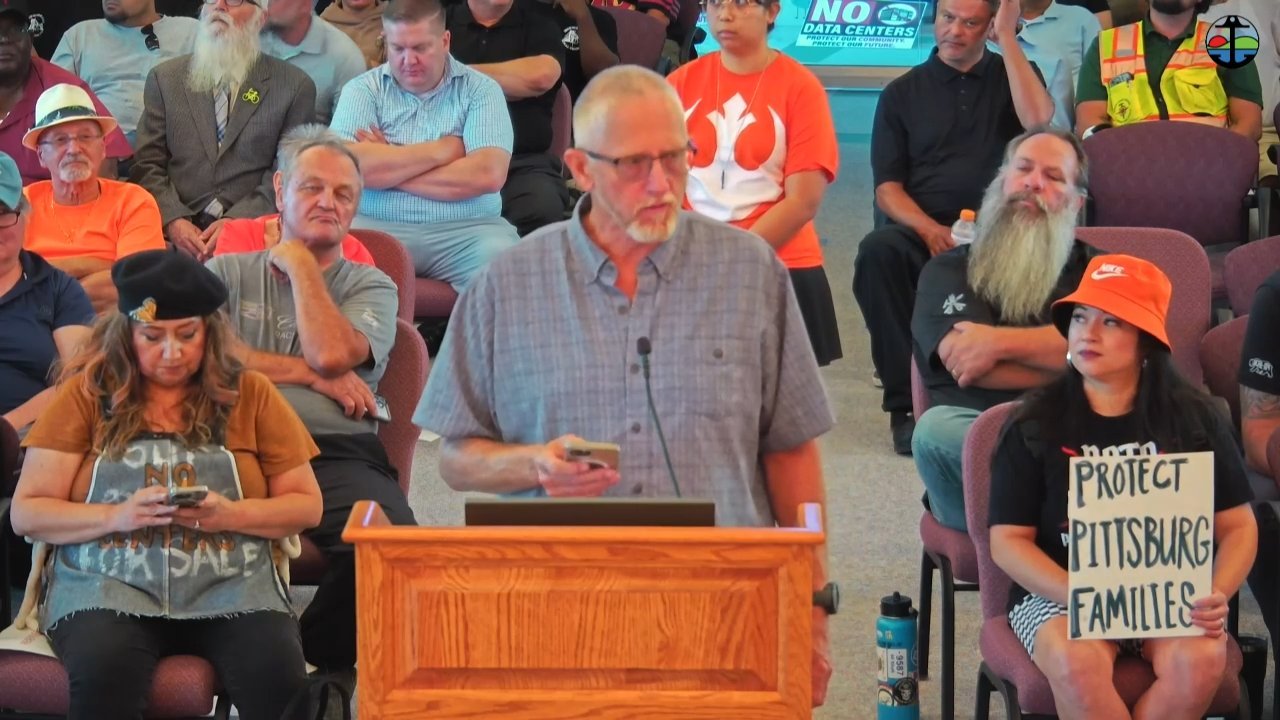
Pittsburg's City Council confronted one of its most politically charged land use fights in years Monday night, holding a nearly six-hour special session on the Avayo Perseus data center that drew more than 40 public speakers — the vast majority opposed — and a petition with over 26,600 signatures demanding a moratorium. By the end, the council directed staff to create a citizen advisory committee, pursue a binding development agreement, and permanently block administrative-level approvals for future data centers.
- Council orders citizen advisory committee and legislative development agreement to tighten oversight of the $2 billion Avayo data center on the former Delta View Golf Course
- Over 26,600 petition signatures fuel demands for a moratorium; multiple residents threaten council recalls
- Residents raise health alarms over diesel backup generators 400 feet from Rancho Medanos Middle School
- City discloses 10-year tax rebate — 50% for the first six years — drawing scrutiny of revenue projections
- Building trades unions back the project, citing family-sustaining jobs and $13.4 million in projected annual city revenue
- Mayor Adams recuses herself from the entire session due to her employment at PG&E
Trust Crisis Erupts Over Data Center Siting
Pittsburg's special meeting was convened solely to address the Avayo Perseus project — a data center already entitled on a 23-acre portion of the 76-acre former Delta View Golf Course — after a wave of community opposition that organizers say rivals any civic mobilization in the city's recent history.
The basics: Avayo's Phase 1 has already received land use entitlements and environmental clearance under CEQA (the city certified the environmental impact report in November 2024, and the California Energy Commission issued its own clearance in 2025). Phases 2 and 3, covering 54 acres south of the Contra Costa Canal, have no applications submitted and would require separate public review. The nearest residence is 420 feet from the building. The project includes 37 Tier 4 biodiesel backup generators, a closed-loop cooling system using 100% recycled water from Delta Diablo, and a dedicated 230kV PG&E transmission line connection through Pittsburgh Power Company — the city's municipal utility — that staff say does not touch the residential distribution grid.
Why it matters: The project would be one of the largest data centers in the East Bay, with an assessed building value of roughly $800 million plus $1.2 billion in interior improvements. But opponents say it was permitted under a "technology park" label that kept the community in the dark and that the city lacks the capacity to hold a billion-dollar company accountable.
Where things stand: Director of Economic and Community Development Jordan Davis told the council the city has the authority to revoke permits if the facility violates its conditions. "Nothing is off the table for us to make sure that this facility operates in compliance with the requirements of the mitigation monitoring reporting programs, the Pittsburgh Municipal Code, or other agency requirements," he said.
But residents weren't reassured. Speaker after speaker described a community blindsided by the project's scale and proximity to homes and schools. Leticia Preciado, a 34-year resident, questioned whether passing regulatory thresholds equals protecting health, pointing to cumulative pollution from Highway 4, industrial sites, and rail that Pittsburg already bears.
Cynthia Cardinali returned to the microphone twice during the evening to press the council on transparency, while Lupin Ruppert, a five-year resident, demanded to know what had actually changed in the project as a result of resident feedback — and insisted the sheer repetition of concerns was itself the message.
The other side: Representatives from the Contra Costa Building and Construction Trades and several union locals argued the project delivers exactly what Pittsburg needs: construction jobs, long-term tax revenue, and economic stability after years of industrial decline.
"The choice is between progress and a closed golf course," said Shannon McKinney, vice president of Heat and Frost Insulators Local 16, who cited 150-plus union trade workers, $13.4 million in projected annual tax revenue, the city's $80 million road repair backlog, and carbon-free power at zero cost to residents.
Julian Vinatieri, business manager of IBEW Local 302, said he surveyed his Pittsburg members and found 50% in support, 30% opposed, and 20% undecided, urging the council to move forward. Nick Goodwin, president of the Contra Costa Building Trades and business manager of Plumbers and Steam Fitters Local 159, echoed the revenue and environmental arguments.
Health and Noise Fears Center on Diesel Generators Near School
The proximity of 37 Tier 4 biodiesel backup generators to Rancho Medanos Middle School — approximately 400 feet — became the sharpest flashpoint of the evening.
Maeve Lillis cited California Energy Commission data showing cancer risk from the backup generators at 17 in 1 million at 25% load capacity — exceeding the Bay Area Air Quality Management District's threshold of 10 in 1 million, and well above the 6 in 1 million threshold the district applies to overburdened communities. She called for a moratorium.
Pauline Johnson, a homeowner and new mother, said she found cancer risk figures buried in a 400-page project document showing risk 183% above the air district threshold. She also challenged the claim that the data center's grid connection is separate, arguing that Pittsburgh Power Company buys wholesale from the California Independent System Operator and that increased demand raises prices for everyone.
Tami Chandra, who identified herself as a California Energy Commission employee and IT worker, distinguished between traditional cloud data centers and AI workloads, warning that AI requires far more GPUs and energy. She cited a Virginia data center linked to power flickering affecting a wide area.
Staff responded that the generators are limited to 50 hours per year each, equipped with after-treatment scrubbers, and subject to ongoing Bay Area Air Quality Management District oversight with no allowance for grid-support operation. The EIR found emissions less than significant under CEQA. On noise, staff said levels are capped at 65 decibels at the property line per the city's zoning ordinance, and the EIR found the change in ambient noise would be imperceptible. Public Works Director John Samuelson explained that the cooling system is closed-loop, requiring only about 210,000 gallons to fill initially with small periodic top-offs — all recycled water — and that daily water consumption is estimated at 4,000 gallons, less than the 6,000 used by the adjacent park.
Revenue Projections Face Hard Questions on Rebates and Depreciation
City Manager Darren Gill walked the council through the financial picture: roughly $1.36 million annually in property tax (the city receives approximately 17% of the 1% levy on $800 million in assessed building value); about $5 million over five years from sales tax; and the $10.5 million land sale — reduced from $16.7 million after the developer returned 25 acres as a residential buffer. The city also stands to collect a 5% surcharge on an estimated $50 million to $150 million in annual power costs flowing through Pittsburgh Power Company.
But the city also disclosed a detail that drew sharp attention: a 10-year economic incentive rebate signed in 2018–2019. Under the agreement, Avayo receives a 50% rebate on property tax and Bradley Burns sales tax for years one through six, declining to 40% and then 30% in years seven through ten.
Jesus Hernandez, a 44-year Pittsburg resident, went further, arguing that server equipment depreciates rapidly under state law, reducing personal property tax to near zero within three to five years. He alleged a "closed political loop" among city officials, Calpine, and former insiders that he said shaped the project's approval trajectory.
These challenges raise a material question: whether the $13.4 million annual revenue figure cited repeatedly by project supporters accounts for the rebate schedule and depreciation curves, or represents a best-case gross number.
Council Responds: Advisory Committee, Development Agreement, and End to Administrative Approvals
After hours of testimony, all four participating council members spoke at length. (Mayor Adams had recused herself at the session's outset due to her employment at PG&E as Director of Inclusion and Belonging, consistent with a California Fair Political Practices Commission advice letter she obtained in February.)
Banales: Acknowledge the Loss, Slow the Pace
Councilmember Juan Banales provided the most extensive historical context, framing the data center decision against the collapse of Pittsburg's industrial employment base. "In the last few years, we've lost two of the employers that built this city. U.S. Steel wound down the UPI steel mill after more than a century, and Corteva, the former DOW chemical manufacturing facility, began exiting its production site," he said.
Banales acknowledged community concerns but defended the council's economic reasoning. He reported visiting a comparable data center in Santa Clara with residences closer than 250 feet: "We stood across the street from it. You could not hear this data center. And so that was really reassuring to me." He called for slowing phases 2 and 3 to incorporate community feedback, potentially through a community advisory commission.
Killings: A Policy Framework With Teeth
Councilmember Jelani Killings outlined the most detailed framework of the evening: "I would like for staff to come back as we're looking at — a white paper or something that can be used as a document that we can really look to with community input about what responsible data center development and best practices look like."
His list included a development agreement with enforceable monitoring provisions, permanent noise monitoring at sensitive receptor locations, a community benefits framework, fiber infrastructure expansion for residents, and a requirement that the developer bear all costs.
Lopez: Independent Oversight, Earn the Trust
Vice Mayor Angelica Lopez called for a citizens advisory committee composed of one to two council members and three to five community members — structured independently of city staff. She also requested an independent audio engineer study that considers impacts on neurodivergent children and called for a decommissioning bond.
"I'm a firm believer that trust should never be freely given. It needs to be earned," she said. "At this point, I would call for a citizens advisory committee."
City Manager Commits to Five Concrete Steps
Summarizing the direction he received, City Manager Darren Gill made five commitments:
- No data center will proceed through zoning administrator approval — all will require planning commission and city council hearings.
- A citizens advisory group will be established before the end of the month.
- The group will produce a white paper with policy recommendations on responsible data center development.
- The city will pursue a legislative development agreement requiring planning commission and council hearings.
- Enhanced public notification will include website publication, on-site signage, social media, and monthly newsletter distribution to 30,000 residents.
"I've heard loud and clear from all the elected officials individually and here again tonight that we will not allow anything to come forward as relates to a data center for that specific plan that would allow for a zoning administrator approval for a data center, period," Gill said.
Decisions: The council took one procedural vote — to extend the meeting past 11 p.m. — which passed 4-0 (Councilmember Kobata, Councilmember Banales, Vice Mayor Lopez, and Councilmember Killings all voting yes; Mayor Adams was recused). No formal vote was taken on the data center itself; this was a study session with direction to staff.
What's next: The city manager committed to forming the citizens advisory committee before the end of the month. That group will develop the white paper on responsible data center practices. A legislative development agreement for Phase 1 will require separate planning commission and council hearings. Phases 2 and 3 have no pending applications and will face full public review if filed.
Minor Items
- Mayor Adams recused from the entire session due to her PG&E employment, handing facilitation to Vice Mayor Lopez
- Eve Mejia raised concerns linking data centers to surveillance infrastructure, including license plate readers and potential ICE access to surveillance data in violation of sanctuary policy
- Teresa Martin suggested capturing waste heat from the facility via a thermal loop to power nearby homes and restaurants, citing available federal grants
- Wolfgang Kroske, a Pittsburg Chamber leader and 45-year resident, said he is not anti-technology but criticized pre-approval of phases 2 and 3 at the staff level without public hearings