
City Council - Mar 03, 2026 - Meeting

City Council - Mar 03, 2026 - Meeting

City CouncilPinoleMarch 3, 2026

Sources:

Locunity is a independent informational service and is not an official government page for this commission.We use AI-assisted analysis and human editorial review to publish information.

Pinole Introduces Permanent Gas Station Ban, Revamps Rental Inspections

Pinole's City Council advanced two landmark policy moves at its March 3 meeting — unanimously introducing an ordinance to permanently ban new fossil fuel gas stations and approving a modernized rental inspection program that uncovered nearly 500 suspected unlicensed rental properties. Meanwhile, a wave of residents flooded the meeting to oppose the elected mayor ballot measure heading to voters in June.

  • Permanent gas station ban introduced 5-0, creating a regulatory pathway for EV, hydrogen, and biofuel stations; second reading set for March 17

  • Revamped rental inspection program approved 5-0, adding a full-time inspector, digital enrollment platform, and sustainability tracking — all at full cost recovery

  • Residents overwhelm public comment to oppose the elected mayor ballot measure, reading dozens of constituent emails into the record

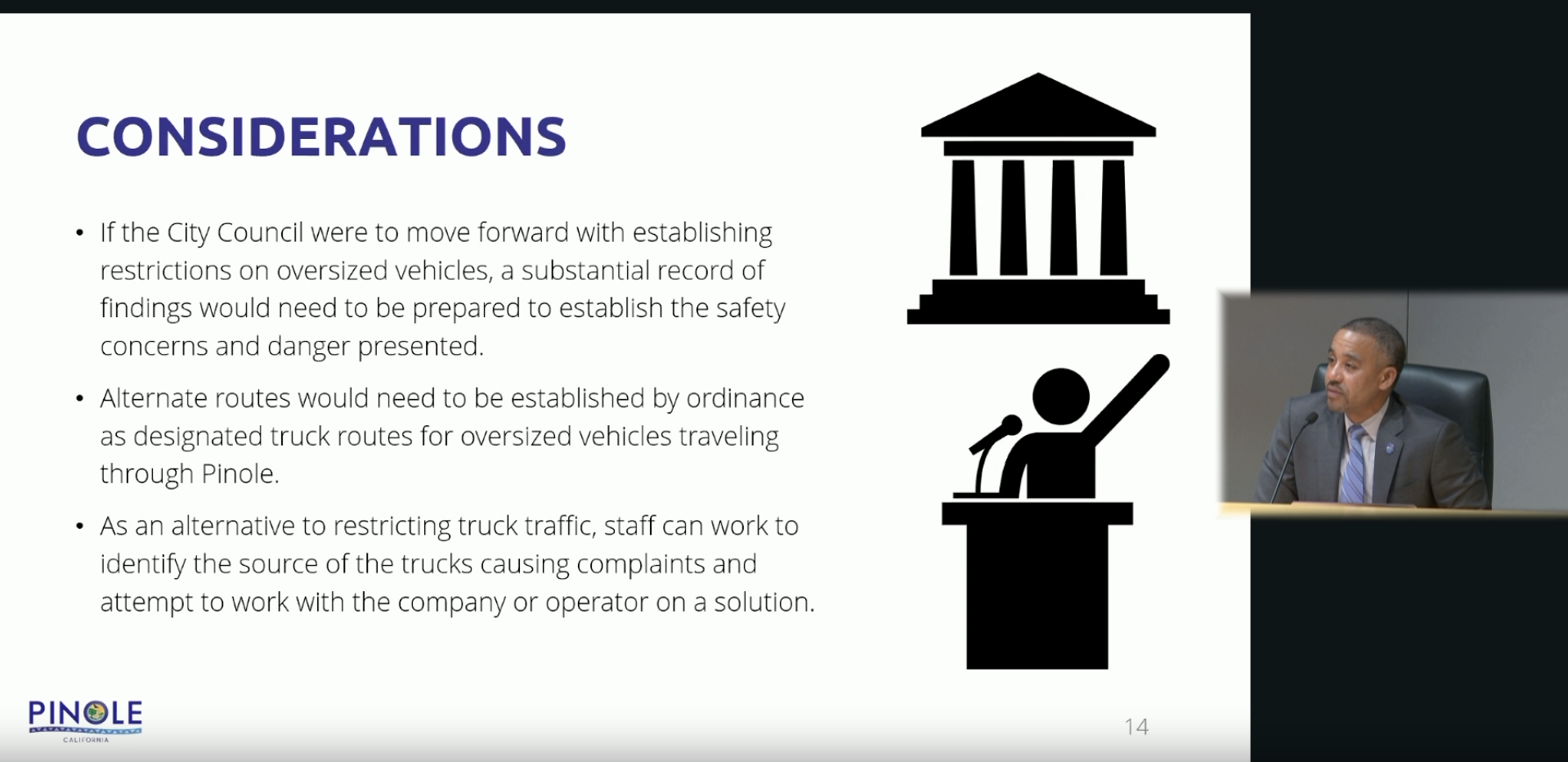
  • Council directs staff to engage trucking companies about oversized vehicles shaking homes along San Pablo Avenue at night

  • MCE to cut electricity generation rates 14% and add $10 million in bill credits for low-income households, effective April 1

  • Council unanimously approves future agenda items on cultural conservation easements for Native American sacred sites and a revival of the city's strategic plan


Pinole Moves to Permanently Ban New Gas Stations

The basics: The council voted 5-0 to waive first reading and introduce an ordinance permanently prohibiting new fossil fuel gas stations citywide, replacing an emergency moratorium set to expire March 22. The ordinance stems from Pinole's Climate Action and Adaptation Plan adopted in August 2024. Second reading is scheduled for March 17.

Why it matters: Pinole joins a small but growing cohort of California cities codifying the fossil fuel transition directly into their land use codes. All eight existing gas stations become existing legal non-conforming uses and may continue operating indefinitely — but no new fossil fuel pumps can be added. A new "alternative fuel station" category opens the door for EV charging, hydrogen, biodiesel, and other renewable fuel infrastructure.

Where things stand: Planning Manager Dave Hannam and Associate Planner Justin Hsu presented the comprehensive zoning amendments. Key provisions protect existing operators: fossil fuel pumps can be repaired or replaced for safety, and convenience stores and car washes on station sites continue under standard permitting. However, if a station ceases fuel sales for six months, it loses non-conforming status and triggers mandatory site cleanup.

Councilmember Cameron Sasai cited a peer-reviewed study linking benzene emissions from clustered gas stations to increased cancer risk, noting that a proposed station at the Appian 80 site would have been roughly 440 feet from Pinole Middle School — within the California Air Resources Board's recommended 300-foot setback buffer. "There was a peer-reviewed study published in the International Journal of Environmental Research and Public Health which found that benzene emissions from gas stations, particularly where stations are clustered together, significantly increased estimated lifetime cancer risk for people living working nearby," he said.

Sasai also countered claims that the ban would create a fuel desert: "There is nowhere in this city where you would happen to run out of gas unless you're really playing it close."

Councilmember Norma Martinez-Rubin, drawing on her public health background, emphasized the stakes: "Halting the proliferation of toxic underground storage tanks as well as the exposure of carcinogenic toxic fumes for residents is something of great importance to me."

The other side: Councilmember Maureen Toms acknowledged the split in community opinion, noting survey results showed 78 respondents against the ban and 33 in favor. She raised an innovative idea — transfer of development rights — that would allow a gas station to relocate from one site to another without increasing total pumps. "Have we thought about the possibility of doing something like a transfer of development rights for gas stations?" she asked. Staff indicated the concept was not in the current draft and would require additional analysis; the council directed staff to prepare a policy memo on the idea for future consideration.

In public comment, Maureen Brennan of the Sunflower Alliance praised Pinole's leadership, describing the I-80 corridor as "significantly overburdened with auto pollution emissions." Resident Antonio Silva argued the transition should happen organically rather than through regulation, raising concerns about grid capacity and calling fossil fuel regulation a state and federal matter. Planning Commissioner Rafael Menes, speaking as a private citizen, cautioned that transfer of development rights could undermine the ordinance's core goal.

Community Development Director Lily Whelan clarified that the Appian 80/former Safeway gas station entitlement lapsed because the property owner let it expire — not because of city action.

Decisions: The council voted 5-0 to waive first reading and introduce the ordinance (For: Tave, Murphy, Sasai, Martinez-Rubin, Toms; Against: 0; Absent: 0).

What's next: Second reading and adoption is scheduled for March 17. Staff will also prepare a separate policy memo on transfer of development rights for future council consideration. Mayor Pro Tem Devin Murphy expressed optimism about the alternative fuel pathway: "I look forward to the day where we can bring a green hydrogen station to Pinole."


Nearly 500 Unlicensed Rentals Found as Council Approves Inspection Overhaul

The basics: Pinole's Residential Health and Safety Rental Inspection Program was originally launched in 2006 but effectively went dormant after the 2008 recession, when the city laid off its dedicated inspector. The council voted 5-0 to adopt resolutions relaunching the program with a new full-time inspector, a digital enrollment platform launching April 1, and updated fees at full cost recovery — zero general fund impact.

Why it matters: Initial data analysis identified nearly 500 suspected rental properties operating without rental business licenses, broken down by owner location: in-city, metropolitan area, in-state, and out-of-state. Bringing these units under city oversight for the first time could significantly improve tenant health and safety conditions while generating housing policy data the city has never had.

Where things stand: Housing Fellow Jared Murty presented the modernized program, which includes sustainability metrics tracking — heating systems, laundry, stove types — aligned with decarbonization goals, and a public-facing data transparency site. Stakeholder engagement found broadly positive reception: landlords were "excited for improved efficiencies," and the harshest critique was that new data collection would be "a little annoying." Tenants expressed enthusiasm for increased transparency.

The fee structure, developed by ClearSource Financial, converts the previous triennial lump-sum fee to an annual per-unit charge representing a roughly 30% increase — about $2–3 per month per unit — with an early enrollment fee waiver to smooth implementation. An affordable housing exemption partially exempts units regulated by agencies like HUD or the California Tax Credit Allocation Committee, though at least 20% of those units would still be inspected by the city, with the building official retaining discretion to increase inspections based on complaint history.

The other side: Planning Commissioner Rafael Menes raised concerns about federal agency inspection reliability given potential budget cuts to HUD, and asked whether tenants or owners could request additional inspections between triennial cycles. Staff confirmed complaint-based inspections remain available at any time.

Decisions: The council adopted the resolution 5-0 (For: Tave, Murphy, Sasai, Martinez-Rubin, Toms; Against: 0; Absent: 0), with Mayor Pro Tem Murphy's amendment requiring an annual progress report from the Community Development Department.

What's next: The digital enrollment and inspection booking platform launches April 1. The Community Development Department will provide its first annual progress report to council.


Residents Flood Meeting to Oppose Elected Mayor Ballot Measure

Why it matters: The City Council approved a June 2 ballot measure for a directly elected mayor on a 3-2 vote last month. At this meeting, nearly every public commenter and submitted email opposed the change, raising questions about the measure's viability at the ballot box. Arguments for and against must be submitted to the City Clerk by March 18, with rebuttals due March 23.

Where things stand: Public commenters Anne Moriarty, Kent Moriarty, and Jennifer Horn collectively read more than 20 constituent emails into the record — letters from residents citing the cost of a special election ($37,000–$55,000), the lack of demonstrated need, and the success of Pinole's existing rotational mayoral system. Multiple emails argued the money should instead fund road repair and landscaping.

Former five-term Councilmember Mary Horton, who served as rotational mayor four times, delivered passionate testimony: "I was elected five times to the city council. I served as a rotational mayor four times. I fought for the police department when the sentiment was to contract it out to the county." She challenged supporters to explain what an elected mayor would accomplish that the current system cannot.

Bill Bright pledged to "work aggressively against the measure and anyone who supports it." Frances Bright questioned whether any public groundswell exists for the change. Debbie Long criticized the council majority for polling the public on the gas station ban but declining to poll on the elected mayor measure. The only reference to supportive correspondence came from a speaker noting that the two pro-measure emails appeared to be from non-residents.

City Attorney Eric Casher provided procedural clarification: the elected mayor salary would be consistent with council member compensation, and the term would match other council terms — countering public concerns about added cost.

What's next: Ballot arguments are due March 18; rebuttals are due March 23. Voters will decide on June 2.


Council Orders Outreach to Trucking Companies on San Pablo Avenue

Why it matters: Pinole's truck route ordinance for San Pablo Avenue (State Route 123) dates to 1988 and has never been updated, despite dramatic changes in delivery traffic volume. Residents in Old Town report their homes physically shaking at night.

Where things stand: City Attorney Eric Casher presented the legal framework, noting SafeStreets data from 2023 shows 318 medium and heavy-duty trucks daily on San Pablo Avenue. He outlined the requirements: Vehicle Code Section 21101C allows local agencies to restrict vehicle classes but requires Caltrans approval, and case law establishes that restrictions must be based on safety concerns and cannot be arbitrary.

Councilmember Martinez-Rubin emphasized the quality-of-life toll: "I'm thinking about the noise effects and possibly other effects, health-related effects because of the presence of heavy trucks." Public commenter Anthony Vosbrink raised additional concerns about 38- to 48-foot tractor trailers parking overnight near Collins Elementary School.

Decisions: The council voted 5-0 to direct staff to identify and engage trucking companies operating on the corridor (For: Tave, Murphy, Sasai, Martinez-Rubin, Toms; Against: 0; Absent: 0). Mayor Pro Tem Murphy added that coordination with Hercules and San Pablo should be included. Councilmember Toms requested exploration of weight limit restrictions.

What's next: Staff will report back with a summary of findings and recommendations for further action.


MCE Cuts Rates 14%, Adds $10M in Bill Relief

Mayor Pro Tem Devin Murphy reported that the MCE Board of Directors approved three affordability measures at its Feb. 19 meeting: a 14% reduction in electricity generation rates bringing MCE into parity with PG&E, a temporary bill credit to offset PG&E exit fee increases, and an expanded CARES credit program adding $10 million to support monthly bill credits of $20–25 for income-qualified households and small businesses. Changes take effect April 1 pending final budget approval.

"MCE customers will be seeing a reduction in generation rates by 14%, bringing them into parity with PG&E's generation rate," Murphy said.


Minor Items

  • Consent calendar approved 5-0, including a meeting start time ordinance aimed at improving public participation for working residents.

  • Council honored retiring Contra Costa County Fire Chief Louis Burchard for a 30-year career including nearly three years of direct service to Pinole. "It has been almost three years. We're probably within a week or two, I think, of our three-year anniversary serving the citizens and residents of Pinole directly," Fire Chief Burchard said.

  • $300,000 Caltrans Community Cleanup and Employment Pathway Grant awarded for Creekside Park site preparation — trash removal, invasive plant clearing, and installation of benches, picnic tables, and signage — with workforce development partners including Friends of the Pinole Creek Watershed, Pinole Valley High School, Earth Team, and the Lisjan Tribe.

  • Council unanimously approved two future agenda items: revival of the city strategic planning process (last conducted around 2020–2021) and a presentation on cultural conservation easements. Councilmember Sasai described the easements as "a voluntary, legally binding agreement that permanently protects Native American cultural resources and sacred sites on land and provides a way for cities to really give land back to Native Americans in perpetuity."

  • Proclamations issued for Prescription Drug Abuse Awareness Month, Multiple Myeloma Awareness Month, Developmental Disabilities Awareness Month, and American Red Cross Month.

  • Mayor Pro Tem Murphy reported his appointment to the National League of Cities Finance committee — one of only three California cities represented.

  • No reportable action from closed session on anticipated litigation.

Pinole Introduces Permanent Gas Station Ban, Revamps Rental Inspections | City Council | Locunity