
Petaluma Unanimously Limits Immigration Agents' Access to City Facilities
City Council • PetalumaSeptember 29, 2026
Locunity is an independent informational service and is not an official government page for this commission. All information is sourced from public footage and an analysis of official agendas with the aid of responsible, fact-checked AI. to report an error or omission.
Petaluma's City Council on Sept. 28, 2026, adopted a detailed policy that limits immigration authorities' access to city facilities and data, beating SB 580's Jan. 1, 2027, deadline by more than three months. The 7-0 vote followed eight public comments urging passage. The council also settled a 30-year-old marina debt, adopted a hazard plan ahead of a forecast El Niño winter and launched community visioning for the downtown trestle.
- SB 580 immigration policy adopted 7-0, effective immediately, with signage and hotline amendments
- Hazard Mitigation Plan adopted 7-0 as residents press for flood and sandbag action
- State waives over $4M in back interest on a decades-old marina loan
- Trestle visioning launches with more than $50,000 in donations, matched by the city
- CDBG report approved 7-0 as the mayor warns a key homelessness fund is running out
Petaluma Turns SB 580 Into Daily Practice
The basics: SB 580 took effect in January 2026 and sets a Jan. 1, 2027, deadline for cities. The state attorney general issued guidance in July. Petaluma's council has passed resolutions supporting immigrant inclusion and compliance with the California Values Act (SB 54) since 2017, most recently in February 2025.
Why it matters: The policy turns broad sanctuary commitments into specific rules for every city employee. Advocates said Petaluma is believed to be the first city to implement SB 580 in this much detail. Mayor Kevin McDonnell moved the item up so it would "immediately follow the consent calendar."
Where things stand: The City Attorney's office drafted the policy. It restricts voluntary entry and staging in nonpublic areas and routes all requests to the city attorney. It also limits collection of personal information, requires database safeguards and audits that extend to contractors, and calls for bilingual public information. Administrative Services and HR Director Linda Lee will lead a 90-day staff training plan.
Councilmember John Shribbs asked what the policy means "in actual actions by our staff and by the public." City Attorney Eric Danley said staff "will ask them to wait in a public area, will go immediately get a manager, will immediately contact my office."
Police Chief Brian Miller said the policy extends existing police restrictions to all city staff: "So you don't have a city employee just voluntarily allowing an immigration authority into a city facility, into a non-public area." He added that sharing license plate reader data with federal agencies is already prohibited.
The other side: No speaker opposed the policy, but Danley drew firm legal lines. "The policy does not authorize, because it is not lawful, to physically obstruct, give false statements to, or conceal persons vis-à-vis our interactions with federal government officials," he said.
He also turned down two requests from advocates:
- Miranda-style warnings by staff: He declined, citing staff safety. "That's probably not the time for our line staff to be attempting to provide Miranda warnings," he said.
- A requirement to publish data: He declined, citing the complexity of the Public Records Act.
Staff also said the policy does not shield the city from litigation or federal funding disputes. Councilmember Brian Barnacle rejected the argument that the policy puts a target on the city's back, calling that view "tone deaf."
Decisions and stakeholder impacts: The council adopted the policy 7-0 (For: McDonnell, DeCarli, Barnacle, Cader Thompson, Shribbs, Quint, Nau; Against: 0; Absent: 0). Councilmember Janice Cader Thompson moved the item and Shribbs seconded. A show of seven hands confirmed the amendments to Sections 15 and 16. Those amendments add signage, hotline details and a statement of the right to remain silent on the city website.
Public commenter Linda Evans corrected the hotline listing to the North Bay Rapid Response Network. Gina Garibo of the North Bay Organizing Project thanked the city. Monica Navarro, a teacher, asked for advance notice before any future changes. Danley said resolutions stay in effect "unless and until they're amended or appealed by the council."
"No one should wonder whether seeking help, accessing our city facility, coming to a city meeting is going to put their family at risk," said Barnacle.
What's next: Staff training begins under the 90-day plan. Shribbs asked how the city can help school districts strengthen their own policies.
Hazard Plan Adopted as Residents Fear Floods
Why it matters: Adopting the plan keeps Petaluma eligible for hazard mitigation funding. That eligibility matters as a strong El Niño winter is forecast and federal programs are in flux.
Where things stand: Emergency Manager Tom Jordan and Water Resources and Utilities Director Chelsea Thompson outlined the city's storm preparations:
- Cross-department training and infrastructure inspections
- Creek maintenance coordinated with Sonoma Water
- 22 rain and stream gauges across the city
The plan names flooding, earthquakes, wildfire, drought and extreme heat as key risks, and rates earthquake as the highest-impact threat. Jordan said the plan positions the city to pursue projects but does not guarantee an award.
Assistant Public Works Director Gina Benedetti-Petnick said "we have not used BRIC funding extensively in the past." BRIC is FEMA's Building Resilient Infrastructure and Communities program. Patrick Carter of the City Manager's Office said projects listed in the earlier plan helped the city secure grants: "We were able to get just under $2 million of grants to study the feasibility of those."
The other side: Three public commenters said the city is not moving fast enough:
- Nicholas Harris recalled the 1982 flood. He urged the city to finish three unbuilt flood projects and press private landowners to maintain creeks.
- Wayne Ekstrom warned that a large dirt mound near Fire Station 2 could wash into a storm drain in early rains.
- Chantel Rogers asked about pump backups and help filling sandbags for residents who can't do it themselves.
Cader Thompson said she raised the dirt mound with community development staff. She noted the North Station developer has "a performance bond … to complete all the construction activity, including hauling the excessive dirt." Other councilmembers asked about funding losses, using the fairgrounds for animal evacuation and a supplies checklist for residents.
Decisions and stakeholder impacts: The council adopted the plan 7-0 and authorized submission to Cal OES and FEMA. Cader Thompson moved the item. McDonnell, recalling 2017, said "the buck stops with the city."
Trestle Visioning Begins With Community Money
Where things stand: In May 2025, the council directed staff to engage the community before narrowing eight design alternatives for the downtown trestle. Benedetti-Petnick said "the adopted budget for this work totals $1.27 million," which covers the environmental and scoping phase. Construction remains unfunded and will depend on grants.
Catherine Reinhardt of the Petaluma Trestle Promenade Now steering committee described the grassroots campaign behind the next phase. The group raised more than $50,000 from over 120 donors through the Healthy Petaluma Foundation, and the city matched it. That money will hire the consulting firm MIG to run:
- Stakeholder mapping
- Bilingual outreach
- Three community workshops
- A final vision report
The engineering firm Foth will continue technical work. "What that looks like is still to be determined, and it can't be determined without meaningful public input," Reinhardt said. Benedetti-Petnick disclosed that McDonnell sits on the steering committee.
Decisions and stakeholder impacts: The council took no action. Shribbs asked consultants to estimate "how much tourism dollars might come in" under each alternative. Barnacle said, "I want to stop kicking the can, and I think this is a great plan." Public commenter Rosemary Hart cited 819 petition supporters and 123 donors.
What's next: Workshops will be held in the community and can be videotaped. The council gets one check-in, and the project returns to the council in summer 2027.
Small Federal Grant, Big Safety-Net Worries
Assistant Community Development Director Jenna Garcia presented the annual Community Development Block Grant (CDBG) performance report. CDBG is federal money from the U.S. Department of Housing and Urban Development (HUD). The report accounts for $306,305, including:
- $45,945 for PPSC senior meals, serving 291 people
- $250,000 for Rebuilding Together Petaluma, serving 32 households
Garcia said HUD sends the city "between $300,000 and $350,000" each year. Non-CDBG sources, such as Measure O and the Encampment Resolution Fund, support larger affordable housing projects.
McDonnell said "the Encampment Resolution Fund is the one that I worry about the most because it's the largest pot of money and it runs out in the next year." Garcia said local partners "are feeling the crunch" and that staff meet with them regularly. The council approved the report 7-0, with a motion by Barnacle and a second by Cader Thompson. No one spoke during public comment.
Marina Debt Finally Gets a Payment Plan
The state's Division of Boating and Waterways lent Petaluma roughly $4 million in the 1990s. Assistant City Manager Brian Cochran said "we do not believe we have ever made a payment on that loan."
The settlement with the California Department of Parks and Recreation sets these terms:
- More than $4 million in back interest waived
- 18 graduated payments at 0% interest, rising from $160,000 to about $360,000
- A penalty for late payments
- Payments made from the general fund
Shribbs asked about raising marina revenue. Staff cited dredging costs as a hurdle, and the marina manager said concession agreements, rental rates or fees could be reviewed. The council approved the deal 7-0, with a motion by Cader Thompson and a second by Barnacle. "We now have a plan," McDonnell said.
Minor Items
- Litigation: After closed session, the council gave unanimous direction to start a lawsuit. Details will come once it is filed.
- Mobile home owners: Jody Johnson and Tim Porteous separately urged stronger enforcement of the senior park overlay.
- Consent calendar: Items 1 through 8 passed 7-0, including a bid for up to $10M in state resilience center funding.
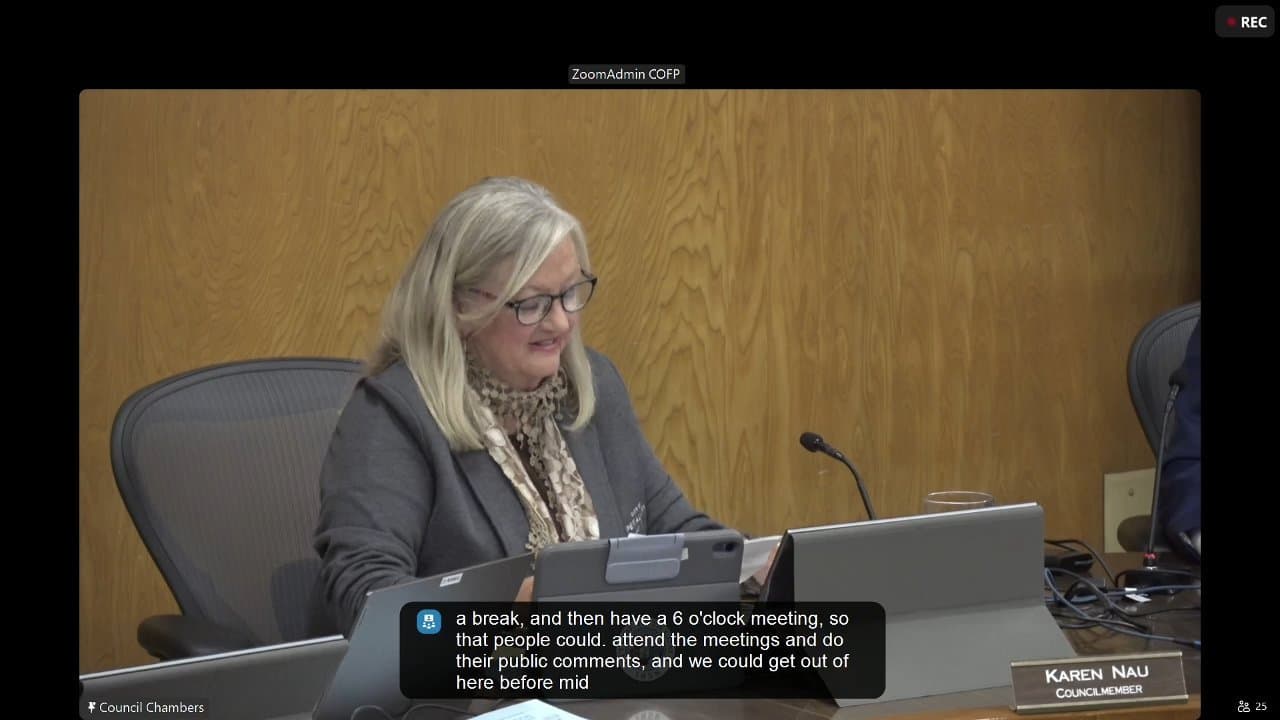
- Housing vouchers: Councilmember Karen Nau said "approximately 95 families may be able to remain in their current housing."
- Community notes: Putnam Plaza stewards reported outreach to nearly 400 people, and the city received its first Helen Putnam Award.
Looking ahead: Petaluma Urban Chat hosts author Carl Elefante on decarbonizing buildings on Oct. 26.