
> **Editor's Note:** We have corrected a few minor transcription issues — Supervisor Mueller, not Mayor Mueller or Supervisor Bueller; Wavecrest, not Wave Press; Liesl Taner, not Lisa Tanner.
Parks and Recreation Commission • Half Moon BayFebruary 25, 2026
Locunity is an independent informational service and is not an official government page for this commission. All information is sourced from public footage and an analysis of official agendas with the aid of responsible, fact-checked AI. to report an error or omission.
Editor's Note: We have corrected a few minor transcription issues — Supervisor Mueller, not Mayor Mueller or Supervisor Bueller; Wavecrest, not Wave Press; Liesl Taner, not Lisa Tanner.
Coastside Rallies Behind Two-Pool Aquatic Center After 30-Year Wait
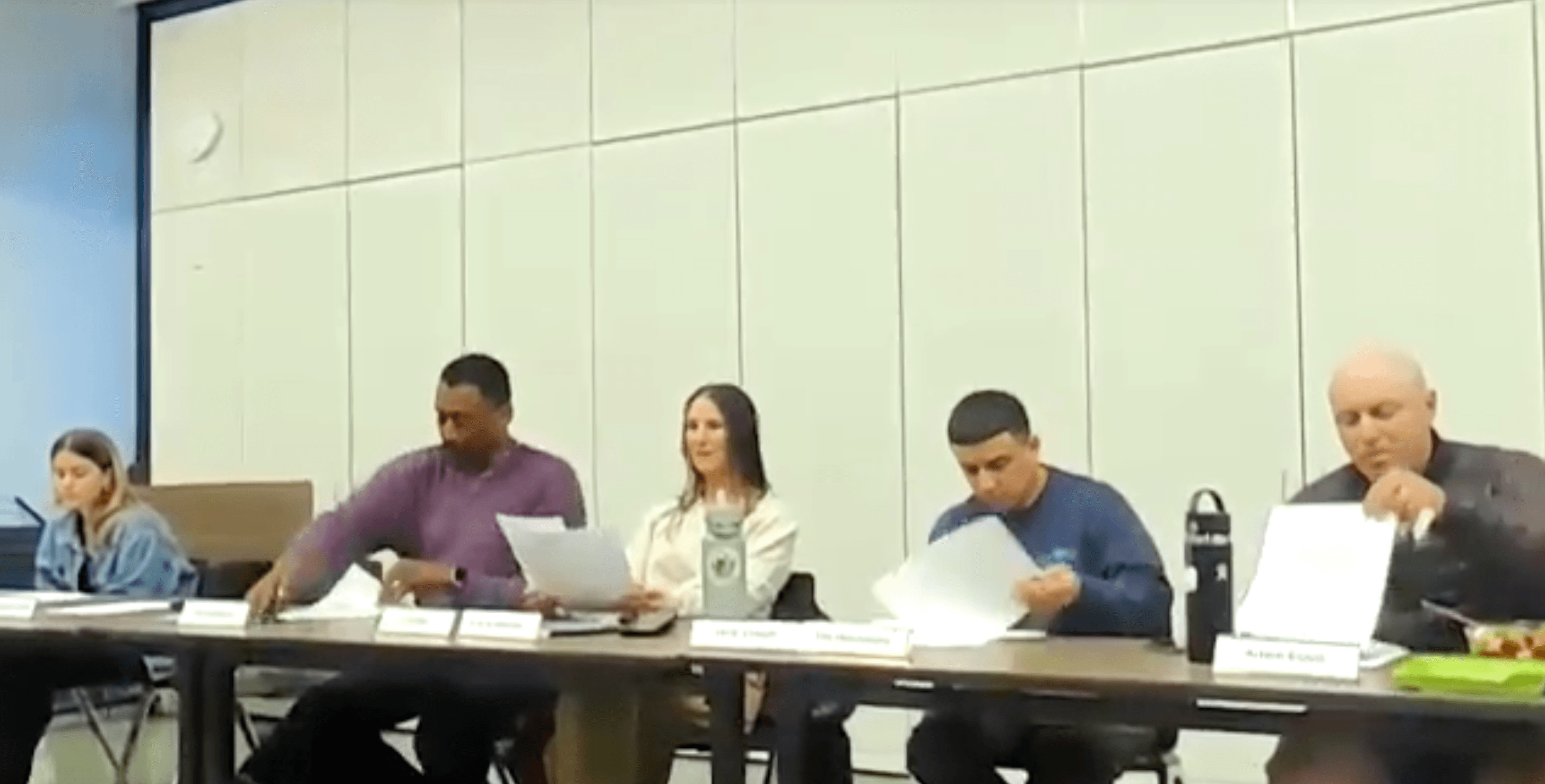
Half Moon Bay's Parks and Recreation Commission heard an impassioned case for a two-pool community aquatic center funded by a $153 million school bond — a project three decades in the making that drew six public speakers, each with a personal stake in bringing swimming back to the coast. The commission also locked in Carter Park as its top 2026 priority, debriefed a major Apple film production, and began positioning the city as a World Cup watch destination.
School district superintendent unveils two-pool aquatic center plan backed by $153M voter-approved bond
Carter Park designated as umbrella top priority for 2026, with World Cup viewing, concerts, and movie nights
150-person Apple film crew wraps shoot in Half Moon Bay; city develops press kit to recruit future productions
Smith Field pipeline set for July start; Frenchman's Creek renovation heads to contractor bids
A Pool 30 Years in the Making
The basics: Cabrillo Unified School District Superintendent Dr. Ramon Miramontes presented the commission with plans for a community aquatic center at the high school, the centerpiece of Phase 1 of the district's $153 million voter-approved bond. The design calls for two pools: a competition-sized pool (8 to 16 lanes) for high school athletics, water polo, and community lap swimming, and a smaller, warmer teaching pool for swim lessons, physical education, water aerobics, and daytime community access — fenced separately with its own gate.
Why it matters: The coastside has gone roughly 30 years without a proper community pool. The existing pool is limping along under a single volunteer operator, and without building both pools simultaneously, Dr. Miramontes warned the community would wait another generation. The teaching pool, modeled after Sonoma Valley High School's successful two-pool facility, is the linchpin for community access during school hours.
Where things stand: Dr. Miramontes told the commission the project is in the design phase, with the pool complex and approximately 10 special-needs classrooms comprising Phase 1 of the bond. One pool is estimated at just under $15 million; adding the second pool increases costs significantly. The superintendent has begun outreach to County Supervisor Mueller and state legislators to secure additional funding.
On community access, Dr. Miramontes acknowledged the district cannot run the pool alone and pointed to an existing model — the campus tennis courts are already open to a community tennis association, with members checking in and using cameras for security. He signaled openness to a similar arrangement for aquatics but said the district needs a city or community partner to manage operations.
Chair Hilary Stamper pressed on how community access would actually work, noting the historical difficulties schools face in sharing space.
Commissioner Adam Eisen, a former city council member, urged Dr. Miramontes to prioritize formal two-by-two meetings between the school board and city council, calling out a pattern of weak intergovernmental communication.
"There's so many events and opportunities for us to utilize the schools to communicate information to the community," Commissioner Eisen said. "When those two entities aren't meeting, it doesn't happen. And when they do, it does happen."
Community Turns Out in Force
Six public commenters spoke, each bringing a distinct perspective that underscored how broad the demand is:
Dan, representing the Coastside Aquatic Center, urged the district to open the existing pool to the public this summer — even for just a few hours on Fridays and Sundays — at affordable rates of $2–3 for children and $5 for adults. He acknowledged the program would lose money but said it would establish a precedent and serve the community now, not next year.
Bill Hubert of Moss Beach recommended that the commission also work with the county which represents at least 13,000 coastside residents living in unincorporated areas who would benefit from the pool. The county, along with the city and school district, could add funding to the project.
Liesl Taner, a professional swimmer who owns pool businesses and who also joined Dr. Miramontes during the design presentation, shared that she thought it was "brilliant" for the school district to select the pool for phase one of spending the bond money as it will provide an asset for the whole community.
Anjali, a parent of two young boys, framed swimming as an essential life skill in an ocean community and called for creative business models with sliding-scale fees. Erica Atkins, a first-time meeting attendee, described how lap swimming is medically essential for managing her severe arthritis — she has had a full hip replacement at 48 with shoulder and knee replacements pending. Kurt Vermeer, a nearly 40-year coastside resident, warned that certain council members have been resistant to pool discussions and urged the commission to push the council to keep open minds.
The Letter — Tabled, Not Shelved
The commission discussed sending a formal letter of support for the two-pool configuration to the school district but ultimately tabled the vote to the next meeting so commissioners could consult their appointing city council members first. Commissioner RJ Jennings pushed back on the delay, arguing the commission should assert its independent voice:
"I don't mind putting them in an awkward position. That's their role. And so I think this idea of support is really a voice from Parks and Rec."
Jennings also reported that Supervisor Mueller has committed to finding city funding for the pool project.
What's next: The letter of support is expected at the next meeting. Dr. Miramontes is continuing outreach to County Supervisor Bueller and state legislators. Commissioner Eisen's call for formal city-school board two-by-two meetings could shape whether the partnership moves from enthusiasm to binding commitments.
Carter Park Becomes the Commission's North Star
Why it matters: The commission designated "Carter Park Activation" as its umbrella top priority for 2026 — a move that bundles World Cup viewing, concerts, movie nights, a memorial plaque program, and a long-overdue park fee schedule under a single focus area. The consolidation was proposed by Karen Decker, Interim Deputy City Manager, who suggested grouping related items to give the three-person recreation staff a manageable mandate.
The World Cup creates a hard deadline: recreation staff attended a FIFA Peninsula Conference and are pursuing a 20-foot outdoor screen — approximately $25,000 — to broadcast matches at Carter Park this June. Current equipment cannot project during daytime, and staff are seeking donor sponsors. Staff noted that Peninsula visitors during the three-week tournament are expected to seek Pacific coast destinations, making this both a community programming and economic development play.
Chair Hilary Stamper emphasized the need to identify community partners for each initiative, noting that staff bandwidth is severely constrained by vacancies:
"Anytime we talk about these things I'm thinking who is going to be the person that helps bring this to fruition … so that it's not just city staff doing something on their own."
The commission agreed to address one priority per meeting going forward, with beach volleyball coastal development permits and Carter Park activation as the next two items up.
Apple Comes to Half Moon Bay — and the City Wants More
A 150-person Apple film crew completed a multi-day shoot in Half Moon Bay, using Smith Field for staging and closing portions of Main Street. Staff negotiated to limit intersection closures to roughly 15 minutes at a time to minimize disruption to downtown businesses.
Karen Decker, Interim Deputy City Manager, highlighted the economic benefit:
"As soon as we started conversations with them, we gave them a list of local restaurants, bakeries, hotels. And so there's 80 workers and a couple really high profile actors that I definitely see in a couple quarters."
The production used local restaurants, bakeries, and hotels during the typically slow tourist season, and transient occupancy tax and sales tax bumps are expected.
Due to the rain, damage to a coastal trail near the bluff required an estimated $40,000 in restoration, which Apple committed to fund. The city is now developing a press kit showcasing Half Moon Bay's scenery to proactively recruit future film productions — the first time the city has formalized such an effort after processing its first large-scale film permit.
Minor Items
January 28 minutes approved by voice vote, 5-0 (Paulette Eisen absent; Aiden Des Tombe arrived late).
Frenchman's Creek renovation: Phase 1 plans submitted and heading out for contractor bids.
Smith Field pipeline: A pipeline project running from Highway 1 along Wavecrest to the last baseball field will begin in early July with an estimated three-month construction window. Staff will coordinate with summer programming and dog-access users. This pipeline must be completed before broader Smith Field improvements — field cleaning, parking, playground — can proceed.
Main Street banner program: Staff are formalizing the historically informal banner program across 47 flag poles, some in disrepair. Designs will go to the Architectural Advisory Committee in spring, then to Planning Commission and City Council for hardware approval. The Chamber of Commerce and Downtown Association are driving the effort. A Highway 92 entrance sign funded by the county will be folded into the broader signage approach.
Expanded school district MOU identified as a priority but described as largely administrative — likely resolvable in one meeting given the superintendent's openness to community access, including pickleball courts already open on weekends.
Food trucks at Poplar Beach flagged as a priority requiring an update to the city's outdated mobile vending ordinance; the land use plan implementation consultant could handle the work.
Summer's End event will retain its own subcommittee, with interest in expanding into the Stone Pine parking lot for a kids' zone and nonprofit outreach tables.