
Palm Springs HOAs, Businesses Face Turf Watering Bans Starting 2027
City Council • Palm SpringsOctober 1, 2026
Locunity is an independent informational service and is not an official government page for this commission. All information is sourced from public footage and an analysis of official agendas with the aid of responsible, fact-checked AI. to report an error or omission.
Palm Springs got a detailed look at a state mandate that will reach HOA common areas, business parks and city property: watering decorative grass is ending, with deadlines from 2027 to 2031 and fines up to $2,000 per violation. The council also extended its data center ban through Aug. 25, 2028, over a formal legal objection, and approved three Mills Act tax breaks while pressing staff on what the program costs the city.
Nonfunctional turf watering bans begin in 2027 for government sites, then commercial properties in 2028 and HOAs in 2029.
Desert Water Agency is about 40% over its 2040 water-use objective, and the city's rebate match is depleted.
Data center moratorium extended 22 months and 15 days, to Aug. 25, 2028, despite a challenge from an industry group.
Three Mills Act agreements approved, cutting about $40,000 a year from city property tax revenue.
Burgess Residence named a Class 1 historic resource, the city's highest designation.
1 Big Thing: The Lawn Clock Is Ticking
The basics: "Nonfunctional turf" is grass that is purely decorative. It is not used for recreation or other community activity. State law, enforced locally through Desert Water Agency (DWA) Ordinance 80, bars watering it with potable water.
Why it matters: HOAs, apartment complexes, commercial sites and government facilities across Palm Springs will have to turn off sprinklers on ornamental lawns on a staggered schedule. The city's turf rebate match, which has helped pay for conversions, is gone.
Where things stand: Director of Sustainability Jasmine Fields walked through the city's record:
A 2011-2015 lawn buyback budgeted $150,000 a year and spent about $140,000 on 110 projects.
The city has invested $1.7M in turf rebates since 2016.
About 300,000 square feet of street medians have been converted.
"The city match is currently depleted," said Fields.
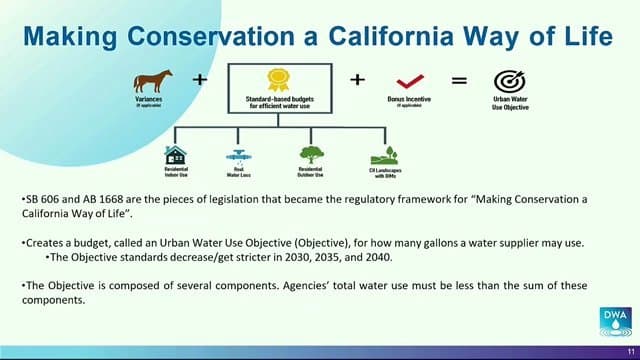
DWA then laid out the state framework: AB 1668 and SB 606, known as "Making Conservation a California Way of Life," and AB 1572, the nonfunctional turf law. DWA Director of Public Affairs and Conservation Victoria Lort said AB 1572 required public water systems to update their rules by Jan. 1, 2027.
Who must comply, and when:
Government sites: 2027
Commercial properties: 2028
HOAs and residential common areas: 2029
Government sites in disadvantaged communities: 2031
Property owners must self-certify compliance six months before each deadline. Missing self-certification brings penalties of $125 to $500 per month, and violations can reach $2,000 each. Owners may request a hardship postponement of up to three years. Single-family homes and areas served by recycled water are exempt.
The pressure behind the rules is regional. "We are about 40% over our projected objective in 2040," said DWA Conservation Manager Clark Elliott.
Owners do not have to rip out their grass. "The law itself requires that you do stop watering it. It doesn't actually require conversion," Elliott said.
The other side: Councilmembers tested where the lines fall. "And dog walking doesn't count?" asked Councilmember Jeffrey Bernstein. The answer was no: dog walking alone does not make turf functional.
Mayor Pro Tem David H. Ready relayed HOA frustration that neighboring single-family homes are exempt, and he asked how hardship would be defined. "All of us know we've got to conserve," he said.
Members also asked about tribal lands. The same rules apply there because DWA is the sole water provider.
Decisions and stakeholder impacts: The council took no action. HOAs and commercial property managers carry the heaviest compliance load, and they will have to fund conversions without a city match. Enforcement sits with the water agency, not City Hall. "Essentially all of the enforcement will be DWA," Elliott said.
What's next: Mayor Naomi Soto asked for follow-up on new turf varieties and for DWA to return in about six months. Property owners with questions can contact DWA at conservation@dwa.org.
Data Center Ban Extended to 2028 Over Legal Objection
Why it matters: Large data centers cannot locate in Palm Springs while the city writes zoning rules, and the city attorney's response suggests the city is prepared to defend its findings if challenged.
Where things stand: The council adopted a 45-day urgency moratorium on Aug. 26, followed by a required 10-day report in September. Director of Planning Services Christopher Hadwin said the extension runs until the zoning code update sets standards, or until a fixed end date.
"The moratorium will be effective until August 25th, 2028 if you approve this extension," Hadwin said.
Staff cited concerns about land use, electricity, water, employment and community benefits. Hadwin said the work aligns with the zoning code update and will include targeted stakeholder meetings.
Bernstein backed the ban but flagged gray areas, such as hospital IT rooms and warehouse uses. "We clearly don't want the energy-producing, heat-creating, water-sucking data centers," he said.
The other side: Kylie Cabral, speaking for the Western Steel Council, argued the extension fails the standard in Government Code 65858, which requires a current and immediate threat. She also noted the city has received no data center applications.
"Something that could happen does not raise the level of threat classified as current and immediate harm," said Cabral. "We respectfully request that the board votes no on extending the urgency ordinance."
Cabral said her group supports a regulatory framework adopted through ordinary zoning. She cited two cases: Imperial Valley Computer Manufacturing LLC v. County of Imperial and Building Industry Legal Defense Foundation v. Superior Court.
City Attorney Jeff Ballinger responded that ambiguity in the city's current zoning sets Palm Springs apart. "I think that presents a case that's distinguishable from those two cases that were cited," he said.
Decisions and stakeholder impacts: The extension of Ordinance No. 2134 carried on a voice vote; no tally was announced. Developers and builders lose a near-term path into the market. Residents concerned about strain on power and water gain time for rules to be written.
What's next: Councilmember Grace Elena Garner urged residents to join the zoning code and heat mitigation sessions. "Please come out and attend our zoning code meetings," she said.
Mills Act Approvals Come With a Bill Attached
The basics: The Mills Act lets owners of historic properties pay lower property taxes. In exchange, they commit to restoration and maintenance work.
Why it matters: Each new contract permanently trims city revenue. The program now covers 186 properties, more than staff say they can audit.
Where things stand: The council pulled the three agreements from the consent calendar for discussion. They cover 457 N. Palm Canyon Drive, 360 Cabrillo Road and 765 Via Vadera.
Hadwin estimated tax reductions of 40% to 70%, averaging about 60%, on roughly $65,000 in annual assessments. "So we would be reducing annually the city's property tax revenue by about $40,000 with these 3 requests tonight," he said.
Hadwin described reforms adopted after 2023:
Applicants must list the projects they commit to and their costs.
Each contract is subject to a five-year audit.
The council can rescind contracts.
Interior renovations do not qualify. Staff could not say how much of the county's tax reduction falls on taxing entities other than the city.
The other side: Councilmembers did not oppose the contracts, but they pressed on accountability. "I just think it's really important we're really transparent about what that means financially to the city," said Soto, who asked that dollar estimates become standard in future staff reports.
"The dollars are really adding up," said Councilmember Ron deHarte.
Hadwin acknowledged the limits on oversight. "There's obviously a staffing capacity issue with auditing 186 Mills Act contracts," he said.
Decisions and stakeholder impacts: The agreements passed on a voice vote; no tally was announced. Owners of historic homes and commercial buildings gain lasting tax relief. The city's general fund absorbs the cost.
What's next: Revisions to the historic preservation ordinance will come with the zoning code update.
Burgess Residence Earns Class 1 Status
The council designated the Burgess Residence at 550 Palisades Drive a Class 1 historic resource, the city's highest distinction. The application came from the Rhonda Sassoon Revocable Trust.
According to the staff presentation, Hugh Kaptur designed the home in 1957, and Albert Frey expanded it in the 1960s. The house was first identified in 2003 surveys and meets historic Criteria 3 and 5. The owner's restoration work supports its integrity.
"HSPB did unanimously vote for a recommendation for Class 1 designation," a staff presenter said, referring to the Historic Site Preservation Board.
In response to a question from Bernstein, staff said the original home was about 1,200 square feet. No one spoke at the public hearing, and the motion carried on a voice vote.
Minor Items
Public art upkeep: The council approved Amendment No. 5 with Signature Sculpture for art maintenance as nine new pieces are installed. Bernstein urged covering bench touch-ups now: "somebody should find this $5,000 so we don't have to wait until July."
Short-term rental software: The Neumo Tax and Licensing contract passed on consent. Staff are implementing the state Short-Term Rental Facilitator Act, starting with VRBO, and deHarte asked for a timeline.
Cannabis lounges: The council introduced an ordinance striking subsection C of Section 5.55.500. Outdoor lounge events will go through the existing land use permit process.
Officer remembrance: On the 10th anniversary of the deaths of Officers Gil Vega and Leslie Zrewny, Chief Stern said: "we're not going to have any formal memorial events on the 8th." The department will honor the officers during Peace Officer Memorial Week in mid-May.
Public comment: Resident Jesse Nehmeyer Romero said any debate over whether international issues belong on council agendas "belongs in public."
Looking Ahead
The council meets next on Oct. 14, 2026, at 5:30 p.m. City Manager Scott Stiles said that agenda includes:
FIND Food Bank
A hearing on the Old Las Palmas utility undergrounding district
A discussion of the Flock camera system
A vacation rental and event house ordinance
The Oct. 28 agenda is slated to include an LGBTQ Center study, an AB 562 hearing and the Gene Autry affordable housing development agreement.
Councilmembers also requested updates on the Racquet Club, Orchid Tree and Dream Hotel properties. Separately, the mayoral position subcommittee will hold a Spanish-language session at the James O'Jesse Community Center and release a community survey next week. Officials said any charter change could reach voters no earlier than March 2028.