School Board - May 20, 2026 - Meeting

School Board - May 20, 2026 - Meeting

School BoardPacifica School DistrictMay 20, 2026

Sources:

Locunity is a independent informational service and is not an official government page for this commission.We use AI-assisted analysis and human editorial review to publish information.

State Fiscal Watchdog Flags Systemic Weaknesses as Pacifica Staff Demand Action on Pay

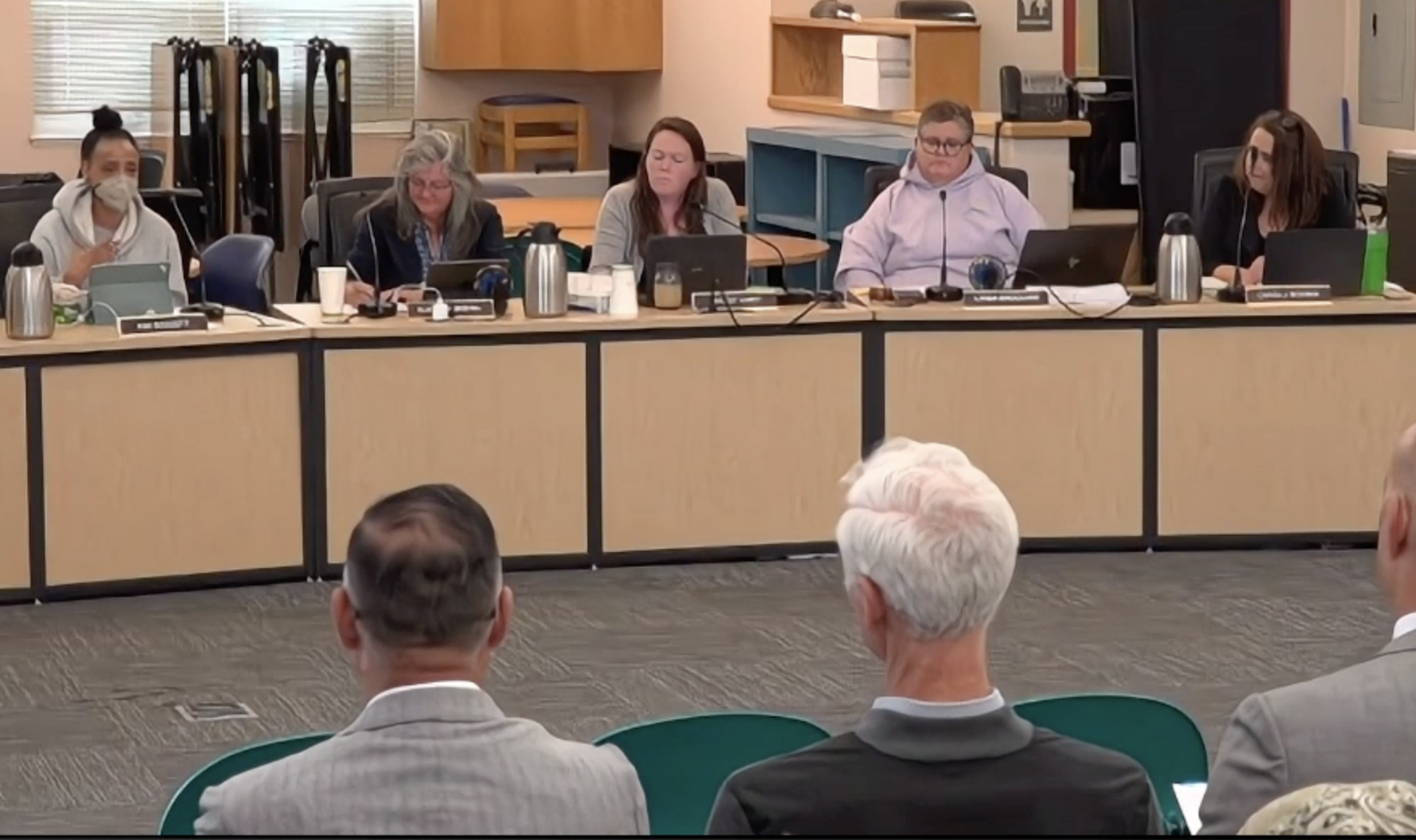
The Pacifica School Board's May 20 meeting laid bare a district under pressure on every front: a state fiscal health assessment exposed systemic breakdowns in budgeting and internal controls, unions escalated demands over pay gaps and a 323-day contract stall, and teachers described classroom safety crises in the youngest grades. The board moved to stabilize operations by hiring two key administrators and approving a third interim budget that projects a path out of deficit spending — but only if one-time state grants materialize and union salary settlements remain at zero.

  • State fiscal watchdog finds deficiencies in budget monitoring, position control, internal controls, and fraud prevention across 20 operational areas

  • Teachers' union reports Pacifica pay trails neighbors by 29–45%; classified staff have waited 323 days for a contract and partner with Central Labor Council

  • TK/K teachers describe violent classroom behaviors and propose floating paraprofessionals at every site; English learner enrollment drops 37% in two years

  • Board hires new business chief at $213K and facilities supervisor to fill vacancies tied to FCMAT concerns

  • Third interim budget shows deficit narrowing with $2.1M in new one-time state grants, but no union settlements are factored in

  • $70M Measure G bond nearly consumed by $55M workforce housing project, leaving $6M for all other facilities needs


FCMAT Report: A District at a Fiscal Crossroads

The basics: FCMAT — the Fiscal Crisis and Management Assistance Team, a state agency that reviews troubled school districts — conducted a fiscal health risk analysis after the San Mateo County Office of Education issued a "lack of going concern" finding on Pacifica's first interim budget. The assessment reviewed more than 360 documents across 20 operational areas.

Why it matters: The report confirms what unions and community members have been alleging for months: executive turnover has hollowed out fiscal processes, and the district's multi-year budget projections cannot be relied upon until fundamental systems are repaired.

Where things stand: Key findings included deficient position control — the system that tracks staffing costs against the budget — with the county discovering omitted staffing in financial reports. Internal controls and fraud prevention showed weaknesses in purchasing, payroll, human resources, accounts payable/receivable, and segregation of duties. Staff were unaware of relevant board policies. Budget development lacked consistent documented assumptions, and collective bargaining disclosures had inconsistencies and missing signatures.

"Position control really is important because it's salaries and benefits. That is approximately 85% of your district's unrestricted general fund. So if there's a problem with position control, 85% would be a mistake," said Jennifer Noga, FCMAT analyst.

The other side: Board President Lynda Brocchini pushed back on the framing, noting Pacifica receives roughly $15,000 less per student than community-funded districts, making fiscal discipline structurally harder. FCMAT recommended the district continue collaborating with the county and implement a comprehensive fiscal stability plan.

What's next: The two newly hired administrators (see below) are the board's most direct response to the FCMAT findings. The fiscal stability plan will be developed in coordination with the county office.


Unions Turn Up the Heat on Pay and Contracts

Why it matters: The district's two labor unions used their communications time to deliver pointed critiques of district compensation and responsiveness, escalating organized pressure at a moment when the FCMAT report has validated many of their complaints.

Where things stand: Laguna Salada Education Association (LSEA) President Meghann Elsbernd framed the district as a failing "group project" and laid out the math: after 23 years and a master's degree, she earns $92,541 — compared to $134,420 in Burlingame (45% more) and $120,480 in Jefferson (29% more). She reported four union member issues in a single week over unanswered emails, including one item that required a seventh request for information.

"I make $92,541. If I had started my career in Burlingame, been a part of their group project, I would be making 45% more today and take home $134,420," she said.

CSEA Chapter 128 Representative Charlene Hilo reported that classified staff have waited 323 days for a fair agreement while watching salary increases go to the highest-paid positions. "323 days. Classified staff have continued to keep this district moving forward, all while waiting for a fair agreement," she said. CSEA announced a new partnership with the San Mateo County Central Labor Council — a signal of escalating external pressure.

Former CSEA President Sue Beckmeyer told the board that paraprofessionals earn $14–15 per hour and that experienced classified employees were not consulted during the FCMAT process. "There were a whole bunch of employees who really know how the district office functions who were not asked. That's not respect. That needs to change," she said.

The other side: Trustee Kai Doggett responded that she believes all educators deserve more but noted the board must make fiscally responsible decisions. She argued total compensation is on par with the area even if base salaries lag. Superintendent Carissa Bowman acknowledged the frustrations, saying cabinet members work approximately 80 hours per week. "Nobody moved to Pacifica and said, 'What can we do here to make everybody unhappy?' Every single one of us came here and wants to do what's well," she said.


Teachers Sound Alarm on Classroom Safety and English Learner Services

Violent Behaviors in the Youngest Classrooms

Why it matters: Teachers say families are leaving the district over safety concerns in TK and kindergarten classrooms — creating both an enrollment and financial hit at a time the district is already in fiscal distress.

Where things stand: Gabriela Wiseman, representing TK/K teachers districtwide, described screaming, throwing objects, property destruction, spitting, kicking, and physical aggression toward students and adults. She challenged the district's February board presentation that cited zero suspensions in TK through third grade as evidence of adequate support.

"The fact that young students are not being suspended does not mean that classrooms are adequately supported or that serious behavioral concerns are not occurring," she said. She proposed a floating paraprofessional for TK/K and first grade classrooms at every site. Superintendent Bowman responded that the district has been meeting with San Mateo County and the Office of Early Learning about TK/K support.

English Learner Enrollment Drops 37%

Gwendolyn Holden, a sixth-grade teacher at IBL, reported the English learner population declined from 224 to 139 students — a 37% drop over two years — versus a 4% general enrollment decline. She described a student who arrived unable to say "Can I go to the bathroom" in English despite a year in the district, and estimated roughly 15% absenteeism among developing English learners. She noted the district lacked an EL master plan until this school year despite a 2016 request.

The district is already under state differentiated assistance for long-term English learners and attendance. Superintendent Bowman acknowledged the challenges but reported the highest ELPAC reclassification rate in five years.


Board Fills Two Leadership Vacancies to Address FCMAT Concerns

Why it matters: Both hires directly respond to FCMAT's central finding that executive turnover drove fiscal and operational breakdowns. The positions had been vacant during a period of significant institutional instability.

Decisions: The board unanimously approved Chuck Neidhoefer as assistant superintendent of business at a base salary of $213,082 plus master's and doctoral stipends. Niedhoefer currently serves as CBO at Gravenstein Union School District and holds CASBO CBO certification. "I've listened to the last several board meetings with interest and with intensity, and I've heard many of the concerns, and I look forward to working with the team here to address the many challenges before us," he told the board. (For: 5, Against: 0, Absent: 0)

Jose Quintana was hired as supervisor of maintenance, operations and bond construction. He previously served as assistant superintendent of business services at Newark Unified, managing an $88M budget, and holds a California general contractor license — essential for executing the $70M Measure G bond program. (For: 5, Against: 0, Absent: 0)


Third Interim Budget: Deficit Narrows, but Big Unknowns Remain

The basics: California school districts file interim budget reports to demonstrate fiscal solvency. Pacifica received a "qualified" certification at second interim — meaning the county flagged concerns about the district's ability to meet financial obligations over three years.

Why it matters: The path to surplus depends on one-time state grants and assumes zero union salary settlements — a politically unsustainable assumption given the labor pressure described above.

Where things stand: CBO consultant Dusty Novant presented updated projections reflecting good news from the governor's May revise: COLA increases to 2.87% (adding roughly $134,000), a proposed 1.44% LCFF augmentation (approximately $400,000, but offset by a new 14-week pregnancy disability mandate), a Learning Recovery Block Grant of roughly $136,000, and a Student Support Block Grant of approximately $2.1M for 2026-27 — all one-time money.

Enrollment projections improved slightly to 2,531 with TK expansion. The unrestricted fund balance is projected at 3.66% for 2025-26, declining to 3.3% in 2026-27, before improving to approach 6% by 2027-28 when including Fund 17 reserves.

Key caveats: No union salary settlements are included. Measure D parcel tax revenue — which expires at the end of 2026-27 — is not included in 2027-28 projections until renewal is secured. Election costs have not yet been budgeted. The adopted budget public hearing is set for June 10, with board approval targeted for June 24. (For: 5, Against: 0, Absent: 0)


Bond and Parcel Tax Updates: Transparency Concerns Surface

Measure G Workforce Housing Absorbs Most of $70M Bond

Deborah Sherwin of the Citizen Bond Oversight Committee reported Measure O bond funds are 95.9% allocated through 2026, with $47.8M of $55M in completed projects and $921,000 earmarked for play structure replacements. Measure G is primarily budgeted toward a workforce housing project for teachers and staff, with $55M in projected construction costs, $1.6M in financing, and $4.6M in other costs — leaving a projected $6M of the $70M measure for all other planned projects. The committee recommended improved transparency around how site projects are proposed, reviewed, and approved. Both Measure G and Measure O bond audits received clean unmodified opinions with no compliance exceptions. (For: 5, Against: 0, Absent: 0 — each)

Parcel Tax Committee: Show the Public a Spending Plan

Parcel Tax Oversight Committee Chair Christopher Swiedler reported that Measure D (~$1.27M per year) spending is well-established. However, Measure E (~$1.2M per year), passed last year, has had no money spent because the district has not finalized a spending plan. "I really want to avoid a situation where in a year after having spent the money, there's then concerns from the community about how it was spent," he said. The committee urged the board to present a plan publicly before spending begins — critical given Measure D's upcoming expiration and a likely renewal campaign.


Minor Items

  • Cloud phone system upgrade approved unanimously; 101 Voice replaces a 2016 system running on Windows Server 2008 with cloud-based management, E911 classroom-level location, and LTE failover when internet is down. Funded by Measure O bond proceeds, the new system saves roughly $30,000 annually from the general fund by eliminating AT&T line costs. (For: 5, Against: 0, Absent: 0)

  • National University MOU renewed for student teacher and intern partnerships. (For: 5, Against: 0, Absent: 0)

  • Consent agenda approved 5-0.

  • Nine retiring employees honored, including Michelle Sullivan (36 years at Cabrillo) and Dr. Ellie Cundiff (33 years as teacher and principal). Retiring Ocean Shore teacher Virginia Szczepanuk gave an emotional farewell: "I'm no longer able to teach the way that I was trained or mentored. I will miss the children every day." (For: 5, Against: 0, Absent: 0)

  • Six parents received Elna Flynn Outstanding Volunteer Awards; appreciation resolutions adopted for parent groups at all six schools and the Pacifica Education Foundation. (For: 5, Against: 0, Absent: 0)

  • Safe Routes to School Coordinator Charlene Folden recognized for nearly a decade of work securing pedestrian safety improvements including a flashing beacon at Inger B. Lacy and curb extensions at Pearl Meadow.

  • IBL PTO reported $24,609 in direct donations — a dramatic increase attributed to a "no fuss fundraiser" approach — with a current balance of roughly $47,000. Teacher stipends were reduced from $400 to $275 due to enrollment growth concerns.

  • Board President Lynda Brocchini delivered farewell remarks at her final meeting after six years of service.

  • Wellness Committee provided an informational update linking nutrition and physical activity programming to the district's LCAP framework.

State Fiscal Watchdog Flags Systemic Weaknesses as Pacifica Staff Demand Action on Pay | School Board | Locunity